
0,49 €
Mehr erfahren.
- Herausgeber: Booksell-Verlag
- Kategorie: Abenteuer, Thriller, Horror
- Sprache: Englisch
The Collected Works of Richard Marsh (Illustrated Edition) serves as a comprehensive anthology of the influential yet often underappreciated literature of Richard Marsh, a key figure in Gothic fiction at the turn of the 20th century. This illustrated edition provides readers with a rich tapestry of his narratives, showcasing Marsh's distinctive style characterized by intricate plots, psychological depth, and an unsettling ambiance. The selection not only highlights his mastery of suspense and horror but also places his work within the context of Victorian anxieties surrounding science, gender, and identity, making it a vital contribution to the Gothic literary canon. Richard Marsh (1857-1914) was a contemporary of luminaries such as Bram Stoker and Arthur Machen, drawing inspiration from the shifting cultural landscape of his era. His experiences as a traveler and a keen observer of societal norms informed his narratives, embodying the complexities of human nature. Marsh's personal struggles with identity'—themes evident in his writing'—reflect his profound engagement with contemporary debates around modernity and morality, positioning him as a forerunner of psychological and supernatural exploration in literature. This illustrated edition is an invaluable resource for scholars and enthusiasts of Gothic literature, as it not only revives Marsh's notable works but also deepens our understanding of the genre's evolution. Readers seeking to immerse themselves in thrilling and thought-provoking storytelling will find Marsh's collected works a captivating journey into the depths of the human psyche, amplified by striking illustrations that enhance the reading experience. In this enriched edition, we have carefully created added value for your reading experience: - A comprehensive Introduction outlines these selected works' unifying features, themes, or stylistic evolutions. - A Historical Context section situates the works in their broader era—social currents, cultural trends, and key events that underpin their creation. - A concise Synopsis (Selection) offers an accessible overview of the included texts, helping readers navigate plotlines and main ideas without revealing critical twists. - A unified Analysis examines recurring motifs and stylistic hallmarks across the collection, tying the stories together while spotlighting the different work's strengths. - Reflection questions inspire deeper contemplation of the author's overarching message, inviting readers to draw connections among different texts and relate them to modern contexts. - Lastly, our hand‐picked Memorable Quotes distill pivotal lines and turning points, serving as touchstones for the collection's central themes.
Das E-Book können Sie in Legimi-Apps oder einer beliebigen App lesen, die das folgende Format unterstützen:
Veröffentlichungsjahr: 2023
Ähnliche







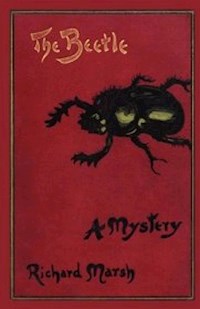







The Collected Works of Richard Marsh (Illustrated Edition)
Table of Contents
Introduction
This illustrated edition assembles a broad survey of Richard Marsh’s work, bringing together a substantial selection of his novels and short fiction in one accessible collection. Its purpose is to present, side by side, the variety and continuity of a writer who helped define popular narrative for late-Victorian and Edwardian readers. Combining widely known titles with lesser-circulated pieces, it invites both first-time readers and returning admirers to trace recurring concerns across different modes of storytelling. By gathering The Beetle alongside Tom Ossington’s Ghost, The Datchet Diamonds, The Chase of the Ruby, and many others, the volume offers a panoramic view of Marsh’s imagination, enriched with illustrations that amplify atmosphere and setting.
The collection includes two principal forms: novels and short stories. The novels range across sensation, crime, mystery, romance, and the uncanny, represented by works such as The Beetle, The Datchet Diamonds, The Twickenham Peerage, Miss Arnott’s Marriage, A Woman Perfected, and A Second Coming. The short fiction appears in curated collections—Marvels and Mysteries, Between the Dark and the Daylight, Frivolities, Amusement Only, The Confessions of a Young Lady, and Under One Flag—each gathering tales that pivot from playful to sinister with nimble economy. The volume also preserves uncollected pieces, including Capturing a Convict and The Disappearance of Mrs. Macrecham, ensuring that key shorter works stand alongside the longer narratives they illuminate.
Taken together, these writings are unified by Marsh’s fascination with secrecy, pursuit, and the slipperiness of identity. Respectability rubs against transgression; private motives collide with public consequence. His pages teem with disguises, contested testimonies, sudden revelations, and the perennial question of who—or what—should be trusted. Stylistically, Marsh favors brisk pacing, vivid set-pieces, and a keen eye for urban spectacle, while shifting nimbly between menace and wit. He tests the boundaries of genre, blending the eerie with the investigative and the romantic with the sensational. These hallmarks keep the works lively as a whole, and explain why they continue to reward readers interested in the mechanics of narrative tension.
Marsh wrote for a culture captivated by mystery, detection, and marvels, and his stories channel that climate without being reducible to it. The fiction taps into anxieties and delights characteristic of its era—new forms of mobility, the press of city life, the allure of wealth, and the shadows cast by hidden histories. Yet the prose seeks entertainment first and foremost, offering resourceful characters, escalating dilemmas, and ingenious reversals. Far from museum pieces, these works show the ongoing vitality of popular fiction’s toolbox: concealment, coincidence, chase, and confession. Read in concert, they chart how a single author could exploit and refresh those devices across shifting narrative frames.
The novels demonstrate Marsh’s range. An uncanny incursion rattles London society in The Beetle; an uneasy haunting confronts truth and reputation in Tom Ossington’s Ghost. Jewel hunts drive The Datchet Diamonds and The Chase of the Ruby, while The Twickenham Peerage turns on contested status and inheritance. Domestic and social entanglements—marital, financial, reputational—animate Miss Arnott’s Marriage, Mr. Ely’s Engagement, Violet Forster’s Lover, and A Woman Perfected. Titles such as The Master of Deception, A Duel, The Woman with One Hand, and The Coward behind the Curtain explore duplicity, honor, and fear. Across these plots, momentum and surprise remain constant, delivering suspense without sacrificing clarity or verve.
Marsh’s short fiction distills his effects with particular sharpness. Marvels and Mysteries and Between the Dark and the Daylight lean toward the uncanny and liminal; Frivolities and Amusement Only showcase lightness of touch and compact ingenuity; The Confessions of a Young Lady and Under One Flag highlight voice, social observation, and adventure. The uncollected stories, Capturing a Convict and The Disappearance of Mrs. Macrecham, reflect his attraction to flight, pursuit, and the puzzle of absence. Read together, these tales reveal how Marsh could pivot from whimsy to dread within a few pages, and how recurring concerns—secrecy, chance, moral testing—gain fresh resonance in shorter form.
As a whole, this collection underscores the durability of Marsh’s storytelling: his talent for swift complication, his feel for setting, and his instinct for the scene that compels a turning page. The illustrated format augments mood and movement, drawing attention to the visual charge already present in the prose. Whether approached sequentially or sampled by theme, the volume offers an integrated encounter with an author who excelled at keeping readers alert and off balance. It restores context without prescribing a single path through the works, allowing patterns to emerge naturally and making the case for Marsh’s place among the most engaging architects of popular narrative in his time.
Historical Context
Richard Marsh, the popular pseudonym of Richard Bernard Heldmann (1857–1915), built a career across the fin de siècle and Edwardian decades, writing for a mass audience centered in London. His breakthrough year, 1897, placed The Beetle alongside Bram Stoker’s Dracula on bookstall displays and in the columns of the London press. Working mainly with firms such as Methuen and Skeffington & Son, he turned out crime, sensation, and supernatural fiction in quick succession, from Tom Ossington’s Ghost to The Datchet Diamonds. These novels and collections, including Amusement Only and Marvels and Mysteries, reflect a marketplace shaped by rapid urban change, voracious periodicals, and the single-volume, six-shilling novel.
Marsh’s city is the modern metropolis of electric light and speed. London’s deep-level Underground began with the City and South London Railway (1890) and expanded with the Central London Railway (1900), while New Scotland Yard opened on the Victoria Embankment in 1890. The Henry fingerprint system (1901) professionalized detection; Jack the Ripper’s 1888 crimes had already fixed the East–West divide in the public imagination. Courtrooms at the Old Bailey, West End clubs, and the City’s counting houses supply stages for jewel chases and financial intrigue in works like The Datchet Diamonds, The Chase of the Ruby, and The Great Temptation, with suburban nodes—Datchet, Twickenham—linked by the railway network.
Imperial reach and its frictions shadow the fiction. Britain occupied Egypt in 1882, celebrated Queen Victoria’s Diamond Jubilee in 1897, and crushed the Mahdist state at Omdurman in 1898, while ships moved through Tilbury (opened 1886) to the Suez route. Such movements of people and objects fed anxieties about invasion, contagion, and exotic treasure. The Beetle’s sinister metamorphoses, the lure of rubies in The Chase of the Ruby, and the patriotic tone of Under One Flag draw on these currents. The Aliens Act (1905) formalized fears of the outsider, and fin-de-siècle occultism and prophecy—alive in A Second Coming—filtered empire’s spiritual and racial debates into popular romance.
Marsh wrote amid the era’s debates over gender, marriage, and agency. The Married Women’s Property Acts (1870, 1882) and the expansion of office work produced typists, shopworkers, and traveling readers; the Women’s Social and Political Union formed in 1903. Bicycles, telephones, and department stores changed courtship geography, while the Royal Courts of Justice (opened 1882) hosted high-profile matrimonial cases. Works such as Miss Arnott’s Marriage, A Woman Perfected, Violet Forster’s Lover, Mr. Ely’s Engagement, and The Confessions of a Young Lady examine consent, reputation, and the economics of romance. Their heroines move through modern interiors—boarding houses, chambers, hotels—where contracts, letters, and gossip govern destinies as surely as love.
Late-Victorian theories of mind and crime shaped Marsh’s hybrid plots. Cesare Lombroso’s Criminal Man (1876) and Max Nordau’s Degeneration (1892) fed talk of heredity and deviance; Charcot’s demonstrations revived mesmerism; and the Society for Psychical Research (1882) treated visions and hauntings as evidence. Tom Ossington’s Ghost, Between the Dark and the Daylight, and Marvels and Mysteries pivot on testimony, hypnosis, and contested perception, while Crime and the Criminal exploits new forensic confidence. Bodily fracture and transformation—a severed limb in The Woman with One Hand, the protean menace in The Beetle—echo medical spectacle. At the same time, gentlemanly sleuths and nimble thieves reflect a culture enthralled by science yet addicted to sensation.
Print culture furnished the engine of Marsh’s career. He thrived in the serial economy of Answers (which ran The Beetle in 1897) and other illustrated magazines such as Pearson’s Magazine and the Strand, where cliff-hangers were tuned to weekly rhythms and W. H. Smith’s railway bookstalls pushed sales nationwide. The collapse of the triple-decker in the early 1890s, the rise of the six-shilling novel, and the Net Book Agreement (1900) stabilized prices while halftone technology multiplied images. Collections like Amusement Only, Frivolities, and The Confessions of a Young Lady display magazine-born variety, and “Uncollected Stories” show how one-off tales circulated through a busy market of family weeklies and evening papers.
Law and identity crises were crowd-pleasing material after the Tichborne case (1867–1874) proved how imposture could enthrall Britain. Peerage disputes reached the House of Lords’ Committee for Privileges, while the Criminal Evidence Act (1898) and fingerprints (1901) altered trials at the Old Bailey. The Twickenham Peerage and The Master of Deception exploit this terrain of forged wills, bigamy, and assumed names; A Duel and The Coward behind the Curtain invoke honor codes in a world patrolled by police rather than seconds. Newspaper culture—the Daily Mail launched in 1896 and the Illustrated Police News had long sensationalized crime—frames tales like Capturing a Convict and The Disappearance of Mrs. Macrecham.
The last act of Marsh’s career coincided with imperial war and modern shock. The Second Boer War (1899–1902), with sieges publicized daily, fed patriotic adventure and grievance; Edward VII’s reign (1901–1910) and George V’s accession (1910) bracketed labor unrest and reform. Under One Flag meets this martial mood, while A Hero of Romance revisits chivalry under new conditions of mass politics and media. By 1914, mobilization, censorship, and Zeppelin raids over London (1915) transformed urban fear into national emergency. Marsh died in 1915, leaving a body of work that bridges the fin de siècle’s decadent dread and the Edwardian appetite for efficiency, speed, and organized power.
Synopsis (Selection)
The Beetle
A shapeshifting terror from Egypt invades late-Victorian London to settle an old score with a rising politician, drawing a circle of friends into a breathless, multi-perspective pursuit.
Tom Ossington’s Ghost
A troubling apparition follows a sudden death, forcing the living to decide whether a genuine haunting or a concealed crime lies behind the disturbances.
Crime and the Criminal
A reflective overview of criminal behavior, detection, and the justice system, blending illustrative cases with observations on policing and punishment.
The Datchet Diamonds
A respectable young man is swept into a jewel robbery and a chase for missing diamonds, leading to comic scrapes, impostures, and swift reversals.
The Chase of the Ruby
The theft of a famed ruby sparks a relentless pursuit across cities, with decoys, disguises, and shifting loyalties complicating the trail.
The Twickenham Peerage
A disputed title entangles families and lovers in legal intrigue and identity claims, testing loyalty, proof, and reputation.
Miss Arnott’s Marriage
A marriage of convenience hides perilous secrets, as a determined heroine navigates suitors, scandal, and the shadow of past misdeeds.
The Great Temptation
Sudden opportunity and social ambition lure characters toward moral compromise, setting romance and conscience on a collision course.
The Master of Deception
A consummate impostor engineers elaborate frauds and manipulations until his own schemes begin to close in around him.
A Duel
Rivalry in love escalates toward a duel, exposing codes of honor, pride, and the costs of bravado.
The Woman with One Hand
A sensational mystery centers on a disfigured woman and a trail of crime, where each clue points to a darker, long-buried past.
The Coward behind the Curtain
In a theatrical milieu, a hidden act of treachery triggers scandal and inquiry as the truth is pieced together from backstage whispers.
A Woman Perfected
A speculative romance about attempts to fashion the 'ideal' woman, raising unsettling questions about desire, control, and perfection.
Violet Forster’s Lover
A society romance complicated by secrecy and misplaced trust, as Violet must weigh duty against a potentially dangerous passion.
Mr. Ely’s Engagement
A comedy of betrothals and misunderstandings in which Mr. Ely’s engagement sets off revelations and a reassessment of true affection.
A Hero of Romance
An unassuming man is thrust into sensational adventures that test his mettle and gently mock the clichés of chivalric heroism.
A Second Coming
A messianic figure appears in modern London, provoking media frenzy and moral debate in a satirical parable about faith and society.
Marvels and Mysteries (Short Story Collection)
Supernatural and uncanny tales featuring haunted objects, inexplicable phenomena, and twist-driven investigations.
Between the Dark and the Daylight (Short Story Collection)
Stories set on the shadowy edge of night blend crime, coincidence, and the eerie psychology of twilight moments.
Frivolities (Short Story Collection)
Lighthearted sketches of courtship and social foibles, often ending with playful reversals.
Amusement Only (Short Story Collection)
A suite of ingenious mystery puzzles and criminal intrigues crafted for sheer entertainment, from thefts to locked-room oddities.
The Confessions of a Young Lady (Short Story Collection)
Humorous, sometimes satirical pieces narrated by a candid young woman whose 'confessions' chart her misadventures in love and society.
Under One Flag (Short Story Collection)
Patriotic and adventure stories uniting disparate characters in shared peril or purpose, often against martial or imperial backdrops.
Capturing a Convict (Uncollected Story)
A brisk crime tale about the pursuit and recapture of an escaped prisoner, where luck and wit trade places.
The Disappearance of Mrs. Macrecham (Uncollected Story)
A vanishing-woman mystery that unravels through competing accounts to a disquieting explanation.
The Collected Works of Richard Marsh (Illustrated Edition)
Novels
The Beetle
BOOK I
The House with the Open Window
The Surprising Narration of Robert Holt
CHAPTER I.OUTSIDE
‘No room!—Full up!’
He banged the door in my face.
That was the final blow.
To have tramped about all day looking for work; to have begged even for a job which would give me money enough to buy a little food; and to have tramped and to have begged in vain,—that was bad. But, sick at heart, depressed in mind and in body, exhausted by hunger and fatigue, to have been compelled to pocket any little pride I might have left, and solicit, as the penniless, homeless tramp which indeed I was, a night’s lodging in the casual ward,— and to solicit it in vain!—that was worse. Much worse. About as bad as bad could be.
I stared, stupidly, at the door which had just been banged in my face. I could scarcely believe that the thing was possible. I had hardly expected to figure as a tramp; but, supposing it conceivable that I could become a tramp, that I should be refused admission to that abode of all ignominy, the tramp’s ward, was to have attained a depth of misery of which never even in nightmares I had dreamed.
As I stood wondering what I should do, a man slouched towards me out of the shadow of the wall.
‘Won’t ‘e let yer in?’
‘He says it’s full.’
‘Says it’s full, does ‘e? That’s the lay at Fulham,—they always says it’s full. They wants to keep the number down.’
I looked at the man askance. His head hung forward; his hands were in his trouser pockets; his clothes were rags; his tone was husky.
‘Do you mean that they say it’s full when it isn’t,—that they won’t let me in although there’s room?’
‘That’s it,—bloke’s a-kiddin’ yer.’
‘But, if there’s room, aren’t they bound to let me in?’
‘Course they are,—and, blimey, if I was you I’d make ‘em. Blimey I would!’
He broke into a volley of execrations.
‘But what am I to do?’
‘Why, give ‘em another rouser—let ‘em know as you won’t be kidded!’
I hesitated; then, acting on his suggestion, for the second time I rang the bell. The door was flung wide open, and the grizzled pauper, who had previously responded to my summons, stood in the open doorway. Had he been the Chairman of the Board of Guardians himself he could not have addressed me with greater scorn.
‘What, here again! What’s your little game? Think I’ve nothing better to do than to wait upon the likes of you?’
‘I want to be admitted.’
‘Then you won’t be admitted!’
‘I want to see someone in authority.’
‘Ain’t yer seein’ someone in authority?’
‘I want to see someone besides you,—I want to see the master.’
‘Then you won’t see the master!’
He moved the door swiftly to; but, prepared for such a manoeuvre, I thrust my foot sufficiently inside to prevent his shutting it. I continued to address him.
‘Are you sure that the ward is full?’
‘Full two hours ago!’
‘But what am I to do?’
‘I don’t know what you’re to do!’
‘Which is the next nearest workhouse?’
‘Kensington.’
Suddenly opening the door, as he answered me, putting out his arm he thrust me backwards. Before I could recover the door was closed. The man in rags had continued a grim spectator of the scene. Now he spoke.
‘Nice bloke, ain’t he?’
‘He’s only one of the paupers,—has he any right to act as one of the officials?’
‘I tell yer some of them paupers is wuss than the orficers,—a long sight wuss! They thinks they owns the ‘ouses, blimey they do. Oh it’s a–-fine world, this is!’
He paused. I hesitated. For some time there had been a suspicion of rain in the air. Now it was commencing to fall in a fine but soaking drizzle. It only needed that to fill my cup to overflowing. My companion was regarding me with a sort of sullen curiosity.
‘Ain’t you got no money?’
‘Not a farthing.’
‘Done much of this sort of thing?’
‘It’s the first time I’ve been to a casual ward,—and it doesn’t seem as if I’m going to get in now.’
‘I thought you looked as if you was a bit fresh.—What are yer goin’ to do?’
‘How far is it to Kensington?’
‘Work’us?—about three mile;—but, if I was you, I’d try St George’s.’
‘Where’s that?’
‘In the Fulham Road. Kensington’s only a small place, they do you well there, and it’s always full as soon as the door’s opened;— you’d ‘ave more chawnce at St George’s.’
He was silent. I turned his words over in my mind, feeling as little disposed to try the one place as the other. Presently he began again.
‘I’ve travelled from Reading this–-day, I ‘ave,—tramped every— —foot!—and all the way as I come along, I’ll ‘ave a shakedown at ‘Ammersmith, I says,—and now I’m as fur off from it as ever! This is a–-fine country, this is,—I wish every–-soul in it was swept into the–-sea, blimey I do! But I ain’t goin’ to go no further,—I’ll ‘ave a bed in ‘Ammersmith or I’ll know the reason why.’
‘How are you going to manage it,—have you got any money?’
‘Got any money?—My crikey!—I look as though I ‘ad,—I sound as though I ‘ad too! I ain’t ‘ad no brads, ‘cept now and then a brown, this larst six months.’
‘How are you going to get a bed then?’
‘Ow am I going to?—why, like this way.’ He picked up two stones, one in either hand. The one in his left he flung at the glass which was over the door of the casual ward. It crashed through it, and through the lamp beyond. ‘That’s ‘ow I’m goin’ to get a bed.’
The door was hastily opened. The grizzled pauper reappeared. He shouted, as he peered at us in the darkness,
‘Who done that?’
‘I done it, guvnor,—and, if you like, you can see me do the other. It might do your eyesight good.’
Before the grizzled pauper could interfere, he had hurled the stone in his right hand through another pane. I felt that it was time for me to go. He was earning a night’s rest at a price which, even in my extremity, I was not disposed to pay.
When I left two or three other persons had appeared upon the scene, and the man in rags was addressing them with a degree of frankness, which, in that direction, left little to be desired. I slunk away unnoticed. But had not gone far before I had almost decided that I might as well have thrown in my fortune with the bolder wretch, and smashed a window too. Indeed, more than once my feet faltered, as I all but returned to do the feat which I had left undone.
A more miserable night for an out-of-door excursion I could hardly have chosen. The rain was like a mist, and was not only drenching me to the skin, but it was rendering it difficult to see more than a little distance in any direction. The neighbourhood was badly lighted. It was one in which I was a stranger, I had come to Hammersmith as a last resource. It had seemed to me that I had tried to find some occupation which would enable me to keep body and soul together in every other part of London, and that now only Hammersmith was left. And, at Hammersmith, even the workhouse would have none of me!
Retreating from the inhospitable portal of the casual ward, I had taken the first turning to the left,—and, at the moment, had been glad to take it. In the darkness and the rain, the locality which I was entering appeared unfinished. I seemed to be leaving civilisation behind me. The path was unpaved; the road rough and uneven, as if it had never been properly made. Houses were few and far between. Those which I did encounter, seemed, in the imperfect light, amid the general desolation, to be cottages which were crumbling to decay.
Exactly where I was I could not tell. I had a faint notion that, if I only kept on long enough, I should strike some part of Walham Green. How long I should have to keep on I could only guess. Not a creature seemed to be about of whom I could make inquiries. It was as if I was in a land of desolation.
I suppose it was between eleven o’clock and midnight. I had not given up my quest for work till all the shops were closed,—and in Hammersmith, that night, at any rate, they were not early closers. Then I had lounged about dispiritedly, wondering what was the next thing I could do. It was only because I feared that if I attempted to spend the night in the open air, without food, when the morning came I should be broken up, and fit for nothing, that I sought a night’s free board and lodging. It was really hunger which drove me to the workhouse door. That was Wednesday. Since the Sunday night preceding nothing had passed my lips save water from the public fountains,—with the exception of a crust of bread which a man had given me whom I had found crouching at the root of a tree in Holland Park. For three days I had been fasting,—practically all the time upon my feet. It seemed to me that if I had to go hungry till the morning I should collapse,—there would be an end. Yet, in that strange and inhospitable place, where was I to get food at that time of night, and how?
I do not know how far I went. Every yard I covered, my feet dragged more. I was dead beat, inside and out. I had neither strength nor courage left. And within there was that frightful craving, which was as though it shrieked aloud. I leant against some palings, dazed and giddy. If only death had come upon me quickly, painlessly, how true a friend I should have thought it! It was the agony of dying inch by inch which was so hard to bear.
It was some minutes before I could collect myself sufficiently to withdraw from the support of the railings, and to start afresh. I stumbled blindly over the uneven road. Once, like a drunken man, I lurched forward, and fell upon my knees. Such was my backboneless state that for some seconds I remained where I was, half disposed to let things slide, accept the good the gods had sent me, and make a night of it just there. A long night, I fancy, it would have been, stretching from time unto eternity.
Having regained my feet, I had gone perhaps another couple of hundred yards along the road—Heaven knows that it seemed to me just then a couple of miles!—when there came over me again that overpowering giddiness which, I take it, was born of my agony of hunger. I staggered, helplessly, against a low wall which, just there, was at the side of the path. Without it I should have fallen in a heap. The attack appeared to last for hours; I suppose it was only seconds; and, when I came to myself, it was as though I had been aroused from a swoon of sleep,—aroused, to an extremity of pain. I exclaimed aloud,
‘For a loaf of bread what wouldn’t I do!’
I looked about me, in a kind of frenzy. As I did so I for the first time became conscious that behind me was a house. It was not a large one. It was one of those so-called villas which are springing up in multitudes all round London, and which are let at rentals of from twenty-five to forty pounds a year. It was detached. So far as I could see, in the imperfect light, there was not another building within twenty or thirty yards of either side of it. It was in two storeys. There were three windows in the upper storey. Behind each the blinds were closely drawn. The hall door was on my right. It was approached by a little wooden gate.
The house itself was so close to the public road that by leaning over the wall I could have touched either of the windows on the lower floor. There were two of them. One of them was a bow window. The bow window was open. The bottom centre sash was raised about six inches.
CHAPTER II.INSIDE
I realised, and, so to speak, mentally photographed all the little details of the house in front of which I was standing with what almost amounted to a gleam of preternatural perception. An instant before, the world swam before my eyes. I saw nothing. Now I saw everything, with a clearness which, as it were, was shocking.
Above all, I saw the open window. I stared at it, conscious, as I did so, of a curious catching of the breath. It was so near to me; so very near. I had but to stretch out my hand to thrust it through the aperture. Once inside, my hand would at least be dry. How it rained out there! My scanty clothing was soaked; I was wet to the skin! I was shivering. And, each second, it seemed to rain still faster. My teeth were chattering. The damp was liquefying the very marrow in my bones.
And, inside that open window, it was, it must be, so warm, so dry!
There was not a soul in sight. Not a human being anywhere near. I listened; there was not a sound. I alone was at the mercy of the sodden night. Of all God’s creatures the only one unsheltered from the fountains of Heaven which He had opened. There was not one to see what I might do; not one to care. I need fear no spy. Perhaps the house was empty; nay, probably. It was my plain duty to knock at the door, rouse the inmates, and call attention to their oversight,—the open window. The least they could do would be to reward me for my pains. But, suppose the place was empty, what would be the use of knocking? It would be to make a useless clatter. Possibly to disturb the neighbourhood, for nothing. And, even if the people were at home, I might go unrewarded. I had learned, in a hard school, the world’s ingratitude. To have caused the window to be closed—the inviting window, the tempting window, the convenient window!—and then to be no better for it after all, but still to be penniless, hopeless, hungry, out in the cold and the rain—better anything than that. In such a situation, too late, I should say to myself that mine had been the conduct of a fool. And I should say it justly too. To be sure.
Leaning over the low wall I found that I could very easily put my hand inside the room. How warm it was in there! I could feel the difference of temperature in my fingertips. Very quietly I stepped right over the wall. There was just room to stand in comfort between the window and the wall. The ground felt to the foot as if it were cemented. Stooping down, I peered through the opening. I could see nothing. It was black as pitch inside. The blind was drawn right up; it seemed incredible that anyone could be at home, and have gone to bed, leaving the blind up, and the window open. I placed my ear to the crevice. How still it was! Beyond doubt, the place was empty.
I decided to push the window up another inch or two, so as to enable me to reconnoitre. If anyone caught me in the act, then there would be an opportunity to describe the circumstances, and to explain how I was just on the point of giving the alarm. Only, I must go carefully. In such damp weather it was probable that the sash would creak.
Not a bit of it. It moved as readily and as noiselessly as if it had been oiled. This silence of the sash so emboldened me that I raised it more than I intended. In fact, as far as it would go. Not by a sound did it betray me. Bending over the sill I put my head and half my body into the room. But I was no forwarder. I could see nothing. Not a thing. For all I could tell the room might be unfurnished. Indeed, the likelihood of such an explanation began to occur to me. I might have chanced upon an empty house. In the darkness there was nothing to suggest the contrary. What was I to do?
Well, if the house was empty, in such a plight as mine I might be said to have a moral, if not a legal, right, to its bare shelter. Who, with a heart in his bosom, would deny it me? Hardly the most punctilious landlord. Raising myself by means of the sill I slipped my legs into the room.
The moment I did so I became conscious that, at any rate, the room was not entirely unfurnished. The floor was carpeted. I have had my feet on some good carpets in my time; I know what carpets are; but never did I stand upon a softer one than that. It reminded me, somehow, even then, of the turf in Richmond Park,—it caressed my instep, and sprang beneath my tread. To my poor, travel-worn feet, it was luxury after the puddly, uneven road. Should I, now I had ascertained that—the room was, at least, partially furnished, beat a retreat? Or should I push my researches further? It would have been rapture to have thrown off my clothes, and to have sunk down, on the carpet, then and there, to sleep. But,—I was so hungry; so famine-goaded; what would I not have given to have lighted on something good to eat!
I moved a step or two forward, gingerly, reaching out with my hands, lest I struck, unawares, against some unseen thing. When I had taken three or four such steps, without encountering an obstacle, or, indeed, anything at all, I began, all at once, to wish I had not seen the house; that I had passed it by; that I had not come through the window; that I were safely out of it again. I became, on a sudden, aware, that something was with me in the room. There was nothing, ostensible, to lead me to such a conviction; it may be that my faculties were unnaturally keen; but, all at once, I knew that there was something there. What was more, I had a horrible persuasion that, though unseeing, I was seen; that my every movement was being watched.
What it was that was with me I could not tell; I could not even guess. It was as though something in my mental organisation had been stricken by a sudden paralysis. It may seem childish to use such language; but I was overwrought, played out; physically speaking, at my last counter; and, in an instant, without the slightest warning, I was conscious of a very curious sensation, the like of which I had never felt before, and the like of which I pray that I never may feel again,—a sensation of panic fear. I remained rooted to the spot on which I stood, not daring to move, fearing to draw my breath. I felt that the presence will me in the room was something strange, something evil.
I do not know how long I stood there, spell-bound, but certainly for some considerable space of time. By degrees, as nothing moved, nothing was seen, nothing was heard, and nothing happened, I made an effort to better play the man. I knew that, at the moment, I played the cur. And endeavoured to ask myself of what it was I was afraid. I was shivering at my own imaginings. What could be in the room, to have suffered me to open the window and to enter unopposed? Whatever it was, was surely to the full as great a coward as I was, or why permit, unchecked, my burglarious entry. Since I had been allowed to enter, the probability was that I should be at liberty to retreat,—and I was sensible of a much keener desire to retreat than I had ever had to enter.
I had to put the greatest amount of pressure upon myself before I could summon up sufficient courage to enable me to even turn my head upon my shoulders,—and the moment I did so I turned it back again. What constrained me, to save my soul I could not have said,—but I was constrained. My heart was palpitating in my bosom; I could hear it beat. I was trembling so that I could scarcely stand. I was overwhelmed by a fresh flood of terror. I stared in front of me with eyes in which, had it been light, would have been seen the frenzy of unreasoning fear. My ears were strained so that I listened with an acuteness of tension which was painful.
Something moved. Slightly, with so slight a sound, that it would scarcely have been audible to other ears save mine. But I heard. I was looking in the direction from which the movement came, and, as I looked, I saw in front of me two specks of light. They had not been there a moment before, that I would swear. They were there now. They were eyes,—I told myself they were eyes. I had heard how cats’ eyes gleam in the dark, though I had never seen them, and I said to myself that these were cats’ eyes; that the thing in front of me was nothing but a cat. But I knew I lied. I knew that these were eyes, and I knew they were not cats’ eyes, but what eyes they were I did not know,—nor dared to think.
They moved,—towards me. The creature to which the eyes belonged was coming closer. So intense was my desire to fly that I would much rather have died than stood there still; yet I could not control a limb; my limbs were as if they were not mine. The eyes came on,—noiselessly. At first they were between two and three feet from the ground; but, on a sudden, there was a squelching sound, as if some yielding body had been squashed upon the floor. The eyes vanished,—to reappear, a moment afterwards, at what I judged to be a distance of some six inches from the floor. And they again came on.
So it seemed that the creature, whatever it was to which the eyes belonged, was, after all, but small. Why I did not obey the frantic longing which I had to flee from it, I cannot tell; I only know, I could not. I take it that the stress and privations which I had lately undergone, and which I was, even then, still undergoing, had much to do with my conduct at that moment, and with the part I played in all that followed. Ordinarily I believe that I have as high a spirit as the average man, and as solid a resolution; but when one has been dragged through the Valley of Humiliation, and plunged, again and again, into the Waters of Bitterness and Privation, a man can be constrained to a course of action of which, in his happier moments, he would have deemed himself incapable. I know this of my own knowledge.
Slowly the eyes came on, with a strange slowness, and as they came they moved from side to side as if their owner walked unevenly. Nothing could have exceeded the horror with which I awaited their approach,—except my incapacity to escape them. Not for an instant did my glance pass from them,—I could not have shut my eyes for all the gold the world contains!—so that as they came closer I had to look right down to what seemed to be almost the level of my feet. And, at last, they reached my feet. They never paused. On a sudden I felt something on my boot, and, with a sense of shrinking, horror, nausea, rendering me momentarily more helpless, I realised that the creature was beginning to ascend my legs, to climb my body. Even then what it was I could not tell,—it mounted me, apparently, with as much ease as if I had been horizontal instead of perpendicular. It was as though it were some gigantic spider,—a spider of the nightmares; a monstrous conception of some dreadful vision. It pressed lightly against my clothing with what might, for all the world, have been spider’s legs. There was an amazing host of them,—I felt the pressure of each separate one. They embraced me softly, stickily, as if the creature glued and unglued them, each time it moved.
Higher and higher! It had gained my loins. It was moving towards the pit of my stomach. The helplessness with which I suffered its invasion was not the least part of my agony,—it was that helplessness which we know in dreadful dreams. I understood, quite well, that if I did but give myself a hearty shake, the creature would fall off; but I had not a muscle at my command.
As the creature mounted its eyes began to play the part of two small lamps; they positively emitted rays of light. By their rays I began to perceive faint outlines of its body. It seemed larger than I had supposed. Either the body itself was slightly phosphorescent, or it was of a peculiar yellow hue. It gleamed in the darkness. What it was there was still nothing to positively show, but the impression grew upon me that it was some member of the spider family, some monstrous member, of the like of which I had never heard or read. It was heavy, so heavy indeed, that I wondered how, with so slight a pressure, it managed to retain its hold,—that it did so by the aid of some adhesive substance at the end of its legs I was sure,—I could feel it stick. Its weight increased as it ascended,—and it smelt! I had been for some time aware that it emitted an unpleasant, foetid odour; as it neared my face it became so intense as to be unbearable.
It was at my chest. I became more and more conscious of an uncomfortable wobbling motion, as if each time it breathed its body heaved. Its forelegs touched the bare skin about the base of my neck; they stuck to it,—shall I ever forget the feeling? I have it often in my dreams. While it hung on with those in front it seemed to draw its other legs up after it. It crawled up my neck, with hideous slowness, a quarter of an inch at a time, its weight compelling me to brace the muscles of my back. It reached my chin, it touched my lips,—and I stood still and bore it all, while it enveloped my face with its huge, slimy, evil-smelling body, and embraced me with its myriad legs. The horror of it made me mad. I shook myself like one stricken by the shaking ague. I shook the creature off. It squashed upon the floor. Shrieking like some lost spirit, turning, I dashed towards the window. As I went, my foot, catching in some obstacle, I fell headlong to the floor.
Picking myself up as quickly as I could I resumed my flight,—rain or no rain, oh to get out of that room! I already had my hand upon the sill, in another instant I should have been over it,—then, despite my hunger, my fatigues, let anyone have stopped me if they could!—when someone behind me struck a light.
CHAPTER III.THE MAN IN THE BED
The illumination which instantly followed was unexpected. It startled me, causing a moment’s check, from which I was just recovering when a voice said,
‘Keep still!’
There was a quality in the voice which I cannot describe. Not only an accent of command, but a something malicious, a something saturnine. It was a little guttural, though whether it was a man speaking I could not have positively said; but I had no doubt it was a foreigner. It was the most disagreeable voice I had ever heard, and it had on me the most disagreeable effect; for when it said, ‘Keep still!’ I kept still. It was as though there was nothing else for me to do.
‘Turn round!’
I turned round, mechanically, like an automaton. Such passivity was worse than undignified, it was galling; I knew that well. I resented it with secret rage. But in that room, in that presence, I was invertebrate.
When I turned I found myself confronting someone who was lying in bed. At the head of the bed was a shelf. On the shelf was a small lamp which gave the most brilliant light I had ever seen. It caught me full in the eyes, having on me such a blinding effect that for some seconds I could see nothing. Throughout the whole of that strange interview I cannot affirm that I saw clearly; the dazzling glare caused dancing specks to obscure my vision. Yet, after an interval of time, I did see something; and what I did see I had rather have left unseen.
I saw someone in front of me lying in a bed. I could not at once decide if it was a man or a woman. Indeed at first I doubted if it was anything human. But, afterwards, I knew it to be a man,—for this reason, if for no other, that it was impossible such a creature could be feminine. The bedclothes were drawn up to his shoulders; only his head was visible. He lay on his left side, his head resting on his left hand; motionless, eyeing me as if he sought to read my inmost soul. And, in very truth, I believe he read it. His age I could not guess; such a look of age I had never imagined. Had he asserted that he had been living through the ages, I should have been forced to admit that, at least, he looked it. And yet I felt that it was quite within the range of possibility that he was no older than myself,—there was a vitality in his eyes which was startling. It might have been that he had been afflicted by some terrible disease, and it was that which had made him so supernaturally ugly.
There was not a hair upon his face or head, but, to make up for it, the skin, which was a saffron yellow, was an amazing mass of wrinkles. The cranium, and, indeed, the whole skull, was so small as to be disagreeably suggestive of something animal. The nose, on the other hand, was abnormally large; so extravagant were its dimensions, and so peculiar its shape, it resembled the beak of some bird of prey. A characteristic of the face—and an uncomfortable one I—was that, practically, it stopped short at the mouth. The mouth, with its blubber lips, came immediately underneath the nose, and chin, to all intents and purposes, there was none. This deformity—for the absence of chin amounted to that—it was which gave to the face the appearance of something not human,—that, and the eyes. For so marked a feature of the man were his eyes, that, ere long, it seemed to me that he was nothing but eyes.
His eyes ran, literally, across the whole of the upper portion of his face,—remember, the face was unwontedly small, and the columna of the nose was razor-edged. They were long, and they looked out of narrow windows, and they seemed to be lighted by some internal radiance, for they shone out like lamps in a lighthouse tower. Escape them I could not, while, as I endeavoured to meet them, it was as if I shrivelled into nothingness. Never before had I realised what was meant by the power of the eye. They held me enchained, helpless, spell-bound. I felt that they could do with me as they would; and they did. Their gaze was unfaltering, having the bird-like trick of never blinking; this man could have glared at me for hours and never moved an eyelid.
It was he who broke the silence. I was speechless.
‘Shut the window.’ I did as he bade me. ‘Pull down the blind.’ I obeyed. ‘Turn round again.’ I was still obedient. ‘What is your name?’
Then I spoke,—to answer him. There was this odd thing about the words I uttered, that they came from me, not in response to my will power, but in response to his. It was not I who willed that I should speak; it was he. What he willed that I should say, I said. Just that, and nothing more. For the time I was no longer a man; my manhood was merged in his. I was, in the extremest sense, an example of passive obedience.
‘Robert Holt.’
‘What are you?’
‘A clerk.’
‘You look as if you were a clerk.’ There was a flame of scorn in his voice which scorched me even then. ‘What sort of a clerk are you?’
‘I am out of a situation.’
‘You look as if you were out of a situation.’ Again the scorn. ‘Are you the sort of clerk who is always out of a situation? You are a thief.’
‘I am not a thief.’
‘Do clerks come through the window?’ I was still,—he putting no constraint on me to speak. ‘Why did you come through the window?’
‘Because it was open.’
‘So!—Do you always come through a window which is open?’
‘No.’
‘Then why through this?’
‘Because I was wet—and cold—and hungry—and tired.’
The words came from me as if he had dragged them one by one,— which, in fact, he did.
‘Have you no home?’
‘No.’
‘Money?’
‘No.’
‘Friends?’
‘No.’
‘Then what sort of a clerk are you?’
I did not answer him,—I did not know what it was he wished me to say. I was the victim of bad luck, nothing else,—I swear it. Misfortune had followed hard upon misfortune. The firm by whom I had been employed for years suspended payment. I obtained a situation with one of their creditors, at a lower salary. They reduced their staff, which entailed my going. After an interval I obtained a temporary engagement; the occasion which required my services passed, and I with it. After another, and a longer interval, I again found temporary employment, the pay for which was but a pittance. When that was over I could find nothing. That was nine months ago, and since then I had not earned a penny. It is so easy to grow shabby, when you are on the everlasting tramp, and are living on your stock of clothes. I had trudged all over London in search of work,—work of any kind would have been welcome, so long as it would have enabled me to keep body and soul together. And I had trudged in vain. Now I had been refused admittance as a casual,—how easy is the descent! But I did not tell the man lying on the bed all this. He did not wish to hear,— had he wished he would have made me tell him.
It may be that he read my story, unspoken though it was,—it is conceivable. His eyes had powers of penetration which were peculiarly their own,—that I know.
‘Undress!’
When he spoke again that was what he said, in those guttural tones of his in which there was a reminiscence of some foreign land. I obeyed, letting my sodden, shabby clothes fall anyhow upon the floor. A look came on his face, as I stood naked in front of him, which, if it was meant for a smile, was a satyr’s smile, and which filled me with a sensation of shuddering repulsion.
‘What a white skin you have,—how white! What would I not give for a skin as white as that,—ah yes!’ He paused, devouring me with his glances; then continued. ‘Go to the cupboard; you will find a cloak; put it on.’
I went to a cupboard which was in a corner of the room, his eyes following me as I moved. It was full of clothing,—garments which might have formed the stock-in-trade of a costumier whose speciality was providing costumes for masquerades. A long dark cloak hung on a peg. My hand moved towards it, apparently of its own volition. I put it on, its ample folds falling to my feet.
‘In the other cupboard you will find meat, and bread, and wine. Eat and drink.’
On the opposite side of the room, near the head of his bed, there was a second cupboard. In this, upon a shelf, I found what looked like pressed beef, several round cakes of what tasted like rye bread, and some thin, sour wine, in a straw-covered flask. But I was in no mood to criticise; I crammed myself, I believe, like some famished wolf, he watching me, in silence, all the time. When I had done, which was when I had eaten and drunk as much as I could hold, there returned to his face that satyr’s grin.
‘I would that I could eat and drink like that,—ah yes!—Put back what is left.’ I put it back,—which seemed an unnecessary exertion, there was so little to put. ‘Look me in the face.’
I looked him in the face,—and immediately became conscious, as I did so, that something was going from me,—the capacity, as it were, to be myself. His eyes grew larger and larger, till they seemed to fill all space—till I became lost in their immensity. He moved his hand, doing something to me, I know not what, as it passed through the air—cutting the solid ground from underneath my feet, so that I fell headlong to the ground. Where I fell, there I lay, like a log.
And the light went out.
CHAPTER IV.A LONELY VIGIL
I knew that the light went out. For not the least singular, nor, indeed, the least distressing part of my condition was the fact that, to the best of my knowledge and belief, I never once lost consciousness during the long hours which followed. I was aware of the extinction of the lamp, and of the black darkness which ensued. I heard a rustling sound, as if the man in the bed was settling himself between the sheets. Then all was still. And throughout that interminable night I remained, my brain awake, my body dead, waiting, watching, for the day. What had happened to me I could not guess. That I probably wore some of the external evidences of death my instinct told me,—I knew I did. Paradoxical though it may sound, I felt as a man might feel who had actually died,—as, in moments of speculation, in the days gone by, I had imagined it as quite possible that he would feel. It is very far from certain that feeling necessarily expires with what we call life. I continually asked myself if I could be dead,—the inquiry pressed itself on me with awful iteration. Does the body die, and the brain—the I, the ego—still live on? God only knows. But, then! the agony of the thought.
The hours passed. By slow degrees, the silence was eclipsed. Sounds of traffic, of hurrying footsteps,—life!—were ushers of the morn. Outside the window sparrows twittered,—a cat mewed, a dog barked—there was the clatter of a milk can. Shafts of light stole past the blind, increasing in intensity. It still rained, now and again it pattered against the pane. The wind must have shifted, because, for the first time, there came, on a sudden, the clang of a distant clock striking the hour,—seven. Then, with the interval of a lifetime between each chiming, eight,—nine,—ten.
So far, in the room itself there had not been a sound. When the clock had struck ten, as it seemed to me, years ago, there came a rustling noise, from the direction of the bed. Feet stepped upon the floor,—moving towards where I was lying. It was, of course, now broad day, and I, presently, perceived that a figure, clad in some queer coloured garment, was standing at my side, looking down at me. It stooped, then knelt. My only covering was unceremoniously thrown from off me, so that I lay there in my nakedness. Fingers prodded me then and there, as if I had been some beast ready for the butcher’s stall. A face looked into mine, and, in front of me, were those dreadful eyes. Then, whether I was dead or living, I said to myself that this could be nothing human,—nothing fashioned in God’s image could wear such a shape as that. Fingers were pressed into my cheeks, they were thrust into my mouth, they touched my staring eyes, shut my eyelids, then opened them again, and—horror of horrors!—the blubber lips were pressed to mine—the soul of something evil entered into me in the guise of a kiss.
Then this travesty of manhood reascended to his feet, and said, whether speaking to me or to himself I could not tell,
‘Dead!—dead!—as good as dead!—and better! We’ll have him buried.’
He moved away from me. I heard a door open and shut, and knew that he was gone.
And he continued gone throughout the day. I had no actual knowledge of his issuing out into the street, but he must have done so, because the house appeared deserted. What had become of the dreadful creature of the night before I could not guess. My first fear was that he had left it behind him in the room with me,—it might be, as a sort of watchdog. But, as the minutes and the hours passed, and there was still no sign or sound of anything living, I concluded that, if the thing was there, it was, possibly, as helpless as myself, and that during its owner’s absence, at any rate, I had nothing to fear from its too pressing attentions.
That, with the exception of myself, the house held nothing human, I had strong presumptive proof more than once in the course of the day. Several times, both in the morning and the afternoon, people without endeavoured to attract the attention of whoever was within. Vehicles—probably tradesmen’s carts—drew up in front, their stopping being followed by more or less assiduous assaults upon the knocker and the bell. But in every case their appeals remained unheeded. Whatever it was they wanted, they had to go unsatisfied away. Lying there, torpid, with nothing to do but listen, I was, possibly, struck by very little, but it did occur to me that one among the callers was more persistent than the rest.