Erhalten Sie Zugang zu diesem und mehr als 300000 Büchern ab EUR 5,99 monatlich.
- Herausgeber: Musaicum Books
- Kategorie: Sachliteratur, Reportagen, Biografien
- Sprache: Englisch
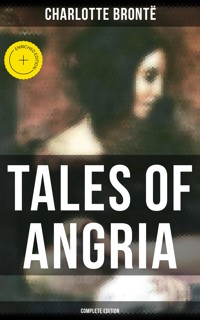
In Charlotte Brontë's 'Tales of Angria - Complete Edition', readers are immersed in a world of vivid imagination and intricate storytelling. Set in the fictional kingdom of Angria, the collection of tales explores themes of love, power, and society with a keen eye for detail and emotional depth. Brontë's writing style is characterized by lush descriptions, compelling dialogue, and a firm grasp of human emotions, making the stories both engaging and thought-provoking within the literary context of the Victorian era. Charlotte Brontë's personal experiences and keen observations of society's inequalities and constraints undoubtedly influenced her creation of the rich tapestry of characters and events in 'Tales of Angria'. As a gifted writer ahead of her time, Brontë used her literary talents to challenge societal norms and explore the complexities of human relationships, which is evident throughout this collection of tales. I highly recommend 'Tales of Angria - Complete Edition' to readers who appreciate classic literature, intricate character development, and immersive storytelling. Charlotte Brontë's masterful work in this collection is sure to captivate and inspire readers of all ages. In this enriched edition, we have carefully created added value for your reading experience: - A comprehensive Introduction outlines these selected works' unifying features, themes, or stylistic evolutions. - The Author Biography highlights personal milestones and literary influences that shape the entire body of writing. - A Historical Context section situates the works in their broader era—social currents, cultural trends, and key events that underpin their creation. - A concise Synopsis (Selection) offers an accessible overview of the included texts, helping readers navigate plotlines and main ideas without revealing critical twists. - A unified Analysis examines recurring motifs and stylistic hallmarks across the collection, tying the stories together while spotlighting the different work's strengths. - Reflection questions inspire deeper contemplation of the author's overarching message, inviting readers to draw connections among different texts and relate them to modern contexts. - Lastly, our hand‐picked Memorable Quotes distill pivotal lines and turning points, serving as touchstones for the collection's central themes.
Sie lesen das E-Book in den Legimi-Apps auf:
Seitenzahl: 278
Veröffentlichungsjahr: 2017
Das E-Book (TTS) können Sie hören im Abo „Legimi Premium” in Legimi-Apps auf:
Ähnliche



Tales of Angria - Complete Edition
Published by
Books
Table of Contents
Introduction
This Complete Edition gathers Charlotte Brontë’s principal Angrian narratives—Tales of Angria, Mina Laury, Stancliffe’s Hotel, and Angria and the Angrians—into a single volume designed for continuous reading. Composed in her youth, these works chart the rise of an imaginary polity whose intrigues, passions, and performances offered Brontë an early theatre for themes she would pursue throughout her career. Bringing these titles together allows the sequence to be seen as a coherent cycle rather than scattered curiosities. Readers encounter an evolving imaginative experiment in which character, power, and storytelling itself are tested against a flamboyant world both recognizably historical and deliberately invented.
The Angrian writings belong to the author’s juvenilia, drafted in the 1830s in handmade booklets written in an exceptionally small hand. They circulated privately among family and were not published in her lifetime. Later editors assembled and transcribed them from the surviving manuscripts, making accessible a body of fiction that had long remained archival. This collection presents those Angrian pieces by Charlotte Brontë that are most often read as substantial narratives or world-sketches. While conceived independently of her published novels, they illuminate the formation of her craft and the discipline of sustained invention across multiple, interconnected tales.
The world of Angria grew from a collaborative imaginative project the Brontë siblings first called Glass Town, developed especially by Charlotte with her brother Branwell. From that shared foundation, Charlotte fashioned a distinct strand centred on court politics, artistic celebrity, and volatile alliances within a realm she steadily elaborated. The four works gathered here belong to that strand and are authored by Charlotte. They can be read without prior knowledge of the broader saga: each provides enough orientation to enter the narrative, while together they sketch a culture animated by ambition, performance, and the hazards of renown in a fictional state.
These texts represent several prose forms. Tales of Angria is a suite of interlinked tales exploring the kingdom’s ruling circles and their confidants. Mina Laury and Stancliffe’s Hotel are short novels or long tales, focused on particular episodes in which private feeling collides with public consequence. Angria and the Angrians functions as a descriptive chronicle, offering a survey of places, figures, and customs that underpin the cycle. Across them, Brontë experiments with first-person and third-person narration, bursts of reported speech, and a brisk, periodical-like momentum, blending romantic narrative with the energy of political sketch and social satire.
Without venturing into outcomes, a few initial co-ordinates may help. Tales of Angria introduces readers to the realm’s charismatic power-brokers and the orbit of dependents, artists, and observers around them, establishing patterns of allegiance and rivalry. Mina Laury opens from the vantage of a young woman whose judgment and loyalty are tested as she negotiates a world where reputation carries tangible risk. Stancliffe’s Hotel gathers prominent figures in a public yet theatrical space—a hotel—where encounters, rumors, and sudden decisions accelerate. Angria and the Angrians steps back to map the setting itself, sketching a background of courts, clubs, and factions.
Unifying these works is a sustained meditation on power: how it is dramatized, disguised, transferred, and resisted. Brontë explores the charisma of leaders, the calculus of ambition, and the costs of attachment to a cause or person. She is equally alert to secrecy and display—the eloquence of gesture, the management of scandal, and the psychology of those who move between public stages and private rooms. Love, loyalty, friendship, and rivalry appear not as abstractions but as pressures exerted by a society addicted to performance. The result is a literature of motive, where desire encounters the compromises of rank and influence.
Stylistically, the Angrian pieces are vigorous, ornate, and fast-moving. Brontë relishes dramatic entrances, rapid reversals, and set pieces of conversation where wit and authority are tested line by line. Narrators sometimes adopt the stance of a reporter or memoirist; at other moments an omniscient voice sweeps across a scene with theatrical assurance. The prose is rich in rhetorical flourish yet anchored by an artisan’s attention to scene and gesture. These are experiments in voice as well as plot, rehearsing strategies—shifts in focalization, strategic withholdings, bursts of confession—that would become enduring resources in Brontë’s later, more widely known fiction.
Character in Angria is deliberately heightened, yet the interior life of individuals remains a central interest. Brontë’s figures are not mere emblems of party or rank; they hesitate, misread, and recalibrate, and their choices carry emotional weight. Women’s perspectives are particularly telling, offering vantage points from which the etiquette of power can be scrutinized. Through confidences, reported recollections, and tightly framed scenes, the narratives register how perception can both clarify and mislead. The result is a drama of self-command and exposure, in which the boundaries between sincerity and performance are tested in salons, studies, corridors, and crowded public rooms.
The invented geography of Angria is more than a backdrop; it is a system of institutions, rituals, and reputations that shapes conduct. Courts and cabinets, clubs and editorial rooms, galleries and hotels all function as stages where influence is negotiated. Angria and the Angrians complements the tales by supplying a sense of civic texture—names of places, outlines of parties, and a history of how this society understands itself. Brontë’s world-making extends to the arts and the press within the realm, lending the cycle a modern energy: decisions are played out in print, in rumor, and in carefully choreographed appearances.
Encountered as a whole, these writings show Charlotte Brontë building a narrative laboratory. They belong to a tradition of Romantic and post-Romantic tale-telling while anticipating the psychological intensity of the Victorian novel. Their lasting significance lies not only in their early date but in their technique: a fusion of melodrama with close attention to motive and social texture. The Angrian cycle demonstrates how a young author could convert reading, observation, and debate into sustained fiction, testing questions about authority, conscience, and self-fashioning that would continue to animate English prose.
Readers may approach the collection sequentially or by individual title. Each work stands on its own terms; read together, they reveal recurring situations and a cast whose reputations precede them. Apparent cross-references are part of the design of a shared world. Because the texts originated as separate booklets, transitions can be abrupt, and Brontë often assumes a reader’s quickness in recognizing a title, a rumor, or a gesture. That momentum is integral to the pleasure of the cycle, inviting a mode of reading that is both attentive to detail and tolerant of the headlong speed of serial invention.
Tales of Angria – Complete Edition offers a concentrated encounter with Charlotte Brontë’s early prose imagination at full stretch. It preserves the vitality of an invented kingdom while showcasing the author’s command of scene, voice, and dramatic tension. The four works assembled here invite readers to observe how an extraordinary talent refined its instruments in dialogue with a demanding, self-created world. Their vigor, audacity, and intricate play with power remain compelling, not as preliminary exercises only, but as accomplished narratives that continue to speak to questions of identity, allegiance, and the performance of self within a watchful society.
Author Biography
Charlotte Brontë (1816–1855) was an English novelist and early Victorian writer whose work bridged Romantic intensity and emerging realist detail. Writing first within a vast imaginary polity called Angria, she developed narrative boldness and psychological focus that later marked her celebrated novels. Publishing initially under the pseudonym Currer Bell, she achieved international recognition and helped shape the nineteenth‑century English novel. The works in this collection—Tales of Angria, Mina Laury, Stancliffe’s Hotel, and Angria and the Angrians—come from her formative years, revealing an ambitious architect of worlds, characters, and political intrigues that prefigure her mature control of voice, structure, and moral questioning.
Her schooling combined limited formal instruction with intensive self‑education. After early experiences at a clergy daughters’ school, she attended Roe Head School in the 1830s as pupil and later as teacher, an interval during which she read widely in history, poetry, and periodicals. In the early 1840s she studied languages in Brussels, encountering Continental models of pedagogy and prose that deepened her technical range. Brontë’s acknowledged influences included the Romantic poets, Lord Byron’s rhetoric and myth of the Byronic hero, and the narrative vigor of writers such as Walter Scott; she also absorbed the argumentative, review‑driven culture of magazines circulating in Britain.
From adolescence she collaborated on a shared saga that began as “Glass Town” and evolved into Angria, a sprawling, serialized universe written in miniature notebooks. Composed mainly in the late 1820s and 1830s, these texts mix statecraft, scandal, romance, and military campaigns. They are notable for compressed script, shifting narrators, and a mock‑archival apparatus—letters, journals, proclamations—that trained her in handling multiple voices. The Angrian cycle allowed Brontë to test extremes of temperament, especially charismatic leaders and eloquent rebels, while experimenting with irony and unreliable testimony. Many Angrian manuscripts survive, offering a uniquely continuous record of apprenticeship in plotting and style.
Tales of Angria gathers representative narratives from this universe, concentrating on high society, political maneuvering, and the theatrical self‑presentation of power. Mina Laury is a focused tale whose emotional tensions unfold within Angria’s intricate social web, exemplifying Brontë’s early command of atmosphere and interiority. Stancliffe’s Hotel extends the milieu to urban spaces of intrigue, using salons and lodging rooms as stages for shifting alliances. Angria and the Angrians functions as a descriptive and historical companion, cataloging institutions, territories, and notable figures. Together they exhibit a developing prose method: swift scene changes, editorial asides, and a press‑inflected cadence derived from contemporary journalism.
Brontë’s juvenilia prepared her for professional authorship. In 1846 she joined her sisters in issuing Poems by Currer, Ellis, and Acton Bell, a cautious first venture that signaled a shared commitment to print. Her first written novel, The Professor, met rejection and appeared posthumously, but the 1847 publication of Jane Eyre as Currer Bell brought immediate success and controversy. She followed with Shirley and Villette, which consolidated her reputation for psychological penetration and formal daring. Critics noted the distinctive narrative voice and ethical inquiry that her early experiments had honed, even as she adapted them to more realistic settings and adult concerns.
Across juvenilia and mature fiction, Brontë’s writing persistently explores individual conscience, the negotiation of power, and the costs of desire. She was drawn to conflicts between public roles and private feeling, to the formation of selfhood under constraint, and to the rhetoric of authority—secular and domestic. The Angrian pieces in this collection already stage such tensions, couching them in grand politics and personal feuds while refining techniques of focalization and voice that would later serve subtler analyses of character. Her work’s ethical tenor—clear‑sighted about ambition, sympathetic to marginal positions, and wary of domination—has sustained enduring engagement from readers and scholars.
In her later years Brontë managed a growing literary reputation, corresponded with publishers and critics, and continued to revise and compose. She married Arthur Bell Nicholls in 1854 and died in 1855. Although her life was brief, her influence has been long, shaping the English novel’s treatment of interior life, narrative authority, and moral complexity. The Angrian writings remain crucial to understanding her craft: they preserve the laboratory where she forged habits of structure, imagery, and cadence. Today they are read alongside her published novels, offering context for her achievement and reminding readers of the audacity of her earliest imaginative designs.
Historical Context
Charlotte Brontë’s Tales of Angria - Complete Edition gathers narratives she composed mainly in her teens and early twenties, roughly between 1829 and 1839. These writings stand at the hinge between late Romantic culture and the early Victorian era that would shape her career after 1846. They evoke the aftermath of the Napoleonic wars, the stir of parliamentary reform, and the expanding British Empire, refracted through an invented polity called Angria. Read alongside her later novels, the collection reveals how Brontë’s earliest experiments answered the public dramas of the 1820s–1830s while testing voices, forms, and themes she would subsequently refine in the 1840s and early 1850s.
The Angrian world grew from the Brontë siblings’ collaborative play after Branwell received toy soldiers in 1826. The children assigned each figure a biography and, by 1829–1830, produced tiny, hand-written booklets that mimicked magazines and histories. Charlotte and Branwell developed the Glass Town Confederacy and then Angria, while Emily and Anne later created Gondal. Charlotte drew especially on Romantic verse and the swaggering figures popular in Blackwood’s Magazine and similar periodicals. The miniature format encouraged dense, experiment-filled storytelling, and the shared mythos allowed political intrigue, romance, and reportage to intersect—traits that characterize Tales of Angria, Mina Laury, Stancliffe’s Hotel, and Angria and the Angrians.
British politics of the 1820s and early 1830s left a noticeable imprint on Angria. The Reform Act of 1832, intense rivalry between Whigs and Tories, and the cultural afterglow of the Duke of Wellington’s victories provided models of faction, charisma, and contest. In the Angrian capital, Verdopolis, Brontë stages salons, cabinet maneuvers, and street rumor that echo such metropolitan tensions. Angria and the Angrians offers a synoptic account of rulers, ministries, and alliances, while Stancliffe’s Hotel turns political discussion into sharp social comedy. The result is an invented polity that refracts contemporary constitutional debate through melodrama and satire rather than direct allegory.
The imagined geography of Angria borrows from the British imperial imagination of West Africa. Early nineteenth-century readers encountered reports from Sierra Leone (a Crown Colony from 1808), discussions of the abolition of the slave trade (1807), and the Slavery Abolition Act (1833). Explorers’ narratives and commercial plans circulated in newspapers and magazines Brontë read. Angria’s placement on or near the West African coast, with Verdopolis as its cosmopolitan hub, appropriates imperial scenery while remaining a work of fantasy rather than reportage. That setting furnishes plots of garrison life, trade, and court politics, implicating the stories in contemporary arguments about empire, commerce, and moral responsibility.
Print culture shaped both the form and voice of these texts. The 1820s–1830s saw an explosion of periodicals—monthly magazines, literary annuals, and political reviews—that modeled a collage of genres: letters, dialogues, editorials, and verse. The Brontës imitated this mosaic in their tiny books, cultivating a tone that could switch from high romance to mock journalism. Tales of Angria gathers such variety; Stancliffe’s Hotel, with its gossiping observers and rapid scene changes, resembles a society column crossed with political sketch-writing. This periodical energy lets Brontë dramatize how reputations are made in print, how rumor competes with fact, and how narrative authority itself becomes a contest.
Urban modernity provides another historical backdrop. Britain’s towns expanded rapidly in the 1820s–1830s, and new institutions—hotels, theaters, circulating libraries—organized sociability. Innovations such as the Liverpool and Manchester Railway (opened 1830) symbolized speed and connectivity, paralleled by quicker news cycles. In Angria, Verdopolis condenses such metropolitan dynamism into a colonial capital where carriages, street crowds, and fashionable interiors repeatedly frame action. Stancliffe’s Hotel makes the hotel a stage for negotiation and surveillance, mirroring how real-life urban spaces enabled political talk, celebrity display, and clandestine dealings. Brontë transposes provincial observation into a cosmopolitan register without abandoning the social textures of her own milieu.
The collection’s engagement with gender and work reflects early Victorian constraints on women’s livelihoods. Governessing became a common, precarious occupation for middle-class women, a path Brontë herself later followed. Mina Laury centers on a woman negotiating duty, intimacy, and reputation within elite households—subjects shaped by the period’s ideal of separate spheres and its anxieties about female independence. The tale tests the authority linked to education and moral influence while acknowledging the limited legal and economic power available to women. By situating a woman’s perspective amid Angria’s court and military intrigues, Brontë measures public ambition against domestic codes and the risks attached to female visibility.
Education, self-fashioning, and reading practices are central historical coordinates. Patrick Brontë, an Anglican clergyman, prized learning, and the siblings’ autodidactic habits drew on borrowed books, newspapers, and debates modeled on the press. Their minuscule manuscripts trained them to mimic editors, poets, and historians at once. Within the fiction, salons, lessons, and letter-writing function as sites where status is negotiated and minds are formed. Mina Laury’s emphasis on tutelage aligns with contemporary faith in moral education, while the titles aggregated in Tales of Angria exhibit how literary apprenticeship can simultaneously be playful, parodic, and technically ambitious.
The Romantic cult of the charismatic, conflicted hero provides another historical lens. Lord Byron’s poetry and persona permeated 1820s British culture, influencing figures who are proud, secretive, and dangerously attractive. Charlotte’s Angrian protagonists and antagonists—especially the magnetic duke figures and their rivals—draw on this idiom while embedding it in cabinet battles, salons, and duels. Such characterization resonates with a Europe still processing the legacies of Napoleon and Wellington, where celebrity and politics intertwined. The collection registers this fascination while tempering it with irony and reportage, allowing the allure of power to be scrutinized rather than simply celebrated.
European upheavals of 1830—revolutions in France and Belgium—kept the possibility of sudden regime change before British readers. At home, the state’s response to unrest earlier in the century and ongoing debate about public order shaped discourse on authority. Brontë’s Angria presents plots of surveillance, conspiracy, and contested legitimacy that mirror these preoccupations. Angria and the Angrians compresses coups, ministries, and restorations into a chronicle of instability. The prominence of dueling codes and clandestine correspondence in multiple tales further reflects a culture alert to honor, secrecy, and the shadowy intermediaries who enforce or undermine political settlements.
Military culture—another inheritance of the long wars against Revolutionary and Napoleonic France—pervaded the 1820s–1830s. Officers were prominent in society, and colonial garrisons remained vital to Britain’s global presence. Brontë’s Angrian characters often serve in regiments or exploit military prestige for political ends. Campaign reminiscences, uniforms, and martial ceremony lend the narratives authority while drawing on printed histories and memoirs then widely read. In this milieu, bravery, loyalty, and reputation can be assets or liabilities. The tales use drill, dispatches, and mess-room talk to show how the army functions as both a career and a theater for personal ambition.
Religious debate and moral rhetoric also mark the period. Evangelical influence within the Church of England and voluntary societies pressed for personal reform, missions, and social improvement. In Haworth, Patrick Brontë’s clerical vocation situated the family within these currents. The Angrian tales often counterpose libertine wit and ascetic conscience, staging confessions, vows, and moments of remorse. Mina Laury, attentive to virtue, tact, and reputation, engages questions central to religious culture: how authority justifies itself, and how private conduct bears public consequence. The oscillation between moral didacticism and worldly intrigue reflects the era’s argumentative, sermonized public sphere.
Class structure and aristocratic power remained dominant despite economic transformations. While industrial and commercial wealth grew, the landed elite still monopolized many avenues of influence. Brontë’s Angria mirrors this hierarchy with dukes, earls, and their clients filling ministries, salons, and newspapers. Patronage, electioneering, and fashionable display recur as mechanisms of control. Stancliffe’s Hotel, crowded with hangers-on and rumor-mongers, satirizes the social choreography of elite culture, while Tales of Angria trails how lesser figures seek advancement through wit, loyalty, or opportunism. This tension between birth and merit echoes contemporary debates over who should rule and on what grounds.
Geography and exploration inflect the collection’s imaginative apparatus. Early nineteenth-century Britain avidly consumed travel narratives about Africa, including accounts following Mungo Park and later Niger schemes. The Brontës created maps and place-lists for their invented realms, treating cartography as a literary tool. Angria and the Angrians reads partly like a gazetteer, cataloging provinces, rivers, and routes. Such mapping reproduces an imperial habit: translating space into knowledge that enables governance. Yet the chronic instability of Angria underscores that maps promise mastery they cannot secure, a lesson that reflects contemporaneous skepticism about what exploration, commerce, and military force could truly control.
The material form of these works is historically telling. Charlotte wrote in minute script within handmade booklets often only a few centimeters high, economizing scarce paper while imitating printed typography. This artisanal book culture trained her to think as author, compositor, and editor, experimenting with layout, titles, and paratexts. Many surviving Angrian manuscripts are now dispersed across archives, including the Brontë Parsonage Museum and major national libraries. Modern editors have transcribed and collated them, revealing layers of revision. A complete edition clarifies chronology, cross-references, and narrative interlocks that would have been difficult to perceive in scattered manuscript form.
Publication and reception history frame how readers approach the collection. The Angrian writings remained largely unpublished during Brontë’s lifetime; her public career began later, most notably in the late 1840s. Editors in the twentieth century issued selections from the juvenilia, prompting reassessment of their scope and sophistication. Scholars have since situated Angria within Romantic-period traditions, women’s authorship, and the culture of the magazine press. Feminist and postcolonial criticism has highlighted the tensions between imaginative freedom and imperial discourse, and between a woman writer’s ambitions and the constraints of her milieu. These lenses encourage historically grounded readings without reducing the tales to allegory.
Tales of Angria, as a cluster of narratives, foregrounds courtship, scandal, and cabinet rivalry to dramatize how rumor, print, and performance structure political life. Mina Laury focuses the same world through a woman’s working perspective, making social dependence and moral agency its core questions. Stancliffe’s Hotel compresses urban modernity into a single address where politics meets fashion and finance. Angria and the Angrians supplies the backstory—dynasties, ministries, and provinces—that turns episodes into a quasi-national chronicle. Together, these works sketch a culture in motion, in which identity is debated across salons, barracks, hotels, newspapers, and private rooms, much like Britain itself.
Synopsis (Selection)
TALES OF ANGRIA
A cycle of interlinked narratives set in the invented kingdom of Angria, this work plunges readers into courtly power plays, volatile romances, and artistic rivalries. Pivotal turns revolve around shifting allegiances and self-fashioning, as charismatic figures test the limits of authority and desire. The tone blends melodrama, Gothic shimmer, and sly satire, showcasing an early fascination with imagination as both escape and instrument of control.
MINA LAURY
Centered on a reserved heroine whose steadfastness contrasts with the brilliant turbulence around her, Mina Laury traces how private feeling collides with public spectacle. Crucial movements hinge on promises, letters, and carefully managed encounters that expose the costs of loyalty in a politicized society. The piece distills the cycle’s grand themes into an intimate psychological study, balancing romantic yearning with clear-eyed scrutiny of power and reputation.
STANCLIFFE’S HOTEL
Set in a bustling hotel that doubles as a stage for intrigue, the story gathers rival factions and restless lovers into a single, scrutinizing space. Reversals arise through chance meetings, witty maneuvering, and strategic displays that reshape alliances without revealing all motives. Fast-paced and theatrical, it sharpens the Angrian mix of satire and danger, probing how public performance dictates private fate.
ANGRIA AND THE ANGRIANS
Framed as a sweeping account of the realm and its people, this work surveys the institutions, leaders, and legends that give Angria its character. Its turning points chart cycles of rivalry and consolidation, mapping how narratives of glory and grievance become civic memory. Expansive and quasi-historical, it foregrounds nation-making, myth, and the entanglement of storytelling with rule—providing a structural backbone for the other Angrian tales.
Tales of Angria - Complete Edition
TALES OF ANGRIA
MINA LAURY
The Cross of Rivaulx! Is that a name familiar to my readers? I rather think not. Listen then: it is a green, delightful, and quiet place half way between Angria and the foot of the Sydenham Hills; under the frown of Hawkscliffe, on the edge of its royal forest. You see a fair house, whose sash windows are set in ivy grown thick and kept in trim order; over the front door there is a little modern porch of trellis work, all the summer covered with a succession of verdant leaves and pink rose-globes, buds and full-blown blossoms. Within this, in fine weather, the door is constantly open and reveals a noble passage, almost a hall, terminating in a staircase of low white steps, traced up the middle by a brilliant carpet. You look in vain for anything like a wall or gate to shut it in: the only landmark consists in an old obelisk with moss and wild flowers at its base and an half obliterated crucifix sculptured on its side.
Well, this is no very presuming place, but on a June evening not seldom have I seen a figure, whom every eye in Angria might recognise, stride out of the domestic gloom of that little hall and stand in pleasant leisure under the porch whose flowers and leaves were disturbed by the contact of his curls. Though in a sequestered spot, the Cross of Rivaulx is not one of Zamorna’s secret houses; he’ll let anybody come there that chooses.
The day is breathless, quite still and warm. The sun, far declined for afternoon, is just melting into evening, and sheds a deep amber light. A cheerful air surrounds the mansion whose windows are up, its door as usual hospitably apart, and the broad passage reverberates with a lively conversational hum from the rooms which open into it. The day is of that perfectly mild, sunny kind that by an irresistible influence draws people out into the balmy air; see, there are two gentlemen lounging easily in the porch, sipping coffee from the cups they have brought from the drawing room; a third has stretched himself on the soft moss in the shadow of the obelisk. But for these figures, the landscape could be one of exquisite repose.
Two, [in military dress], are officers from the headquarters of Zamorna’s grand army; the other, reclining on the grass, a slight figure in black, wears a civil dress. That is Mr Warner, the home secretary. Another person was standing by him whom I should not have omitted to describe. It was a fine girl, dressed in rich black satin, with ornaments like those of a bandit’s wife in which a whole fortune seemed to have been expended; but no wonder, for they had doubtless been the gift of a king. In her ears hung two long clear drops, red as fire, and suffused with a purple tint that showed them to be the true oriental ruby. Bright delicate links of gold circled her neck again and again, and a cross of gems lay on her breast, the centre stone of which was a locket enclosing a ringlet of dark brown hair — with that little soft curl she would not have parted for a kingdom.
Warner’s eyes were fixed with interest on Miss Laury as she stood over him, a model of beautiful vigour and glowing health; there was a kind of military erectness in her form, so elegantly built, and in the manner in which her neck, sprung from her exquisite bust, was placed with graceful uprightness on her falling shoulders. Her waits too, falling in behind, and her fine slender foot, supporting her in a regulated position, plainly indicated familiarity from her childhood withthe sergeant’s drill. All the afternoon she had been entertaining her exalted guests — the two in the porch were no other than Lord Hartford and Enara — and conversing with them, frankly and cheerfully. These were the only friends she had in the world. Female acquaintance she never sought, nor if she had sought, would she have found them. And so sagacious, clever, and earnest was she in all she said and did, that the haughty aristocrats did not hesitate to communicate with her often on matters of first-rate importance.
Mr Warner was now talking to her about herself.
‘My dear madam,’ he was saying in his usual imperious and still dulcet tone, ‘it is unreasonable that you should remain this exposed to danger. I am your friend — yes, madam, your true friend. Why do you not hear me and attend to my representations of the case? Angria is an unsafe place for you. You ought to leave it.’ The lady shook her head.
‘Never. Till my master compels me, his land is my land[2q].’
‘But — but, Miss Laury, you know that our army have no warrant from the Almighty. This invasion may be successful at least for a time; and then what becomes of you? When the duke’s nation is wrestling with destruction, his glory sunk in deep waters, and himself striving desperately to recover it, can he waste a thought or a moment on one woman?’
Mina smiled[3q].
‘I am resolved,’ said she. ‘My master himself shall not force me to leave him. You know I am hardened, Warner; shame and reproach have no effect on me. I do not care for being called a camp follower. In peace and pleasure all the ladies of Africa would be at the duke’s beck; in war and suffering he shall not lack one poor peasant girl. Why, sir, I’ve nothing else to exist for. I’ve no other interest in life. Just to stand by his grace, watch him and anticipate his wishes, or when I cannot do that, to execute them like lightning when they are signified; to wait on him when he is sick or wounded, to hear his groans and bear his heartrending animal patience in enduring pain; to breathe if I can my own inexhaustible health and energy into him, and oh, if it were practicable, to take his fever and agony; to guard his interests, to take on my shoulders power from him that galls me with its weight; to fill a gap in his mighty train of service which nobody else would dare to step into: to do all that, sir, is to fulfil the destiny I was born to. I know I am of no repute amongst society at large because I have devoted myself so wholly to one man. And I know that he even seldom troubles himself to think of what I do, has never and can never appreciate the unusual feelings of subservience, the total self-sacrifice I offer at his shrine. But then he gives me my reward, and that an abundant one.
‘Mr Warner, when I was at Fort Adrian and had all the yoke of governing the garrison and military household, I used to rejoice in my responsibility, and to feel firmer, the heavier the weight assigned me to support. When my master came over, as he often did to take one of his general surveys, or on a hunting expedition with some of his state officers, I had such delight in ordering the banquets and entertainments, and in seeing the fires kindled up and the chandeliers lighted in those dark halls, knowing for whom the feast was made ready. It gave me a feeling of ecstasy to hear my young master’s voice, to see him moving about secure and powerful in his own stronghold, to know what true hearts he had about him. Besides, sir, his greeting to me, and the condescending touch of his hand, were enough to make a queen proud, let alone a sergeant’s daughter.
‘Then, for instance, the last summer evening that he came here, the sun and flowers and quietness brightened his noble features with such happiness, I could tell his heart was at rest; for as he lay in the shade where you are now, I heard him hum the airs he long, long ago played on his guitar. I was rewarded then to feel that the house I kept was pleasant enough to make him forget Angria and recur to home. You must excuse me, Mr Warner, but the west, the sweet west, is both his home and mine.’ Mina paused and looked solemnly at the sun, now softened in its shine and hanging exceedingly low. In a moment her eyes fell again on Warner. They seemed to have absorbed radiance from what they had gazed on: light like an arrow point glanced in them as she said,
‘This is my time to follow Zamorna. I’ll not be robbed of those hours of blissful danger when I may be continually with him. I am not afraid of danger; I have strong nerves; I will die or be with him[1q].’
‘What has fired your eyes so suddenly, Miss Laury?’ asked Lord Hartford, now advancing with Enara from their canopy of roses.
‘The duke, the duke,’ muttered Enara. ‘You won’t leave him, I’ll be sworn.’
‘I can’t, general,’ said Mina.
‘No,’ answered the Italian, ‘and nobody shall force you. You shall have your own way, madam, whether it be right or wrong. I hate to contradict such as you in their will.’
‘Thank you, general, you are always so kind to me.’ Mina hurriedly put her little hand into the gloved grasp of Enara.
‘Kind, madam?’ said he, pressing it warmly, ‘I’m so kind that I would hang the man unshriven who should use your name with other than respect due to a queen.’ The dark, hard-browed Hartford smiled at his enthusiasm.
‘Is that homage paid to Miss Laury’s goodness or to her beauty?’ asked he.
‘To neither, my lord,’ answered Enara briefly, ‘but to her worth, her sterling worth.’