
Erhalten Sie Zugang zu diesem und mehr als 300000 Büchern ab EUR 5,99 monatlich.
- Herausgeber: Musaicum Books
- Kategorie: Gesellschafts- und Liebesromane
- Sprache: Englisch
Anthony Trollope's 'The Barsetshire Chronicles - All 6 Books in One Edition' is a literary masterpiece that delves deep into the intricacies of English small town life in the 19th century. Trollope's writing style is characterized by its keen observation of social norms, intricate character development, and subtle humor. The Barsetshire Chronicles offer a panoramic view of a fictional county, Barsetshire, and its inhabitants, showcasing the joys and sorrows, gossips and scandals, loyalty and betrayals that make up everyday life. Trollope's ability to intertwine multiple storylines and characters seamlessly makes this collection a delightful and engaging read for any lover of classic literature. The series also highlights themes of class, morality, and human nature, making it a timeless and relevant work of art. Anthony Trollope's own experiences working in the British postal service provided him with a unique perspective on Victorian society, which he skillfully incorporates into his novels. His insightful commentary on the social fabric of his time adds depth and richness to his storytelling. I highly recommend 'The Barsetshire Chronicles - All 6 Books in One Edition' to anyone seeking a captivating and profound literary experience. In this enriched edition, we have carefully created added value for your reading experience: - A comprehensive Introduction outlines these selected works' unifying features, themes, or stylistic evolutions. - The Author Biography highlights personal milestones and literary influences that shape the entire body of writing. - A Historical Context section situates the works in their broader era—social currents, cultural trends, and key events that underpin their creation. - A concise Synopsis (Selection) offers an accessible overview of the included texts, helping readers navigate plotlines and main ideas without revealing critical twists. - A unified Analysis examines recurring motifs and stylistic hallmarks across the collection, tying the stories together while spotlighting the different work's strengths. - Reflection questions inspire deeper contemplation of the author's overarching message, inviting readers to draw connections among different texts and relate them to modern contexts. - Lastly, our hand‐picked Memorable Quotes distill pivotal lines and turning points, serving as touchstones for the collection's central themes.
Sie lesen das E-Book in den Legimi-Apps auf:
Seitenzahl: 6569
Veröffentlichungsjahr: 2017
Das E-Book (TTS) können Sie hören im Abo „Legimi Premium” in Legimi-Apps auf:
Ähnliche












The Barsetshire Chronicles - All 6 Books in One Edition
Published by
Books
Table of Contents
Introduction
This volume gathers, in one continuous reading experience, the complete Barsetshire Chronicles by Anthony Trollope: The Warden, Barchester Towers, Doctor Thorne, Framley Parsonage, The Small House at Allington, and The Last Chronicle of Barset. Composed and published across the mid-nineteenth century, these six novels form a unified cycle set in Trollope’s imagined county of Barsetshire. Bringing them together restores the scope and momentum with which Trollope designed his series, allowing readers to follow recurring characters, institutions, and places as they develop from the first stirrings of controversy at Hiram’s Hospital to the final reckonings within the cathedral city of Barchester and its surrounding parishes.
The works collected here are all novels—full-length narratives that blend social comedy, institutional realism, and domestic drama. While Trollope wrote widely in other modes across his career, the Barsetshire series is distinguished by its sustained focus on provincial life and ecclesiastical affairs. Readers will encounter the genres of the clerical novel, the manners novel, and the political-satirical vignette in concert, each element reinforcing the others. The selection does not include essays, poems, or letters; rather, it presents a complete, coherent fictional cycle whose variety arises from character, setting, and situation within the expansive form of the novel.
Barsetshire is one of Victorian literature’s most enduring fictional geographies. Its cathedral city, Barchester, with its Close, hospital, and diocesan palaces, sits amid market towns, country houses, and modest parsonages. Within this world Trollope maps a web of clergy, gentry, professionals, tradespeople, and servants whose relationships cross parish and party lines. The consistency of place and the gradual accretion of local history generate a powerful sense of community. Readers see institutions as living organisms: churches, charities, newspapers, and courts shape behavior while also being reshaped by the ambitions, scruples, and affections of the people who staff and sustain them.
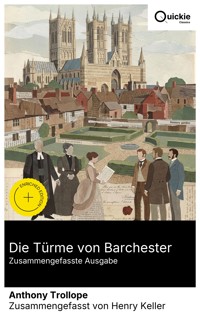
The Warden opens the series with a quiet moral crisis. Septimus Harding, gentle and conscientious, oversees Hiram’s Hospital, an almshouse founded by an old bequest. A question arises about the fairness of the endowment’s distribution, prompting public scrutiny and legal inquiry. Trollope frames a conflict between tradition and reform without caricature, paying careful attention to motive and conscience. The novel’s premise introduces themes that resonate throughout the series: the pressure of public opinion, the ethics of office, and the unanticipated consequences that ripple through families and friendships when institutions come under the bright light of controversy.
Barchester Towers extends the canvas from charity to diocesan politics. The appointment of a new bishop brings upheaval to the cathedral city, accompanied by a forceful household presence and an ambitious chaplain whose views challenge established hierarchies. Trollope orchestrates ecclesiastical maneuvering with deft comic pacing, balancing professional rivalries with the social rhythms of visits, receptions, and garden parties. While the story turns on questions of preferment and influence, its energy comes from the friction of personalities and the delicate negotiations between private inclination and public role that define provincial leadership.
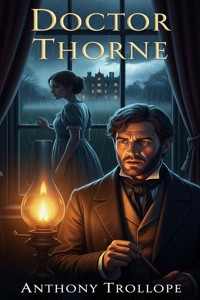
Doctor Thorne shifts attention to the county families beyond the Close. The country physician Thomas Thorne and his niece, Mary, occupy a borderland between gentry and professional class, linking medical practice to questions of inheritance and rank. Around them gather the Greshams of Greshamsbury and self-made magnates whose fortunes interact with old land and new money. The premise brings Trollope’s interest in legitimacy, credit, and character to the fore. Economic facts press upon romantic hopes, and the public understands of “position” meets the private measure of worth, all within a narrative that insists moral judgment must be tempered by sympathy.
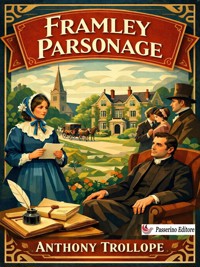
Framley Parsonage brings the series back to clerical life, but now through a younger generation. Mark Robarts, an able and personable vicar, finds himself out of depth in the currents of patronage, parliamentary society, and personal debt. The story situates ethical decision-making within the temptations of fashionable circles and the solid expectations of parish duty. Trollope’s cast widens to include energetic hostesses, calculating politicians, and friends whose advice is sometimes costly. The premise explores financial imprudence and social aspiration, showing how reputations are built—or compromised—through choices made under the gaze of both neighbors and newspapers.
The Small House at Allington turns to the Dale family, living on the edge of a larger estate, and to the entanglements of courtship tested by ambition and fidelity. Two sisters confront differing opportunities and pressures, while a young clerk in London and a polished visitor from higher society represent divergent paths of advancement. Trollope uses this premise to examine constancy, self-respect, and the impact of metropolitan allure on provincial hearts. The wider Barsetshire world remains in view, and the appearance of Plantagenet Palliser gestures toward the broader social and political terrain that intersects, at times, with Barchester’s quiet lanes.
The Last Chronicle of Barset gathers many threads of the earlier novels into a grave, absorbing premise. Josiah Crawley, a deeply conscientious but impoverished clergyman, is accused of misappropriating a sum of money he cannot clearly account for. The allegation tests the bonds of parish, family, and diocese, and compels leading figures of Barsetshire to consider justice, mercy, and the claims of memory and pride. The novel’s opening situation brings institutional procedure and human vulnerability into stark conversation, demonstrating Trollope’s commitment to weigh public judgment against the often opaque realities of individual suffering.
Across all six novels, unifying themes emerge with remarkable consistency. Trollope examines authority and service within the Church of England, the responsibilities of wealth and the dignity of modest means, the workings of patronage, and the limits of reform. He traces how public reputations are formed, sometimes by pamphlet and newspaper, and how private conscience sustains or unsettles those reputations. Marriage, friendship, and kinship are treated as social institutions in their own right, shaped by economic circumstance and ethical aspiration. The resulting portrait of provincial life gains depth from the interplay of continuity and change across the series.
Stylistically, Trollope favors an urbane, omniscient narrator who invites readers into both drawing rooms and vestries with genial candor and measured irony. He is attentive to the textures of ordinary days: the pacing of visits, the cadence of sermons, the quiet heroism of routine work. Dialogue carries much of the ethical inquiry, while authorial commentary frames scenes with humane clarity. The mid-Victorian habit of serial publication informs the rhythm of many chapters, encouraging vivid set-pieces and carefully balanced transitions. Yet the prose remains supple and unhurried, sustaining a tonal equilibrium in which sympathy tempers satire and judgment follows close upon observation.
The significance of the Barsetshire Chronicles lies not only in their entertainment but in their durable architecture of place, character, and institution. Trollope demonstrated that a provincial county could support an expansive, interlinked narrative world, encouraging readers to inhabit social complexities over time. The cycle offers insight into Victorian civic and ecclesiastical life without reducing it to thesis or allegory. It remains a touchstone for series fiction, proving that recurring locales and ensembles can develop cumulative moral and emotional resonance. This one-volume edition preserves that continuity, inviting a fresh traversal from the first quiet dispute to the final, searching inquiries into justice and community.
Author Biography
Anthony Trollope (1815–1882) was a major Victorian novelist whose shrewd, humane portraits of English society helped define the nineteenth‑century social novel. Balancing a long civil‑service career with remarkable literary productivity, he created the fictional county of Barsetshire and a network of interlinked books that feel both intimate and expansive. The six Barsetshire novels collected here—The Warden, Barchester Towers, Doctor Thorne, Framley Parsonage, The Small House at Allington, and The Last Chronicle of Barset—trace clerical politics, country‑house alliances, and middle‑class aspiration with wit and moral tact. Trollope’s even‑handed realism, refusal of simple villains, and interest in institutions made him an enduring interpreter of provincial England.
He grew up amid financial uncertainty and early disappointments that sharpened his sensitivity to status, debt, and social embarrassment—pressures that recur in his fiction. Educated at prominent English schools, he entered the General Post Office in the 1830s and learned bureaucracy from the inside. Sent to Ireland in the early 1840s, he travelled on survey work, observed parish life, and absorbed small‑town rhythms. Those journeys trained his eye for landscape and routine, later essential to Barsetshire’s convincing topography. In the Post Office he also supported practical reforms that improved everyday communication, an attention to systems that parallels his fascination with how institutions shape character.
Trollope began publishing fiction in the 1840s, but his breakthrough came with The Warden in the mid‑1850s. He developed a disciplined routine—writing to the clock before starting official duties—cultivating steadiness rather than inspiration. That ethic produced a large body of work and, crucially, a consistent tone: conversational, ironical, and sympathetic. With Barsetshire he invented a shared world where clergy, gentry, and professionals reappear across books, growing older and sometimes wiser. Readers enter a living community, not a single plot. The design lets him examine gradual change—personal, political, and economic—while preserving everyday continuity and domestic detail, the very texture that gives his realism its persuasive force.
The Warden introduces the quiet conscience of Mr Septimus Harding, whose modest music and scruples collide with reformist zeal and newspaper power. Dr Grantly embodies entrenched authority; John Bold pushes for accountability; and a thunderous London journal, thinly veiled as the Jupiter, tests provincial resolve. Trollope treats funds, patronage, and charity as moral problems rather than melodrama, showing how good intentions can conflict. The novel’s Barchester Cathedral close, Hiram’s Hospital, and tea‑table diplomacy establish the social scales he would refine: private tenderness against public controversy, and the fine gradations of duty that make choices difficult even for the gentle and well‑meaning.
Barchester Towers widens the stage with a new bishop, his formidable wife Mrs Proudie, and the ambitious chaplain Mr Slope, setting comic ecclesiastical politics against genuine spiritual feeling. Trollope delights in receptions, sermons, and library skirmishes while keeping sympathy for the vulnerable. Doctor Thorne turns to birth, money, and merit: Frank Gresham’s prospects, Miss Dunstable’s independence, and Sir Roger Scatcherd’s rise illuminate Victorian respectability. Across both books, Trollope’s humor tempers critique; he exposes vanity and maneuver yet grants characters privacy, a balance that prevents satire from cruelty and romance from sentimentality.
Framley Parsonage explores ambition and debt as the vicar Mark Robarts drifts into obligations beyond prudence, while Lady Lufton’s authority and Lucy Robarts’s integrity test patronage. The Small House at Allington turns to courtship and constancy through Lily Dale, John Eames, and Adolphus Crosbie, tracing wounded pride and self‑respect with unsentimental poise. The Last Chronicle of Barset gathers the threads in the stern trial of Reverend Josiah Crawley, confronting poverty, dignity, and justice across the community. Recurring figures—Grantlys, Arabins, Proudies—reappear, giving the deep satisfactions of continuity: consequences reverberate, and small choices quietly redirect lives.
Alongside Barsetshire, Trollope wrote widely, travelled for work and pleasure, and eventually left the Post Office to devote himself fully to literature. He stood unsuccessfully for Parliament in the later 1860s, experience that fed his interest in public life. His posthumously published memoir described an unromantic craft of daily application, a candor that once unsettled admirers but now seems modern. He died in 1882, his reputation later renewed by critics and by stage and screen adaptations that highlight his humane comedy. Today the Barsetshire novels endure for their supple ethics, patient realism, and clear sense that institutions matter because the people within them do.
Historical Context
Anthony Trollope (1815–1882) wrote the six Barsetshire novels between 1855 and 1867, the heart of the mid-Victorian period. He composed much of this work while employed by the British Post Office, traveling widely and observing provincial life. The series unfolds in the fictional county of Barsetshire, centered on the cathedral city of Barchester, and mirrors the decades when Britain balanced industrial expansion with inherited institutions. The novels emerged as Britain’s reading public grew rapidly, fueled by rising literacy, cheaper books, and serial publication. Together, they chart the changing social landscape—from ecclesiastical reform and political patronage to the rise of new wealth—without abandoning the intimate scale of parish, family, and club.
The Church of England’s mid-nineteenth-century transformations are the series’ abiding background. The Ecclesiastical Commission (established 1836) reorganized cathedral and parish revenues, challenged sinecures, and redistributed wealth among livings. Simultaneously, the Oxford Movement (from 1833) promoted High Church ritual and theology, while Evangelical activism emphasized moral reform, charity, and plain preaching. These currents shape the rivalries and alliances animating clerical life in Barsetshire. Trollope’s clergy navigate debates about authority, tradition, and the pastoral role, reflecting controversies that reached the public sphere through pamphlets, sermons, and newspapers. The novels treat these conflicts less as doctrinal treatises than as lived pressures upon careers, households, and local hierarchies.
The Warden (1855) introduces Barchester through a controversy over Hiram’s Hospital, an almshouse endowed centuries earlier. Charitable bequests and their modern management had become a national issue; Parliament increasingly scrutinized endowed charities, and public critics questioned whether funds met founders’ intentions. Trollope drew loosely on disputes surrounding the Hospital of St Cross at Winchester, widely discussed in the 1840s, to stage questions of duty, conscience, and legal right. The novel situates benevolence within institutional frameworks shaped by law and custom, revealing how evolving expectations—of transparency, utility, and fairness—pressed upon older forms of Anglican philanthropy and upon the reputations of the clergy who administered them.
Legal culture and reform supply a second axis of The Warden. Mid-century Britain still wrestled with the complexities of the Court of Chancery and with long, costly equity suits—criticized across literature and Parliament. The Charitable Trusts Act (1853) created the Charity Commission to supervise endowed charities, signaling rising administrative oversight. Trollope satirizes legal maneuvering and metropolitan expertise through figures of fashionable counsel and bustling solicitors, capturing the era’s fascination with legal reform without reducing it to caricature. The novel’s London chapters highlight how provincial disputes could be reframed by barristers, committees, and newspaper offices into public questions, bridging local grievance and national debate.
Equally central is the growing power of the press. The Warden’s “Jupiter,” a thinly veiled version of The Times, dramatizes the reach of leading articles in an age when daily newspapers expanded circulation and influence. The abolition of the newspaper stamp duty in 1855 accelerated this growth, even as Trollope depicted it slightly earlier as an already formidable force. Editorial anonymity, the cult of the “leader writer,” and metropolitan opinion-shaping are rendered with care. Trollope shows how print could crystallize a moral narrative about provincial affairs, complicating the efforts of local actors to define their own motives, and reminding readers that reputation and policy were increasingly negotiated in public.
Barchester Towers (1857) responds to the politicization of episcopal appointments. Nineteenth-century bishops were chosen by the Crown’s ministers, and shifts in party control could alter diocesan policy. Trollope transposes this to Barchester, where a new bishop, his energetic wife, and a fashionable chaplain try to recast cathedral priorities. The resulting clash between Evangelical zeal and High Church consistency echoes real controversies—such as the Gorham judgment debates of 1849–50—when theology, patronage, and law intersected. Through ecclesiastical preferment battles and cathedral chapter maneuvering, the novel reflects how religious conviction, party influence, and social ambition intertwined in the governance of the national church.
The novel also captures mid-Victorian sociability as a theater of power. Drawing rooms, garden fêtes, and cathedral receptions function as informal institutions where reputations are made and unmade. This aligns with the period’s culture of the “season,” philanthropic bazaars, and public lectures, where moral seriousness met performance. Trollope’s portraits of clergy families, assertive hostesses, and fashionable visitors acknowledge shifting gender expectations: women did not hold ecclesiastical office, yet wielded significant influence over patronage networks, parish opinion, and charitable initiatives. The result is a study in soft power—how tact, hospitality, and gossip could guide appointments as surely as statute or canon.
Doctor Thorne (1858) turns toward class and capital in an era of economic transformation. The 1840s Railway Mania created fortunes among contractors and speculators, while many landed estates struggled with debt. Trollope’s self-made magnate embodies new wealth rising from industry and infrastructure, challenging norms of lineage and entail. Marriage, inheritance, and settlement law become instruments for negotiating status between gentry and plutocracy. The novel reflects the mid-century’s mingled admiration and suspicion of entrepreneurial energy: railway capital funded public works and mobility yet unsettled assumptions about rank. Trollope’s Barsetshire, though provincial, is linked by investment, credit, and rumor to national financial currents.
Its election scenes engage Britain’s evolving franchise. After the 1832 Reform Act, borough and county constituencies expanded, but open voting, “treating,” and local patron influence persisted. Trollope depicts canvassing, public nomination, and festive disorder familiar to mid-century contests, well before the Secret Ballot Act (1872) curtailed some abuses. Debates over who “ought” to represent a district—birth, property, or aptitude—mirror national arguments that culminated in the 1867 Reform Act extending the urban male franchise. Without sermonizing, Doctor Thorne shows how parliamentary politics was a social practice conducted in inns, on hustings, and through networks of obligation as much as in Westminster.
Framley Parsonage (1861) examines the clerical economy and the moral risks of credit. Although reforms had curtailed flagrant pluralism, inequalities among livings left many curates and vicars precarious. Bills of exchange, promissory notes, and gentlemanly borrowing—common features of Victorian finance—could erode reputations when optimism outran means. Trollope situates a young vicar’s missteps within a world where bishops, patrons, and archdeacons mediate advancement, and where parsonages double as both domestic refuges and administrative hubs. The novel’s attention to obligation and solvency reflects wider concerns about middle-class respectability, debt imprisonment reforms, and the social penalties attached to financial imprudence.
At the same time, the book registers the fluidity of politics in the 1850s and early 1860s. Cabinets fell frequently; Peelites, Whigs, and Conservatives realigned; and minor offices were distributed through a system that mixed merit and favor. Trollope’s lecturers, amateur reformers, and club politicians evoke a culture of public speaking and polite agitation, shaped by expanding rail networks that enabled national circuits of ideas. The intersection of county families with metropolitan salons and ministries illustrates how local prestige could be leveraged—or compromised—by proximity to London. Patronage appears neither purely corrupt nor purely efficient, but as a customary lubricant of government under strain to modernize.
The Small House at Allington (serialized 1862–64; book 1864) shifts some attention to the civil service and the London professional world. After the Northcote–Trevelyan Report (1854), competitive examination and bureaucratic efficiency became reform watchwords, yet patronage still helped junior clerks advance. Trollope’s government office captures this transitional ethos, contrasting office discipline and club sociability with the slower tempo of rural life. Courtship and ambition are filtered through new measures of merit—punctuality, salary, and promotion lists—rather than solely through ancestry. The result is a portrait of middling professionals whose fortunes depend on the modern state as much as on county influence.
Technological change underwrites the series’ movement and plot mechanics. Railways shortened journeys between Barchester and London, enabling day trips, surprise encounters, and quicker news. The national postal system—strengthened after the 1840 Penny Post—and the spread of pillar boxes (introduced in the early 1850s, with Trollope recommending them in the Channel Islands) normalized frequent letter-writing that anchors many misunderstandings and reconciliations. The electric telegraph, increasingly available by the 1850s and 1860s, further compressed time and space for news and finance. Trollope integrates these systems not as marvels but as ordinary conveniences reshaping expectations of punctuality, privacy, and the pace of decision-making.
Across the books, country-house culture remains an axis of authority and display. Great houses—Ullathorne, Gatherum Castle, and others—host fêtes champêtres, political consultations, and charitable theatricals that reinforce hierarchy while courting public approval. Such hospitality reflects how aristocratic and gentry families maintained local leadership amid national change. Yet Trollope hints at structural pressures: the need for strategic marriages, the sale of timber or land, and dependence on credit or wealthy allies. Without invoking the later agricultural depression, he shows that ceremonial stability often rested on delicate financial balances—an insight that aligns with contemporary discussions of estate management and with the gradual recalibration of deference.
The Last Chronicle of Barset (1867) returns to the clergy to probe reputation, poverty, and institutional justice. Disparities among benefices left some rural pastors on near-subsistence incomes, and disputes over church rates and diocesan authority provoked ongoing agitation (church rates were abolished in 1868). Trollope sets a moral dilemma within these constraints, tracing how a bishop’s inhibitions, ecclesiastical commissions, and lay opinion bear upon a parish under suspicion. The novel’s texture reflects an era negotiating the scope of church discipline and the demands of Christian charity, even as political debate moved—soon after—toward the Irish Church Question and wider arguments about establishment.
The publication history of the series mirrors Victorian reading practices. While the first volumes appeared in book form, later ones, notably Framley Parsonage and The Small House at Allington, were serialized in the Cornhill Magazine, reaching a broad middle-class audience. Circulating libraries such as Mudie’s shaped demand for multi-volume fiction suitable for family reading. Illustrations, monthly parts, and magazine placement influenced pacing and cliffhangers, reinforcing Trollope’s reputation for steady, realistic narration rather than melodrama. The Barsetshire novels thus participate in the commercial ecology of Victorian print, where editorial taste, library purchasing, and readership expectations guided literary form.
Trollope’s government career also informs the series’ observational range. His postal surveys took him across Britain and Ireland; his recommendations helped introduce pillar boxes to the Channel Islands in 1852, with rapid adoption on the mainland. Habitual travel and strict routines—he famously wrote on trains and before breakfast—fostered a disciplined realism attentive to timetables, distances, and administrative detail. Barsetshire’s geography, while imaginary, is mapped with the logic of routes, markets, and diocesan jurisdictions. This bureaucratic sensibility, far from dulling the fiction, lends it a persuasive infrastructure: characters are constrained by schedules, hierarchies, and forms as much as by feelings and kinship ties.
Synopsis (Selection)
The Warden
In the cathedral city of Barchester, the kindly warden of a church charity finds his comfortable post publicly attacked as a misuse of funds by a principled reformer. As clergy, family, and the national press take sides, he confronts a quiet crisis of conscience amid ecclesiastical politics. Trollope’s gentle irony and moral tact inaugurate the series’ blend of social satire and humane scrutiny.
Barchester Towers
A new bishop and his formidable household bring factional strife to Barchester, with an ambitious chaplain and a socially adroit family upsetting old clerical hierarchies. Courtship, preferment, and power plays entwine as fortunes rise and fall across drawing rooms, chapters, and a country fête. The tone brightens into bustling comedy while sharpening the satire of patronage and manners.
Doctor Thorne
A country doctor stands at the crossroads of county ambitions, guarding a young woman’s prospects as a debt-burdened squire’s family and a self-made magnate’s legacy collide. Elections, inheritances, and the question of birth versus worth press upon the marriage market. The novel widens Barsetshire beyond the cathedral close, tempering social critique with steady compassion.
Framley Parsonage
A young vicar is drawn into fashionable politics and costly obligations, imperiling his standing while his sister’s quiet attachment challenges class expectations. Familiar figures from earlier books thread through visits to great houses and gatherings where patronage, credit, and conscience intersect. Trollope refines his panoramic method here, mixing domestic tenderness with pointed satire of influence.
The Small House at Allington
Centered on the Dale women of Allington, the story traces a brilliant suitor’s faltering allegiance and a steadfast friend’s long patience, from village lanes to London offices and clubs. The emotional stakes turn inward—broken promises, resilience, and self-respect—while society’s judgments hover. The tone is intimate and bittersweet, shaded by Trollope’s observant humor.
The Last Chronicle of Barset
When a hard-pressed clergyman is accused of holding money that is not his, Barsetshire faces a moral and legal tangle that tests loyalties across parish and county. A contested courtship and the return of many familiar figures carry the series toward institutional change and personal reckonings. Grave yet compassionate, this finale gathers the cycle’s themes—conscience, charity, and the uses of power—into a resonant close.
The Barsetshire Chronicles - All 6 Books in One Edition
The Warden
Chapter I Hiram’s Hospital
The Rev. Septimus Harding was, a few years since, a beneficed clergyman residing in the cathedral town of —-; let us call it Barchester. Were we to name Wells or Salisbury, Exeter, Hereford, or Gloucester, it might be presumed that something personal was intended; and as this tale will refer mainly to the cathedral dignitaries of the town in question, we are anxious that no personality may be suspected. Let us presume that Barchester is a quiet town in the West of England, more remarkable for the beauty of its cathedral and the antiquity of its monuments than for any commercial prosperity; that the west end of Barchester is the cathedral close, and that the aristocracy of Barchester are the bishop, dean, and canons, with their respective wives and daughters.
Early in life Mr Harding found himself located at Barchester. A fine voice and a taste for sacred music had decided the position in which he was to exercise his calling, and for many years he performed the easy but not highly paid duties of a minor canon. At the age of forty a small living in the close vicinity of the town increased both his work and his income, and at the age of fifty he became precentor of the cathedral.
Mr Harding had married early in life, and was the father of two daughters. The eldest, Susan, was born soon after his marriage; the other, Eleanor, not till ten years later.
At the time at which we introduce him to our readers he was living as precentor at Barchester with his youngest daughter, then twenty-four years of age; having been many years a widower, and having married his eldest daughter to a son of the bishop a very short time before his installation to the office of precentor.
Scandal at Barchester affirmed that had it not been for the beauty of his daughter, Mr Harding would have remained a minor canon, but here probably Scandal lied, as she so often does; for even as a minor canon no one had been more popular among his reverend brethren in the close than Mr Harding; and Scandal, before she had reprobated Mr Harding for being made precentor by his friend the bishop, had loudly blamed the bishop for having so long omitted to do something for his friend Mr Harding. Be this as it may, Susan Harding, some twelve years since, had married the Rev. Dr Theophilus Grantly, son of the bishop, archdeacon of Barchester, and rector of Plumstead Episcopi, and her father became, a few months later, precentor of Barchester Cathedral, that office being, as is not usual, in the bishop’s gift.
Now there are peculiar circumstances connected with the precentorship which must be explained. In the year 1434 there died at Barchester one John Hiram, who had made money in the town as a wool-stapler, and in his will he left the house in which he died and certain meadows and closes near the town, still called Hiram’s Butts, and Hiram’s Patch, for the support of twelve superannuated wool-carders, all of whom should have been born and bred and spent their days in Barchester; he also appointed that an alms-house should be built for their abode, with a fitting residence for a warden, which warden was also to receive a certain sum annually out of the rents of the said butts and patches. He, moreover, willed, having had a soul alive to harmony, that the precentor of the cathedral should have the option of being also warden of the almshouses, if the bishop in each case approved.
From that day to this the charity had gone on and prospered — at least, the charity had gone on, and the estates had prospered. Wool-carding in Barchester there was no longer any; so the bishop, dean, and warden, who took it in turn to put in the old men, generally appointed some hangers-on of their own; worn-out gardeners, decrepit grave-diggers, or octogenarian sextons, who thankfully received a comfortable lodging and one shilling and fourpence a day, such being the stipend to which, under the will of John Hiram, they were declared to be entitled. Formerly, indeed — that is, till within some fifty years of the present time — they received but sixpence a day, and their breakfast and dinner was found them at a common table by the warden, such an arrangement being in stricter conformity with the absolute wording of old Hiram’s will: but this was thought to be inconvenient, and to suit the tastes of neither warden nor bedesmen, and the daily one shilling and fourpence was substituted with the common consent of all parties, including the bishop and the corporation of Barchester. Such was the condition of Hiram’s twelve old men when Mr Harding was appointed warden; but if they may be considered as well-to-do in the world according to their condition, the happy warden was much more so. The patches and butts which, in John Hiram’s time, produced hay or fed cows, were now covered with rows of houses; the value of the property had gradually increased from year to year and century to century, and was now presumed by those who knew anything about it, to bring in a very nice income; and by some who knew nothing about it, to have increased to an almost fabulous extent.
The property was farmed by a gentleman in Barchester, who also acted as the bishop’s steward — a man whose father and grandfather had been stewards to the bishops of Barchester, and farmers of John Hiram’s estate. The Chadwicks had earned a good name in Barchester; they had lived respected by bishops, deans, canons, and precentors; they had been buried in the precincts of the cathedral; they had never been known as griping, hard men, but had always lived comfortably, maintained a good house, and held a high position in Barchester society. The present Mr Chadwick was a worthy scion of a worthy stock, and the tenants living on the butts and patches, as well as those on the wide episcopal domains of the see, were well pleased to have to do with so worthy and liberal a steward.
For many, many years — records hardly tell how many, probably from the time when Hiram’s wishes had been first fully carried out — the proceeds of the estate had been paid by the steward or farmer to the warden, and by him divided among the bedesmen; after which division he paid himself such sums as became his due. Times had been when the poor warden got nothing but his bare house, for the patches had been subject to floods, and the land of Barchester butts was said to be unproductive; and in these hard times the warden was hardly able to make out the daily dole for his twelve dependents. But by degrees things mended; the patches were drained, and cottages began to rise upon the butts, and the wardens, with fairness enough, repaid themselves for the evil days gone by. In bad times the poor men had had their due, and therefore in good times they could expect no more. In this manner the income of the warden had increased; the picturesque house attached to the hospital had been enlarged and adorned, and the office had become one of the most coveted of the snug clerical sinecures attached to our church. It was now wholly in the bishop’s gift, and though the dean and chapter, in former days, made a stand on the subject, they had thought it more conducive to their honour to have a rich precentor appointed by the bishop, than a poor one appointed by themselves. The stipend of the precentor of Barchester was eighty pounds a year. The income arising from the wardenship of the hospital was eight hundred, besides the value of the house. Murmurs, very slight murmurs, had been heard in Barchester — few indeed, and far between — that the proceeds of John Hiram’s property had not been fairly divided: but they can hardly be said to have been of such a nature as to have caused uneasiness to anyone: still the thing had been whispered, and Mr Harding had heard it. Such was his character in Barchester, so universal was his popularity, that the very fact of his appointment would have quieted louder whispers than those which had been heard; but Mr Harding was an open-handed, just-minded man, and feeling that there might be truth in what had been said, he had, on his instalment, declared his intention of adding twopence a day to each man’s pittance, making a sum of sixty-two pounds eleven shillings and fourpence, which he was to pay out of his own pocket. In doing so, however, he distinctly and repeatedly observed to the men, that though he promised for himself, he could not promise for his successors, and that the extra twopence could only be looked on as a gift from himself, and not from the trust. The bedesmen, however, were most of them older than Mr Harding, and were quite satisfied with the security on which their extra income was based.
This munificence on the part of Mr Harding had not been unopposed. Mr Chadwick had mildly but seriously dissuaded him from it; and his strong-minded son-in-law, the archdeacon, the man of whom alone Mr Harding stood in awe, had urgently, nay, vehemently, opposed so impolitic a concession: but the warden had made known his intention to the hospital before the archdeacon had been able to interfere, and the deed was done.
Hiram’s Hospital, as the retreat is called, is a picturesque building enough, and shows the correct taste with which the ecclesiastical architects of those days were imbued. It stands on the banks of the little river, which flows nearly round the cathedral close, being on the side furthest from the town. The London road crosses the river by a pretty one-arched bridge, and, looking from this bridge, the stranger will see the windows of the old men’s rooms, each pair of windows separated by a small buttress. A broad gravel walk runs between the building and the river, which is always trim and cared for; and at the end of the walk, under the parapet of the approach to the bridge, is a large and well-worn seat, on which, in mild weather, three or four of Hiram’s bedesmen are sure to be seen seated. Beyond this row of buttresses, and further from the bridge, and also further from the water which here suddenly bends, are the pretty oriel windows of Mr Harding’s house, and his well-mown lawn. The entrance to the hospital is from the London road, and is made through a ponderous gateway under a heavy stone arch, unnecessary, one would suppose, at any time, for the protection of twelve old men, but greatly conducive to the good appearance of Hiram’s charity. On passing through this portal, never closed to anyone from 6 A.M. till 10 P.M., and never open afterwards, except on application to a huge, intricately hung mediaeval bell, the handle of which no uninitiated intruder can possibly find, the six doors of the old men’s abodes are seen, and beyond them is a slight iron screen, through which the more happy portion of the Barchester elite pass into the Elysium of Mr Harding’s dwelling.
Mr Harding is a small man, now verging on sixty years, but bearing few of the signs of age; his hair is rather grizzled, though not gray; his eye is very mild, but clear and bright, though the double glasses which are held swinging from his hand, unless when fixed upon his nose, show that time has told upon his sight; his hands are delicately white, and both hands and feet are small; he always wears a black frock coat, black knee-breeches, and black gaiters, and somewhat scandalises some of his more hyperclerical brethren by a black neck-handkerchief.
Mr Harding’s warmest admirers cannot say that he was ever an industrious man; the circumstances of his life have not called on him to be so; and yet he can hardly be called an idler. Since his appointment to his precentorship, he has published, with all possible additions of vellum, typography, and gilding, a collection of our ancient church music, with some correct dissertations on Purcell, Crotch, and Nares. He has greatly improved the choir of Barchester, which, under his dominion, now rivals that of any cathedral in England. He has taken something more than his fair share in the cathedral services, and has played the violoncello daily to such audiences as he could collect, or, faute de mieux, to no audience at all.
We must mention one other peculiarity of Mr Harding. As we have before stated, he has an income of eight hundred a year, and has no family but his one daughter; and yet he is never quite at ease in money matters. The vellum and gilding of ‘Harding’s Church Music’ cost more than any one knows, except the author, the publisher, and the Rev. Theophilus Grantly, who allows none of his father-in-law’s extravagances to escape him. Then he is generous to his daughter, for whose service he keeps a small carriage and pair of ponies. He is, indeed, generous to all, but especially to the twelve old men who are in a peculiar manner under his care. No doubt with such an income Mr Harding should be above the world, as the saying is; but, at any rate, he is not above Archdeacon Theophilus Grantly, for he is always more or less in debt to his son-in-law, who has, to a certain extent, assumed the arrangement of the precentor’s pecuniary affairs.
Chapter II The Barchester Reformer
Mr Harding has been now precentor of Barchester for ten years; and, alas, the murmurs respecting the proceeds of Hiram’s estate are again becoming audible. It is not that any one begrudges to Mr Harding the income which he enjoys, and the comfortable place which so well becomes him; but such matters have begun to be talked of in various parts of England. Eager pushing politicians have asserted in the House of Commons, with very telling indignation, that the grasping priests of the Church of England are gorged with the wealth which the charity of former times has left for the solace of the aged, or the education of the young. The well-known case of the Hospital of St Cross has even come before the law courts of the country, and the struggles of Mr Whiston, at Rochester, have met with sympathy and support. Men are beginning to say that these things must be looked into.
Mr Harding, whose conscience in the matter is clear, and who has never felt that he had received a pound from Hiram’s will to which he was not entitled, has naturally taken the part of the church in talking over these matters with his friend, the bishop, and his son-in-law, the archdeacon. The archdeacon, indeed, Dr Grantly, has been somewhat loud in the matter. He is a personal friend of the dignitaries of the Rochester Chapter, and has written letters in the public press on the subject of that turbulent Dr Whiston, which, his admirers think, must wellnigh set the question at rest. It is also known at Oxford that he is the author of the pamphlet signed ‘Sacerdos’ on the subject of the Earl of Guildford and St Cross, in which it is so clearly argued that the manners of the present times do not admit of a literal adhesion to the very words of the founder’s will, but that the interests of the church for which the founder was so deeply concerned are best consulted in enabling its bishops to reward those shining lights whose services have been most signally serviceable to Christianity. In answer to this, it is asserted that Henry de Blois, founder of St Cross, was not greatly interested in the welfare of the reformed church, and that the masters of St Cross, for many years past, cannot be called shining lights in the service of Christianity; it is, however, stoutly maintained, and no doubt felt, by all the archdeacon’s friends, that his logic is conclusive, and has not, in fact, been answered.
With such a tower of strength to back both his arguments and his conscience, it may be imagined that Mr Harding has never felt any compunction as to receiving his quarterly sum of two hundred pounds. Indeed, the subject has never presented itself to his mind in that shape. He has talked not unfrequently, and heard very much about the wills of old founders and the incomes arising from their estates, during the last year or two; he did even, at one moment, feel a doubt (since expelled by his son-in-law’s logic) as to whether Lord Guildford was clearly entitled to receive so enormous an income as he does from the revenues of St Cross; but that he himself was overpaid with his modest eight hundred pounds — he who, out of that, voluntarily gave up sixty-two pounds eleven shillings and fourpence a year to his twelve old neighbours — he who, for the money, does his precentor’s work as no precentor has done it before, since Barchester Cathedral was built,— such an idea has never sullied his quiet, or disturbed his conscience.
Nevertheless, Mr Harding is becoming uneasy at the rumour which he knows to prevail in Barchester on the subject. He is aware that, at any rate, two of his old men have been heard to say, that if everyone had his own, they might each have their hundred pounds a year, and live like gentlemen, instead of a beggarly one shilling and sixpence a day; and that they had slender cause to be thankful for a miserable dole of twopence, when Mr Harding and Mr Chadwick, between them, ran away with thousands of pounds which good old John Hiram never intended for the like of them. It is the ingratitude of this which stings Mr Harding. One of this discontented pair, Abel Handy, was put into the hospital by himself; he had been a stone-mason in Barchester, and had broken his thigh by a fall from a scaffolding, while employed about the cathedral; and Mr Harding had given him the first vacancy in the hospital after the occurrence, although Dr Grantly had been very anxious to put into it an insufferable clerk of his at Plumstead Episcopi, who had lost all his teeth, and whom the archdeacon hardly knew how to get rid of by other means. Dr Grantly has not forgotten to remind Mr Harding how well satisfied with his one-and-sixpence a day old Joe Mutters would have been, and how injudicious it was on the part of Mr Harding to allow a radical from the town to get into the concern. Probably Dr Grantly forgot at the moment, that the charity was intended for broken-down journeymen of Barchester.
There is living at Barchester, a young man, a surgeon, named John Bold, and both Mr Harding and Dr Grantly are well aware that to him is owing the pestilent rebellious feeling which has shown itself in the hospital; yes, and the renewal, too, of that disagreeable talk about Hiram’s estates which is now again prevalent in Barchester. Nevertheless, Mr Harding and Mr Bold are acquainted with each other; we may say, are friends, considering the great disparity in their years. Dr Grantly, however, has a holy horror of the impious demagogue, as on one occasion he called Bold, when speaking of him to the precentor; and being a more prudent far-seeing man than Mr Harding, and possessed of a stronger head, he already perceives that this John Bold will work great trouble in Barchester. He considers that he is to be regarded as an enemy, and thinks that he should not be admitted into the camp on anything like friendly terms. As John Bold will occupy much of our attention we must endeavour to explain who he is, and why he takes the part of John Hiram’s bedesmen.
John Bold is a young surgeon, who passed many of his boyish years at Barchester. His father was a physician in the city of London, where he made a moderate fortune, which he invested in houses in that city. The Dragon of Wantly inn and posting- house belonged to him, also four shops in the High Street, and a moiety of the new row of genteel villas (so called in the advertisements), built outside the town just beyond Hiram’s Hospital. To one of these Dr Bold retired to spend the evening of his life, and to die; and here his son John spent his holidays, and afterwards his Christmas vacation when he went from school to study surgery in the London hospitals. Just as John Bold was entitled to write himself surgeon and apothecary, old Dr Bold died, leaving his Barchester property to his son, and a certain sum in the three per cents. to his daughter Mary, who is some four or five years older than her brother.
John Bold determined to settle himself at Barchester, and look after his own property, as well as the bones and bodies of such of his neighbours as would call upon him for assistance in their troubles. He therefore put up a large brass plate with ‘John Bold, Surgeon’ on it, to the great disgust of the nine practitioners who were already trying to get a living out of the bishop, dean, and canons; and began house-keeping with the aid of his sister. At this time he was not more than twenty- four years old; and though he has now been three years in Barchester, we have not heard that he has done much harm to the nine worthy practitioners. Indeed, their dread of him has died away; for in three years he has not taken three fees.