
0,49 €
Mehr erfahren.
- Herausgeber: DigiCat
- Kategorie: Gesellschafts- und Liebesromane
- Sprache: Englisch
In "William Dean Howells: 27 Novels in One Volume (Illustrated)", readers are invited into the intricate tapestry of American life as depicted through Howells's keen pen. This comprehensive collection encapsulates the author's signature literary realism, characterized by a focus on the nuanced social dynamics of late 19th-century America. Richly illustrated, the volume not only showcases Howells's profound narrative style but also provides contextual insights into the emergent cultural and philosophical currents of his time, such as the tension between materialism and idealism that defined the American experience. William Dean Howells, often hailed as the 'Dean of American Letters', was a pivotal figure in the establishment of realism as a literary movement. His extensive career as a novelist, playwright, and editor helped shape the literary landscape of post-Civil War America. Growing up in a modest background and witnessing the evolving socio-political landscape, Howells's writing reflects his commitment to social critique and the exploration of human psychology, particularly in middle-class life. This illustrated anthology is not only a treasure trove for scholars and enthusiasts of American literature but also an accessible gateway for new readers. Each novel offers a unique perspective on the human condition, making it an indispensable addition to any literary collection. I highly recommend this volume to anyone seeking a rich understanding of American realism and the complexities of its characters. In this enriched edition, we have carefully created added value for your reading experience: - A comprehensive Introduction outlines these selected works' unifying features, themes, or stylistic evolutions. - The Author Biography highlights personal milestones and literary influences that shape the entire body of writing. - A Historical Context section situates the works in their broader era—social currents, cultural trends, and key events that underpin their creation. - A concise Synopsis (Selection) offers an accessible overview of the included texts, helping readers navigate plotlines and main ideas without revealing critical twists. - A unified Analysis examines recurring motifs and stylistic hallmarks across the collection, tying the stories together while spotlighting the different work's strengths. - Reflection questions inspire deeper contemplation of the author's overarching message, inviting readers to draw connections among different texts and relate them to modern contexts. - Lastly, our hand‐picked Memorable Quotes distill pivotal lines and turning points, serving as touchstones for the collection's central themes.
Das E-Book können Sie in Legimi-Apps oder einer beliebigen App lesen, die das folgende Format unterstützen:
Veröffentlichungsjahr: 2023
Ähnliche










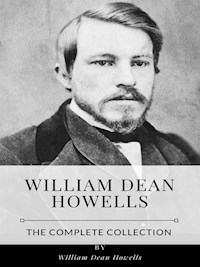





William Dean Howells: 27 Novels in One Volume (Illustrated)
Table of Contents
Introduction
This illustrated single-author collection gathers twenty-seven long fictions by William Dean Howells, framed by Charles Dudley Warner’s portrait of the novelist. Its aim is to present, in one continuous view, the breadth of Howells’s achievement in American realism: courtship and marriage plots, city and country studies, business and class conflicts, artistic and professional lives, utopian dialogues, and family journeys. Landmark books such as The Rise of Silas Lapham, A Hazard of New Fortunes, and Indian Summer appear beside works that illuminate other corners of his practice. Read together, they reveal how sustained attention to everyday manners and motives composes a national social history.
Although titled as a collection of novels, the volume represents several prose forms that Howells used for long and shorter narratives. Most entries are full-length novels, yet some are novellas and one is a story collection (Questionable Shapes). There are romances in the older sense of speculative or ideal inquiry, as in A Traveler from Altruria and its sequel, Through the Eye of the Needle. The Flight of Pony Baker is a boys’ story. A Pair of Patient Lovers gathers shorter fictions. The Story of a Play, despite its title, is a novel about theatrical life rather than a dramatic script.
A distinctive arc within the book is the March family sequence—Their Wedding Journey, A Hazard of New Fortunes, and Their Silver Wedding Journey—often recognized as a trilogy. It follows a couple from an early excursion through the challenges of urban work and publication and back into the reflective travel of later life. Without anticipating outcomes, one can say the trilogy offers a cross-section of American scenes in motion: trains and steamers, boardinghouses and parlors, offices and streets. It also displays Howells’s favorite method: placing decent people in difficult circumstances and allowing character, habit, and conscience to reveal the world’s texture.
Howells’s stylistic hallmarks unify these diverse books. He practices an observational realism attentive to speech, gesture, and social setting; favors irony that clarifies rather than mocks; and prefers moral discovery to dramatic revelation. His narrators often withhold judgment until the reader has seen enough to weigh competing claims. Dialogue carries much of the action, and description is economical, keyed to perception and mood rather than spectacle. He avoids sensational contrivance in favor of plausible complication. Across the collection, this discipline yields scenes where private scruple meets public custom, and where the ordinary—properly regarded—becomes the most demanding subject an American novelist can undertake.
Courtship, marriage, and the education of feeling are central. A Chance Acquaintance and April Hopes explore the hazards of social expectation when an accidental meeting or youthful engagement is tested by class, taste, and tact. Indian Summer studies renewed affection under the shadow of past choices. Ragged Lady traces a young woman’s movement through varied social rooms. The Lady of the Aroostook begins with a transatlantic crossing that exposes a solitary traveler to scrutiny and sympathy. A Foregone Conclusion and An Open-Eyed Conspiracy frame romance as cultural encounter. A Modern Instance examines the pressures that modern publicity and misunderstanding place upon a union.
Business, class, and conscience supply another through-line. The Rise of Silas Lapham follows a self-made manufacturer whose prosperity confronts him with ethical and social decisions. The Quality of Mercy shows how the consequences of financial wrongdoing reach across households. A Hazard of New Fortunes gathers writers, investors, and workers around a new magazine enterprise in a great city, setting competing ideals in close quarters. The Landlord at Lion’s Head considers ambition and responsibility where hospitality, property, and performance intersect. In each case, Howells’s realism rests on the conviction that prosperity and principle must be narrated together to be understood at all.
Professional life and the arts receive pointed attention. Dr. Breen’s Practice presents a woman physician negotiating competence, skepticism, and attachment in a community that tests her resolve. Fennel and Rue moves among writers and editors, recording entanglements of sentiment and reputation. The Coast of Bohemia observes the allure and limits of artistic aspiration in a commercial society. The Story of a Play opens the backstage of authorship and production, tracing the compromises and revelations that accompany bringing a script to the footlights. These books ask what “success” looks like when vocation meets convention, and how a calling may be honored without self-deception.
Howells is also a master of travel and regional observation. The Kentons follows a Midwestern family as place and circumstance strain and confirm their solidarity. Their Wedding Journey and Their Silver Wedding Journey use itineraries to chart changes in manners and landscapes. The Lady of the Aroostook records maritime passage as social experiment. Annie Kilburn considers the return from Europe to New England and the duties that await at home. In A Foregone Conclusion, foreigners and Americans study each other across old and new worlds. An Open-Eyed Conspiracy locates an idyl in a resort town and watches how leisure reveals character and class.
Social critique emerges with special clarity in the Altrurian books. A Traveler from Altruria introduces a visitor from an ideal commonwealth whose observations prompt frank comparison with American practices. Through the Eye of the Needle continues this inquiry from another vantage. The Minister’s Charge (The Apprenticeship of Lemuel Barker) tests literary goodwill and responsibility when a country youth is brought into city circles. The Leatherwood God sets a community against the claims of charismatic authority, raising questions about belief and judgment. These works do not preach systems; they dramatize choices and their costs, inviting readers to consider the country’s ends and means.
Youthful impulse, memory, and the shorter form broaden the collection’s compass. The Flight of Pony Baker traces a boy’s recurring desire to run away and the ordinariness that makes escape both tempting and impossible. A Pair of Patient Lovers offers compact studies of endurance in affection. Questionable Shapes gathers shorter narratives that examine ambiguous motives and perceptions. These works show Howells’s economy at small scale: he pares incident to the bone, keeping attention on the ordinary perplexities that grown people often hide and that children perceive with alarming clarity.
Taken together, the books display a consistent moral imagination. Howells refuses to treat persons as types; he lets them reveal themselves through language and habit. His plots rarely hinge on accident; they turn on choices made under pressure from custom, class, and desire. He believes that sympathy is a mode of knowledge and that art need not abandon the familiar to be profound. The result helped to consolidate American realism: a novelistic practice that trusted common life, ordinary diction, and social candor enough to make them the arena of serious art.
The present volume therefore serves both as library and itinerary. Warner’s introductory essay offers a contemporary vantage on Howells’s place among realists, while the illustrations supply complementary visual contexts for scenes, settings, and moods. Readers may begin anywhere—by following the Marches, by entering the business novels, by lingering over the courtship comedies, or by testing the Altrurian dialogues—and still encounter the same commitments to clarity, fairness, and form. The collection’s purpose is simple and ambitious: to make accessible, in one book, the abiding pleasures and searching intelligence of William Dean Howells’s long engagement with American life.
Author Biography
William Dean Howells (1837–1920) stands as a central architect of American realism, a novelist, critic, and editor who helped shift national letters from romantic spectacle to the detailed moral drama of everyday life. Born in Ohio and active chiefly in Boston and New York, he wrote with clarity, urbanity, and a quietly reforming conscience. His editorial leadership and prolific fiction established models for domestic, social, and professional narratives in the post–Civil War era. A contemporary assessment by Charles Dudley Warner, whose “William Dean Howells” opens this collection, attests to Howells’s stature among peers and readers who recognized him as an authoritative, humane voice in American culture.
Howells’s education was largely practical and literary rather than formal: he learned printing and journalism in his family’s newspaper offices and read widely. His early political writing, including a campaign life of Abraham Lincoln, led to a diplomatic post as U.S. consul in Venice during the 1860s. Exposure to European literature and theater deepened his commitment to realism; he admired writers such as Turgenev and Tolstoy and took an interest in contemporary drama. Returning to the United States, he brought that cosmopolitan sensibility to American scenes, seeking truthful representation of manners, speech, motive, and social circumstance while maintaining a gentle, ethically engaged irony.
At The Atlantic Monthly—first on the staff and later as editor—Howells shaped the magazine’s literary direction and brought new American writing to national attention. He began issuing novels that mapped travel, courtship, and domestic tests with observant wit. Their Wedding Journey followed a young couple’s itinerary and inaugurated his long engagement with the March family, later extended in A Hazard of New Fortunes and Their Silver Wedding Journey. Early fiction such as A Chance Acquaintance, The Lady of the Aroostook, and Dr. Breen’s Practice refined his method: sympathetic portraits, moral scruple, and realistic dialogue replacing melodrama without surrendering narrative charm.
The 1880s marked a confident maturity. A Modern Instance probed the dissolution of a marriage with unprecedented candor in American fiction, while The Rise of Silas Lapham offered an enduring study of a self-made businessman confronting questions of class, taste, and conscience. Indian Summer and The Minister’s Charge likewise balanced comedy with ethical testing. The Quality of Mercy, The Landlord at Lion’s Head, and The Coast of Bohemia traced the entanglements of art, ambition, and social aspiration. Across these works, Howells’s method remained consistent: a patient attention to ordinary lives under pressure, narrated in an even tone that invites reflection rather than sensation.
Relocating his imaginative center to New York, Howells widened his canvas. A Hazard of New Fortunes surveys magazine publishing, immigrant neighborhoods, and labor-capital tensions with a panoramic realism rare for its time. The Kentons, Ragged Lady, and The Story of a Play continue his interest in families and the performing arts, while Fennel and Rue and Questionable Shapes test the boundaries of social observation with essays and stories that mingle conscience, memory, and the uncanny. Throughout, he preserved a characteristic balance of humor and seriousness, grounding even experimental turns in the recognizable surfaces and speech of late nineteenth-century American life.
Howells also pursued speculative and reformist lines. A Traveler from Altruria and Through the Eye of the Needle present an ideal society against which Gilded Age practices are measured, blending satire with earnest inquiry into work, wealth, and civic duty. Annie Kilburn examines community responsibility; April Hopes and An Open-Eyed Conspiracy scrutinize courtship and resort culture; The Leatherwood God revisits religious enthusiasm and imposture on the American frontier. He returned to youth and memory in The Flight of Pony Baker and explored intimate relationships in A Pair of Patient Lovers. Even in these varied modes, his touch remains steady, humane, and intellectually curious.
In later years, Howells became an influential critic at Harper’s, advocating realism and supporting younger writers while continuing his own fiction. He died in 1920, by then widely regarded as the “Dean of American Letters.” His legacy endures in the American novel’s commitment to social texture, moral nuance, and everyday speech. Works like The Rise of Silas Lapham and A Hazard of New Fortunes remain touchstones for studies of class, labor, and urban modernity, while the Altrurian romances anticipate debates about equity and citizenship. Read today, his prose retains its clarity, sympathy, and disciplined irony—quiet virtues with lasting power.
Historical Context
Spanning from the aftermath of the Civil War to the Progressive Era, the works gathered in William Dean Howells: 27 Novels in One Volume trace an American transformation in real time. Born in 1837 and active into the 1910s, Howells edited the Atlantic Monthly (1871–1881), championed realism, and wrote fiction that mirrors industrial growth, urban migration, class mobility, and reformist debate. The collection’s temporal breadth—1870s travel romances to turn‑of‑the‑century social critiques—lets readers watch shifting institutions, from marriage and the press to finance and the theater. Charles Dudley Warner’s introductory portrait situates Howells among contemporaries who named the “Gilded Age” and debated its moral terms.
Howells’s career unfolded alongside the rise of national magazines and the spread of railroads that carried both periodicals and people. Many of his novels first appeared serially in the Atlantic, Harper’s, or the Century, shaping their episodic rhythms and topical sharpness. As mass illustration and halftone printing expanded readership in the 1880s–1890s, his fictions scrutinized the same modernity that distributed them. Travel-centered works like Their Wedding Journey and A Chance Acquaintance follow itineraries opened by postwar rail and steam navigation, while The Lady of the Aroostook uses the transatlantic steamer to test American manners abroad, a mobility impossible at antebellum speed and scale.
In the March family trilogy—Their Wedding Journey, A Hazard of New Fortunes, and Their Silver Wedding Journey—Howells reuses one couple to map national consolidation and cosmopolitan aspiration. The first volume’s honeymoon route along the Great Lakes and St. Lawrence rides the new tourist economy of through‑tickets, sleeping cars, and guidebook itineraries. By 1890 the same family navigates New York’s publishing world and labor tensions; by 1899 they revisit Europe on dense rail networks and regular steamship lines. These narratives register practical innovations such as standardized time (adopted by American railroads in 1883) and the social scripts that accompanied a more mobile middle class.
The Gilded Age’s merger capitalism and recurrent financial panics supplied pressure for moral inquiry. The Rise of Silas Lapham, The Quality of Mercy, The Landlord at Lion’s Head, The Kentons, and The Minister’s Charge observe the collisions of self‑made wealth with older Brahmin prestige, of rural aspiration with urban gatekeeping. Howells wrote during and after the panics of 1873 and 1893, when credit failures and consolidations reordered careers and neighborhoods. His Boston‑centered novels anatomize the etiquette of business respectability and its limits, testing whether character can withstand speculation, advertising, and the lure of monopoly—questions readers confronted amid trusts and corporate law’s expansion.
Urbanization is nowhere more vivid than in A Hazard of New Fortunes, which turns on founding a magazine in late‑1880s New York, a city of elevated railways, tenements, and immigrant languages. Labor unrest and mass protest had become fixtures of the period: violent strikes, including transit walkouts, punctuated the decade; the 1886 Haymarket affair shaped public debate on anarchism and policing. Howells, a public critic of the Haymarket verdict in 1887, channels those controversies into characters who argue over wages, property, and civic duty. The novel dramatizes modern pluralism’s promise and strain as finance, print culture, and working‑class organization jostled for the streets.
Alongside city spectacle, Howells probes reformism’s local mechanics. Annie Kilburn returns from Europe to a New England town and discovers that good intentions face institutional realities—echoing late‑1880s movements from parish charity organization to settlement houses like Hull House (founded 1889). The Minister’s Charge dissects benevolent patronage that can uplift or infantilize. These fictions register the Social Gospel’s insistence that faith address structural injustice, not only personal charity. They also reflect the rise of women’s clubs, civic leagues, and newspaper crusades that linked towns to national reform networks, refracting a United States learning to translate sympathy into municipal ordinances, school boards, and legal aid.
Changing gender roles and family law are central to Dr. Breen’s Practice, A Modern Instance, April Hopes, Ragged Lady, and A Pair of Patient Lovers. Dr. Breen portrays a woman physician confronting professional skepticism when women’s medical colleges and coeducation remained contested, even as institutions like Vassar (opened 1865) and Wellesley (founded 1870) normalized higher learning for women. A Modern Instance examines divorce amid evolving statutes and rising newspaper sensationalism. Courtship novels such as April Hopes interrogate etiquette under the “New Woman” horizon, while Ragged Lady and later pieces track women’s agency within travel and work. Across them, domestic feeling meets contract, property, and publicity.
Italy—where Howells served as U.S. consul in Venice during the 1860s—provides a privileged lens for cross‑cultural modernity. A Foregone Conclusion, Indian Summer, and scenes in Ragged Lady draw on an American colony of artists, students, and tourists who flocked to Venice and Florence after the Risorgimento, as Venice joined a unified Italy in 1866. These novels weigh Protestant republican ideals against Catholic ritual, and Yankee practicality against Old World style, without surrendering realism’s commitment to ordinary motives. The transatlantic itineraries they trace were enabled by regular steamship lines and a widening market in guidebooks, art reproductions, and language instruction for aspirant travelers.
Leisure industries form another Gilded Age infrastructure. An Open‑Eyed Conspiracy is set in Saratoga Springs, whose mineral baths, grand hotels, and horseracing made it a social theater for Northeastern elites and upwardly mobile tourists. The spectacle depended on rail connections that funneled summer crowds to resorts and seaside colonies. The Landlord at Lion’s Head, though centered on New England enterprise, considers how rustic landscapes were packaged for city visitors. Howells parses rituals of promenade, flirtation, and surveillance that leisure made visible, linking etiquette and consumption. Resorts, he shows, were both escapes from commerce and laboratories where the market reorganized time, space, and self‑presentation.
The art world’s professionalization animates The Coast of Bohemia and informs Fennel and Rue and The Story of a Play. With museums and art schools multiplying—the Museum of Fine Arts, Boston dates to 1870; New York’s Art Students League to 1875—Howells tracks students, critics, and patrons confronting the pull of career versus vocation. The International Copyright Act (1891) reshaped publishing economies; the Theatrical Syndicate (from 1896) rationalized stage bookings. His artists and authors navigate contracts, reviews, and celebrity, while realism debates with aestheticism over purpose and method. The result is a documentary record of how culture became an occupation governed by new intermediaries.
A Traveler from Altruria (1894) and its sequel, Through the Eye of the Needle, adapt the era’s utopian vogue to critique American capitalism. Following Edward Bellamy’s Looking Backward (1888) and William Morris’s News from Nowhere (1890), Howells’s visitor from a cooperative commonwealth unsettles assumptions about wages, philanthropy, and leisure. The later work appears amid Progressive Era agitation for antitrust enforcement and regulation, when muckraking journalism exposed corporate abuses. Howells’s political commitments had sharpened: after 1898 he allied with anti‑imperialist critics of U.S. policy in the Philippines. These romances thus interleave economic and imperial ethics, asking what a democratic culture owes to strangers.
The Leatherwood God looks backward to the 1820s Ohio frontier, reconstructing a documented imposture in which a charismatic figure near Leatherwood Creek claimed divinity and gathered followers. Set against the Second Great Awakening’s exuberant revivals, the novel studies community credulity, dissent, and the policing of order in a backwoods settlement. By revisiting the early republic from the vantage point of the twentieth century, Howells connects antebellum religious enthusiasms with later anxieties about authority, leadership, and fraud. The book’s historical method—sifting legend and testimony—parallels progressive‑era historiography that sought to ground national myths in local archives and contested memories.
The entertainment business recurs as subject and setting. The Story of a Play exposes contractual risk, censorship pressures, and the emerging star system as electric lighting brightened stages and syndicates knit national circuits. The Landlord at Lion’s Head likewise touches the porous border between rustic entrepreneurship and theatrical ambition. These narratives document a leisure economy shifting from parlor recitals and amateur theatricals toward mass spectacle, touring companies, and centralized booking. They also index audiences made by urban transport and disposable income, illustrating how performance became a business with managers, unions, and critics—all of which framed the modern writer’s engagement with the public.
Childhood and memory anchor The Flight of Pony Baker: A Boy’s Town Story, which reimagines midwestern boyhood from the safer distance of the 1890s–1900s. Howells drew on his own Ohio youth to render schoolyard rituals, neighborhood governance, and the allure of escape. The period saw a surge in juvenile publishing and expanding compulsory schooling laws, making childhood a distinct, studied phase. The Kentons, though centered on a family’s mobility, also observes how parents and children navigated a nation knitted by timetables and expectations. Together these works record the small disciplines and freedoms through which the republic reproduced its citizens.
Questionable Shapes represents Howells’s late fascination with the liminal and the psychological, echoing a broader fin‑de‑siècle curiosity about spiritualism, hypnotism, and psychical research. The Society for Psychical Research, founded in 1882, gave a quasi‑scientific frame to ghostly phenomena that salon culture and newspapers popularized. Howells’s tales keep faith with realism by treating the extraordinary as filtered through perception, memory, and suggestion rather than occult machinery. They register the same modern mind his city novels explore, but under nocturnal lighting—showing how a culture of laboratories and statistics still made room for uncertainty, coincidence, and the moral tests of belief.
Charles Dudley Warner’s introductory sketch places Howells within a transatlantic conversation about realism alongside Henry James and Mark Twain. Warner himself co‑named the “Gilded Age” in an 1873 novel with Twain, highlighting the period’s sheen and rot. Howells—often called the “Dean of American Letters”—used editorial influence to legitimize everyday subjects and colloquial speech, arguing in essays like Criticism and Fiction (1891) for a democratic art. He promoted new talents through reviews and magazine work and insisted that American literature engage its own factories, parlors, and streets. That program underwrites this collection’s range, from tender courtships to labor disputes and political parables.
Taken together, these novels offer a running commentary on U.S. modernization: how technology rearranged intimacy, how money organized virtue, and how publics were made by print, travel, and performance. Contemporary readers recognized their cities, offices, and scruples; later readers have mined them for evidence about class formation, gender conventions, consumer culture, and the globalization of American taste. The Altrurian romances speak to recurring reformist hopes; the frontier and expatriate tales preserve moments of origin and encounter. As successive eras revisit Howells—through realism studies, labor history, or critiques of empire—the collection proves less a time capsule than a chronicle still asking uncomfortable questions.
Synopsis (Selection)
Introduction: Charles Dudley Warner on William Dean Howells
This appreciative essay sketches Howells’s character and commitments, presenting him as a central advocate of American literary realism. It frames the collection by highlighting his preference for ordinary lives, ethical nuance, and quiet irony over melodramatic plots.
The Altrurian Romances: A Traveler from Altruria; Through the Eye of the Needle
A visitor from the utopian island of Altruria tours Gilded Age America, probing its assumptions about wealth, labor, and democracy through pointed conversations and revealing encounters. The sequel continues the experiment by bringing an American perspective into Altruria itself, testing ideals against daily practice. Together they blend satire and social critique in a dialogic, thought-provoking mode.
The March Family Trilogy: Their Wedding Journey; A Hazard of New Fortunes; Their Silver Wedding Journey
These linked novels follow Basil and Isabel March from observant newlyweds on a scenic journey to middle-aged urbanites navigating journalism, money, and social change, and finally to reflective travelers revisiting earlier scenes with deeper insight. Howells uses travel writing, workplace comedy, and city panoramas to map American mobility and moral tact. The tone is gently ironic and humane, tracing how marriage and manners evolve alongside the nation’s bustling modernization.
Business, Conscience, and American Realism: The Rise of Silas Lapham; A Modern Instance; The Quality of Mercy; The Minister's Charge
These novels examine where character meets commerce: a self-made businessman confronting ethical crossroads, a marriage buckling under ambition and publicity, a tangle of lives weighed by wrongdoing and compassion, and a rural youth apprenticed to city life under well-meant patronage. Howells favors close observation over sensational twists, showing the pressures of reputation, class, and responsibility. The result is analytic yet sympathetic realism that finds drama in everyday decisions.
Art, Theater, and the Marketplace: The Story of a Play; Fennel and Rue; The Coast of Bohemia; The Landlord at Lion's Head
Behind the scenes of stages and salons, these works explore how art is made, marketed, and compromised—whether in launching a new play, courting literary celebrity amid advertising, drifting along fashionable bohemia, or translating rural talent into public success. Howells satirizes pretension while respecting craft, tracing the bargains struck between ideals and audience appetite. The mood is shrewd, observant, and often comic, attentive to vanity, collaboration, and the price of acclaim.
Resort Towns and Society Stages: An Open-Eyed Conspiracy; Ragged Lady
Set in resorts and parlors where everyone watches everyone else, these novels treat social life as theater and courtship as a public performance. Provincial and cosmopolitan characters test one another through manners, rumor, and restraint. The tone is gently satirical and affectionate, finding significance in small gestures and whispered judgments.
Transatlantic Courtships and Cultural Friction: A Foregone Conclusion; The Lady of the Aroostook; Indian Summer
In Old World settings and on ocean crossings, American sensibilities collide with European customs as love negotiates duty, age, and national difference. Howells stages quiet conflicts on decks, piazzas, and drawing rooms, favoring moral nuance over melodrama. The effect is poised, ironic realism that prizes tact, introspection, and the pressures of reputation.
Courtship and Family Adjustments: A Chance Acquaintance; April Hopes; A Pair of Patient Lovers; The Kentons
From flirtations sparked in transit to engagements tested by pride, these books follow how expectation, class, and conversation shape young love and family identity. Misread signals and social snobberies give way to the long patience required for affection to mature, sometimes widening into a family’s collective education in broader society. The tone is tenderly ironic, focused on interior scruple and the slow work of understanding.
Community, Reform, and Women's Work: Annie Kilburn; Dr. Breen's Practice
Returning heroines and professional women confront the gap between high ideals and practical outcomes as they try to improve their towns or claim a vocation. Howells scrutinizes philanthropy, gossip, and gendered expectations, showing how reform depends on sympathy, tact, and persistence. The approach is earnest but unsentimental, privileging process over spectacle.
Faith, Fraud, and the American Crowd: The Leatherwood God
This historical narrative studies the ascent of a charismatic impostor and the credulity he awakens in a frontier community. Howells probes the psychology of belief and the social hunger for meaning, balancing skepticism with empathy. The tone is grave and probing, questioning collective delusions without resorting to easy villains.
Speculative and Supernatural Sketches: Questionable Shapes
These reflective pieces let the uncanny brush against the ordinary, inviting readers to weigh perception, coincidence, and belief. Howells maintains a realist’s restraint while entertaining possibilities that resist tidy explanation. The result is playful, thoughtful inquiry more about how we interpret experience than about shocks.
A Boy’s Town Tale: The Flight of Pony Baker
A boy’s repeated plans to run away become a gently comic study of imagination, rules, and affection in a close-knit town. Howells evokes childhood freedom and constraint through everyday adventures and a community’s protective rhythms. The tone is warm and observant, celebrating small-scale drama over peril.
William Dean Howells: 27 Novels in One Volume (Illustrated)
Introduction:
WILLIAM DEAN HOWELLS
Howells, William Dean, author, b. in Martin's Ferry, Ohio, 1 March, 1837. His ancestors on the father's side were Welsh Quakers, and people of substance; his great-grandfather introduced the manufacture of flannel into his town and built three mills; his grandfather, impelled by his democratic sympathies, emigrated to this country, and became an ardent Methodist; while his father adopted the beliefs of Swedenborg, in which young Howells was educated. In all these generations the family was a cultivated race, living in an atmosphere of books and moral and literary refinement. His father had, for the time and place, a good collection of books, but it was mostly poetry, and familiarity with this doubtless decided the nature of his early literary efforts. Almost as soon as he could read he began to make verses and put them in type in his father's printing-office. In his inherited literary tastes and refinement and liberal and undogmatic religious tendency, in the plain living of his early years and his learning a trade, in his contact with a thoroughly democratic society, in the early habit of self-dependence and the knowledge of the realities of life, it is evident what has given the man his charm as a writer, his courage of opinion, his sturdy Americanism, and his profound sympathy with common life. When he was three years old his father removed to Hamilton, Ohio, and bought the Hamilton “Intelligencer,” a weekly journal, in the office of which Howells learned to set type before he was twelve years old. In 1849, the elder Howells, unable, conscientiously, to support a slave-holding president, sold his newspaper, and removed with is family to Dayton, Ohio, where he purchased the Dayton “Transcript,” a semi-weekly newspaper, which he turned into a daily. After a struggle of two years, this enterprise completely failed, not, however, from any want of industry, for all the sons worked at the case, and young Howells often set type till eleven o'clock at night, and then arose at four in the morning to deliver newspapers. The announcement of the catastrophe in business was accepted with American insouciance. “We all,” says the author, “went down to the Miami river, and went in swimming.” In expectation, which was disappointed, of taking the superintendence of a projected paper-mill, the elder Howells took his family to Greene county, where they remained a year. During this year, in a log house, the author had his sole experience of roughing it, away from the amenities of civilization, an experience which he has turned to account in a charming sketch of his boyhood. In 1851, when the father was clerk of the house at the state capital, Howells worked as a compositor on the “Ohio State Journal,” earning four dollars a week, which he contributed to the family treasury. It was here that he made the acquaintance of John J. Piatt, an intimacy which stimulated his poetical tendency. In 1851 the family removed to Ashtabula, and all found employment on the “Sentinel,” which the elder Howells purchased; but this newspaper was subsequently transferred to Jefferson, where it continued under the management of the family. Before this last removal the talents of the young author had attracted attention; at the age of nineteen he was the Columbus correspondent of the Cincinnati “Gazette,” and when he was twenty-two he was made the news editor of the “State Journal” at Columbus. During his residence in Columbus he published poems in the “Atlantic Monthly,” the first entitled “By the Dead,” and in one year five others, “The Poet's Friends,” “The Pilot's Story,” “Pleasure Pain,” “Lost Beliefs,” and “Andenken.” Upon the nomination of Lincoln in 1860, Howells wrote his life, and from the profits of this book, $160, he made his first excursion into the world, visiting Montreal and Boston, where he formed the acquaintance of James Russell Lowell, then editor of the “Atlantic Monthly,” who introduced him to Oliver Wendell Holmes. By President Lincoln he was appointed consul to Venice, and he resided in that city from 1861 till 1865, devoting his leisure hours to the mastering of the Italian language and literature, and the general cultivation of letters. The earliest fruits of this residence were a series of papers on “Venetian Life,” first published in book-form in England, in which was at once recognized the advent of a new writer of uncommon power, one capable of conveying to the reader exquisite delight merely by the charm of an original style, as vivid as it was subtle and flexible. The sketches had the novelty of realism; never was Venice so perfectly photographed, and the reader was agreeably surprised to find that the intrinsic romance of the city of the lagoons was heightened rather than diminished by this delicate and sympathetic analysis. Returning home well equipped for newspaper work, by a knowledge of foreign politics and literature, and the acquisition of French and Italian, Howells was for some time an editorial writer on the New York “Tribune” and the “Times,” and a salaried contributor of the “Nation,” and in 1866 he was made by James T. Fields assistant editor of the “Atlantic Monthly.” In 1872 he became its editor, which post he retained till 1881, when he resigned and was succeeded by Thomas Bailey Aldrich. Besides his strictly editorial work on this periodical, he contributed to it a vast amount of criticism, miscellaneous sketches, and fiction. During this period he was an occasional contributor to the “North American Review” of papers on Italian literature, and, residing in Cambridge, he was a valuable member of the coterie that gathered at Longfellow's house to assist in the translation of Dante. About this time. he began his acquaintance with Spanish literature. While editor of the “Atlantic Monthly,” he edited with delightful introductory essays a series of “Choice Autobiographies.” His first tentative attempt at a story in “Their Wedding Journey” was so successful with the public that it determined his career as a writer of fiction, and since he dissolved his connection with the “Atlantic” he has pursued the career of a professional man of letters, devoting himself mainly to fiction, with the occasional production of plays, travel sketches, and literary criticism. Since 1881 most of his work has had a preliminary publication in “The Century” and “Harper's Magazine.” In 1882-’3 Mr. Howells was again in Europe with his family, spending some time in England and revisiting Italy. Since his return his residence has been in Boston. In 1886 he made a salaried connection with “Harper's,” taking charge of a new and critical department called the “Editor's Study,” and contributing exclusively to its pages. In this department he exposes and explains his theory of modern fiction, taking part with signal courage and acumen in that conflict which is always raging, under one name or another, between the idealists and the realists. To his apprehension there is a new spirit in the world, or a new era in fiction, which concerns itself with life as it actually is, has a profound sympathy with humanity, and reckons more important the statement of the facts of life than the weaving these facts, by any process of selection, which in a painter would be called “composition,” into any sort of story, more or less ideal. Anything ceases to be commonplace when it is frankly and exactly stated. In this new literary movement, the novels of the past seem unreal and artificial. This tendency is best exemplified in the modern Russian school, which is remorseless in its fidelity to the actual, the lowly, the sordid, the sinful, and the sorrowful in life, and accepts the inevitable, the fateful, without sarcasm, but with a tender pity. Because he portrays life as it is, or rather has the power of transferring the real, throbbing, human life, and not merely its incidents, to his pages as no writer has done before, Mr. Howells regards Count Leo Tolstoi as the first of all novelists that have written. Howells adds to his theory of realism the notion that genius is merely the power of taking conscientious pains. In practice he is a methodical and industrious worker, with a keen literary conscience, mindful of the responsibilities of a writer, serious in mind, but genial and even gay in temperament, and a delightful talker and companion. Mr. Howells married in Paris, 24 Dec., 1862, Elinor G. Mead, sister of Larkin G. Mead, the sculptor. They have three children, two girls and a boy. Besides his occasional uncollected writings, some translations, and four popular farces, “The Parlor Car,” “The Sleeping Car,” “The Register,” and “The Elevator,” the writings of Mr. Howells are “Poems of Two Friends,” with John J. Piatt (Columbus, Ohio, 1860); “Life of Abraham Lincoln” (1860); “Venetian Life” (London and New York, 1866); “Italian Journeys” (1867); “Suburban Sketches” (1868); “o Love Lost, a Poem of Travel” (1868); “Their Wedding Journey” (Boston, 1871); “A Chance Acquaintance” (1873); “A Foregone Conclusion” (1874); “Out of the Question” (Boston, 1876): “Life of Rutherford B. Hayes” (New York, 1876); “A Counterfeit Presentment” (1877); “Choice Biographies,” edited with essays (8 vols., 1877-’8); “The Lady of the Aroostook” (1878); “The Undiscovered Country” (1880); “A Fearful Responsibility, and other Tales” (1882); “Dr. Breen's Practice” (1883); “A Modern Instance” (1883); “A Woman's Reason” (1884); “Three Villages” (1885): “The Rise of Silas Lapham” (1885); “Tuscan Cities” (1885); “A Little Girl among the Old Masters,” drawings by his daughter (1886); “The Minister's Charge” 11886); “Indian Summer” (1886); “Modern Italian Poets” (1887); and “April Hopes” (New York, 1887).
Novels:
A FOREGONE CONCLUSION
I
As Don Ippolito passed down the long narrow calle or footway leading from the Campo San Stefano to the Grand Canal in Venice, he peered anxiously about him: now turning for a backward look up the calle, where there was no living thing in sight but a cat on a garden gate; now running a quick eye along the palace walls that rose vast on either hand and notched the slender strip of blue sky visible overhead with the lines of their jutting balconies, chimneys, and cornices; and now glancing toward the canal, where he could see the noiseless black boats meeting and passing. There was no sound in the calle save his own footfalls and the harsh scream of a parrot that hung in the sunshine in one of the loftiest windows; but the note of a peasant crying pots of pinks and roses in the campo came softened to Don Ippolito's sense, and he heard the gondoliers as they hoarsely jested together and gossiped, with the canal between them, at the next gondola station.
The first tenderness of spring was in the air though down in that calle there was yet enough of the wintry rawness to chill the tip of Don Ippolito's sensitive nose, which he rubbed for comfort with a handkerchief of dark blue calico, and polished for ornament with a handkerchief of white linen. He restored each to a different pocket in the sides of the ecclesiastical talare, or gown, reaching almost to his ankles, and then clutched the pocket in which he had replaced the linen handkerchief, as if to make sure that something he prized was safe within. He paused abruptly, and, looking at the doors he had passed, went back a few paces and stood before one over which hung, slightly tilted forward, an oval sign painted with the effigy of an eagle, a bundle of arrows, and certain thunderbolts, and bearing the legend, CONSULATE OF THE UNITED STATES, in neat characters. Don Ippolito gave a quick sigh, hesitated a moment, and then seized the bell-pull and jerked it so sharply that it seemed to thrust out, like a part of the mechanism, the head of an old serving-woman at the window above him.
"Who is there?" demanded this head.
"Friends," answered Don Ippolito in a rich, sad voice.
"And what do you command?" further asked the old woman.
Don Ippolito paused, apparently searching for his voice, before he inquired, "Is it here that the Consul of America lives?"
"Precisely."
"Is he perhaps at home?"
"I don't know. I will go ask him."
"Do me that pleasure, dear," said Don Ippolito, and remained knotting his fingers before the closed door. Presently the old woman returned, and looking out long enough to say, "The consul is at home," drew some inner bolt by a wire running to the lock, that let the door start open; then, waiting to hear Don Ippolito close it again, she called out from her height, "Favor me above." He climbed the dim stairway to the point where she stood, and followed her to a door, which she flung open into an apartment so brightly lit by a window looking on the sunny canal, that he blinked as he entered. "Signor Console," said the old woman, "behold the gentleman who desired to see you;" and at the same time Don Ippolito, having removed his broad, stiff, three-cornered hat, came forward and made a beautiful bow. He had lost for the moment the trepidation which had marked his approach to the consulate, and bore himself with graceful dignity.
It was in the first year of the war, and from a motive of patriotism common at that time, Mr. Ferris (one of my many predecessors in office at Venice) had just been crossing his two silken gondola flags above the consular bookcase, where with their gilt lance-headed staves, and their vivid stars and stripes, they made a very pretty effect. He filliped a little dust from his coat, and begged Don Ippolito to be seated, with the air of putting even a Venetian priest on a footing of equality with other men under the folds of the national banner. Mr. Ferris had the prejudice of all Italian sympathizers against the priests; but for this he could hardly have found anything in Don Ippolito to alarm dislike. His face was a little thin, and the chin was delicate; the nose had a fine, Dantesque curve, but its final droop gave a melancholy cast to a countenance expressive of a gentle and kindly spirit; the eyes were large and dark and full of a dreamy warmth. Don Ippolito's prevailing tint was that transparent blueishness which comes from much shaving of a heavy black beard; his forehead and temples were marble white; he had a tonsure the size of a dollar. He sat silent for a little space, and softly questioned the consul's face with his dreamy eyes. Apparently he could not gather courage to speak of his business at once, for he turned his gaze upon the window and said, "A beautiful position, Signor Console."
"Yes, it's a pretty place," answered Mr. Ferris, warily.
"So much pleasanter here on the Canalazzo than on the campos or the little canals."
"Oh, without doubt."
"Here there must be constant amusement in watching the boats: great stir, great variety, great life. And now the fine season commences, and the Signor Console's countrymen will be coming to Venice. Perhaps," added Don Ippolito with a polite dismay, and an air of sudden anxiety to escape from his own purpose, "I may be disturbing or detaining the Signor Console?"
"No," said Mr. Ferris; "I am quite at leisure for the present. In what can I have the honor of serving you?"
Don Ippolito heaved a long, ineffectual sigh, and taking his linen handkerchief from his pocket, wiped his forehead with it, and rolled it upon his knee. He looked at the door, and all round the room, and then rose and drew near the consul, who had officially seated himself at his desk.
"I suppose that the Signor Console gives passports?" he asked.
"Sometimes," replied Mr. Ferris, with a clouding face.
Don Ippolito seemed to note the gathering distrust and to be helpless against it. He continued hastily: "Could the Signor Console give a passport for America ... to me?"
"Are you an American citizen?" demanded the consul in the voice of a man whose suspicions are fully roused.
"American citizen?"
"Yes; subject of the American republic."
"No, surely; I have not that happiness. I am an Austrian subject," returned Don Ippolito a little bitterly, as if the last words were an unpleasant morsel in the mouth.
"Then I can't give you a passport," said Mr. Ferris, somewhat more gently. "You know," he explained, "that no government can give passports to foreign subjects. That would be an unheard-of thing."
"But I thought that to go to America an American passport would be needed."
"In America," returned the consul, with proud compassion, "they don't care a fig for passports. You go and you come, and nobody meddles. To be sure," he faltered, "just now, on account of the secessionists, they do require you to show a passport at New York; but," he continued more boldly, "American passports are usually for Europe; and besides, all the American passports in the world wouldn't get you over the frontier at Peschiera. You must have a passport from the Austrian Lieutenancy of Venice."
Don Ippolito nodded his head softly several times, and said, "Precisely," and then added with an indescribable weariness, "Patience! Signor Console, I ask your pardon for the trouble I have given," and he made the consul another low bow.
Whether Mr. Ferris's curiosity was piqued, and feeling himself on the safe side of his visitor he meant to know why he had come on such an errand, or whether he had some kindlier motive, he could hardly have told himself, but he said, "I'm very sorry. Perhaps there is something else in which I could be of use to you."
"Ah, I hardly know," cried Don Ippolito. "I really had a kind of hope in coming to your excellency."
"I am not an excellency," interrupted Mr. Ferris, conscientiously.
"Many excuses! But now it seems a mere bestiality. I was so ignorant about the other matter that doubtless I am also quite deluded in this."
"As to that, of course I can't say," answered Mr. Ferris, "but I hope not."
"Why, listen, signore!" said Don Ippolito, placing his hand over that pocket in which he kept his linen handkerchief. "I had something that it had come into my head to offer your honored government for its advantage in this deplorable rebellion."
"Oh," responded Mr. Ferris with a falling countenance. He had received so many offers of help for his honored government from sympathizing foreigners. Hardly a week passed but a sabre came clanking up his dim staircase with a Herr Graf or a Herr Baron attached, who appeared in the spotless panoply of his Austrian captaincy or lieutenancy, to accept from the consul a brigadier-generalship in the Federal armies, on condition that the consul would pay his expenses to Washington, or at least assure him of an exalted post and reimbursement of all outlays from President Lincoln as soon as he arrived. They were beautiful men, with the complexion of blonde girls; their uniforms fitted like kid gloves; the pale blue, or pure white, or huzzar black of their coats was ravishingly set off by their red or gold trimmings; and they were hard to make understand that brigadiers of American birth swarmed at Washington, and that if they went thither, they must go as soldiers of fortune at their own risk. But they were very polite; they begged pardon when they knocked their scabbards against the consul's furniture, at the door they each made him a magnificent obeisance, said "Servus!" in their great voices, and were shown out by the old Marina, abhorrent of their uniforms and doubtful of the consul's political sympathies. Only yesterday she had called him up at an unwonted hour to receive the visit of a courtly gentleman who addressed him as Monsieur le Ministre, and offered him at a bargain ten thousand stand of probably obsolescent muskets belonging to the late Duke of Parma. Shabby, hungry, incapable exiles of all nations, religions, and politics beset him for places of honor and emolument in the service of the Union; revolutionists out of business, and the minions of banished despots, were alike willing to be fed, clothed, and dispatched to Washington with swords consecrated to the perpetuity of the republic.
"I have here," said Don Ippolito, too intent upon showing whatever it was he had to note the change in the consul's mood, "the model of a weapon of my contrivance, which I thought the government of the North could employ successfully in cases where its batteries were in danger of capture by the Spaniards."
"Spaniards? Spaniards? We have no war with Spain!" cried the consul.
"Yes, yes, I know," Don Ippolito made haste to explain, "but those of South America being Spanish by descent"—
"But we are not fighting the South Americans. We are fighting our own Southern States, I am sorry to say."
"Oh! Many excuses. I am afraid I don't understand," said Don Ippolito meekly; whereupon Mr. Ferris enlightened him in a formula (of which he was beginning to be weary) against European misconception of the American situation. Don Ippolito nodded his head contritely, and when Mr. Ferris had ended, he was so much abashed that he made no motion to show his invention till the other added, "But no matter; I suppose the contrivance would work as well against the Southerners as the South Americans. Let me see it, please;" and then Don Ippolito, with a gratified smile, drew from his pocket the neatly finished model of a breech-loading cannon.
"You perceive, Signor Console," he said with new dignity, "that this is nothing very new as a breech-loader, though I ask you to observe this little improvement for restoring the breech to its place, which is original. The grand feature of my invention, however, is this secret chamber in the breech, which is intended to hold an explosive of high potency, with a fuse coming out below. The gunner, finding his piece in danger, ignites this fuse, and takes refuge in flight. At the moment the enemy seizes the gun the contents of the secret chamber explode, demolishing the piece and destroying its captors."
The dreamy warmth in Don Ippolito's deep eyes kindled to a flame; a dark red glowed in his thin cheeks; he drew a box from the folds of his drapery and took snuff in a great whiff, as if inhaling the sulphurous fumes of battle, or titillating his nostrils with grains of gunpowder. He was at least in full enjoyment of the poetic power of his invention, and no doubt had before his eyes a vivid picture of a score of secessionists surprised and blown to atoms in the very moment of triumph. "Behold, Signor Console!" he said.
"It's certainly very curious," said Mr. Ferris, turning the fearful toy over in his hand, and admiring the neat workmanship of it. "Did you make this model yourself?"
"Surely," answered the priest, with a joyous pride; "I have no money to spend upon artisans; and besides, as you might infer, signore, I am not very well seen by my superiors and associates on account of these little amusements of mine; so keep them as much as I can to myself." Don Ippolito laughed nervously, and then fell silent with his eyes intent upon the consul's face. "What do you think, signore?" he presently resumed. "If this invention were brought to the notice of your generous government, would it not patronize my labors? I have read that America is the land of enterprises. Who knows but your government might invite me to take service under it in some capacity in which I could employ those little gifts that Heaven"—He paused again, apparently puzzled by the compassionate smile on the consul's lips. "But tell me, signore, how this invention appears to you." "Have you had any practical experience in gunnery?" asked Mr. Ferris.
"Why, certainly not."
"Neither have I," continued Mr. Ferris, "but I was wondering whether the explosive in this secret chamber would not become so heated by the frequent discharges of the piece as to go off prematurely sometimes, and kill our own artillerymen instead of waiting for the secessionists?"
Don Ippolito's countenance fell, and a dull shame displaced the exultation that had glowed in it. His head sunk on his breast, and he made no attempt at reply, so that it was again Mr. Ferris who spoke. "You see, I don't really know anything more of the matter than you do, and I don't undertake to say whether your invention is disabled by the possibility I suggest or not. Haven't you any acquaintances among the military, to whom you could show your model?"
"No," answered Don Ippolito, coldly, "I don't consort with the military. Besides, what would be thought of a priest," he asked with a bitter stress on the word, "who exhibited such an invention as that to an officer of our paternal government?"
"I suppose it would certainly surprise the lieutenant-governor somewhat," said Mr. Ferris with a laugh. "May I ask," he pursued after an interval, "whether you have occupied yourself with other inventions?"
"I have attempted a great many," replied Don Ippolito in a tone of dejection.
"Are they all of this warlike temper?" pursued the consul.
"No," said Don Ippolito, blushing a little, "they are nearly all of peaceful intention. It was the wish to produce something of utility which set me about this cannon. Those good friends of mine who have done me the honor of looking at my attempts had blamed me for the uselessness of my inventions; they allowed that they were ingenious, but they said that even if they could be put in operation, they would not be what the world cared for. Perhaps they were right. I know very little of the world," concluded the priest, sadly. He had risen to go, yet seemed not quite able to do so; there was no more to say, but if he had come to the consul with high hopes, it might well have unnerved him to have all end so blankly. He drew a long, sibilant breath between his shut teeth, nodded to himself thrice, and turning to Mr. Ferris with a melancholy bow, said, "Signor Console, I thank you infinitely for your kindness, I beg your pardon for the disturbance, and I take my leave."
"I am sorry," said Mr. Ferris. "Let us see each other again. In regard to the inventions,—well, you must have patience." He dropped into some proverbial phrases which the obliging Latin tongues supply so abundantly for the races who must often talk when they do not feel like thinking, and he gave a start when Don Ippolito replied in English, "Yes, but hope deferred maketh the heart sick."
It was not that it was so uncommon to have Italians innocently come out with their whole slender stock of English to him, for the sake of practice, as they told him; but there were peculiarities in Don Ippolito's accent for which he could not account. "What," he exclaimed, "do you know English?"
"I have studied it a little, by myself," answered Don Ippolito, pleased to have his English recognized, and then lapsing into the safety of Italian, he added, "And I had also the help of an English ecclesiastic who sojourned some months in Venice, last year, for his health, and who used to read with me and teach me the pronunciation. He was from Dublin, this ecclesiastic."
"Oh!" said Mr. Ferris, with relief, "I see;" and he perceived that what had puzzled him in Don Ippolito's English was a fine brogue superimposed upon his Italian accent.
"For some time I have had this idea of going to America, and I thought that the first thing to do was to equip myself with the language."
"Um!" said Mr. Ferris, "that was practical, at any rate," and he mused awhile. By and by he continued, more kindly than he had yet spoken, "I wish I could ask you to sit down again: but I have an engagement which I must make haste to keep. Are you going out through the campo? Pray wait a minute, and I will walk with you."
Mr. Ferris went into another room, through the open door of which Don Ippolito saw the paraphernalia of a painter's studio: an easel with a half-finished picture on it; a chair with a palette and brushes, and crushed and twisted tubes of colors; a lay figure in one corner; on the walls scraps of stamped leather, rags of tapestry, desultory sketches on paper.
Mr. Ferris came out again, brushing his hat.
"The Signor Console amuses himself with painting, I see," said Don Ippolito courteously.
"Not at all," replied Mr. Ferris, putting on his gloves; "I am a painter by profession, and I amuse myself with consuling;" [Footnote: Since these words of Mr. Ferris were first printed, I have been told that a more eminent painter, namely Rubens, made very much the same reply to very much the same remark, when Spanish Ambassador in England. "The Ambassador of His Catholic Majesty, I see, amuses himself by painting sometimes," said a visitor who found him at his easel. "I amuse myself by playing the ambassador sometimes," answered Rubens. In spite of the similarity of the speeches, I let that of Mr. Ferris stand, for I am satisfied that he did not know how unhandsomely Rubens had taken the words out of his mouth.] and as so open a matter needed no explanation, he said no more about it. Nor is it quite necessary to tell how, as he was one day painting in New York, it occurred to him to make use of a Congressional friend, and ask for some Italian consulate, he did not care which. That of Venice happened to be vacant: the income was a few hundred dollars; as no one else wanted it, no question was made of Mr. Ferris's fitness for the post, and he presently found himself possessed of a commission requesting the Emperor of Austria to permit him to enjoy and exercise the office of consul of the ports of the Lombardo-Venetian kingdom, to which the President of the United States appointed him from a special trust in his abilities and integrity. He proceeded at once to his post of duty, called upon the ship's chandler with whom they had been left, for the consular archives, and began to paint some Venetian subjects.
He and Don Ippolito quitted the Consulate together, leaving Marina to digest with her noonday porridge the wonder that he should be walking amicably forth with a priest. The same spectacle was presented to the gaze of the campo, where they paused in friendly converse, and were seen to part with many politenesses by the doctors of the neighborhood, lounging away their leisure, as the Venetian fashion is, at the local pharmacy.
The apothecary craned forward over his counter, and peered through the open door. "What is that blessed Consul of America doing with a priest?"
"The Consul of America with a priest?" demanded a grave old man, a physician with a beautiful silvery beard, and a most reverend and senatorial presence, but one of the worst tongues in Venice. "Oh!" he added, with a laugh, after scrutiny of the two through his glasses, "it's that crack-brain Don Ippolito Rondinelli. He isn't priest enough to hurt the consul. Perhaps he's been selling him a perpetual motion for the use of his government, which needs something of the kind just now. Or maybe he's been posing to him for a picture. He would make a very pretty Joseph, give him Potiphar's wife in the background," said the doctor, who if not maligned would have needed much more to make a Joseph of him.