
1,99 €
Mehr erfahren.
- Herausgeber: DigiCat
- Kategorie: Geisteswissenschaft
- Sprache: Englisch
The Diary of Samuel Pepys — Complete stands as an unparalleled historical document and literary masterpiece, chronicling the life of a man from 1660 to 1669 in Restoration England. Pepys's diary is marked by its candidness, rich detail, and vivid portrayal of contemporary events, reflecting a society in transition. His unique blend of personal reflections, societal observations, and historical accounts offers invaluable insights into daily life, politics, and the Great Plague, as well as the Great Fire of London, establishing a profound narrative that transcends his time and illuminates human experience. Pepys's engaging prose, characterized by its immediacy and clarity, serves both as a personal chronicle and an essential historical record, firmly positioning the work within the tradition of English diaries while defying strict literary classification. Samuel Pepys, a prominent naval official and Member of Parliament, was deeply immersed in the political and cultural currents of his era. His commitment to meticulous documentation stems from both a personal inclination toward record-keeping and a desire to preserve the tumultuous events of his time, driven by a keen sense of history. Pepys's unique position in society afforded him access to influential circles, which allowed him to witness the confluence of personal and public life, an interplay he adeptly captures in his diary. The Diary of Samuel Pepys — Complete is a seminal work for anyone intrigued by history, literature, or the intricacies of human behavior. It invites readers to traverse the rich tapestry of 17th-century England, blending personal narrative with larger historical trajectories. Whether you are a scholar, a historian, or a casual reader, Pepys's insightful observations and vibrant storytelling promise an enlightening and immersive experience. In this enriched edition, we have carefully created added value for your reading experience: - A comprehensive Introduction outlines these selected works' unifying features, themes, or stylistic evolutions. - The Author Biography highlights personal milestones and literary influences that shape the entire body of writing. - A Historical Context section situates the works in their broader era—social currents, cultural trends, and key events that underpin their creation. - A concise Synopsis (Selection) offers an accessible overview of the included texts, helping readers navigate plotlines and main ideas without revealing critical twists. - A unified Analysis examines recurring motifs and stylistic hallmarks across the collection, tying the stories together while spotlighting the different work's strengths. - Reflection questions inspire deeper contemplation of the author's overarching message, inviting readers to draw connections among different texts and relate them to modern contexts. - Lastly, our hand‐picked Memorable Quotes distill pivotal lines and turning points, serving as touchstones for the collection's central themes.
Das E-Book können Sie in Legimi-Apps oder einer beliebigen App lesen, die das folgende Format unterstützen:
Veröffentlichungsjahr: 2022
Ähnliche


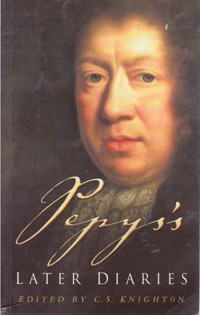

















The Diary of Samuel Pepys — Complete
Table of Contents
Introduction
This collection presents The Diary of Samuel Pepys — Complete, gathering the entire surviving journal that Pepys kept through the first decade of the English Restoration. Arranged month by month from January 1659/60 to May 1669, and framed by prefatory material and notes on previous editions, it offers a continuous record of public and private life in seventeenth-century London as seen by a working official. The purpose is simple and comprehensive: to place in one volume the full sequence of entries, preserving the diarist’s daily cadence and scope, so that readers may follow the unfolding of events in the order Pepys himself experienced and recorded them.
Written privately in shorthand and not intended for publication, Pepys’s diary remained unknown to the wider public until long after his lifetime. The prefatory materials here acknowledge that history of transmission and explain how the text passed from a personal record to a classic of historical and literary testimony. The included section on previous editions summarizes the line of decipherment and editing that made the diary accessible. Together, these front and back matter pieces situate the diary as a historical artifact, a literary work, and a documentary source shaped by both its author and its editors.
The principal text type represented is the diary: dated entries, kept regularly, that record observations of business, society, and self. Supplementing the diary are a preface and a survey of earlier editions, which serve as editorial and historical commentary on the text’s discovery, preparation, and reception. There are no novels, plays, or poems gathered here, nor a miscellany of letters; the volume is dedicated to Pepys’s diaristic practice and to the contextual apparatus that explains how this private chronicle entered the public realm.
Pepys wrote as an energetic and increasingly influential civil servant. His career in the Navy Office during the Restoration gave him an exceptional vantage on administration, finance, logistics, and policy. The diary traces the rhythms and pressures of government service, from routine paperwork to sudden crises. Because Pepys notes what he did, read, heard, and decided on specific days, his record preserves the immediacy of an eyewitness who was also a participant. The result is a uniquely granular account of how institutions function, falter, and adapt, as seen by a conscientious official rising in responsibility and reputation.
Equally central is Pepys’s London. Streets, wharves, shops, churches, and playhouses pass before us in quick succession. The diary attends to prices and purchases, neighborhood news, weather, dining, and travel by water and by coach. Domestic management and household relations appear alongside professional obligations, showing how home and office overlapped in a bustling, compact city. Music, books, and the revived theater mark the cultural pulse of the period, while the mundane—repairs, clothing, servants, errands—anchors the record in everyday life. The civic and the personal are inseparable, producing a portrait of urban modernity in formation.
Pepys’s entries also follow national events that shaped his decade: the Restoration settlement, war at sea, epidemic disease, and urban catastrophe. He notes mobilizations and rumors, the movement of fleets, and the strain placed on supply and finance. He observes the responses of government, city, and populace to sudden shock. Without seeking to narrate a grand design, the diary’s day-by-day accumulation yields a powerful composite of public crisis and recovery. The emphasis throughout remains on what an informed Londoner in office could actually see, learn, and do, and on how those pressures touched work, family, and conscience.
The diary is, above all, a study in self-scrutiny. Pepys measures his ambitions and anxieties, monitors his health and habits, tracks money with tireless exactitude, and weighs his conduct against social and religious expectations. He watches himself learn new skills, judge colleagues, manage subordinates, and negotiate favors. He cherishes leisure, especially music and the stage, yet repeatedly returns to questions of duty and reputation. The ethical interest lies in this oscillation between appetite and discipline, candor and caution. Over time, the record becomes a continuous experiment in self-knowledge conducted in the laboratory of daily life.
Stylistically, the diary’s vitality comes from Pepys’s immediacy and specificity. He writes in brisk, compact sentences, moving swiftly from one matter to another. He tallies sums, times, distances, and tasks; he catalogs names, meetings, and messages; he notices weather and traffic on the river. The shorthand in which he wrote, adapted from a contemporary system, communicates privacy while supporting speed. Occasional foreign words and technical terms register both discretion and expertise. The effect is a prose of practical intelligence: concrete, alert, and cumulative, generating drama from the sequence of ordinary decisions.
The arrangement by months, with dates sometimes spanning dual years, follows contemporary English calendrical practice. During the period covered, the civil year did not begin on 1 January, and editors have preserved the historical forms while clarifying the sequence. The structure of this complete edition—running from the opening entries of January 1659/60 through the conclusion in May 1669—allows readers to keep pace with the diarist’s changing responsibilities and relationships without breaking the original chronological order. The apparatus is intended to guide, not to intrude, offering orientation while leaving the day-to-day narrative intact.
As a historical source, the diary supports scholarship across political, social, economic, maritime, and cultural history. It corroborates and complicates official papers, newsletters, and chronicles, often adding local detail and first-hand impressions unavailable elsewhere. As a work of literature, it helped define modern life-writing by fusing documentary precision with personal voice. Pepys’s habit of observation anticipates journalistic method; his attention to interior motives anticipates the psychological novel. The diary’s lasting significance resides in that dual fidelity—to the world as it happened and to the mind that tried to comprehend it.
Readers may approach the work straight through or by intervals, following themes such as finance, theater, music, household management, or naval administration. The prefaces and the account of previous editions supply useful context on how the manuscript was deciphered and how editorial choices shape what we read today. Across all approaches, the continuity of the entries is essential: meaning accrues by repetition and variation, by the appearance and reappearance of people, places, and problems that structure a working life in a populous city.
The diary ends in 1669, when Pepys laid aside regular entry-keeping out of concern for his eyesight. What remains is complete in its own right: a decade-long canvas that captures the Restoration’s textures at close range. This volume gathers that record in full and presents it as a coherent whole, supported by orienting materials but governed by Pepys’s own sequence and emphasis. It stands as both an absorbing narrative of a particular time and an enduring model of how the ordinary business of days can illuminate the largest movements of history.
Author Biography
Samuel Pepys (1633–1703) was an English civil servant and diarist whose journals offer the most vivid first-person chronicle of Restoration London. Written daily from early 1660 to May 1669, his Diary traces the return of the monarchy, the relaunch of public entertainments, the strains of war, and the shocks of plague and fire. The collection outlined here follows his practice month by month—from January 1659–60 through May 1669, with a preface and editorial matter framing the sequence. Its steady accumulation of detail, practical and intimate, makes Pepys indispensable to historians and general readers seeking the textures of seventeenth‑century urban life.
Pepys grew up in London and was educated at St Paul’s School before studying at Magdalene College, Cambridge, where he acquired the habits of disciplined note‑taking, wide reading, and musical enthusiasm that recur in the Diary. He adopted Thomas Shelton’s shorthand, a tachygraphic system that enabled him to record conversations, prices, and observations with unusual speed and privacy. Beginning his journal in the uncertain months before the Restoration, he set down both public events and self‑audit—what he spent, whom he met, what he heard and saw—an approach that would define the work’s authority as a documentary companion to the age.
Pepys’s administrative career advanced with the Restoration. In 1660 he became Clerk of the Acts to the Navy Board, serving the revived royal government and reporting closely on shipbuilding, victualling, and dockyards. The April and May 1660 books capture the delicate transitions that brought Charles II back to England, while subsequent months show Pepys learning the machinery of office: committees, warrants, audits, and the management of subordinates. His entries trace not only policy but practice, revealing how regulations met the realities of supply, weather, and money. By alternating official business with candid impressions of courtiers, he mapped power as it was exercised.
Alongside statecraft, the Diary relishes London’s revived cultural life. Pepys records playgoing after the theatres reopened, music at home and in company, and the pleasures and anxieties of consumption. A typical note—“July 1st. This morning came home my fine Camlett cloak”—offers a window on fashion, status, and thrift, themes that recur through 1660 and beyond. He tracks the growth of coffeehouses, the chatter of the Exchange, and the commerce of booksellers’ stalls. Domestic routines, visits, and meals sit beside inventories of wages and tips, allowing readers to reconstruct social networks and the cash economy that sustained them.
The Diary’s most famous pages confront urban catastrophe. Across the 1665 volumes Pepys charts the Great Plague’s spread, the thinning streets, office disruptions, and the burdens placed on the Navy during war. In September 1666 he gives an eyewitness account of the Great Fire: flames advancing, orders to move goods, and the desperate demolition of houses to create firebreaks. He describes official councils, the king and the Duke of York on the river, and ordinary Londoners improvising amid smoke and ash. These entries combine logistical observation with immediacy, preserving how disaster felt, how decisions were made, and how the city began to recover.
Later volumes record the strains of the Anglo‑Dutch conflict, notably the 1667 crisis when Dutch forces struck the Medway. Pepys documents parliamentary scrutiny and the Navy Board’s internal debates, returning to persistent themes: provisioning, contracts, dockyard discipline, and the need for coherent finance. By 1668–69 he writes with growing confidence as a manager and reformer, yet also notes the toll of work and the fatigue of failing eyesight. In May 1669 he closed the Diary, fearing blindness and resolving to protect his vision. The cessation underlines its method: nine years of daily self‑observation, ended with a characteristically practical decision.
Pepys continued to serve in high naval office in the 1670s and 1680s and sat in Parliament, gaining a reputation for administrative competence and reforming zeal. He was active in London’s scientific and intellectual life, including leadership roles in the Royal Society, and he assembled a notable library whose preservation helped secure his papers. He died in 1703. Written in shorthand and long kept in manuscript, the Diary was later transcribed and published in successive editions, of which this month‑by‑month arrangement is emblematic. It remains a foundational source for Restoration studies and a classic of observational prose.
Historical Context
Samuel Pepys’s diary spans January 1660 to May 1669, a decisive decade in English history. Born in 1633 and educated at Cambridge, Pepys advanced through patronage, particularly under his kinsman Edward Montagu (later Earl of Sandwich). In 1660 he became Clerk of the Acts to the Navy Board, placing him at the heart of Restoration administration. London, already Europe’s largest city after mid-century growth, provided the stage for his observations on court politics, commerce, science, theater, and everyday life. The diary’s months correspond to a rapid sequence of regime change, religious settlement, maritime war, epidemic, and urban catastrophe that reshaped institutions and habits across the British Isles.
The first months (1659–60) unfold amid the collapse of the Protectorate. Richard Cromwell had resigned in 1659; the Rump Parliament and the Army struggled for supremacy; and the City of London’s political weight grew. From Scotland, General George Monck marched south, entered London in early 1660, and oversaw the readmission of secluded Members, paving the way for a new, freely elected Convention Parliament. Pepys, then in Montagu’s service, watched the unraveling of Commonwealth authority and the negotiation of a settlement that could reconcile property, army arrears, and public order. The diary catches the tension of a polity in transition before the monarchy’s recall.
The Restoration crystallized around the Declaration of Breda (April 1660), in which Charles II promised a general pardon (subject to exceptions), religious forbearance subject to Parliament, and settlement of land and army pay. He landed at Dover in May and entered London at the end of the month to widespread celebration. The Act of Indemnity and Oblivion (August 1660) formalized clemency while reserving punishment for regicides, whose trials and executions followed in the autumn. The Church of England’s structures began to re-emerge. For Pepys, proximity to Montagu and the Navy Board made 1660 a year of personal advancement entwined with the ceremonial reordering of public life.
Stability remained fragile in 1661. Thomas Venner’s Fifth Monarchist rising in January provoked a determined response from authorities, hardening attitudes toward dissent. Charles II’s coronation on 23 April 1661 reasserted traditional rites and monarchical pageantry. The Cavalier Parliament, meeting from May 1661, supported a Royalist settlement and backed Edward Hyde, Earl of Clarendon. The gruesome posthumous punishment of leading Commonwealth figures, including Oliver Cromwell’s exhumation, signaled the regime’s intent. Pepys’s London was both anxious and exuberant, as militia musters, civic processions, and the reopening of entertainments normalized daily rhythms under a restored court and a government intent on securing order.
Religious and institutional settlement intensified in 1661–62. The Corporation Act (1661) reshaped municipal governance to favor conformists; the Act of Uniformity (1662) required adherence to the restored Book of Common Prayer, prompting the “Great Ejection” of roughly two thousand ministers on St. Bartholomew’s Day. These measures, later grouped as part of the Clarendon Code, defined the boundaries of acceptable worship and civic participation. In May 1662 Charles II married Catherine of Braganza at Portsmouth, bringing diplomatic ties with Portugal and a dowry that included Bombay and Tangier. Court fashions, novel beverages like tea, and the queen’s household practices influenced elite sociability that Pepys frequently observed.
Foreign policy and royal finance pressed hard in 1662. To relieve fiscal strain, the Crown sold Dunkirk to France later that year, a move that divided opinion but acknowledged budgetary realities. New and revived revenue streams—customs, excise, and the Hearth Tax (first levied in 1662)—underwrote government and naval expansion but never comfortably met demand. Within the Navy Office, Pepys confronted arrears, provisioning contracts, and the perennial challenge of paying and disciplining seamen. The diary’s routine entries on warrants, victualling, and stores place the Restoration state’s administrative sinews on the page, revealing both reformist impulses and the persistent weight of patronage and personal obligation.
Cultural life revived and diversified under the Stuarts. Theaters reopened from 1660 under royal patents granted to Thomas Killigrew and William Davenant, and professional actresses appeared on the English stage for the first time. New comedies and tragedies catered to court and city audiences alike. Coffeehouses proliferated as venues for news, debate, and mercantile networking. The Post Office Act (1660) regularized national communication. Pepys’s notes on music lessons, book-buying in St. Paul’s Churchyard, and evening performances illuminate London’s burgeoning consumer and print culture, in which fashionable taste, political rumor, and commercial intelligence circulated through intertwined social and commercial spaces.
The decade also coincided with the institutionalization of experimental science. The Royal Society coalesced in 1660 and received charters in 1662 and 1663, gathering figures such as Robert Boyle, Robert Hooke, and Christopher Wren. Publications like Hooke’s Micrographia (1665) exemplified new empirical methods and instrumentation. Pepys, an attentive observer with technical interests, records conversations, demonstrations, and the diffusion of scientific ideas into educated discourse. Naval affairs intersected with this culture through debates over ship design, instruments, and standards. The diary reveals how experimental curiosity, practical engineering, and state needs overlapped in a metropolis where learned societies and government offices were often near neighbors.
Commercial rivalry with the Dutch sharpened through the Navigation Acts (notably 1660), colonial competition, and maritime seizures. In 1664 an English expedition captured New Netherland, renaming it New York in honor of the Duke of York, who also served as Lord High Admiral. War with the United Provinces followed in 1665. Pepys’s office faced the burdens of fleet mobilization: impressment of sailors, provisioning thousands of men, and managing funds against Parliamentary grants. The English victory at Lowestoft (June 1665) boosted morale but exposed logistical strains. The diary’s attention to pay, victualling contracts, and dockyard work documents the war’s administrative and social footprint.
The Great Plague of London (1665) transformed urban life. Weekly Bills of Mortality traced a rising toll from summer into autumn, with parish-by-parish data shaping official responses. Authorities imposed quarantines, marked infected houses, and restricted movement; theaters and many public assemblies closed. The court removed to Oxford for a time, and the government’s official newsbook, published as the Oxford Gazette late in 1665, later became the London Gazette. Pepys’s entries, alternating between duty at the Navy Office and navigating household risks, provide granular evidence of economic dislocation, fear, and the improvisations of governance and charity under epidemic conditions.
War continued through 1666 alongside catastrophe at sea and ashore. The Four Days’ Battle in June inflicted heavy losses on the English; the St. James’s Day fight in July partly restored confidence; and Edward Holmes’s August raid burned Dutch shipping in the Vlie and at Terschelling. On 2 September 1666 a fire beginning near Pudding Lane consumed much of the walled City, destroying some 13,000 houses and dozens of parish churches, including old St. Paul’s Cathedral. Pepys’s Seething Lane base, close to the Tower, placed him near the crisis. The aftermath spurred the Fire Court, Rebuilding Acts, and plans associated with Wren and Hooke to reconstruct in more durable materials.
In 1667 strategic and fiscal weakness culminated in the Dutch raid on the Medway. In June, a Dutch force under Michiel de Ruyter broke the defenses of the Thames and Medway, burned ships at Chatham, and carried off the Royal Charles, exposing administrative failures and defensive gaps. The Treaty of Breda (July 1667) ended the war on terms reflecting battlefield realities: England retained New York; the Dutch secured Suriname; navigation provisions were adjusted. Political consequences followed. Parliament investigated “miscarriages,” Edward Hyde, Earl of Clarendon, fell from power and fled, and the Navy Office faced intense scrutiny of accounts and practices.
The years 1668–69 brought shifting alliances and contested policy. The Triple Alliance of 1668 linked England with the Dutch Republic and Sweden to check French expansion, marking a diplomatic reorientation after Breda. At home, inquiries continued: the Brooke House Committee examined naval expenditures and contracts, drawing detailed testimony from administrators, including Pepys, about victualling, wages, and stores. Meanwhile, Restoration theater and court culture flourished with new comedies and spectacles, even as religious dissent remained constrained by law. The diary shows a maturing administrative class weathering criticism while metropolitan life—print, performance, and sociability—resumed its confident pace after plague and fire.
By early 1669 Pepys had attained notable professional standing but feared for his eyesight, a concern that he cited in laying down the diary on 31 May. The final entries occur against a backdrop of continuing urban rebuilding, consolidation of naval routines in peacetime, and cautious foreign policy. London’s economic networks—river traffic, guild trades, and international merchants returning to repaired wharves—signal resilience. The collection’s concluding months therefore juxtapose ongoing institutional demands with private reckonings about health, ambition, and household management, closing a record that began with regime change and ends with the uneasy calm of a capital remade by adversity.
The Navy Office frames much of the diary’s action and reflects Restoration governance. Under the Duke of York as Lord High Admiral, the Navy Board combined old practices—fees, perquisites, personal recommendation—with attempts at system: contracts for victualling and timber, standardized warrants, and tighter record-keeping. Colleagues such as Sir William Batten, Sir William Penn, Sir George Carteret (Treasurer of the Navy), and shipwrights like Peter Pett recur as figures in a complex administrative ecology. Chronic arrears forced seamen to accept tickets in lieu of cash, provoking discontent. Pepys’s notes on audits, dockyard visits, and Parliament’s grants anatomize the fiscal underpinnings of sea power.
Pepys’s London was a capital of commerce and conversation. Coffeehouses and taverns functioned as hubs where merchants, officials, and writers exchanged intelligence; newsletters and printed weeklies diffused reports from Westminster and abroad. The Stationers’ Company regulated the book trade, while booksellers around St. Paul’s supplied legal, theological, and literary works. Domestic consumption expanded through textiles, imported sugars, tobacco, and Asian goods channeled by the East India Company and, from 1660, the re-chartered Company of Royal Adventurers trading to Africa. The diary’s streetscapes—bridges, wharves, alleys, and livery halls—register the city’s material and regulatory textures as much as its entertainments.
Scientific and technical curiosity penetrated everyday talk. Pepys recorded demonstrations, instrument-making, and calendrical and astronomical discussions that reflected Royal Society interests. Naval requirements—charts, timekeeping, and ship construction—connected workshop craftsmanship to state needs. Figures such as Hooke moved between society meetings and post-Fire surveying, while Wren’s designs married engineering and aesthetics in rebuilding churches and public buildings. The diary offers a lay administrator’s vantage on the diffusion of empirical habits without the jargon of specialist treatises, showing how experiments, printed illustrations, and cabinets of curiosities enriched metropolitan culture and provided practical tools for governance, trade, and navigation in the 1660s Atlantic world.","Imperial and commercial expansion forms a quiet but persistent backdrop. The 1662 marriage treaty brought Tangier and Bombay into English possession, necessitating garrisons, fortifications, and supply chains that implicated the Navy Office. The seizure of New Netherland in 1664 reflected imperial rivalry that also energized the slave-trading ambitions of the re-chartered Royal Adventurers (1663), predating the later Royal African Company. Navigation laws sought to channel colonial produce in English ships. Pepys’s memoranda on victualling and transport illustrate how distant acquisitions translated into contracts, provisioning cycles, and debates about costs that tied metropolitan decision-making to colonial outposts and contested seas.","Because Pepys wrote in Shelton’s shorthand, his diary remained private and unprinted for nearly a century and a half. After his death, the manuscripts passed to Magdalene College, Cambridge. The nineteenth century produced successive breakthroughs: the Reverend John Smith transcribed much of the text; Lord Braybrooke’s 1825 edition, though heavily bowdlerized, first made the diary famous; Mynors Bright’s 1875–79 edition offered a fuller text from the originals; and Henry B. Wheatley’s 1893–99 edition supplied extensive notes and indexing. Later, Robert Latham and William Matthews published the modern scholarly edition (1970–83). The prefaces and notes in this collection situate the text amid that editorial evolution.","The editorial and reception history reshaped how readers understood the work. Early editions softened sexual candor and political sharpness, aligning Pepys with Victorian sensibilities. Twentieth-century scholarship restored omissions, calibrated dates against Old Style/New Style usage, and annotated the diary with archival sources—Navy records, parish registers, court minutes, and newspapers—turning it into a cornerstone of Restoration social history. The “Previous Editions” essays and second preface in this collection explain transcription challenges, gloss foreign phrases, and identify persons and places, allowing the diary to function as both a personal record and a meticulously cross-referenced chronicle of a transformative decade.","Read sequentially, the monthly files trace how a mid-level official’s routine intersects great events without ceding individuality. Reports of Parliament and court sit alongside prices of goods, theater casts, weather, and the state of London streets. The diary does not theorize about constitutions or commerce; it shows them at work—in payments delayed, ships victualled, churches repopulated, and neighborhoods rebuilt. For later readers, Pepys’s blend of immediacy and accumulation makes the collection a commentary on Restoration resilience: a record of how institutions, households, and markets absorbed shock, negotiated constraint, and reinvented custom in the wake of civil war, epidemic, fire, and maritime rivalry."
Synopsis (Selection)
COMPLETE
A day-by-day record of Samuel Pepys’s life from the late 1650s to spring 1669, the Diary blends public history with private habit. It tracks his ascent within the Navy Office, the return of the monarchy, plague, fire, and war, while cataloging finances, food, clothes, music, theatre, and marriage. The tone evolves from energetic ambition to more reflective self-scrutiny, culminating in a pause prompted by concerns over eyesight.
Prefaces and Meta-Material (PREFACE; PREVIOUS EDITIONS OF THE DIARY.; (SECOND) PREFACE)
These framing texts introduce the scope, method, and historical value of Pepys’s record and orient readers to its chronology and concerns. They survey how the diary has been presented and the challenges of rendering a private, coded text for a general audience, with attention to accuracy and context. The tone is explanatory and guiding, preparing readers for the mix of public events and intimate detail that follows.
Early Restoration (Jan 1659/60–Dec 1661)
Covering the political transition from Commonwealth to monarchy, these months chart Pepys’s early responsibilities at the Navy Office and the rebuilding of civic and court life. Personal habits—keeping accounts, improving his household, acquiring clothes, and returning to theatres and music—unfold alongside depictions of ceremonies and shifting allegiances. The tone is curious and brisk, marked by upward mobility and a relish for novelty and routine alike.
Rising Office and Court Culture (Jan 1661/62–Dec 1664)
Pepys consolidates authority in naval administration, mastering paperwork, procurement, and dockyard oversight amid growing court patronage and social display. He records house improvements, musical pursuits, and flirtations, even as tensions with the Dutch and the demands of supply intensify. The voice is confident and pragmatic, with sharpened attention to systems, status, and the pleasures of urban life.
The Plague Year (Jan–Dec 1665)
As plague empties streets and alters rhythms of the city, Pepys balances caution with duty, keeping ships and supplies moving in a strained wartime economy. He notes mortality, disrupted commerce, and improvisations in work and travel, while maintaining meticulous accounts and office discipline. The tone is clear-eyed and adaptive, registering fear, resilience, and the persistence of daily habit.
Fire and War (Jan–Dec 1666)
Amid ongoing conflict at sea, London’s Great Fire brings devastation Pepys witnesses at close hand, prompting emergency measures and hard choices about preservation and rebuilding. Administrative pressures mount as resources tighten and public scrutiny rises, and Pepys’s logistical instincts come to the fore. The narrative turns urgent and civic-minded, attentive to loss, response, and the machinery of recovery.
Inquiry and Strain (Jan–Dec 1667)
Following severe naval setbacks, Pepys confronts inquiries and blame while arguing for reform and professional standards in supply and command. He details hearings, rivalries, and policy debates, probing institutional weakness and the limits of patronage. The tone is defensive yet analytical, mixing anxiety with disciplined record-keeping and self-possession.
Late Reflections and Closure (Jan 1667/68–May 1669)
With peace and consolidation, Pepys refines office routines, cultivates patronage, and returns to theatres and music, even as domestic tensions and self-examination deepen. Health anxieties—especially about his eyes—narrow the focus and eventually bring the daily entries to a close. The voice becomes more introspective and measured, weighing ambition against well-being and legacy.
July 1st. This morning came home my fine Camlett cloak,
A vivid miniature of Pepys’s taste and social aspiration, this single entry rejoices in the arrival of a fashionable garment and the sensation it creates. It exemplifies his delight in material culture, exact noticing, and the linkage of appearance, rank, and personal satisfaction. The tone is playful and sensuous, revealing how small pleasures punctuate a life otherwise filled with work and events.
The Diary of Samuel Pepys — Complete
COMPLETE
PREFACE
Although the Diary of Samuel Pepys has been in the hands of the public for nearly seventy years, it has not hitherto appeared in its entirety. In the original edition of 1825 scarcely half of the manuscript was printed. Lord Braybrooke added some passages as the various editions were published, but in the preface to his last edition he wrote: “there appeared indeed no necessity to amplify or in any way to alter the text of the Diary beyond the correction of a few verbal errors and corrupt passages hitherto overlooked.”
The public knew nothing as to what was left unprinted, and there was therefore a general feeling of gratification when it was announced some eighteen years ago that a new edition was to be published by the Rev. Mynors Bright, with the addition of new matter equal to a third of the whole. It was understood that at last the Diary was to appear in its entirety, but there was a passage in Mr. Bright’s preface which suggested a doubt respecting the necessary completeness. He wrote: “It would have been tedious to the reader if I had copied from the Diary the account of his daily work at the office.”
As a matter of fact, Mr. Bright left roughly speaking about one-fifth of the whole Diary still unprinted, although he transcribed the whole, and bequeathed his transcript to Magdalene College.
It has now been decided that the whole of the Diary shall be made public, with the exception of a few passages which cannot possibly be printed. It may be thought by some that these omissions are due to an unnecessary squeamishness, but it is not really so, and readers are therefore asked to have faith in the judgment of the editor. Where any passages have been omitted marks of omission are added, so that in all cases readers will know where anything has been left out.
Lord Braybrooke made the remark in his “Life of Pepys,” that “the cipher employed by him greatly resembles that known by the name of ‘Rich’s system.’” When Mr. Bright came to decipher the MS., he discovered that the shorthand system used by Pepys was an earlier one than Rich’s, viz., that of Thomas Shelton, who made his system public in 1620.
In his various editions Lord Braybrooke gave a large number of valuable notes, in the collection and arrangement of which he was assisted by the late Mr. John Holmes of the British Museum, and the late Mr. James Yeowell, sometime sub-editor of “Notes and Queries.” Where these notes are left unaltered in the present edition the letter “B.” has been affixed to them, but in many instances the notes have been altered and added to from later information, and in these cases no mark is affixed. A large number of additional notes are now supplied, but still much has had to be left unexplained. Many persons are mentioned in the Diary who were little known in the outer world, and in some instances it has been impossible to identify them. In other cases, however, it has been possible to throw light upon these persons by reference to different portions of the Diary itself. I would here ask the kind assistance of any reader who is able to illustrate passages that have been left unnoted. I have received much assistance from the various books in which the Diary is quoted. Every writer on the period covered by the Diary has been pleased to illustrate his subject by quotations from Pepys, and from these books it has often been possible to find information which helps to explain difficult passages in the Diary.
Much illustrative matter of value was obtained by Lord Braybrooke from the “Diurnall” of Thomas Rugge, which is preserved in the British Museum (Add. MSS. 10,116, 10,117). The following is the description of this interesting work as given by Lord Braybrooke
Another work I have found of the greatest value is the late Mr. J. E. Doyle’s “Official Baronage of England” (1886), which contains a mass of valuable information not easily to be obtained elsewhere. By reference to its pages I have been enabled to correct several erroneous dates in previous notes caused by a very natural confusion of years in the case of the months of January, February, and March, before it was finally fixed that the year should commence in January instead of March. More confusion has probably been introduced into history from this than from any other cause of a like nature. The reference to two years, as in the case of, say, Jan. 5, 1661-62, may appear clumsy, but it is the only safe plan of notation. If one year only is mentioned, the reader is never sure whether or not the correction has been made. It is a matter for sincere regret that the popular support was withheld from Mr. Doyle’s important undertaking, so that the author’s intention of publishing further volumes, containing the Baronies not dealt with in those already published, was frustrated.
PREVIOUS EDITIONS OF THE DIARY.
I. Memoirs of Samuel Pepys, Esq., F.R.S., Secretary to the Admiralty in the reigns of Charles II. and James II., comprising his Diary from 1659 to 1669, deciphered by the Rev. John Smith, A.B., of St. John’s College, Cambridge, from the original Shorthand MS. in the Pepysian Library, and a Selection from his Private Correspondence. Edited by Richard, Lord Braybrooke. In two volumes. London, Henry Colburn... 1825. 4vo.
2. Memoirs of Samuel Pepys, Esq., F.R.S.... Second edition. In five volumes. London, Henry Colburn.... 1828. 8vo.
3. Diary and Correspondence of Samuel Pepys, F.R.S., Secretary to the Admiralty in the reigns of Charles II. and James II.; with a Life and Notes by Richard, Lord Braybrooke; the third edition, considerably enlarged. London, Henry Colburn.... 1848-49. 5 vols. sm. 8vo.
4. Diary and Correspondence of Samuel Pepys, F.R.S.... The fourth edition, revised and corrected. In four volumes. London, published for Henry Colburn by his successors, Hurst and Blackett... 1854. 8vo.
The copyright of Lord Braybrooke’s edition was purchased by the late Mr. Henry G. Bohn, who added the book to his Historical Library.
5. Diary and Correspondence of Samuel Pepys, Esq., F.R.S., from his MS. Cypber in the Pepysian Library, with a Life and Notes by Richard, Lord Braybrooke. Deciphered, with additional notes, by the Rev. Mynors Bright, M.A.... London, Bickers and Son, 1875-79. 6 vols. 8vo.
Nos. 1, 2 and 3 being out of copyright have been reprinted by various publishers.
No. 5 is out of print.
The family of Pepys is one of considerable antiquity in the east of England, and the Hon. Walter Courtenay Pepys
says that the first mention of the name that he has been able to find is in the Hundred Rolls (Edw. I, 1273), where Richard Pepis and John Pepes are registered as holding lands in the county of Cambridge. In the next century the name of William Pepis is found in deeds relating to lands in the parish of Cottenham, co. Cambridge, dated 1329 and 1340 respectively (Cole MSS., British Museum, vol. i., p. 56; vol. xlii., p. 44). According to the Court Roll of the manor of Pelhams, in the parish of Cottenham, Thomas Pepys was “bayliffe of the Abbot of Crowland in 1434,” but in spite of these references, as well as others to persons of the same name at Braintree, Essex, Depedale, Norfolk, &c., the first ancestor of the existing branches of the family from whom Mr. Walter Pepys is able to trace an undoubted descent, is “William Pepis the elder, of Cottenham, co. Cambridge,” whose will is dated 20th March, 1519.
In 1852 a curious manuscript volume, bound in vellum, and entitled “Liber Talboti Pepys de instrumentis ad Feoda pertinentibus exemplificatis,” was discovered in an old chest in the parish church of Bolney, Sussex, by the vicar, the Rev. John Dale, who delivered it to Henry Pepys, Bishop of Worcester, and the book is still in the possession of the family. This volume contains various genealogical entries, and among them are references to the Thomas Pepys of 1434 mentioned above, and to the later William Pepys. The reference to the latter runs thus:—
In illustration of this entry we may refer to the Diary of June 12th, 1667, where it is written that Roger Pepys told Samuel that “we did certainly come out of Scotland with the Abbot of Crowland.” The references to various members of the family settled in Cottenham and elsewhere, at an early date already alluded to, seem to show that there is little foundation for this very positive statement.
With regard to the standing of the family, Mr. Walter Pepys writes:—
There is a very general notion that Samuel Pepys was of plebeian birth because his father followed the trade of a tailor, and his own remark, “But I believe indeed our family were never considerable,”—[February 10th, 1661-62.] has been brought forward in corroboration of this view, but nothing can possibly be more erroneous, and there can be no doubt that the Diarist was really proud of his descent. This may be seen from the inscription on one of his book-plates, where he is stated to be:—
Many members of the family have greatly distinguished themselves since the Diarist’s day, and of them Mr. Foss wrote (“Judges of England,” vol. vi., p. 467):—
The William Pepys of Cottenham who commences the pedigree had three sons and three daughters; from the eldest son (Thomas) descended the first Norfolk branch, from the second son (John Pepys of Southcreeke) descended the second Norfolk branch, and from the third son (William) descended the Impington branch. The latter William had four sons and two daughters; two of these sons were named Thomas, and as they were both living at the same time one was distinguished as “the black” and the other as “the red.” Thomas the red had four sons and four daughters. John, born 1601, was the third son, and he became the father of Samuel the Diarist. Little is known of John Pepys, but we learn when the Diary opens that he was settled in London as a tailor. He does not appear to have been a successful man, and his son on August 26th, 1661, found that there was only L45 owing to him, and that he owed about the same sum. He was a citizen of London in 1650, when his son Samuel was admitted to Magdalene College, but at an earlier period he appears to have had business relations with Holland.
In August, 1661, John Pepys retired to a small property at Brampton (worth about L80 per annum), which had been left to him by his eldest brother, Robert Pepys, where he died in 1680.
The following is a copy of John Pepys’s will:
His wife Margaret, whose maiden name has not been discovered, died on the 25th March, 1667, also at Brampton. The family of these two consisted of six sons and five daughters: John (born 1632, died 1640), Samuel (born 1633, died 1703), Thomas (born 1634, died 1664), Jacob (born 1637, died young), Robert (born 1638, died young), and John (born 1641, died 1677); Mary (born 1627), Paulina (born 1628), Esther (born 1630), Sarah (born 1635; these four girls all died young), and Paulina (born 1640, died 1680), who married John Jackson of Brampton, and had two sons, Samuel and John. The latter was made his heir by Samuel Pepys.
Samuel Pepys was born on the 23rd February, 1632-3, but the place of birth is not known with certainty. Samuel Knight, D.D., author of the “Life of Colet,” who was a connection of the family (having married Hannah Pepys, daughter of Talbot Pepys of Impington), says positively that it was at Brampton. His statement cannot be corroborated by the registers of Brampton church, as these records do not commence until the year 1654.
Samuel’s early youth appears to have been spent pretty equally between town and country. When he and his brother Tom were children they lived with a nurse (Goody Lawrence) at Kingsland, and in after life Samuel refers to his habit of shooting with bow and arrow in the fields around that place. He then went to school at Huntingdon, from which he was transferred to St. Paul’s School in London. He remained at the latter place until 1650, early in which year his name was entered as a sizar on the boards of Trinity Hall, Cambridge. He was admitted on the 21st June, but subsequently he transferred his allegiance to Magdalene College, where he was admitted a sizar on the 1st October of this same year. He did not enter into residence until March 5th, 1650-51, but in the following month he was elected to one of Mr. Spendluffe’s scholarships, and two years later (October 14th, 1653) he was preferred to one on Dr. John Smith’s foundation.
Little or nothing is known of Pepys’s career at college, but soon after obtaining the Smith scholarship he got into trouble, and, with a companion, was admonished for being drunk.
His time, however, was not wasted, and there is evidence that he carried into his busy life a fair stock of classical learning and a true love of letters. Throughout his life he looked back with pleasure to the time he spent at the University, and his college was remembered in his will when he bequeathed his valuable library. In this same year, 1653, he graduated B.A. On the 1st of December, 1655, when he was still without any settled means of support, he married Elizabeth St. Michel, a beautiful and portionless girl of fifteen. Her father, Alexander Marchant, Sieur de St. Michel, was of a good family in Anjou, and son of the High Sheriff of Bauge (in Anjou). Having turned Huguenot at the age of twenty-one, when in the German service, his father disinherited him, and he also lost the reversion of some L20,000 sterling which his uncle, a rich French canon, intended to bequeath to him before he left the Roman Catholic church. He came over to England in the retinue of Henrietta Maria on her marriage with Charles I, but the queen dismissed him on finding that he was a Protestant and did not attend mass. Being a handsome man, with courtly manners, he found favour in the sight of the widow of an Irish squire (daughter of Sir Francis Kingsmill), who married him against the wishes of her family. After the marriage, Alexander St. Michel and his wife having raised some fifteen hundred pounds, started, for France in the hope of recovering some part of the family property. They were unfortunate in all their movements, and on their journey to France were taken prisoners by the Dunkirkers, who stripped them of all their property. They now settled at Bideford in Devonshire, and here or near by were born Elizabeth and the rest of the family. At a later period St. Michel served against the Spaniards at the taking of Dunkirk and Arras, and settled at Paris. He was an unfortunate man throughout life, and his son Balthasar says of him: “My father at last grew full of whimsies and propositions of perpetual motion, &c., to kings, princes and others, which soaked his pocket, and brought all our family so low by his not minding anything else, spending all he had got and getting no other employment to bring in more.” While he was away from Paris, some “deluding papists” and “pretended devouts” persuaded Madame St. Michel to place her daughter in the nunnery of the Ursulines. When the father heard of this, he hurried back, and managed to get Elizabeth out of the nunnery after she had been there twelve days. Thinking that France was a dangerous place to live in, he removed his family to England, where soon afterwards his daughter was married, although, as Lord Braybrooke remarks, we are not told how she became acquainted with Pepys. St. Michel was greatly pleased that his daughter had become the wife of a true Protestant, and she herself said to him, kissing his eyes: “Dear father, though in my tender years I was by my low fortune in this world deluded to popery, by the fond dictates thereof I have now (joined with my riper years, which give me some understanding) a man to my husband too wise and one too religious to the Protestant religion to suffer my thoughts to bend that way any more.”
Alexander St. Michel kept up his character for fecklessness through life, and took out patents for curing smoking chimneys, purifying water, and moulding bricks. In 1667 he petitioned the king, asserting that he had discovered King Solomon’s gold and silver mines, and the Diary of the same date contains a curious commentary upon these visions of wealth:—
As already noted, Pepys was married on December 1st, 1655. This date is given on the authority of the Registers of St. Margaret’s Church, Westminster,
but strangely enough Pepys himself supposed his wedding day to have been October 10th. Lord Braybrooke remarks on this,
What is even more strange than Pepys’s conviction that he was married on October 10th is Mrs. Pepys’s agreement with him: On October 10th, 1666, we read,
Here Mrs. Pepys was wrong, as it was eleven years; so she may have been wrong in the day also. In spite of the high authority of Mr. and Mrs. Pepys on a question so interesting to them both, we must accept the register as conclusive on this point until further evidence of its incorrectness is forthcoming.
Sir Edward Montage (afterwards Earl of Sandwich), who was Pepys’s first cousin one remove (Pepys’s grandfather and Montage’s mother being brother and sister), was a true friend to his poor kinsman, and he at once held out a helping hand to the imprudent couple, allowing them to live in his house. John Pepys does not appear to have been in sufficiently good circumstances to pay for the education of his son, and it seems probable that Samuel went to the university under his influential cousin’s patronage. At all events he owed his success in life primarily to Montage, to whom he appears to have acted as a sort of agent.
On March 26th, 1658, he underwent a successful operation for the stone, and we find him celebrating each anniversary of this important event of his life with thanksgiving. He went through life with little trouble on this score, but when he died at the age of seventy a nest of seven stones was found in his left kidney.
In June, 1659, Pepys accompanied Sir Edward Montage in the “Naseby,” when the Admiral of the Baltic Fleet and Algernon Sidney went to the Sound as joint commissioners. It was then that Montage corresponded with Charles II., but he had to be very secret in his movements on account of the suspicions of Sidney. Pepys knew nothing of what was going on, as he confesses in the Diary:
On Pepys’s return to England he obtained an appointment in the office of Mr., afterwards Sir George Downing, who was one of the Four Tellers of the Receipt of the Exchequer. He was clerk to Downing when he commenced his diary on January 1st, 1660, and then lived in Axe Yard, close by King Street, Westminster, a place on the site of which was built Fludyer Street. This, too, was swept away for the Government offices in 1864-65. His salary was L50 a year. Downing invited Pepys to accompany him to Holland, but he does not appear to have been very pressing, and a few days later in this same January he got him appointed one of the Clerks of the Council, but the recipient of the favour does not appear to have been very grateful. A great change was now about to take place in Pepys’s fortunes, for in the following March he was made secretary to Sir Edward Montage in his expedition to bring about the Restoration of Charles II., and on the 23rd he went on board the “Swiftsure” with Montage. On the 30th they transferred themselves to the “Naseby.” Owing to this appointment of Pepys we have in the Diary a very full account of the daily movements of the fleet until, events having followed their natural course, Montage had the honour of bringing Charles II. to Dover, where the King was received with great rejoicing. Several of the ships in the fleet had names which were obnoxious to Royalists, and on the 23rd May the King came on board the “Naseby” and altered there—the “Naseby” to the “Charles,” the “Richard” to the “Royal James,” the “Speaker” to the “Mary,” the “Winsby” to the “Happy Return,” the “Wakefield” to the “Richmond,” the “Lambert” to the “Henrietta,” the “Cheriton” to the “Speedwell,” and the “Bradford” to the “Success.” This portion of the Diary is of particular interest, and the various excursions in Holland which the Diarist made are described in a very amusing manner.
When Montagu and Pepys had both returned to London, the former told the latter that he had obtained the promise of the office of Clerk of the Acts for him. Many difficulties occurred before Pepys actually secured the place, so that at times he was inclined to accept the offers which were made to him to give it up. General Monk was anxious to get the office for Mr. Turner, who was Chief Clerk in the Navy Office, but in the end Montagu’s influence secured it for Pepys. Then Thomas Barlow, who had been appointed Clerk of the Acts in 1638, turned up, and appeared likely to become disagreeable. Pepys bought him off with an annuity of too, which he did not have to pay for any length of time, as Barlow died in February, 1664-65. It is not in human nature to be greatly grieved at the death of one to whom you have to pay an annuity, and Pepys expresses his feelings in a very naive manner:—