1,99 €
Niedrigster Preis in 30 Tagen: 1,99 €
Niedrigster Preis in 30 Tagen: 1,99 €
Mehr erfahren.
- Herausgeber: DigiCat
- Kategorie: Fachliteratur
- Sprache: Englisch
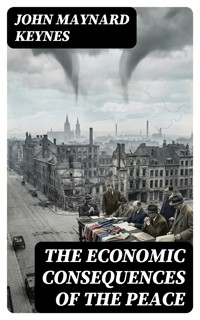
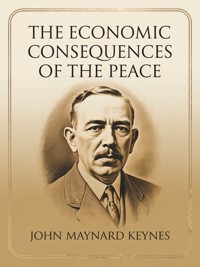
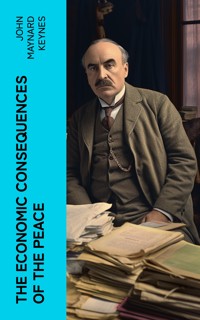
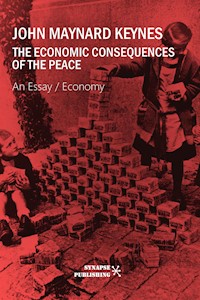
In "The Economic Consequences of the Peace," John Maynard Keynes meticulously analyzes the economic ramifications of the Treaty of Versailles following World War I. Written in a poignant and incisive prose style, Keynes critiques the punitive reparations imposed on Germany, arguing that such terms would engender economic despair and political instability in Europe. He employs a blend of empirical evidence and theoretical inquiry rooted in classical economics, drawing on contemporary economic thought to forewarn of the dire consequences that would ensue from an imbalanced peace settlement, thus situating his work within the broader intellectual discourse of the time. Keynes, a prominent British economist, was deeply influenced by his experiences as a delegate at the Paris Peace Conference in 1919. His growing concerns about the rising tensions in Europe and the potential for future conflict motivated him to advocate for a more equitable economic settlement. This experience, combined with his pioneering theories on macroeconomics and money markets, shaped his prescient views on the critical nexus of economics and international relations. This book is essential reading for anyone interested in the intersection of economics and politics, as it not only highlights the flawed peace-building strategies of the post-war era but also serves as a compelling warning about the long-term consequences of economic injustice. Readers will find Keynes's arguments both timeless and relevant, thus inviting reflection on contemporary global economic policies. In this enriched edition, we have carefully created added value for your reading experience: - A succinct Introduction situates the work's timeless appeal and themes. - The Synopsis outlines the central plot, highlighting key developments without spoiling critical twists. - A detailed Historical Context immerses you in the era's events and influences that shaped the writing. - An Author Biography reveals milestones in the author's life, illuminating the personal insights behind the text. - A thorough Analysis dissects symbols, motifs, and character arcs to unearth underlying meanings. - Reflection questions prompt you to engage personally with the work's messages, connecting them to modern life. - Hand‐picked Memorable Quotes shine a spotlight on moments of literary brilliance. - Interactive footnotes clarify unusual references, historical allusions, and archaic phrases for an effortless, more informed read.
Das E-Book können Sie in Legimi-Apps oder einer beliebigen App lesen, die das folgende Format unterstützen:
Veröffentlichungsjahr: 2022
Ähnliche



The Economic Consequences of the Peace
Table of Contents
Introduction
As statesmen celebrated victory and drafted terms in ornate chambers, one economist counted the unpaid bills of a ruined continent and warned that a peace built on unpayable promises could bankrupt the future it sought to secure.
A classic of twentieth-century political economy, The Economic Consequences of the Peace endures because it marries analysis with narrative in a voice at once lucid, humane, and unsparing. John Maynard Keynes writes with the urgency of a participant and the discipline of a scholar, turning the abstractions of diplomacy into the tangible arithmetic of bread, coal, ships, and credit. The book’s literary vitality—its portraits, its moral pressure, its clear architecture of argument—has kept it alive well beyond the controversies of 1919. It is not merely timely reportage; it is a crafted work that set a durable standard for public reasoning about international order.
Written in 1919 by British economist John Maynard Keynes, shortly after he served with the British Treasury at the Paris Peace Conference, the book advances a stark premise: the settlement imposed after the First World War, especially its financial demands, threatened to obstruct Europe’s recovery and unsettle the world economy. Having resigned his official post during the negotiations, Keynes returned to Britain and produced this analysis from firsthand observation, informed by fiscal data and practical experience. He frames the peace not as an abstract legal document but as an economic system with measurable flows, incentives, and limits, inviting readers to examine what the treaty required against what postwar Europe could plausibly supply.
Keynes anchors his argument in the shattered realities of 1919. The war had broken trade routes, depleted reserves, and left factories idle, railways and mines damaged, and households short of essentials. Governments were tangled in debts to one another and to their publics, while currencies strained under wartime finance. A continent that had long depended on dense networks of credit and commerce found those networks frayed. Against this background, the peace would have to restore production, transport, and credit if prosperity—and political stability—were to return. Keynes’s analysis begins from this interdependence: what happens to one economy, he shows, necessarily ripples through all the rest.
The book’s method is notable for its combination of concrete numbers, institutional knowledge, and narrative insight. Keynes assesses capacity to pay, external balances, and the material conditions of reconstruction, while never losing sight of human consequences. He also sketches the personalities and priorities of the leading figures at Paris, revealing how character and circumstance shaped the settlement’s design. The effect is to place ledger and stage side by side: a treaty clause is illuminated not only by its wording but by the resources, industries, and livelihoods it touches. This dual perspective gives the work both clarity of exposition and dramatic immediacy.
Its literary impact has been unusually wide for an economic treatise. The book reached readers far beyond specialists and became an emblem of the expert as public advocate. Its cadences and metaphors, its careful pacing from scene to statistic, have influenced how writers narrate policy. By demonstrating that technical argument can be rendered in persuasive, graceful prose, Keynes helped define a genre in which economic reasoning and civic rhetoric reinforce one another. The result is a work often read for its voice as much as for its verdicts—a reminder that style can sharpen substance, especially when the stakes are national and international recovery.
The influence of The Economic Consequences of the Peace extends across disciplines. Economists drew on its framework for thinking about reparations, transfers, and international adjustment. Historians engaged with its interpretation of motives and trade-offs at Paris. Journalists and essayists adopted its example of evidence-based critique addressed to a general audience. Even when later scholars have debated particular estimates or inferences, they have done so on the terrain the book mapped: the intersection of political choice and economic possibility. In this way, it helped establish a vocabulary—of capacity, incentives, and interconnected risk—that remains central to discussions of postwar settlements.
Its themes have outlasted the treaty it scrutinizes. The book argues, in effect, that order requires more than the victory of arms; it needs the arithmetic of recovery and the ethics of restraint. It questions whether penalties that disregard productive capacity can advance justice, and whether nations can prosper in isolation from the markets, credits, and supplies that tie them together. It invites consideration of how to balance accountability with reconstruction, and how to align political aims with economic realities. These are not concerns confined to one era, but recurring questions wherever peace turns from promise to policy.
For the reader, the structure offers both a narrative of negotiation and a map of economic mechanics. Keynes moves from the conference rooms to the coalfields and docks, from the drafting table to the balance sheet, translating clauses into consequences. He examines what different parties sought and what the European economy could bear, then outlines principles he believes would better support recovery. The power of the book lies less in any single statistic than in this orchestration of scene and calculation, which allows one to grasp the stakes without specialized training while preserving analytical rigor.
Situated early in Keynes’s career as a public intellectual, the book displays the breadth that would soon make him one of the most influential economists of the century. It reveals his command of finance, trade, and monetary questions, as well as his capacity to communicate beyond academic circles. The experience at Paris sharpened his sense of how policy emerges from imperfect information, clashing incentives, and urgent timelines. Readers meet a thinker attentive to institutions and psychology, to expectations and credibility—concerns that would continue to shape his later economic work and his contributions to debates on international monetary arrangements.
Reception was immediate and intense. Admirers praised the clarity and courage of a dissent grounded in facts; critics charged that the book underestimated political imperatives or misread negotiating constraints. Regardless of position, many acknowledged the force of its argument and the reach of its prose. It entered parliamentary debate, informed editorial pages, and became a touchstone in discussions of reparations and reconstruction. The controversy itself underscores the work’s vitality: it was not written to confirm consensus, but to test it, and in doing so it gave the public a framework with which to evaluate the settlement’s demands.
A century on, the book’s questions remain pressing. How should victors design terms that secure stability rather than sow fragility? What balance of punishment, restoration, and investment sustains a durable peace? In an age of sanctions, sovereign debt negotiations, and post-conflict rebuilding, Keynes’s insistence on feasibility, interdependence, and humane calculation retains its force. The Economic Consequences of the Peace endures not as a period piece but as a guide to thinking clearly when moral urgency meets economic constraint—its lasting appeal rooted in the conviction that sound policy begins with an honest reckoning of what nations can, and must, afford.
Synopsis
John Maynard Keynes’s The Economic Consequences of the Peace, published in 1919 in the aftermath of the Paris Peace Conference, analyzes the economic provisions of the Treaty of Versailles and their implications for Europe’s recovery. Writing as an economist who served with the British Treasury at the conference and later resigned from the delegation, Keynes sets out to assess what the settlement demanded, how it was devised, and what those demands meant for production, trade, and finance. He presents his study as both diagnosis and warning, seeking to illuminate the links between policy aims, material capacities, and the fragile equilibrium of a war‑torn continent.
Keynes first reconstructs the prewar European economy to demonstrate its intricate interdependence. He emphasizes how industrial regions, resource basins, transport networks, and financial markets formed a tightly knit system that extended beyond national borders. Germany’s role as an exporting industrial power, the centrality of coal and shipping, the functioning of international credit, and the flow of foodstuffs and raw materials all feature in his account. By highlighting this economic organism, he establishes a benchmark against which to judge the treaty: whether its terms would restore or obstruct the continent’s capacity to feed, fuel, and finance itself.
He then examines the conference itself, focusing on the personalities and priorities of the leading statesmen. Keynes profiles their political constraints and bargaining strategies, showing how domestic pressures, wartime expectations, and divergent national interests shaped the agenda. He criticizes procedural shortcomings that, in his view, encouraged hasty compromise and left economic expertise on the margins. This portrait of the negotiating environment underlines a central tension of the book: the gap between political imperatives and economic feasibility, and the difficulty of building a durable settlement without integrating financial and industrial realities into the peace terms.
The reparations question stands at the core of Keynes’s analysis. He dissects the legal language and practical mechanisms by which Germany was to be assessed and made to pay, including the role of commissions, categories of claims, and payment schedules. Keynes contrasts the scale of the demands with Germany’s postwar productive capacity, export potential, and fiscal position. He argues that extracting large transfers risks undermining the very revenues upon which payments would depend, with consequences for prices, employment, and exchange rates. His treatment aims to distinguish moral claims from economic limits and to assess the likely reaction of markets and industry to the treaty’s burdens.
A closely related theme is the web of inter-Allied debts and the broader monetary architecture. Keynes traces how obligations accumulated during the war had turned creditor and debtor nations into a chain of interlocking claims. He contends that servicing these debts, combined with high reparations, would constrict trade, intensify pressure on exchange rates, and encourage protectionist responses. Restoring multilateral commerce, he suggests, requires more than legal settlements; it needs credit, confidence, and stable currencies. Here, Keynes urges readers to consider whether financial arrangements can be sustained without renewed flows of goods and capital, or whether the treaty’s design instead entrenches scarcity and fragmentation.
Keynes also scrutinizes the treaty’s territorial and resource clauses for their economic effects. He discusses decisions affecting coal basins, industrial districts, and transport corridors, and notes how changes in sovereignty or control could disrupt supply chains crucial to steelmaking, shipping, and power generation. The book links these provisions to immediate postwar issues such as food shortages, the dismantling of wartime controls, and the difficulties of reconstructing railways and river traffic. By connecting borders to bread, and maps to markets, Keynes argues that certain arrangements risked depressing output in precisely those sectors needed to rebuild living standards across Central and Eastern Europe.
Having diagnosed the constraints, Keynes outlines an alternative program oriented to recovery. He proposes limiting reparations to amounts consistent with a rapid revival of production, easing or remitting inter-Allied debts to reduce systemic strain, and arranging a substantial international loan to stabilize currencies and finance reconstruction. He emphasizes restoring the flow of food and raw materials, reopening trade routes, and reducing barriers that impede exchange. The thrust of these suggestions is to substitute a policy of economic rehabilitation for punitive exactions, on the reasoning that prosperity is a precondition for payment and that Europe’s stability depends on rebuilding its productive base.
Keynes then explores the probable consequences if punitive and fragmented policies prevail. He anticipates monetary instability, fiscal crises, and interruptions to trade that could feed unemployment and social unrest. He warns that sustained financial pressure on a weakened economy may foster political resentment and discourage cooperation, complicating diplomacy and the reconstitution of normal commerce. Throughout, he seeks to ground these concerns in concrete arithmetic—balances of payments, output capacity, and the availability of key inputs—rather than in rhetoric. The emphasis remains on feasibility: whether the treaty’s design can deliver restoration or sets conditions for prolonged dislocation.
The book’s enduring significance lies in its fusion of economic analysis with the ethics of statecraft. By insisting that peace settlements be judged by their capacity to restore production, credit, and exchange, Keynes helped shift public debate from legal and territorial claims to material possibility and mutual dependence. His arguments influenced policymakers and critics, stimulated reassessments of reparations and debts, and offered a framework for thinking about reconstruction beyond punishment. The work remains a touchstone for discussions of postwar settlement, warning that durable order depends on aligning political objectives with economic realities and on rebuilding the networks that make prosperity shared.
Historical Context
The Economic Consequences of the Peace emerges from the immediate aftermath of the First World War, centered on Paris in 1919 when the victorious Allied powers attempted to construct a settlement. Dominant institutions included the Allied Supreme Council, national treasuries, foreign ministries, and central banks seeking to stabilize currencies and trade. The nascent League of Nations was promoted as a new international framework, though its powers were uncertain. John Maynard Keynes, a British Treasury official attached to the British delegation, observed how political bargaining, public opinion, and fiscal constraints intersected. The atmosphere blended triumphalism and exhaustion, with European societies strained by war losses, shortages, and inflationary pressures.
The war had shattered an interconnected European economy that, before 1914, relied on dense trade networks, credit from London’s financial markets, and relatively liberal capital flows. Mobilization redirected industry to armaments, while naval warfare and blockades disrupted shipping and raw material supplies. Millions of soldiers and civilians died or were displaced, farming suffered, and railway systems were worn down by military demands. Price controls, rationing, and emergency financing altered daily life and state capacities. Keynes’s book reflects this background: it treats Europe as an economic organism whose prewar interdependence was essential to recovery, and warns that punitive financial terms would sever the arteries of trade and credit.
At the Paris Peace Conference, the “Big Four” leaders—Georges Clemenceau of France, Woodrow Wilson of the United States, David Lloyd George of Britain, and Vittorio Orlando of Italy—balanced divergent aims. France sought security and compensation for devastated regions. Britain weighed imperial commitments and domestic promises. Wilson advanced his Fourteen Points and the League of Nations. Delegations from smaller states pressed territorial and economic claims. The negotiations produced a complex settlement, including the Treaty of Versailles with Germany, alongside treaties with other defeated powers. Keynes’s analysis engages the concrete provisions crafted in this setting, especially those bearing on reparations, trade, and the capacity of Central Europe to revive.
Reparations became the central economic issue. The treaty included Article 231, often called the “war guilt” clause, which established Germany’s responsibility as a legal basis for reparations without fixing a total sum at once. A Reparation Commission was tasked to determine Germany’s liability and payment schedules later. Allied publics, especially in France and Britain, expected substantial transfers. Keynes criticized both the uncertainty and the magnitude implied by political rhetoric, arguing that extracting large payments would bankrupt Germany, shrink European markets, and impede recovery. He urged clarity, moderation, and a plan prioritizing production and imports of essential goods, rather than punitive extractions.
War finance left tangled webs of inter-Allied debts, with European governments owing large sums to the United States. During the war, the financial center of gravity shifted further toward New York as the U.S. became a principal creditor. After 1918, American policy, shaped by Executive-Legislative tensions, did not cancel these debts, reinforcing Europe’s need for reparations from Germany to meet obligations. Keynes contended this chain—Germany paying Allies who paid the U.S.—was economically unsound and politically dangerous. He urged debt remission and new credits to restart trade. The book situates reparations within this wider credit architecture, stressing that liquidity and confidence were prerequisites for recovery.
The monetary system was in disarray. Many belligerents had suspended the gold standard during the war, relying on borrowing and money creation to fund expenditures. The result was inflation and exchange-rate volatility as currencies diverged from prewar parities. Merchants faced uncertain prices; households confronted rising costs; savings eroded. Policymakers debated whether and how to restore stable money, with some advocating deflation to return to gold at prewar rates and others warning of social costs. Keynes emphasized the dangers of abrupt financial tightening and the need to manage exchange stability alongside productivity and trade flows, foreshadowing interwar struggles over deflation, unemployment, and competitive devaluations.
The war collapsed old empires—the German, Austro-Hungarian, Ottoman, and Russian—and ushered in new states across Central and Eastern Europe. Borders were redrawn, minority questions multiplied, and customs barriers rose where prior imperial markets had existed. Rail lines and river transport now crossed frontiers guarded by officials uncertain about tariffs and currencies. Wilsonian ideas of self-determination met the practical challenges of economic fragmentation. Keynes argued that the prosperity of these new polities depended on regional integration: open trade, coordinated rail and coal policies, and credit to restore agriculture and industry. Without such measures, political independence could be undermined by economic paralysis.
The Allied naval blockade, vital during the war, continued into the Armistice period, limiting supplies to Central Europe until the treaty took effect in mid-1919. Urban populations faced food shortages, fuel scarcities, and disease. Relief efforts—supported by organizations such as the American Relief Administration—sought to stabilize nutrition and public health. Keynes saw immediate provisioning as both a moral duty and an economic necessity, enabling labor to return to productive work and preventing political radicalization. His proposals stressed grain and coal shipments, transitional finance, and a cooperative European program to revive trade routes and restore the basic preconditions of market exchange.
Domestic politics heavily constrained the negotiators. In Britain, the December 1918 “khaki election” produced a coalition with promises that Germany would pay the costs of war. In France, memories of invasion and devastation shaped demands for security and compensation. In the United States, the 1918 elections weakened Wilson’s position, and the Senate later rejected the Treaty of Versailles and the League, limiting American engagement. Keynes’s book captures this political bind: leaders faced electorates expecting retribution and restitution, yet economic reconstruction required moderation, credit, and trust. He framed the settlement as a moral and practical test of whether short-term satisfactions would override long-term stability.
Social tensions flared across Europe and beyond in 1919. Demobilization released millions of soldiers into labor markets, while industries struggled to shift from wartime production. Strikes, inflation, and housing shortages stoked unrest. Revolutionary movements rose and fell—from the Spartacist uprising in Germany to the short-lived Hungarian Soviet Republic—while Russia’s revolution and civil war unsettled neighboring states. Many policymakers feared contagion of radicalism. Keynes argued that economic deprivation would nourish extremism and undermine constitutional governments. He warned that the reparations framework risked deepening scarcity, sharpening inequalities, and turning a fragile peace into chronic instability.
Wartime experiences had transformed everyday life. Governments rationed food and fuel, regimented transport, and directed industrial output. Technological innovations—mass production techniques, chemical processes, and improved communications—were harnessed for military ends but could be redirected to civilian reconstruction. The influenza pandemic of 1918–1920 compounded suffering and strained public services. Women, drawn into factories and offices, had widened roles, though postwar transitions were uneven. Keynes grounded his argument in these social realities, stressing that recovery depended not merely on legal clauses but on coal in furnaces, grain in bakeries, and functioning railways carrying goods and workers across reopened frontiers.
Germany’s economy was central to the settlement’s feasibility. The treaty transferred Alsace-Lorraine to France, placed the Saar under international administration with French exploitation of coal, mandated occupation of the Rhineland for a term of years, and stripped Germany of its overseas colonies. Shipping and rolling stock were requisitioned, and territorial questions such as Upper Silesia’s future were left to subsequent decisions. Keynes contended that these measures, combined with heavy reparations, would depress German output and exports. He calculated what Germany could realistically transfer without destroying its productive base, and urged policies that would rebuild, not dismantle, Europe’s largest continental economy.
The treaty created mechanisms and institutions—most notably the League of Nations and specialized commissions—to administer borders, reparations, and plebiscites. Yet enforcement depended on political will and financial capacity. Keynes doubted that punitive provisions could be executed without damaging trade and credit. He argued for a European reconstruction program financed by long-term loans, debt adjustments, and cooperative planning in coal, transport, and food supply. His proposals anticipated later debates over international economic coordination, implying that political peace required a parallel economic peace founded on reciprocity, stable money, and the revitalization of commerce rather than indemnities.
Published in late 1919, The Economic Consequences of the Peace quickly reached a wide audience across Europe and North America. Its vivid portraits of leaders and its stark arithmetic of reconstruction resonated with readers disillusioned by the gap between wartime ideals and peacemaking outcomes. Critics, particularly in France and among some British officials, accused Keynes of underestimating Germany’s capacity to pay and of overlooking security imperatives. Supporters praised his humanitarian urgency and practical sense. The book helped shape public conversation, introducing a language of economic interdependence and cautioning against vengeance masked as finance.
Subsequent events colored interpretations of Keynes’s warnings. A sharp postwar slump in 1920–1921, fiscal strains, and political unrest challenged governments. Germany experienced severe inflation that culminated in hyperinflation in 1923, a crisis intertwined with reparations disputes and domestic fiscal imbalances. International negotiations produced the Dawes Plan in 1924 and the Young Plan in 1929, which restructured payments and introduced foreign loans and supervision. By 1932, the Lausanne Conference effectively ended reparations. Many contemporaries saw these developments as vindicating aspects of Keynes’s case for moderation and credit, though debates persisted about causes and responsibilities.
Keynes continued to argue in the interwar years for national and international policies that balanced financial stability with employment and growth. His later General Theory (1936) transformed macroeconomic thought, but its concerns echoed themes present in 1919: the fragility of investment, the importance of aggregate demand, and the necessity of public action when private confidence falters. During the Second World War, he helped design postwar financial institutions, culminating in the Bretton Woods agreements of 1944, which sought to combine stable exchange rates with domestic policy space and international lending—an institutional embodiment of lessons drawn from the failures after 1918.
As a historical document, The Economic Consequences of the Peace stands at the intersection of finance, diplomacy, and social strain. It critiques the Versailles settlement for elevating punitive claims over productive reconstruction, and it portrays Europe as an interdependent system endangered by short-sighted politics. The book mirrors its era’s anxieties—fear of revolution, longing for security, and uncertainty about money—while urging a different path grounded in economic realities and moral restraint. Its enduring significance lies in showing how peace making can founder when legal agreements ignore the everyday mechanisms of trade, credit, and livelihood on which any durable peace depends.
Author Biography
John Maynard Keynes (1883–1946) was a British economist whose ideas transformed macroeconomic theory and public policy in the twentieth century. Writing and advising during the turmoil of two world wars, the Great Depression, and the reshaping of the global financial system, he argued that modern economies can suffer prolonged unemployment unless governments actively manage aggregate demand. His major books and essays reached broad audiences, and his policy work placed him at the center of national and international economic debates. The term "Keynesian economics" came to describe a wide body of analysis and practice inspired by his insights into employment, interest, money, expectations, and the coordination problems of market economies.
Keynes was educated in Britain’s elite schools, studying mathematics before turning to economics at the University of Cambridge in the early twentieth century. Influenced by teachers such as Alfred Marshall and A. C. Pigou, he absorbed the analytical tools of neoclassical economics while remaining skeptical of its assumptions about automatic market adjustment. He engaged with intellectual circles at Cambridge and in London that encouraged stylistic clarity, ethical reflection, and interdisciplinary curiosity. Early scholarly interests included probability and decision-making under uncertainty, which shaped his later views about expectations in financial markets. This blend of mathematical training, philosophical inquiry, and policy concern defined his method and public voice.
After a brief period in the British civil service, Keynes returned to Cambridge and rose quickly as a lecturer, editor, and commentator. During the First World War he served at the Treasury, gaining practical experience with finance and wartime economic management. In 1919 he joined the British delegation to the Paris Peace Conference but resigned over the reparations policy. His subsequent book, The Economic Consequences of the Peace, argued that punitive terms on Germany would destabilize Europe. A publishing sensation, it displayed his distinctive blend of economic analysis, moral critique, and lucid prose, and it established him as a leading public intellectual across Europe and the United States.
Through the 1920s and early 1930s, Keynes wrote prolifically on monetary and financial questions while remaining active in academic and policy circles. A Treatise on Probability explored the logic of inference and uncertainty, themes he carried into economics. A Tract on Monetary Reform warned of the costs of inflation and deflation and advocated pragmatic monetary stabilization. As a long-serving editor of the Economic Journal, he helped shape professional discourse. His two-volume A Treatise on Money examined the credit system, price levels, and the interaction of saving and investment. These works reflected an evolving program to connect theory with policy and to explain instability in modern capitalist economies.
The Great Depression intensified Keynes’s critique of orthodox views that markets self-correct to full employment. In The General Theory of Employment, Interest and Money, published in the mid-1930s, he argued that insufficient aggregate demand could trap economies in prolonged unemployment. He developed concepts such as liquidity preference to explain interest rates, emphasized the role of expectations—often called "animal spirits"—and highlighted how investment shortfalls reverberate through output and employment, a mechanism related to the multiplier analysis associated with Richard Kahn. The book provoked debate but reshaped macroeconomics, encouraging wider use of national income accounting and justifying countercyclical fiscal policy as a central tool of economic stabilization.
Alongside scholarship, Keynes was an influential adviser and negotiator. In the late 1930s and during the Second World War he worked with the British Treasury on rearmament finance, wartime budgeting, and postwar planning. In How to Pay for the War, he outlined proposals for deferred consumption and equitable financing of the conflict. He contributed to the design of international monetary arrangements and played a leading role at the Bretton Woods negotiations, helping shape the institutions that became the International Monetary Fund and the World Bank. He also wrote accessible collections such as Essays in Persuasion and Essays in Biography, seeking to sway public opinion with clear argument and historical reflection.
Keynes’s health declined after the war years, and he died in 1946. In the decades that followed, many industrialized countries adopted policies influenced by his ideas, incorporating fiscal management and demand stabilization into the toolkit of governments and central banks. Although later challenged by monetarist and new classical schools, Keynesian analysis remained foundational to macroeconomics and experienced renewed attention during financial crises in the late twentieth and early twenty-first centuries. His writings continue to inform debates on unemployment, public investment, financial fragility, and international coordination. As an author and policy thinker, he left a durable legacy that links economic theory to practical governance.