0,49 €
Niedrigster Preis in 30 Tagen: 1,99 €
Niedrigster Preis in 30 Tagen: 1,99 €
Mehr erfahren.
- Herausgeber: DigiCat
- Kategorie: Fantasy und Science-Fiction
- Sprache: Englisch
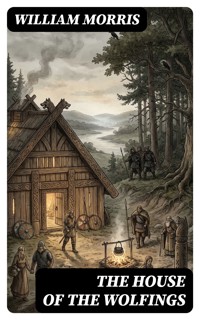
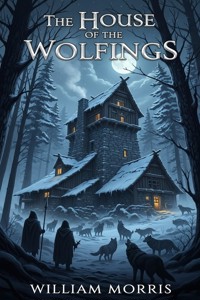
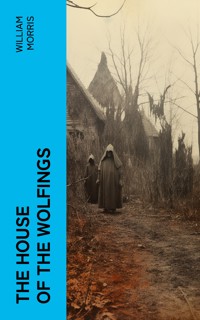
William Morris's "The House of the Wolfings" is a captivating exploration of myth and medievalism, set in a fantastical reimagining of ancient Germanic tribes. Written in an archaic yet lyrical style, the narrative echoes the rhythms of epic poetry, imbued with Morris's deep appreciation for the interconnectedness of nature and humanity. This richly detailed work employs a vivid symbolic landscape, drawing upon historical sources and Morris's interests in Norse legends, which serves to bridge the mythical past with a critique of contemporary Victorian society in the late 19th century. William Morris, a key figure in the Arts and Crafts Movement, was not only a writer but also a designer, social activist, and socialist thinker. His immersion in medieval culture and a profound commitment to artistry informed his storytelling, leading him to create a world that embodies the harmony of craftsmanship and nature. Morris's passion for reviving ancient traditions and his critique of industrialization are evident throughout the novel, reflecting his broader political beliefs and artistic ideals. A masterwork of speculative fiction, "The House of the Wolfings" is highly recommended for readers seeking deeper insights into the interplay of myth, history, and society. Morris's deft storytelling invites readers to inhabit a world where valor, community, and beauty reign, making it a must-read for lovers of fantasy and historical literature alike. In this enriched edition, we have carefully created added value for your reading experience: - A succinct Introduction situates the work's timeless appeal and themes. - The Synopsis outlines the central plot, highlighting key developments without spoiling critical twists. - A detailed Historical Context immerses you in the era's events and influences that shaped the writing. - An Author Biography reveals milestones in the author's life, illuminating the personal insights behind the text. - A thorough Analysis dissects symbols, motifs, and character arcs to unearth underlying meanings. - Reflection questions prompt you to engage personally with the work's messages, connecting them to modern life. - Hand‐picked Memorable Quotes shine a spotlight on moments of literary brilliance. - Interactive footnotes clarify unusual references, historical allusions, and archaic phrases for an effortless, more informed read.
Das E-Book können Sie in Legimi-Apps oder einer beliebigen App lesen, die das folgende Format unterstützen:
Veröffentlichungsjahr: 2022
Ähnliche






The House of the Wolfings
Table of Contents
Introduction
In a deep-bordering forest where freedom meets the iron tread of an encroaching empire, a house of kinsfolk must decide what it will defend, and at what human cost.
The House of the Wolfings, first published in 1889, is a prose-and-verse romance by William Morris, the English poet, designer, and social thinker whose late fiction helped shape modern fantasy. Set in an imagined early Germanic past on the fringes of the Roman world, the book follows a tribal household—the Wolfings—as their community confronts invasion. Without relying on modern fantasy’s machinery, Morris builds a world from customs, councils, song, and shared labor, sketching a society whose values and vulnerabilities are tested by war. The result is both a stirring narrative and a meditation on belonging, memory, and the bonds of kin.
Its classic status rests first on craft. Morris’s language, consciously archaic yet lucid, draws on his lifelong engagement with medieval and Norse literature. He interweaves alliterative verse with measured prose, giving the narrative a ceremonial cadence that evokes oral tradition without sacrificing clarity. Scenes flow from hearth to battlefield with ritual poise, and speeches carry the weight of communal law as well as personal feeling. The book’s historical coloration—tools, feasts, moot-like deliberations—creates a persuasive texture that predates yet anticipates later historical-fantasy hybrids. In restoring the dignity of the romance form, Morris produced a work whose style and structure still feel formally distinctive.
The book has also proven influential. Morris’s late romances offered an early model for building a coherent secondary world out of pre-medieval lifeways rather than overt magic. Their blending of mythic mood with concrete social detail provided a template for twentieth-century fantasy. Writers including J. R. R. Tolkien read Morris and absorbed elements of his diction, song-filled storytelling, and attention to fellowship, landscape, and ancestral memory. E. R. Eddison, among others, drew upon Morris’s example in seeking epic scope through antique cadence. The House of the Wolfings stands therefore not only as a literary achievement in itself, but as a keystone in the genre’s development.
At the heart of the narrative is a set of enduring themes: the duties of kinship, the costs of resistance, and the tension between communal law and individual desire. Morris contemplates what it means to inherit a place and a name, and how such inheritances bind people to one another in crisis. He is attentive to grief as well as glory, to the weary logistics of war as much as its bursts of valor. The book navigates questions of authority and consent within a house of free people, measuring strength not only by arms but by the resilience of custom and care.
Morris’s world-building is persuasive because it is social as well as scenic. The Wolfings live among neighboring houses in a forested borderland of river, meadow, and hall. Decisions arise in gatherings; craft and ritual shape daily rhythms; and the land itself—its mists, tracks, and timbers—becomes a protagonist of sorts. The Roman advance is felt first as rumor and footprint, then as an organizing pressure upon the community’s choices. By attending to weaving rooms and watch-fires alike, the book demonstrates how a people’s identity is sustained across work, ceremony, and story, not simply proclaimed in battle.
Form deepens meaning. The interludes of song and alliterative speech are not decorative pauses, but carriers of memory and motive. The verses encode lore, recall oaths, and momentarily lift the narrative into the timeless register of legend, then return it to the earth of strategy and toil. This oscillation gives the story both breadth and intimacy, balancing public ritual with private thought. Morris’s prosody, informed by his translations from Icelandic sagas, lends authenticity without imitation, allowing readers to feel tradition as living matter rather than museum display.
The book also reflects the author’s convictions about art, labor, and fellowship. Morris, a leading figure of the Arts and Crafts movement, believed beauty belonged to the common life of a community. Here, craftsmanship is everywhere—carved pillars, woven garments, shaped shields—and it signifies dignity as much as ornament. While the narrative avoids didactic intrusions, its sympathy clearly lies with a self-governing people defending home and custom against centralized power. The emphasis on shared work and deliberation, and on the moral weight of collective decision, connects the tale to Morris’s broader cultural commitments.
As a story, The House of the Wolfings balances lyric reflection with tactical momentum. Councils and messengers, scouts and feasts, vows and partings compose a rhythm that mirrors communal life under strain. Morris is sparing with spectacle, yet precise about movement, terrain, and the chain of cause and response. Conflict unfolds through choices—when to march, where to stand, how to weigh counsel—not through surprise alone. The result is a narrative that honors both passion and prudence, letting character emerge from conduct, and letting the landscape guide strategy as surely as it frames emotion.
In literary history, the book marks a turning point between medievalism and modern fantasy. Rather than transplanting chivalric romance, Morris reconstructs an earlier, tribal world whose customs feel internally coherent. This seriousness of setting, joined to an elevated but controlled style, offered later writers a path toward epic without pastiche. Its restraint with overt supernatural machinery also broadened fantasy’s possibilities, showing how mythic atmosphere can arise from ritual, place, and speech. That achievement influenced the evolution of secondary-world storytelling and remains instructive for readers and writers alike.
For contemporary readers, the prose may seem ceremonious at first. Yet its cadence soon discloses purpose: it slows the eye to notice making, naming, and remembering. If one reads with the ear, the sentences carry a steady music, and the inserted songs gather weight as communal testimony. The absence of modern slang clears space for old words to do serious work—house, kin, hall, field—so that the emotional stakes appear as features of a shared life rather than private drama. In this way, style and substance align, guiding us into the Wolfings’ moral weather.
The House of the Wolfings endures because it speaks to perennial concerns: how a community keeps faith under pressure; how love of land and lineage can inspire courage without curdling into cruelty; how memory can fortify justice. Its portrait of collective decision-making, its unsentimental respect for labor, and its wary gaze at empire feel timely. At once historically flavored and imaginatively free, it welcomes readers who seek grandeur without bombast and intimacy without triviality. Morris offers not escapism but encounter—the chance to stand with a house of free people and consider what, in any age, is worth defending.
Synopsis
William Morris’s The House of the Wolfings (1889) is a prose-and-verse romance set among early Germanic kindreds who dwell in a forested riverland called the Mark. It follows the Wolfings, one household in a web of free families, as a powerful southern empire presses into their country. The narrative’s archaizing style and interlaced lays present customs, crafts, and bonds before war disturbs them. Rather than a modern fantasy with elaborate magic, it offers a mythic-historical vision where belief, omen, and kinship guide action. The story moves from pastoral rhythms to gathering danger, as rumors of encampments and scouts’ tidings rouse councils in the hall.
The book lingers on the social fabric that makes resistance meaningful. Each House keeps a timber hall, shared stores, and ancestral gear; women tend the hearth, manage goods, and uphold memory while warriors hunt and ward the borders. Decisions arise in open rede, where elders, captains, and seers weigh risk and honor. Neighbor kindreds pledge mutual aid without a single king, and hospitality flows with obligations. The Mark’s way of life is depicted in work-songs, feasts, and rites, rendering the stakes tangible. Against this, news grows of disciplined foes advancing by road and river, whose order, pay, and engines differ from the Markmen’s.
At the Wolfings’ center stands Thiodolf, a seasoned war-leader bound to his people by affection and duty rather than compulsion. His strength is balanced by counsel from figures who channel other kinds of authority, including a prophetic maiden associated with the hall-fire and the Wood-Sun, a mysterious woman of the wildwood. The latter embodies a perilous grace that draws Thiodolf beyond the common lot. Their meetings pose a tension between personal love and public service, and a fateful gift of war-gear becomes a test of his place among his folk. The narrative treats these bonds as living forces, not mere ornament.
When the southern host takes the field, the kindreds of the Mark assemble swiftly. Runners carry messages, the horn calls men to weapon-taking, and the rede sets a plan for watch, foray, and battle. The empire’s soldiers move in column, make fortified camps, and rely on strict discipline; the Mark’s defenders answer with knowledge of river and thicket, swift musters, and communal resolve. Morris details the logistics of shields, spears, and horses, as well as the unseen labor that feeds and equips fighters. The women keep the hall’s order and receive omens, while the host marches out under chosen captains.
The campaign begins with scouts’ encounters and small fights that measure the strengths of each side. The invaders probe the wood’s edges and test crossings; the Markmen harry lines of march, take prisoners, and learn the temper of their opponents. Messages pass between allied Houses, while the empire’s commanders pursue their own stratagems, seeking to divide or draw the defenders into disadvantage. The narrative alternates the quick movement of war-bands with the stillness of council chambers, maintaining focus on how decisions are made as much as how swords are swung. As losses mount, the need for patience and clarity grows.
Between marches, the story returns to the hall, where verses frame memory and courage. The seer of the House speaks warnings in veiled images, and household elders recall ancestral deeds to anchor the present. These interludes show how poetry and ritual knit the community, binding separate acts into a shared purpose. The prose slows to depict weaving, smithcraft, and the setting of watches, emphasizing that survival depends on mundane continuities no less than valor. Thiodolf’s leaders weigh tidings soberly, tempering eagerness with prudence. The political life of the Mark—informal yet binding—appears as a counter-order to imperial hierarchy.
As the armies close for weightier clashes, Thiodolf’s personal struggle sharpens. The strange war-gear bound up with the Wood-Sun’s world promises protection yet carries an ambiguity that touches freedom, fate, and belonging. Counselors urge him to consider what leadership requires when the life of one might sway the fortunes of many. The narrative conducts this dilemma alongside the thud of shields and flight of spears, presenting valor not as reckless daring but as the capacity to balance competing goods. The southern commanders tighten their net, and the kindreds align their ranks, while song and omen keep the question alive.
The later movement presses toward a decisive encounter that will test the Mark’s cohesion. Messengers race between halls, the rede meets in longer sittings, and the Wolfings’ hall becomes both sanctuary and sign of what must be defended. Tactics shift from harassment to steadier array, even as weather and weariness weigh on the host. The Wood-Sun’s presence flickers at the margins, reminding the tale that choices reverberate beyond calculation. Without lingering on carnage, the prose charts a narrowing of options that compels clear commitments. The outcome remains held in suspense, the narration emphasizing cost, courage, and the endurance of the houses.
By its close, The House of the Wolfings has framed a meditation on freedom, fellowship, and the burdens of command under the shadow of empire. Its prosimetrum gives emotional amplitude to civic life, allowing song to interpret action and action to test belief. The book’s enduring significance lies in how it models communal decision-making and rooted stewardship without denying tragedy or complexity. It also demonstrates a method of mythic historical fiction that would inform later fantasy traditions, favoring moral texture over spectacle. Above all, it leaves readers with an image of a people who recognize that how they live is what they defend.
Historical Context
William Morris’s The House of the Wolfings is set on the forested frontier between Rome and the Germanic world, evoking a period roughly spanning the first to the fourth centuries CE. The narrative landscape—river valleys, deep woods, and communal halls—reflects the social institutions that framed life there: Roman military governance and taxation on one side; on the other, kindreds, assemblies, war-leaders, and sacral customs among free farmers and warriors. The novel inhabits this borderland, where imperial camps, roads, and discipline meet household-based agrarian communities. It draws on classical ethnography and medieval saga to imagine a society ordered by kinship, gift-giving, seasonal labor, and ritual responsibility.
A central historical backdrop is Rome’s attempt to expand and stabilize control beyond the Rhine and Danube. Augustan campaigns in Germania and the defeat of Publius Quinctilius Varus in 9 CE curtailed permanent occupation east of the Rhine, yet Rome continued to project power through punitive expeditions, client relationships, and frontier garrisons. The novel’s depiction of disciplined legions pressing into the forest echoes this strategic pattern. While not tied to a single campaign, the scenario recalls how Roman commanders built roads, forts, and supply lines to assert dominance, attempting to draw tribal societies into imperial logistics, tribute, and auxiliary service.
Another relevant episode is the second-century Marcomannic Wars (166–180 CE) under Marcus Aurelius, when tribes pressed hard upon the Danubian limes. Later, in the third century, Goths and other confederations raided and migrated amid imperial crises. Morris blends such pressures into a composite frontier war, emphasizing the relentless pull of a central power against decentralized communities. The historical rhythm—mobile tribal confederations confronting fortified Roman lines—reinforces the novel’s themes of autonomy, collective defense, and the high human cost when agrarian lifeways meet a professional, expansionist army sustained by a vast administrative machine.
Classical testimony, particularly Tacitus’s Germania (c. 98 CE), supplies a framework for the society Morris imagines. Tacitus describes assemblies of free men, the importance of kin and comitatus loyalties, the circulation of gifts and honor, and the moral weight of oaths. He also notes the influence of women as counselors and seeresses in certain contexts. The book’s household halls, martial councils, and ritualized decision-making echo this ethnography, while refusing to reduce the Germanic world to stereotypes. Instead, it reconstructs a political culture rooted in personal bonds, shared property in land and resources, and reputation regulated by communal memory and song.
Daily life on this frontier was shaped by mixed farming, herding, hunting, and craft production. Archaeology of the European Iron Age indicates longhouses, storage pits, and evidence of weaving, leatherworking, and metalwork as household and specialist tasks. Seasonal rhythms governed sowing, harvest, and transhumance, while forest clearings and river crossings became strategic spaces. The novel’s attention to textiles, food stores, and the physical intimacy of communal halls reflects such material realities. It conjures a world where work, worship, and warfare were interwoven and where the stability of families and herds might be overturned swiftly by raids, levies, or scorched frontiers.
On the Roman side, engineering and organization were decisive. Stone and timber forts, marching camps, and the limes (frontier systems) in the first to third centuries CE consolidated Roman presence. Roads, bridges, and riverine transport tied garrisons to depots and provincial capitals, enabling regular pay, supply, and reinforcement. This infrastructure depended on taxation in coin and kind, on requisition, and on cooperative or coerced labor. The book reflects those realities by emphasizing drills, sentries, and the material apparatus of empire. The contrast between the legions’ discipline and the tribes’ flexible, kin-based mobilization shapes the story’s political rhythm.
Frontier life also produced contact and exchange as much as conflict. Archaeological finds show Roman goods—glassware, brooches, coins—moving into the barbaricum via trade, subsidies, or plunder, while Germanic weapons and styles evolved in dialogue with imperial technologies. The fourth-century Nydam boat from Denmark, discovered in 1863, illustrates seafaring craft and ritual deposit practices that intrigued nineteenth-century scholars. Such discoveries, alongside evidence of mixed camps and diplomatic gift-giving, underwrite the book’s sense that the border was porous. The narrative mirrors a zone where treaties, hostage exchanges, and intermarriage could accompany raids and counter-raids.
Morris’s stylistic choices derive from medieval northern literature. He studied Icelandic and, with Eiríkr Magnússon, translated sagas, including The Story of Grettir the Strong (1869) and The Volsunga Saga (1870). Travels to Iceland in 1871 and 1873 deepened his familiarity with saga cadence, motifs of fate, and the interplay of prose and verse. The House of the Wolfings reproduces that texture, mixing chapters with chantlike songs and employing an archaizing diction. The presence of terms reminiscent of Old Norse lore—such as “Mirkwood,” echoing myrkviðr in early poetry—signals his intention to frame the Germanic frontier through the lens of heroic narrative memory.
Victorian medievalism formed the broader cultural matrix for Morris’s vision. Influenced by John Ruskin’s moral critique of industrialization, Morris helped translate medieval aesthetics into modern practice. He co-founded a decorative arts firm in 1861, championed handcraft and honest materials, and founded the Society for the Protection of Ancient Buildings in 1877 to resist destructive restorations. The novel’s admiration for patterned cloth, carved wood, and well-made gear reflects these commitments. By honoring the beauty of everyday tools and dwellings, Morris implicitly contrasts a pre-capitalist craft culture with the standardized wares of the machine age, making art a measure of social health.
The social and economic context of late nineteenth-century Britain intensified these contrasts. Rapid urbanization, factory discipline, and mechanized textile production reordered work and family life. Morris joined the Democratic Federation in 1883 and, after a split, helped found the Socialist League in 1884, advocating for collective ownership and meaningful labor. He edited the League’s paper, Commonweal, from 1885. Against this background, The House of the Wolfings, published in 1889, imagines communal property, shared decision-making, and work saturated with purpose. Without idealizing hardship, it counters wage-labor fragmentation by revisiting kinship, commons, and craft as viable social foundations.
Imperial debate also shadows the novel. The 1880s saw Britain expand its empire amid the “Scramble for Africa,” marked by the Berlin Conference (1884–85), and fight campaigns such as the Sudan conflict, including the fall of Khartoum in 1885. Public argument over the costs, profit, and morality of empire intensified. Morris’s socialist lectures criticized capitalism and imperial aggression as enemies of humane life and art. His portrayal of Rome—administratively efficient, outwardly civilizing, yet predatory—invites comparison with contemporary empire. The forest communities’ determination to resist incorporation reads as an ethical inquiry into conquest and the price of order.
Class tension sharpened at home. The later 1880s witnessed the emergence of “New Unionism,” organizing unskilled workers, and mass demonstrations in London. The Trafalgar Square events of 1887, often called “Bloody Sunday,” and the London Dock Strike of 1889 crystallized demands for fair wages and political representation. Morris and the Socialist League agitated, published, and spoke amid these confrontations. Appearing the same year as the dockers’ victory, The House of the Wolfings resonates with a collective ethos: councils where commoners speak, leaders are accountable, and solidarity is survival. The historical romance becomes a vehicle for contemporary debates about authority and consent.
Publishing and reading practices also shape the book’s context. Nineteenth-century Britain saw expanding literacy, cheaper print, and powerful circulating libraries, which encouraged a wide market for fiction and essays. Historical romance, revitalized after Walter Scott, flourished in the 1880s alongside adventure tales by writers like H. Rider Haggard. Morris adapted the form while refusing purely escapist thrills, embedding reflection on work, beauty, and justice in a saga-like narrative. Though not a didactic tract, the novel leverages popular appetite for the past to reconsider the future, anticipating later fantasy’s capacity to interrogate modern institutions through alternative, historically inflected worlds.
Philology and the prestige of “Teutonic” origins provided another Victorian scaffold. The comparative work of scholars such as the Grimm brothers in the early nineteenth century and, later, university philology popularized ideas about Indo-European languages and Germanic antiquity. In Britain, studies of Anglo-Saxon law and custom—like J. M. Kemble’s mid-nineteenth-century writings—fed a belief that English liberties descended from Germanic forebears. Morris engages this discourse critically. His free assemblies and folk-rights echo Anglo-Saxonist themes, yet the novel’s sympathy extends beyond ethnonational celebration, emphasizing shared human needs and the dangers of elevating conquest into a civilizational mission.
Archaeology’s professionalization enriched the available picture of the Roman–Germanic frontier. The Three-Age System (stone, bronze, iron), developed in Scandinavia in the early nineteenth century, structured museum displays and public understanding. Excavations of the Upper German–Raetian limes and publication of finds—forts, watchtowers, inscriptions—made Roman infrastructure palpable. In northern Europe, discoveries such as the Nydam boat (unearthed in 1863) and bog bodies revealed ritual and martial practices on the barbarian side. Readers in Morris’s day thus encountered a frontier reconstructed from spades and texts alike, enabling a historically grounded yet imaginative reconstruction like Wolfings.
Religious change frames the longer history hinted at in the book. The novel presents a pre-Christian Germanic world of omen, sacrifice, and fate, consistent with classical reports and later Norse evidence. Historically, parts of the Germanic world converted between the fourth and eighth centuries, with the Goths adopting Arian Christianity in the fourth century and missions spreading in the following centuries. By staging its action before such conversions, the book explores social cohesion rooted in ancestral rites and communal oaths. That focus supports its argument about the sources of authority—ritual, reciprocity, and reputation—versus bureaucratic power and universal law.
Gender and craft supply a further Victorian link. Debates about women’s education and public roles intensified in the 1880s and 1890s, sometimes labeled the “New Woman” moment. Morris’s fiction often gives women advisory, prophetic, or artisan agency within communal life. In his own practice, women were central to design work; his daughter May Morris directed the embroidery department of Morris & Co. from the mid-1880s, professionalizing a traditionally domestic art. The book’s respect for weaving and textile knowledge—skills frequently associated with women—accords with Morris’s broader insistence that all useful labor can be art, and that culture falters when such knowledge is devalued or mechanized away. The House of the Wolfings functions as both historical mirror and critique. Drawing on Roman frontier history, saga style, and Victorian debates about art, labor, and empire, it opposes conquest that reduces communities to supply lines and markets. It imagines collective self-rule based on shared work, beauty, and responsibility, neither romanticizing poverty nor excusing domination. In 1889, amid imperial expansion and labor unrest, Morris offered not antiquarian escapism but a disciplined experiment in social memory, asking readers to weigh what must be defended in any age: the conditions that make meaningful work, mutual aid, and public joy possible.
Author Biography
William Morris (1834–1896) was an English designer, poet, translator, printer, and socialist whose work helped define the Arts and Crafts movement in the later Victorian era. Active across architecture-adjacent design, textiles, wallpapers, stained glass, and book arts, he sought to reunite beauty with everyday life through careful craftsmanship and ethical labor. As a writer he produced narrative poetry, prose romances, and influential essays, and as a cultural reformer he founded organizations and firms that shaped taste and production. His circle included artists linked to the Pre-Raphaelite movement, while his Kelmscott Press transformed typography and page design. Few nineteenth-century figures matched his range or lasting impact.
Raised in England and widely read in medieval literature, Morris studied at Exeter College, Oxford, in the early 1850s. There he formed a lifelong friendship with Edward Burne-Jones and encountered the ideas of John Ruskin, whose defense of Gothic architecture and handcraft profoundly affected him. Through Burne-Jones he met members and associates of the Pre-Raphaelite circle and began to draw, write, and study historic ornament with new seriousness. He briefly worked in an architect’s office and traveled to see medieval buildings, cultivating a love of Northern and early English forms. These experiences established his commitment to “useful” art, historical example, and collaborative practice.
After architectural training with G. E. Street, Morris collaborated with the architect Philip Webb on the Red House, an emblem of functional, handcrafted domestic design. In 1861 he co-founded the firm Morris, Marshall, Faulkner & Co., which produced furniture, wallpapers, textiles, stained glass, and decoration for churches and homes. The firm emphasized traditional materials, integrity of workmanship, and motifs drawn from nature and medieval pattern. Reorganized as Morris & Co. in the 1870s, it expanded its reach through showrooms and commissions. Designs such as Trellis, Willow, and Strawberry Thief became widely admired, illustrating Morris’s belief that good design should serve everyday life.
Morris’s literary career began with The Defence of Guenevere and Other Poems, a collection steeped in medieval themes. He returned to long narrative forms with The Life and Death of Jason and the multi-part cycle The Earthly Paradise, works that found a substantial Victorian readership. He translated and adapted Norse materials in partnership with the Icelandic scholar Eiríkur Magnússon, including Grettis Saga and the Völsunga saga, and he traveled to Iceland in the early 1870s to deepen this engagement. In prose he developed historical and utopian romances—among them A Dream of John Ball, News from Nowhere, The Wood Beyond the World, and The Well at the World’s End.
Committed to cultural reform, Morris founded the Society for the Protection of Ancient Buildings in 1877 to oppose destructive “restoration” and promote careful conservation. In the 1880s he became active in socialist politics, first joining a socialist federation and then helping to organize the Socialist League. He edited and wrote for Commonweal, delivered widely attended lectures, and argued that dignified labor and communal cooperation were the necessary basis for art. Essays such as Useful Work versus Useless Toil and How I Became a Socialist framed his beliefs for a general audience, linking craftsmanship, well-made goods, and social justice in a coherent, persuasive program.
In 1891 Morris established the Kelmscott Press to revive fine printing. Designing typefaces inspired by early printers, commissioning handmade papers and inks, and supervising ornament, he pursued a unified page in which text and decoration formed a single work of art. The press issued classics, translations, and his own romances, culminating in The Works of Geoffrey Chaucer, printed in 1896 with illustrations by Edward Burne-Jones. Kelmscott’s books helped spark the private-press movement in Britain and beyond, demonstrating that industrial modernity could coexist with exacting, historically informed craft, and that readers would value books as artifacts as well as vehicles for texts.
Morris worked at a formidable pace into the 1890s, balancing design, printing, scholarship, and public lecturing until his death in 1896. His legacy extends across disciplines: Arts and Crafts principles influenced design education and studio practice; SPAB reshaped conservation standards; and Kelmscott set benchmarks for typographical harmony. His romances and saga translations nourished later fantasy literature; several twentieth-century writers, including J. R. R. Tolkien, acknowledged his example. Morris & Co. patterns remain in production, and museum collections worldwide preserve his textiles, wallpapers, and books. Debates on sustainable making, the ethics of work, and the social value of beauty continue to draw on his ideas.