Erhalten Sie Zugang zu diesem und mehr als 300000 Büchern ab EUR 5,99 monatlich.
- Herausgeber: Musaicum Books
- Kategorie: Sachliteratur, Reportagen, Biografien
- Sprache: Englisch
The James Joyce Collection is a landmark edition that includes five of the author's most famous works in one comprehensive volume. The literary style of James Joyce is known for its experimental use of stream-of-consciousness, intricate symbolism, and richly detailed prose that delves deep into the human psyche. Combining works such as 'Dubliners', 'A Portrait of the Artist as a Young Man', 'Ulysses', 'Finnegans Wake', and 'Chamber Music', this collection showcases Joyce's evolution as a writer and his profound impact on modernist literature. Each work immerses the reader in Joyce's unique narrative style and exploration of themes such as identity, memory, and the complexities of human relationships. The James Joyce Collection is a must-read for those interested in delving into the complexities of modernist literature and the innovative storytelling of one of the most influential authors of the 20th century. In this enriched edition, we have carefully created added value for your reading experience: - A comprehensive Introduction outlines these selected works' unifying features, themes, or stylistic evolutions. - The Author Biography highlights personal milestones and literary influences that shape the entire body of writing. - A Historical Context section situates the works in their broader era—social currents, cultural trends, and key events that underpin their creation. - A concise Synopsis (Selection) offers an accessible overview of the included texts, helping readers navigate plotlines and main ideas without revealing critical twists. - A unified Analysis examines recurring motifs and stylistic hallmarks across the collection, tying the stories together while spotlighting the different work's strengths. - Reflection questions inspire deeper contemplation of the author's overarching message, inviting readers to draw connections among different texts and relate them to modern contexts. - Lastly, our hand‐picked Memorable Quotes distill pivotal lines and turning points, serving as touchstones for the collection's central themes.
Sie lesen das E-Book in den Legimi-Apps auf:
Seitenzahl: 2307
Veröffentlichungsjahr: 2017
Das E-Book (TTS) können Sie hören im Abo „Legimi Premium” in Legimi-Apps auf:
Ähnliche

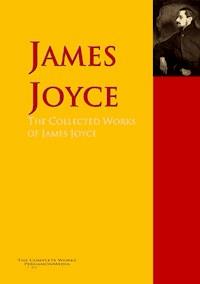



THE JAMES JOYCE COLLECTION - 5 Books in One Edition
Published by
Books
Table of Contents
Introduction
The James Joyce Collection – 5 Books in One Edition presents a concerted view of a writer whose innovations shaped modern literature. Drawn from a decisive fifteen-year span, these works chart Joyce’s artistic ascent from early lyricism to the expansive architectures of the modernist novel. The volume gathers a book of poems, a collection of short stories, a Künstlerroman, a play, and a novel, allowing readers to encounter varied modes through which Joyce explored consciousness, language, and city life. Together they establish a continuum: the intimate music of feeling, the social texture of Dublin, the formation of an artist, the trials of fidelity, and the epic of an ordinary day.
The purpose of assembling these five titles is to offer a coherent, representative arc of Joyce’s achievement up to 1922. While not a complete oeuvre, the collection spans major genres Joyce practiced: poetry (Chamber Music), short fiction (Dubliners), the novel of development (A Portrait of the Artist as a Young Man), drama (Exiles), and the landmark modernist novel (Ulysses). Read together, they reveal a persistent set of concerns—identity, belonging, moral choice, and artistic freedom—while demonstrating a widening stylistic range. The edition thus serves both as an introduction for new readers and a compact, cross-referential resource for sustained study.
Chamber Music, Joyce’s early collection of poems, establishes his abiding attention to cadence, motif, and the musicality of language. The lyrics move through tones of longing, courtship, and urban atmosphere, balancing simplicity of image with intricate sound patterns. Though concise, the volume maps tensions that recur throughout his prose: intimacy and distance, desire and scruple, the public street and the private room. It also exhibits Joyce’s attunement to the spoken and sung voice, a sensitivity that later informs his narrative rhythms and interior monologues. As an opening in this collection, it signals the ear and temperament that underwrite Joyce’s subsequent experiments.
Dubliners gathers short stories set in early-twentieth-century Dublin, presenting ordinary lives with exacting realism. Joyce attends to workplaces, parlors, streets, and public houses, tracing habits, aspirations, and disappointments across age and class. The collection is notable for its poised narration and for moments of heightened awareness that change, however briefly, a character’s perception. Without exceeding the bounds of everyday experience, these stories construct a composite portrait of a city and its pressures—social, religious, and economic. Their restraint and precision prepare readers for the psychological depth that Joyce would pursue in longer forms while retaining a clear, accessible surface.
A Portrait of the Artist as a Young Man follows Stephen Dedalus from childhood through adolescence as he confronts family expectations, schooling, and the claims of nation and religion. The novel’s style evolves with its protagonist, moving from childlike textures to a more complex, inwardly tuned prose. Joyce’s use of free indirect narration and shifting idiom allows readers to experience the growth of a consciousness from within, while the book’s central concern is the forging of an artistic vocation. The premise is simple—a young man seeks the terms of his life—but the method is revolutionary, aligning language and form with development itself.
Exiles, Joyce’s only published play, places a small group of characters in a charged debate about love, trust, and personal freedom. Set over a short span and in a limited number of rooms, the drama intensifies questions of sincerity and autonomy that run through Joyce’s work. Its dialogue-driven exploration of ethical choice and emotional risk provides a theatrical counterpart to the introspective analyses of the novels. The play’s spareness foregrounds motives and speech acts, inviting audiences to weigh promise, permission, and truthfulness. In the sequence of this collection, Exiles acts as a bridge between psychological narrative and more overt experimental design.
Ulysses (1922) chronicles a single day in Dublin, following intersecting paths that draw together the lives of a young teacher, a working advertising canvasser, and a singer at home. Its episodes roam through streets, workplaces, and dwellings, folding past into present as thought and sensation mingle with the city’s sounds. Joyce organizes this breadth with a structural principle that parallels an ancient epic, granting ordinary events a resonant frame. Each episode employs distinctive styles and devices, ranging from interior monologue to public forms. The premise remains direct—one day in a city—yet the variety of voices yields an unprecedented portrait of experience.
Across these works, Joyce’s unifying themes are unmistakable. He probes the terms of belonging—family ties, civic duty, and faith—while charting the desire to step beyond inherited patterns. The city is a constant stage and participant, offering both confinement and possibility. Characters measure themselves against codes of conduct, the memory of childhood, and the pull of desire. Moments of clarity, often quiet and fleeting, recalibrate self-understanding. Exile, literal or felt, becomes a condition of insight as well as estrangement. Throughout, Joyce’s art remains committed to the textures of ordinary life and to the drama of inward decision.
Joyce’s stylistic hallmarks develop from the measured classicism of his early writing to the expansive experimentation of his later prose. He refines free indirect style into intimate proximity, employs interior monologue to render consciousness with immediacy, and devises episode-specific techniques that test the flexibility of prose. Sound—rhyme, rhythm, alliteration—guides diction and cadence. Allusion and structural patterning widen context without displacing the tactile realities of places and objects. Humor, parody, and pastiche interrupt solemnity and reveal the social life of language. Mapping, lists, and careful reference anchor the imaginative in verifiable local detail, a practice that grounds invention in place.
The publication histories of these books also illuminate Joyce’s persistence. Dubliners faced protracted delays before its eventual appearance in 1914, reflecting sensitivities around its candor and setting. A Portrait of the Artist as a Young Man followed in 1916 after earlier serial publication. Exiles appeared in 1918, extending Joyce’s range to the stage. Ulysses was first published in 1922, after portions had been serialized and amid controversy over its frankness and techniques. These contexts are integral to understanding Joyce’s aims: to describe experience precisely and to test the limits and capacities of modern narrative forms.
The lasting significance of Joyce’s work lies in its transformation of what narrative can encompass and how it can sound. He joined the minute and the monumental, granting weight to the commonplace without relieving it of ambiguity. Subsequent writers have drawn upon his methods of internal perspective, stylistic variation, and structural design to portray complex subjectivities and social worlds. The books herein continue to reward rereading because they align their procedures with their themes: self-creation, scrutiny of institutions, and the interplay between individual vision and communal life. In doing so, they helped define modernism’s challenge and its promise.
This edition is designed to be read as both a sequence and a set of distinct achievements. From Chamber Music’s lyric textures to Ulysses’ capacious city, the five books converse across forms, echoes, and recurring concerns. Readers may trace motifs—the pull of home and abroad, the claims of love and work, the calibration of speech and silence—while observing the steady enlargement of technique. Bringing these works together clarifies continuities that single volumes might obscure and invites comparative attention to Joyce’s craft. The collection offers an accessible yet rigorous pathway into one of literature’s most influential bodies of work.
Author Biography
Introduction
James Augustine Aloysius Joyce (1882–1941) was an Irish writer whose exploration of consciousness and language reshaped the modern novel. Born in Dublin and educated in Jesuit schools, he spent much of his adult life on the European continent, where he composed works that combined minute social observation with audacious formal experiment. The collection here traces his ascent from a young poet to a mature innovator: Chamber Music, Dubliners, A Portrait of the Artist as a Young Man, Exiles, and Ulysses (1922). Across them, Joyce forged techniques—interior monologue, shifting narrative styles, and mythic scaffolding—that influenced generations and altered readers’ expectations of what fiction can accomplish.
Joyce’s historical importance rests not only on innovation but on the depth of his engagement with place. Dublin appears throughout the collection as map, memory, and moral weather, captured with documentary detail yet refracted through increasingly complex forms. Chamber Music announces a musical ear; Dubliners renders ordinary lives in luminous, restrained prose; A Portrait charts a consciousness in formation; Exiles tests ideas about freedom in the theater; and Ulysses organizes a single day with encyclopedic reach. The arc reveals a writer turning private experience into public art, transforming local textures into cosmopolitan design while insisting that the everyday carries epic resonance.
Education and Literary Influences
Joyce’s education began at Clongowes Wood College and continued at Belvedere College, both Jesuit institutions known for rigorous training in languages and rhetoric. He then attended University College Dublin, where he studied modern languages and immersed himself in philosophy and aesthetics. Scholastic thinkers, especially Thomas Aquinas, informed his early formulations about art, while his reading of Dante, Aristotle, and classical rhetoric supplied a technical vocabulary for style. He admired continental authors—particularly Henrik Ibsen and Gustave Flaubert—whose example encouraged psychological nuance and structural discipline. These strands helped shape the epiphanic method and free indirect narration that would become central to Dubliners and A Portrait.
After university he left Ireland to work and write on the continent, living chiefly in Trieste with periods in Pola, Zurich, and later Paris. Teaching languages supported him while exposing him daily to polyglot speech and urban routines that fed his ear for dialogue and idiom. He studied Italian intensively and remained fluent in French, engaging with contemporary currents in Symbolism and naturalism. Classical texts, especially Homer, became an organizing resource for later work. The intellectual climate of multilingual port cities, combined with distance from Irish political and clerical pressures, afforded the perspective from which he fashioned Dublin as both subject and structure.
Literary Career
Chamber Music, his first published book, gathers delicate, musically patterned lyrics that reflect a youthful preoccupation with love, absence, and the play of sound. The poems draw on Elizabethan song and the cadences of liturgical and folk traditions, revealing a meticulous attention to rhythm that prefigures the prosodic experiments of his prose. Though later overshadowed by his fiction, the collection announced a craftsman of diction and tone. Its title hints at small forms achieving resonant harmonies, a principle Joyce carried into later work: the calibrated motif, the refrain, and the counterpoint of voices, all of which underpin the larger architectures of Dubliners and Ulysses.
Dubliners presents a suite of interlinked stories that observe ordinary citizens in situations of desire, duty, and hesitation. Joyce’s restraint—precise description, pared-down metaphors, and a calm narrative surface—gives the pieces documentary authority while allowing sudden pivots of insight. He pursued publication tenaciously against objections to candid material, signaling his resolve to depict the city unadorned. The concept of an epiphany, moments when latent tensions crystallize, organizes the collection without overt authorial judgment. Its realism is exacting yet compassionate, creating a civic portrait whose cumulative power exceeds any single plot. Dubliners established Joyce as a writer of scrupulous detail and moral nuance.
A Portrait of the Artist as a Young Man transforms the short story’s epiphanies into a full developmental arc. The novel follows a reflective youth as he negotiates family expectations, religious training, and cultural allegiance while discovering a vocation. Stylistically, it tracks linguistic growth: the prose evolves from childlike textures to supple intellectual patterns, mirroring the protagonist’s widening consciousness. Free indirect discourse and interior monologue render thought as it forms, not merely as expressed. The result is both a coming-of-age narrative and a manifesto for artistic autonomy, laying formal and thematic groundwork for Ulysses, where questions of identity, language, and belonging assume panoramic scope.
Exiles, Joyce’s only completed play, approaches themes familiar from his prose—jealousy, loyalty, truth-telling, and the ethics of freedom—through the rigors of stage dialogue. Influenced by Ibsen’s psychological realism, it sets intimate relationships against competing claims of personal autonomy and social expectation. The drama’s understated actions focus attention on language and motive, testing whether candor can coexist with love. Reception was mixed, with some readers finding its quiet intensity disconcerting, yet the play marks a crucial experiment: it externalizes conflicts that in the novels are interior and discursive. Exiles thus becomes a bridge between Portrait’s introspection and Ulysses’ expansive orchestration of voices.
Ulysses (1922) consolidated Joyce’s ambitions into a modern epic structured around a single day in Dublin. Each episode adopts distinct techniques—newspaper headlines, catechism, parodies of English prose—while interior monologue captures thought in motion. Homeric correspondences provide a loose armature, but the book’s heart lies in the compassionate portrayal of city life and in the capacious humanity of its central figures. Publication was contested; portions deemed obscene provoked bans that lasted into the 1930s in some countries. The eventual legal vindication underscored its significance. Ulysses expanded the novel’s range of styles and subjects, demonstrating that everyday experience could sustain encyclopedic artistry.
Beliefs and Advocacy
Joyce’s work is inseparable from his skeptical stance toward institutional authority, especially clerical influence in Irish life, and from his insistence on the artist’s independence. He neither joined political movements nor advanced programs, yet his portrayals of conscience, sexuality, and civic constraint challenged censorship and parochialism. Cosmopolitan by circumstance and conviction, he valued linguistic plurality and the dignity of ordinary citizens, giving central place to characters often marginalized in public narratives. His approach to nationalism was critical rather than dismissive: he sought a literature equal to the country’s complexity without sacrificing individual freedom. The controversies surrounding Ulysses made him an emblem of artistic liberty.
Final Years & Legacy
After Ulysses, Joyce embarked on an even more experimental project later published as Finnegans Wake, a work beyond this collection but crucial to his late phase. He continued to live mainly on the continent, spending extended periods in Paris and returning to Zurich during wartime. Persistent eye problems and related surgeries complicated his labor but did not halt it. He maintained a disciplined routine of revision and collaboration with editors and friends who assisted with research and proofs. Joyce died in Zurich in 1941 following surgery, leaving a reputation both formidable and embattled, with ongoing debates about textual variants, publication histories, and the proper presentation of his work.
Joyce’s legacy radiates across disciplines. Novelists, poets, dramatists, and composers have absorbed his techniques of interiority, structural variation, and musical patterning. Academic fields grew around his writings, while readers worldwide mark Bloomsday each June, celebrating the imaginative reach of Ulysses and the physical city that sustains it. Dubliners remains a model of short fiction’s civic possibilities; A Portrait continues to define the modern apprenticeship of the artist; Exiles persists as a rigorous test case in dramatic ethics; and Chamber Music endures for its lyrical clarity. Above all, Joyce demonstrated that local speech, faithfully rendered, can bear universal intelligence and feeling.
Historical Context
James Joyce’s career unfolded between the late Victorian moment and the interwar years, and the five works gathered here trace that trajectory from the 1900s to 1922. Ireland remained under British rule through most of this span, while European arts entered the modernist era. Joyce wrote in and about a capital city—Dublin—poised between tradition and modernity: a place of tramlines, newspapers, and municipal reform, yet also of confessional politics and tight social hierarchies. The collection captures distinct phases of this world: lyrical fin-de-siècle poetics (Chamber Music), pre-war urban realism (Dubliners), a modernist Bildungsroman (A Portrait), continental exile drama (Exiles), and a 1904-set epic of the everyday (Ulysses).
Irish political life at the turn of the century was shaped by the legacy of Charles Stewart Parnell’s fall in 1890 and by successive Home Rule campaigns. Party machines, local committees, and nationalist organizations dominated civic routines, while British institutions governed policing, taxation, and administration. These tensions inform the social textures of Dubliners and the public life glimpsed across Ulysses, which are set before the Easter Rising of 1916 but steeped in decades of agitation. Joyce’s focus on local speech, parish politics, and professional networks reflects a city suspended between imperial structures and the uncertain promise of constitutional or revolutionary change.
Cultural movements intensified political debate. The Gaelic League (founded 1893) promoted Irish-language revival; the Abbey Theatre opened in 1904, advancing a national drama associated with W. B. Yeats and J. M. Synge. Street protests over The Playboy of the Western World in 1907 exposed divisions between nationalist sensibilities and experimental art. Joyce engaged that ferment from a distance: he admired European innovators yet wrote about Dublin’s streets, shops, and schools rather than heroic myth. The contrast between revivalist ruralism and his urban, cosmopolitan emphasis frames the collection’s stance—more European in form, yet persistently attentive to Irish social reality and speech.
Religion and education shaped early twentieth-century Irish life. Catholic institutions dominated schooling and moral discourse, and Jesuit pedagogy was central to elite Catholic education in Dublin. The church’s influence on family authority, sexuality, and public decency intersected with British legal norms, creating overlapping systems of control. This institutional backdrop is crucial to A Portrait of the Artist as a Young Man, which traces intellectual formation within a confessional culture, and to Dubliners, where clerical presence and religious vocabulary permeate domestic scenes. The navigation of conscience, obedience, and personal vocation—matters of daily life in Catholic Ireland—threads through the collection without requiring doctrinal debate.
Dubliners was composed mainly between 1904 and 1907 and published in 1914 after years of disputes with printers and publishers over libel and obscenity. These delays arose from the book’s documentary precision: real streets, identifiable institutions, and recognizable public figures heightened legal risk under British and Irish libel standards. The collection thus preserves a pre-war Dublin with unusual fidelity—saloons, offices, quays, and tenements—and documents the city’s rhythms before the upheavals of 1916–1922. Its realism belongs to an international turn toward detailed urban observation, yet its specific references to municipal politics, charity structures, and commercial life anchor it in Dublin’s civic culture.
Ulysses, published in Paris in 1922, is set on a single day—16 June 1904—well before the First World War and Irish revolution. By fixing the action to that date, Joyce mapped a city still under imperial administration yet awash in modern print culture: morning and evening newspapers, classified advertisements, theatre listings, and political commentary. The novel’s detailed geography reflects contemporary Dublin cartography and transport, from bridges and quays to electrified trams. Its interest in journalism, urban trades, and the circulation of money and rumor mirrors the material conditions of Edwardian city life, offering a time capsule of civic routines just prior to seismic political change.
Chamber Music (1907) emerged from the fin-de-siècle lyric tradition and the Edwardian small-press scene; Elkin Mathews published the volume after earlier submissions of the poems. The sequence engages courtly and Elizabethan echoes shaped by late nineteenth-century aestheticism, aligning Joyce with cosmopolitan poetic currents rather than nationalist revivalism. Its modest print run and musicality encouraged settings by composers in subsequent decades, part of a broader early twentieth-century interest in art song across Britain and Europe. The book’s urban undercurrents—glimpses of streets and rooms—signal Joyce’s concern with modern intimacy and city life, anticipated here in refined lyric form before his major prose experiments.
A Portrait of the Artist as a Young Man was serialized in The Egoist (1914–1915) through the advocacy of Ezra Pound and Harriet Shaw Weaver, then published in book form in 1916 in New York. The Bildungsroman registers the intellectual and emotional education available in turn-of-the-century Dublin, including Jesuit instruction and university debates about aesthetics, nationalism, and faith. Formally, it participates in a wider European move toward interiority, adapting techniques associated with writers like Édouard Dujardin to render consciousness and style developmentally. Its appearance during wartime, and in the year of the Easter Rising, positioned the novel at a crossroads of artistic modernization and political transformation.
Exiles, composed in 1914–1915 and published in 1918, premiered in Munich in 1919. The play reflects Joyce’s sustained engagement with Henrik Ibsen’s drama—moral testing through dialogue, domestic stakes, and the claim of individual freedom against social pressure. Written amid wartime dislocation, it addresses questions of loyalty, mobility, and artistic independence that had become immediate for émigré communities. While London’s theatre culture remained under the Lord Chamberlain’s licensing regime, Exiles faced practical rather than spectacular censorship hurdles and was staged less frequently than Joyce’s prose circulated. Its Continental premiere underscores the international routes that modernist works often took to find stages and readers.
The First World War reshaped Joyce’s circumstances and the literary field. When conflict began in 1914, Trieste—where he had lived and taught—was part of Austria-Hungary; he relocated to neutral Zurich, joining a community of exiles, refugees, and artists. Switzerland’s relative stability allowed continued writing and contact with patrons and editors across borders, despite paper shortages, postal delays, and currency restrictions that disrupted publishing. In this climate, Joyce advanced Portrait, Exiles, and early portions of Ulysses. The war’s end altered maps and markets: Trieste moved under Italian sovereignty, and the postwar reconfiguration of Europe created new opportunities and obstacles for avant-garde literature and its transnational networks.
Censorship and obscenity law decisively shaped the publication and reception of Ulysses. Serialized excerpts in The Little Review (1918–1920) led to a 1921 conviction in a New York court under the Comstock laws, restricting U.S. circulation. The complete novel appeared in 1922 in Paris through Sylvia Beach’s Shakespeare and Company, beyond British and American legal reach. A landmark 1933 U.S. federal decision (United States v. One Book Called Ulysses) lifted the American ban, enabling a 1934 Random House edition. In Britain, legal obstacles eased sufficiently for an authorized Bodley Head edition in 1936, marking a shift from suppression to guarded acceptance of modernist experimentation.
The collection also reflects new publishing ecologies: little magazines, sympathetic editors, and private capital. Harriet Shaw Weaver supported Joyce financially and editorially, steering The Egoist Press to push his work in Britain. Ezra Pound connected Joyce to periodicals that championed experimental prose. In Paris, Sylvia Beach undertook the risky task of printing and distributing Ulysses, coordinating typesetting and errata under challenging conditions. In the United States, B. W. Huebsch issued Portrait and Exiles during the war years. These alliances exemplify how modernism relied on small presses, expatriate booksellers, and legal ingenuity to reach audiences beyond conservative commercial channels.
Technological and infrastructural change undergirds the urban textures of this collection. By 1901, Dublin’s tramways were electrified, shrinking distances between suburbs and city centre. Telegraph and telephone networks linked businesses and newspapers, while rotary presses and cheap newsprint expanded daily readership. Advertisements, public notices, and poster hoardings competed for attention, shaping perception and memory. Such developments informed Joyce’s interest in headlines, timetables, shopfronts, and the choreography of pedestrians and vehicles. The works do not celebrate technology uncritically; rather, they register how new media and transit systems reorganized time, labor, and social interaction in a capital still bound to imperial administration.
Exile and cosmopolitan encounters formed another historical matrix for these texts. Joyce left Ireland in 1904 and spent long periods in Trieste—an Austro-Hungarian port with Italian, Slovene, and German communities—before residencies in Zurich and, later, Paris. He taught languages, engaged with Continental periodicals, and befriended writers such as Italo Svevo, whose career he encouraged. This polyglot milieu fostered Joyce’s attention to multilingual punning, translation, and comparative culture. Exiles directly thematizes departure and return, while the prose works draw on the vantage of distance: Dublin is rendered with meticulous accuracy by a writer who mapped the city from abroad, amid the circulation of letters, proofs, and press clippings.
The struggle for Irish independence reframed reception without determining composition. A Portrait appeared in 1916, the year of the Easter Rising; the War of Independence (1919–1921) and the Anglo-Irish Treaty (1921) led to the Irish Free State’s establishment in 1922, the publication year of Ulysses. Though Ulysses is set in 1904, readers encountered it against the backdrop of partition and civil conflict. Critics debated whether Joyce’s focus on ordinary urban life sidestepped national heroics or offered a counter-history of the city that change had overtaken. Across this period, the collection’s depictions of Dublin’s languages, professions, and families acquired retrospective documentary force.
Music threads through the collection’s context and Joyce’s life. He trained as a tenor and won a prize at Dublin’s Feis Ceoil in 1904; he also wrote criticism on opera and song. Chamber Music’s lyric textures encouraged numerous musical settings across the twentieth century, including by composers such as Samuel Barber. The prominence of balladry, hymnody, and music-hall culture in turn-of-the-century Dublin provides a sonic backdrop for several works here, in which songs, street cries, and stage repertoires circulate through social scenes. Attention to musical form—refrain, variation, counterpoint—intersects with modernist technique, linking Joyce’s poetics to the performance culture of his time.
Taken together, these five works form a historical mosaic of Ireland and Europe between the 1890s and early 1920s: colonial administration and civic modernization; Catholic education and moral authority; revivalist nationalism and cosmopolitan experiment; wartime upheaval and exile; censorship and new publishing formations. They register the city’s infrastructures as closely as its households and theatres, documenting habits of speech, reading, and travel at a moment of institutional change. Later readers—from postwar modernists to postcolonial and feminist critics—have reinterpreted the collection’s social textures, while public commemorations such as Bloomsday (marked annually since 1954) and the Ulysses centenary in 2022 attest to its evolving historical resonance.
Synopsis (Selection)
Chamber Music
A sequence of lyric poems that explore desire, courtship, and the ache of distance through nimble rhythms and song-like patterns. The voice is poised and intimate, favoring clarity and musicality, and it reveals a precise ear for sound that anticipates later stylistic experiments. Themes of longing, self-scrutiny, and the interplay between body and spirit establish a foundation for Joyce's ongoing interest in the textures of language and feeling.
Dubliners
A collection of stories mapping the lives of children, adolescents, and adults in Dublin, where routine and social pressures create a sense of paralysis. Through understated realism and finely observed detail, the tales build toward quiet moments of recognition that alter how characters see themselves and their city. The precise, restrained style foregrounds ordinary speech and gesture, laying the groundwork for later explorations of voice and consciousness.
A Portrait of the Artist as Young Man
A bildungsroman tracking Stephen Dedalus from childhood to early adulthood as he struggles with family, faith, and the pull of artistic vocation. The narrative voice evolves with Stephen's consciousness, moving from simple sensory impressions to complex reflections as he seeks an independent identity. Questions of authority, language, and belonging drive the book, bridging the realistic focus of Dubliners and the formal daring of Ulysses (1922).
Exiles
A play centered on a triangle of lovers and friends who test ideas of freedom, fidelity, and truth. Dialogue becomes a field of negotiation where emotional candor collides with pride and the need for control, keeping motives and outcomes ambiguous. The drama probes the ethics of artistic and personal autonomy with a tense, analytic tone that complements Joyce's prose explorations of choice and constraint.
Ulysses (1922)
A novel that follows Leopold Bloom, Stephen Dedalus, and others over the course of a single day in Dublin, rendering the ordinary as epic. Each episode adopts distinct styles and techniques, from interior monologue to playful pastiche, to chart memory, desire, and the layering of public and private life. The book synthesizes recurring concerns with identity, language, and community into a capacious, humane vision while pushing narrative form to its limits.
THE JAMES JOYCE COLLECTION - 5 Books in One Edition
Chamber Music
I
Strings in the earth and air
Make music sweet; Strings by the river where
The willows meet.
There’s music along the river
For Love wanders there, Pale flowers on his mantle,
Dark leaves on his hair.
All softly playing,
With head to the music bent, And fingers straying
Upon an instrument.
II
The twilight turns from amethyst To deep and deeper blue, The lamp fills with a pale green glow The trees of the avenue.
The old piano plays an air,
Sedate and slow and gay; She bends upon the yellow keys,
Her head inclines this way.
Shy thought and grave wide eyes and hands That wander as they list— The twilight turns to darker blue With lights of amethyst.
III
At that hour when all things have repose, O lonely watcher of the skies, Do you hear the night wind and the sighs Of harps playing unto Love to unclose The pale gates of sunrise?
When all things repose, do you alone Awake to hear the sweet harps play To Love before him on his way, And the night wind answering in antiphon Till night is overgone?
Play on, invisible harps, unto Love, Whose way in heaven is aglow At that hour when soft lights come and go, Soft sweet music in the air above And in the earth below.
IV
When the shy star goes forth in heaven All maidenly, disconsolate, Hear you amid the drowsy even
One who is singing by your gate.
His song is softer than the dew
And he is come to visit you.
O bend no more in revery
When he at eventide is calling.
Nor muse: Who may this singer be Whose song about my heart is falling?
Know you by this, the lover’s chant, ‘Tis I that am your visitant.
V
Lean out of the window,
Goldenhair,
I hear you singing
A merry air.
My book was closed,
I read no more,
Watching the fire dance
On the floor.
I have left my book,
I have left my room, For I heard you singing
Through the gloom.
Singing and singing
A merry air,
Lean out of the window,
Goldenhair.
VI
I would in that sweet bosom be
(O sweet it is and fair it is!) Where no rude wind might visit me.
Because of sad austerities I would in that sweet bosom be.
I would be ever in that heart
(O soft I knock and soft entreat her!) Where only peace might be my part.
Austerities were all the sweeter So I were ever in that heart.
VII
My love is in a light attire
Among the apple-trees, Where the gay winds do most desire To run in companies.
There, where the gay winds stay to woo The young leaves as they pass, My love goes slowly, bending to
Her shadow on the grass;
And where the sky’s a pale blue cup Over the laughing land, My love goes lightly, holding up Her dress with dainty hand.
VIII
Who goes amid the green wood
With springtide all adorning her?
Who goes amid the merry green wood To make it merrier?
Who passes in the sunlight
By ways that know the light footfall?
Who passes in the sweet sunlight With mien so virginal?
The ways of all the woodland
Gleam with a soft and golden fire— For whom does all the sunny woodland Carry so brave attire?
O, it is for my true love
The woods their rich apparel wear— O, it is for my own true love,
That is so young and fair.
IX
Winds of May, that dance on the sea, Dancing a ring-around in glee
From furrow to furrow, while overhead The foam flies up to be garlanded, In silvery arches spanning the air, Saw you my true love anywhere?
Welladay! Welladay!
For the winds of May!
Love is unhappy when love is away!
X
Bright cap and streamers,
He sings in the hollow: Come follow, come follow, All you that love.
Leave dreams to the dreamers
That will not after, That song and laughter Do nothing move.
With ribbons streaming
He sings the bolder; In troop at his shoulder The wild bees hum.
And the time of dreaming
Dreams is over—
As lover to lover, Sweetheart, I come.
XI
Bid adieu, adieu, adieu,
Bid adieu to girlish days, Happy Love is come to woo
Thee and woo thy girlish ways— The zone that doth become thee fair, The snood upon thy yellow hair,
When thou hast heard his name upon The bugles of the cherubim Begin thou softly to unzone
Thy girlish bosom unto him And softly to undo the snood
That is the sign of maidenhood.
XII
What counsel has the hooded moon Put in thy heart, my shyly sweet, Of Love in ancient plenilune,
Glory and stars beneath his feet— A sage that is but kith and kin
With the comedian Capuchin?
Believe me rather that am wise
In disregard of the divine, A glory kindles in those eyes
Trembles to starlight. Mine, O Mine!
No more be tears in moon or mist For thee, sweet sentimentalist.
XIII
Go seek her out all courteously, And say I come,
Wind of spices whose song is ever Epithalamium.
O, hurry over the dark lands
And run upon the sea For seas and lands shall not divide us My love and me.
Now, wind, of your good courtesy I pray you go,
And come into her little garden
And sing at her window; Singing: The bridal wind is blowing For Love is at his noon; And soon will your true love be with you, Soon, O soon.
XIV
My dove, my beautiful one,
Arise, arise!
The night-dew lies Upon my lips and eyes.
The odorous winds are weaving
A music of sighs: Arise, arise,
My dove, my beautiful one!
I wait by the cedar tree,
My sister, my love, White breast of the dove, My breast shall be your bed.
The pale dew lies
Like a veil on my head.
My fair one, my fair dove, Arise, arise!
XV
From dewy dreams, my soul, arise, From love’s deep slumber and from death, For lo! the trees are full of sighs Whose leaves the morn admonisheth.
Eastward the gradual dawn prevails Where softly-burning fires appear, Making to tremble all those veils Of grey and golden gossamer.
While sweetly, gently, secretly, The flowery bells of morn are stirred And the wise choirs of faery
Begin (innumerous!) to be heard.
XVI
O cool is the valley now
And there, love, will we go For many a choir is singing now
Where Love did sometime go.
And hear you not the thrushes calling, Calling us away?
O cool and pleasant is the valley And there, love, will we stay.
XVII
Because your voice was at my side I gave him pain,
Because within my hand I held
Your hand again.
There is no word nor any sign
Can make amend—
He is a stranger to me now
Who was my friend.
XVIII
O Sweetheart, hear you
Your lover’s tale; A man shall have sorrow
When friends him fail.
For he shall know then
Friends be untrue And a little ashes
Their words come to.
But one unto him
Will softly move
And softly woo him
In ways of love.
His hand is under
Her smooth round breast; So he who has sorrow
Shall have rest.
XIX
Be not sad because all men
Prefer a lying clamour before you: Sweetheart, be at peace again— Can they dishonour you?
They are sadder than all tears;
Their lives ascend as a continual sigh.
Proudly answer to their tears:
As they deny, deny.
XX
In the dark pine-wood
I would we lay,
In deep cool shadow
At noon of day.
How sweet to lie there,
Sweet to kiss,
Where the great pine-forest
Enaisled is!
Thy kiss descending
Sweeter were
With a soft tumult
Of thy hair.
O unto the pine-wood
At noon of day
Come with me now,
Sweet love, away.
XXI
He who hath glory lost, nor hath Found any soul to fellow his, Among his foes in scorn and wrath Holding to ancient nobleness, That high unconsortable one— His love is his companion.
XXII
Of that so sweet imprisonment
My soul, dearest, is fain— Soft arms that woo me to relent
And woo me to detain.
Ah, could they ever hold me there Gladly were I a prisoner!
Dearest, through interwoven arms By love made tremulous, That night allures me where alarms Nowise may trouble us; But sleep to dreamier sleep be wed Where soul with soul lies prisoned.
XXIII
This heart that flutters near my heart My hope and all my riches is, Unhappy when we draw apart
And happy between kiss and kiss: My hope and all my riches—yes!— And all my happiness.
For there, as in some mossy nest The wrens will divers treasures keep, I laid those treasures I possessed Ere that mine eyes had learned to weep.
Shall we not be as wise as they
Though love live but a day?
XXIV
Silently she’s combing,
Combing her long hair Silently and graciously,
With many a pretty air.
The sun is in the willow leaves
And on the dapplled grass, And still she’s combing her long hair Before the looking-glass.
I pray you, cease to comb out,
Comb out your long hair, For I have heard of witchery
Under a pretty air,
That makes as one thing to the lover Staying and going hence, All fair, with many a pretty air And many a negligence.
XXV
Lightly come or lightly go:
Though thy heart presage thee woe, Vales and many a wasted sun,
Oread let thy laughter run, Till the irreverent mountain air Ripple all thy flying hair.
Lightly, lightly—ever so:
Clouds that wrap the vales below At the hour of evenstar
Lowliest attendants are; Love and laughter song-confessed When the heart is heaviest.
XXVI
Thou leanest to the shell of night, Dear lady, a divining ear.
In that soft choiring of delight What sound hath made thy heart to fear?
Seemed it of rivers rushing forth From the grey deserts of the north?
That mood of thine
Is his, if thou but scan it well, Who a mad tale bequeaths to us
At ghosting hour conjurable— And all for some strange name he read In Purchas or in Holinshed.
XXVII
Though I thy Mithridates were,
Framed to defy the poison-dart, Yet must thou fold me unaware
To know the rapture of thy heart, And I but render and confess
The malice of thy tenderness.
For elegant and antique phrase,
Dearest, my lips wax all too wise; Nor have I known a love whose praise Our piping poets solemnize, Neither a love where may not be
Ever so little falsity.
XXVIII
Gentle lady, do not sing
Sad songs about the end of love; Lay aside sadness and sing
How love that passes is enough.
Sing about the long deep sleep
Of lovers that are dead, and how In the grave all love shall sleep: Love is aweary now.
XXIX
Dear heart, why will you use me so?
Dear eyes that gently me upbraid, Still are you beautiful—but O,
How is your beauty raimented!
Through the clear mirror of your eyes, Through the soft sigh of kiss to kiss, Desolate winds assail with cries The shadowy garden where love is.
And soon shall love dissolved be When over us the wild winds blow— But you, dear love, too dear to me, Alas! why will you use me so?
XXX
Love came to us in time gone by
When one at twilight shyly played And one in fear was standing nigh— For Love at first is all afraid.
We were grave lovers. Love is past That had his sweet hours many a one; Welcome to us now at the last
The ways that we shall go upon.
XXXI
O, it was out by Donnycarney
When the bat flew from tree to tree My love and I did walk together; And sweet were the words she said to me.
Along with us the summer wind
Went murmuring—O, happily!— But softer than the breath of summer Was the kiss she gave to me.
XXXII
Rain has fallen all the day.
O come among the laden trees: The leaves lie thick upon the way Of memories.
Staying a little by the way
Of memories shall we depart.
Come, my beloved, where I may
Speak to your heart.
XXXIII
Now, O now, in this brown land
Where Love did so sweet music make We two shall wander, hand in hand, Forbearing for old friendship’ sake, Nor grieve because our love was gay Which now is ended in this way.
A rogue in red and yellow dress
Is knocking, knocking at the tree; And all around our loneliness
The wind is whistling merrily.
The leaves—they do not sigh at all When the year takes them in the fall.
Now, O now, we hear no more
The vilanelle and roundelay!
Yet will we kiss, sweetheart, before We take sad leave at close of day.
Grieve not, sweetheart, for anything— The year, the year is gathering.
XXXIV
Sleep now, O sleep now,
O you unquiet heart!
A voice crying “Sleep now”
Is heard in my heart.
The voice of the winter
Is heard at the door.
O sleep, for the winter
Is crying “Sleep no more.”
My kiss will give peace now
And quiet to your heart— Sleep on in peace now,
O you unquiet heart!
XXXV
All day I hear the noise of waters Making moan,
Sad as the sea-bird is when, going Forth alone,
He hears the winds cry to the water’s Monotone.
The grey winds, the cold winds are blowing Where I go.
I hear the noise of many waters
Far below.
All day, all night, I hear them flowing To and fro.
XXXVI
I hear an army charging upon the land, And the thunder of horses plunging, foam about their knees: Arrogant, in black armour, behind them stand, Disdaining the reins, with fluttering ships, the charioteers.
They cry unto the night their battle-name: I moan in sleep when I hear afar their whirling laughter.
They cleave the gloom of dreams, a blinding flame, Clanging, clanging upon the heart as upon an anvil.
They come shaking in triumph their long, green hair: They come out of the sea and run shouting by the shore.
My heart, have you no wisdom thus to despair?
My love, my love, my love, why have you left me alone?
Dubliners
The Sisters
There was no hope for him this time: it was the third stroke. Night after night I had passed the house (it was vacation time) and studied the lighted square of window: and night after night I had found it lighted in the same way, faintly and evenly. If he was dead, I thought, I would see the reflection of candles on the darkened blind, for I knew that two candles must be set at the head of a corpse. He had often said to me: I am not long for this world and I had thought his words idle. Now I knew they were true. Every night as I gazed up at the window I said softly to myself the word paralysis[1q]. It had always sounded strangely in my ears, like the word gnomon in the Euclid and the word simony in the Catechism. But now it sounded to me like the name of some maleficent and sinful being. It filled me with fear, and yet I longed to be nearer to it and to look upon its deadly work.
Old Cotter was sitting at the fire, smoking, when I came downstairs to supper. While my aunt was ladling out my stirabout he said, as if returning to some former remark of his:
—No, I wouldn’t say he was exactly… but there was something queer… there was something uncanny about him. I’ll tell you my opinion…
He began to puff at his pipe, no doubt arranging his opinion in his mind. Tiresome old fool! When we knew him first he used to be rather interesting, talking of faints and worms, but I soon grew tired of him and his endless stories about the distillery.
—I have my own theory about it, he said. I think it was one of those… peculiar cases… But it’s hard to say…
He began to puff again at his pipe without giving us his theory. My uncle saw me staring and said to me:
—Well, so your old friend is gone, you’ll be sorry to hear.
—Who? said I.
—Father Flynn.
—Is he dead?
—Mr Cotter here has just told us. He was passing by the house.
I knew that I was under observation so I continued eating as if the news had not interested me. My uncle explained to old Cotter:
—The youngster and he were great friends. The old chap taught him a great deal, mind you; and they say he had a great wish for him.
—God have mercy on his soul, said my aunt piously.
Old Cotter looked at me for a while. I felt that his little beady black eyes were examining me but I would not satisfy him by looking up from my plate. He returned to his pipe and finally spat rudely into the grate.
—I wouldn’t like children of mine, he said, to have too much to say to a man like that.
—How do you mean, Mr Cotter? asked my aunt.
—What I mean is, said old Cotter, it’s bad for children. My idea is: let a young lad run about and play with young lads of his own age and not be… Am I right, Jack?
—That’s my principle too, said my uncle. Let him learn to box his corner. That’s what I’m always saying to that Rosicrucian there: take exercise. Why, when I was a nipper every morning of my life I had a cold bath, winter and summer. And that’s what stands to me now. Education is all very fine and large… Mr Cotter might take a pick of that leg of mutton, he added to my aunt.
—No, no, not for me, said old Cotter.
My aunt brought the dish from the safe and laid it on the table.
—But why do you think it’s not good for children, Mr Cotter? she asked.
—It’s bad for children, said old Cotter, because their minds are so impressionable. When children see things like that, you know, it has an effect…
I crammed my mouth with stirabout for fear I might give utterance to my anger. Tiresome old red-nosed imbecile!
It was late when I fell asleep. Though I was angry with old Cotter for alluding to me as a child, I puzzled my head to extract meaning from his unfinished sentences. In the dark of my room I imagined that I saw again the heavy grey face of the paralytic. I drew the blankets over my head and tried to think of Christmas. But the grey face still followed me. It murmured, and I understood that it desired to confess something. I felt my soul receding into some pleasant and vicious region, and there again I found it waiting for me. It began to confess to me in a murmuring voice and I wondered why it smiled continually and why the lips were so moist with spittle. But then I remembered that it had died of paralysis and I felt that I too was smiling feebly, as if to absolve the simoniac of his sin.
The next morning after breakfast I went down to look at the little house in Great Britain Street. It was an unassuming shop, registered under the vague name of Drapery. The drapery consisted mainly of children’s bootees and umbrellas, and on ordinary days a notice used to hang in the window saying: Umbrellas Recovered. No notice was visible now for the shutters were up. A crape bouquet was tied to the door-knocker with ribbon. Two poor women and a telegram boy were reading the card pinned on the crape. I also approached and read:
July 1st, 1895
The Rev. James Flynn (formerly of S. Catherine’s Church, Meath Street), aged sixty-five years.
R.I.P.
The reading of the card persuaded me that he was dead and I was disturbed to find myself at check. Had he not been dead I would have gone into the little dark room behind the shop to find him sitting in his arm-chair by the fire, nearly smothered in his greatcoat. Perhaps my aunt would have given me a packet of High Toast for him, and this present would have roused him from his stupefied doze. It was always I who emptied the packet into his black snuff-box, for his hands trembled too much to allow him to do this without spilling half the snuff about the floor. Even as he raised his large trembling hand to his nose little clouds of smoke dribbled through his fingers over the front of his coat. It may have been these constant showers of snuff which gave his ancient priestly garments their green faded look, for the red handkerchief, blackened as it always was with the snuff-stains of a week, with which he tried to brush away the fallen grains, was quite inefficacious.
I wished to go in and look at him but I had not the courage to knock. I walked away slowly along the sunny side of the street, reading all the theatrical advertisements in the shop-windows as I went. I found it strange that neither I nor the day seemed in a mourning mood, and I felt even annoyed at discovering in myself a sensation of freedom as if I had been freed from something by his death. I wondered at this for, as my uncle had said the night before, he had taught me a great deal. He had studied in the Irish college in Rome and he had taught me to pronounce Latin properly. He had told me stories about the catacombs and about Napoleon Bonaparte, and he had explained to me the meaning of the different ceremonies of the Mass and of the different vestments worn by the priest. Sometimes he had amused himself by putting difficult questions to me, asking me what one should do in certain circumstances or whether such and such sins were mortal or venial or only imperfections. His questions showed me how complex and mysterious were certain institutions of the Church which I had always regarded as the simplest acts. The duties of the priest towards the Eucharist and towards the secrecy of the confessional seemed so grave to me that I wondered how anybody had ever found in himself the courage to undertake them, and I was not surprised when he told me that the fathers of the Church had written books as thick as the Post Office Directory and as closely printed as the law notices in the newspaper elucidating all these intricate questions. Often when I thought of this I could make no answer or only a very foolish and halting one, upon which he used to smile and nod his head twice or thrice. Sometimes he used to put me through the responses of the Mass, which he had made me learn by heart, and as I pattered he used to smile pensively and nod his head, now and then pushing huge pinches of snuff up each nostril alternately. When he smiled he used to uncover his big discoloured teeth and let his tongue lie upon his lower lip—a habit which had made me feel uneasy in the beginning of our acquaintance, before I knew him well.
As I walked along in the sun I remembered old Cotter’s words and tried to remember what had happened afterwards in the dream. I remembered that I had noticed long velvet curtains and a swinging lamp of antique fashion. I felt that I had been very far away, in some land where the customs were strange—in Persia, I thought… But I could not remember the end of the dream.
In the evening my aunt took me with her to visit the house of mourning. It was after sunset, but the window-panes of the houses that looked to the west reflected the tawny gold of a great bank of clouds. Nannie received us in the hall, and as it would have been unseemly to have shouted at her my aunt shook hands with her for all. The old woman pointed upwards interrogatively and, on my aunt’s nodding, proceeded to toil up the narrow staircase before us, her bowed head being scarcely above the level of the banister-rail. At the first landing she stopped and beckoned us forward encouragingly towards the open door of the dead-room. My aunt went in and the old woman, seeing that I hesitated to enter, began to beckon to me again repeatedly with her hand.
I went in on tiptoe. The room through the lace end of the blind was suffused with dusky golden light, amid which the candles looked like pale thin flames. He had been coffined. Nannie gave the lead and we three knelt down at the foot of the bed. I pretended to pray but I could not gather my thoughts because the old woman’s mutterings distracted me. I noticed how clumsily her skirt was hooked at the back and how the heels of her cloth boots were trodden down all to one side. The fancy came to me that the old priest was smiling as he lay there in his coffin.
But no. When we rose and went up to the head of the bed I saw that he was not smiling. There he lay, solemn and copious, vested as for the altar, his large hands loosely retaining a chalice. His face was very truculent, grey and massive with black cavernous nostrils and circled by a scanty white fur. There was a heavy odour in the room—the flowers.
We crossed ourselves and came away. In the little room downstairs we found Eliza seated in his arm-chair in state. I groped my way towards my usual chair in the corner while Nannie went to the sideboard and brought out a decanter of sherry and some wine-glasses. She set these on the table and invited us to take a little glass of wine. Then, at her sister’s bidding, she filled out the sherry into the glasses and passed them to us. She pressed me to take some cream crackers also, but I declined because I thought I would make too much noise eating them. She seemed to be somewhat disappointed at my refusal and went over quietly to the sofa, where she sat down behind her sister. No one spoke: we all gazed at the empty fireplace.
My aunt waited until Eliza sighed and then said:
—Ah, well, he’s gone to a better world.
Eliza sighed again and bowed her head in assent. My aunt fingered the stem of her wine-glass before sipping a little.
—Did he… peacefully? she asked.
—Oh, quite peacefully, ma’am, said Eliza. You couldn’t tell when the breath went out of him. He had a beautiful death, God be praised.
—And everything…?
—Father O’Rourke was in with him a Tuesday and anointed him and prepared him and all.
—He knew then?
—He was quite resigned.
—He looks quite resigned, said my aunt.
—That’s what the woman we had in to wash him said. She said he just looked as if he was asleep, he looked that peaceful and resigned. No one would think he’d make such a beautiful corpse.
—Yes, indeed, said my aunt.
She sipped a little more from her glass and said:
—Well, Miss Flynn, at any rate it must be a great comfort for you to know that you did all you could for him. You were both very kind to him, I must say.
Eliza smoothed her dress over her knees.
—Ah, poor James! she said. God knows we done all we could, as poor as we are—we wouldn’t see him want anything while he was in it.
Nannie had leaned her head against the sofa-pillow and seemed about to fall asleep.
—There’s poor Nannie, said Eliza, looking at her, she’s wore out. All the work we had, she and me, getting in the woman to wash him and then laying him out and then the coffin and then arranging about the mass in the chapel. Only for Father O’Rourke I don’t know what we’d have done at all. It was him brought us all them flowers and them two candlesticks out of the chapel and wrote out the notice for the Freeman’s General and took charge of all the papers for the cemetery and poor James’s insurance.
—Wasn’t that good of him? said my aunt.
Eliza closed her eyes and shook her head slowly.
—Ah, there’s no friends like the old friends, she said, when all is said and done, no friends that a body can trust.
—Indeed, that’s true, said my aunt. And I’m sure now that he’s gone to his eternal reward he won’t forget you and all your kindness to him.
—Ah, poor James! said Eliza. He was no great trouble to us. You wouldn’t hear him in the house any more than now. Still, I know he’s gone and all to that.
—It’s when it’s all over that you’ll miss him, said my aunt.
—I know that, said Eliza. I won’t be bringing him in his cup of beef tea any more, nor you, ma’am, sending him his snuff. Ah, poor James!
She stopped, as if she were communing with the past, and then said shrewdly:
—Mind you, I noticed there was something queer coming over him latterly. Whenever I’d bring in his soup to him there I’d find him with his breviary fallen to the floor, lying back in the chair and his mouth open.
She laid a finger against her nose and frowned: then she continued:
—But still and all he kept on saying that before the summer was over he’d go out for a drive one fine day just to see the old house again where we were all born down in Irishtown and take me and Nannie with him. If we could only get one of them new-fangled carriages that makes no noise that Father O’Rourke told him about, them with the rheumatic wheels—for the day cheap, he said, at Johnny Rush’s over the way there and drive out the three of us together of a Sunday evening. He had his mind set on that… Poor James!
—The Lord have mercy on his soul! said my aunt.
Eliza took out her handkerchief and wiped her eyes with it. Then she put it back again in her pocket and gazed into the empty grate for some time without speaking.
—He was too scrupulous always, she said. The duties of the priesthood was too much for him. And then his life was, you might say, crossed.
—Yes, said my aunt. He was a disappointed man. You could see that.
A silence took possession of the little room and, under cover of it, I approached the table and tasted my sherry and then returned quietly to my chair in the corner. Eliza seemed to have fallen into a deep revery. We waited respectfully for her to break the silence: and after a long pause she said slowly:
—It was that chalice he broke… That was the beginning of it. Of course, they say it was all right, that it contained nothing, I mean. But still… They say it was the boy’s fault. But poor James was so nervous, God be merciful to him!
—And was that it? said my aunt. I heard something…
Eliza nodded.