
Erhalten Sie Zugang zu diesem und mehr als 300000 Büchern ab EUR 5,99 monatlich.
- Herausgeber: Musaicum Books
- Kategorie: Geisteswissenschaft
- Sprache: Englisch
In James Joyce's ULYSSES, the reader is immersed in the stream-of-consciousness narrative of the protagonist, Leopold Bloom, as he navigates through Dublin on a single day. Joyce's modernist style challenges traditional storytelling, incorporating elements such as puns, parodies, and allusions, making the text rich and complex. The book delves into themes of identity, nationality, and the mundane moments of daily life, making it a cornerstone of modernist literature. ULYSSES is not just a novel, but a work of art that pushes the boundaries of literary expression. James Joyce, an Irish novelist, drew inspiration from his own experiences living in Dublin, as well as from classical literature such as Homer's 'Odyssey'. His intricate writing style and attention to detail reflect his deep understanding of human nature and the complexities of the world. Joyce's talent for wordplay and experimentation with language sets him apart as a literary innovator. I highly recommend ULYSSES to readers who appreciate challenging and thought-provoking literature. This book will take you on a literary journey unlike any other, offering profound insights into the human condition and the power of storytelling. In this enriched edition, we have carefully created added value for your reading experience: - A succinct Introduction situates the work's timeless appeal and themes. - The Synopsis outlines the central plot, highlighting key developments without spoiling critical twists. - A detailed Historical Context immerses you in the era's events and influences that shaped the writing. - An Author Biography reveals milestones in the author's life, illuminating the personal insights behind the text. - A thorough Analysis dissects symbols, motifs, and character arcs to unearth underlying meanings. - Reflection questions prompt you to engage personally with the work's messages, connecting them to modern life. - Hand‐picked Memorable Quotes shine a spotlight on moments of literary brilliance. - Interactive footnotes clarify unusual references, historical allusions, and archaic phrases for an effortless, more informed read.
Sie lesen das E-Book in den Legimi-Apps auf:
Seitenzahl: 1466
Veröffentlichungsjahr: 2017
Das E-Book (TTS) können Sie hören im Abo „Legimi Premium” in Legimi-Apps auf:
Ähnliche




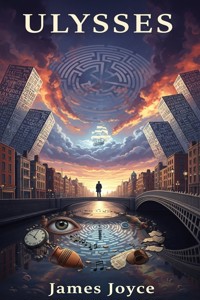
ULYSSES
Published by
Books
Table of Contents
Introduction
A single day expands to the breadth of an epic, where the city’s hum becomes the measure of a human soul. In Ulysses, everyday gestures, errands, and conversations are magnified until they reveal the intricate dramas of consciousness and community. The book invites readers to witness how memory, desire, and duty intersect in ordinary life, and how identity coheres—or splinters—under pressure. Rather than heroic battles, it offers wandering, noticing, and thinking as its great adventures. The result is a vision of modern life that is intimate, comic, and searching, insisting that the commonplace can bear the full weight of art.
James Joyce, an Irish writer working largely in continental exile, composed Ulysses during the 1910s and early 1920s. Portions first appeared serially in The Little Review from 1918 to 1920; the complete novel was published in 1922 in Paris by Sylvia Beach at Shakespeare and Company. Set on a single day—16 June 1904—in Dublin, the narrative follows, among others, Leopold Bloom, a Jewish advertising canvasser, and Stephen Dedalus, a young teacher and aspiring writer. Their separate paths thread the city’s streets and interiors, yielding a portrait of urban life at once local and expansive. That premise frames the novel’s exploration without requiring prior knowledge.
Ulysses is considered a classic because it transformed the possibilities of the novel. Joyce deepened interior monologue into a sustained instrument for representing thought, sensation, and association. He brought to the page a remarkable variety of forms and registers—parody, catechism, journalism, drama—demonstrating that a book could encompass multiple literary traditions while remaining unified. Its stylistic audacity did not eclipse feeling; instead, it fused technique with tenderness, satire with sympathy. The novel’s innovations have influenced generations of writers and critics, establishing a touchstone for modernist experimentation and for later explorations of consciousness in fiction. Its ambition continues to define benchmarks for narrative art.
The book’s historical setting intensifies its themes. Dublin in 1904 was a city marked by colonial governance, religious authority, and the shifting social currents of the early twentieth century. Against this backdrop, personal choices carry the weight of public history, and private doubts echo national anxieties. Joyce’s method does not lecture; it shows how politics, ritual, class, and belief permeate daily routines. Readers encounter the texture of a specific place and time, yet the narrative refuses to reduce its characters to symbols. The city’s particularities—shops, streets, newspaper offices—anchor the story while pointing to broader questions of belonging and freedom.
From the start, Ulysses provoked debate for its candid treatment of bodily experience and its unfiltered depiction of thought. Episodes published in The Little Review led to obscenity charges in the United States, temporarily halting serial publication. The novel ultimately appeared in book form in 1922, and a landmark 1933 U.S. court decision permitted its legal importation. These controversies shaped its early reception, focusing attention on questions of artistic freedom and critical standards. The disputes did not diminish the work; they dramatized its challenge to received norms. Today, the novel’s once-scandalous frankness reads as integral to its human scope.
Its formal range has left a lasting imprint on literature. Joyce demonstrated how a narrative could be architected as a mosaic, with each piece distinct yet harmonized by recurring motifs and subtle correspondences. Later novelists learned from his bold shifts in style, his orchestration of high and low registers, and his insistence that the rhythms of thought are as narratable as external action. Critics and teachers adopted new tools of close reading to meet the book’s density, while translators extended its reach and tested the elasticity of their languages. Through these channels, Ulysses shaped both creative practice and critical method across the century.
Readers often hear of the book’s dialogue with Homer, and that framework is real but lightly worn. Ulysses adapts myth not to retell an ancient story, but to frame modern experience with a durable scaffold. Episodes echo classical structures in playful, pointed ways, yet the echoes serve contemporary lives rather than overshadow them. The apparatus helps organize a day teeming with perceptions and encounters, while encouraging readers to detect patterns across diversity of style. This mythic frame is one of the novel’s most influential decisions, demonstrating how inherited forms can sustain fresh, secular meanings without limiting the narrative’s immediacy.
At the heart of the novel stand its characters, rendered with extraordinary sympathy and detail. Leopold Bloom, practical, curious, and reflective, offers a vantage on domesticity, work, and urban sociability. Stephen Dedalus, searching and skeptical, embodies the dilemmas of art, education, and inheritance. Their trajectories intertwine across Dublin, suggesting questions about mentorship, kinship, and moral responsibility. Molly Bloom’s presence complicates and enriches the novel’s portrayal of desire, memory, and voice. Together, these figures anchor the book’s vast stylistic experiment in credible, tender humanity. They are not heroic in the traditional sense; they are ordinary and therefore inexhaustibly interesting.
Dublin itself functions as more than backdrop—it is a living system of streets, shops, and voices. Joyce’s fidelity to place is meticulous, capturing timetables, landmarks, and the rhythms of speech. The city’s geography is mapped through movements on foot, by tram, and in conversation, so that readers feel how infrastructure and habit mold experience. By tracing the routines of commerce, journalism, education, and leisure, the novel shows how a modern metropolis shapes identity. This attention to the material city keeps the narrative tactile and social, grounding its philosophical inquiries in specific pavements and doorways.
Many first-time readers approach Ulysses with some trepidation, but its difficulty is often a function of abundance. The prose invites rereading, listening for patterns, jokes, and echoes that shimmer into meaning. Its humor is earthy; its compassion is steady; its curiosity about how people think and speak is inexhaustible. One can savor a single episode for its stylistic conceit or follow motifs weaving the day into a coherent fabric. The book rewards both slow, attentive reading and the momentum of a brisk walk. Above all, it offers pleasure in language and the dignity of ordinary lives.
The novel endures because its themes do. It contemplates how people seek connection—within families, friendships, and the accidental fraternities of the street. It considers grief and renewal, the body’s vulnerabilities and the mind’s resourcefulness. It honors work and rest, appetite and restraint, ritual and improvisation. It shows how the public world enters private feeling, and how imagination can counter isolation. In doing so, it affirms that attention itself is a form of care and that art can house the multiplicity of experience without resolving it into slogans.
A century after its publication, Ulysses remains timely. Readers still navigate cities, media, and mixed loyalties; they still ask how to live decently amid noise and haste. Annual celebrations on June 16 attest to its cultural presence, but its deeper relevance lies in its ethic of attentiveness and empathy. The book reminds us that modern life’s fragmentations can be met with patience, humor, and form. Its pages model a way of seeing that dignifies the everyday while acknowledging mystery. For these reasons, Joyce’s experiment continues to feel alive, inviting new generations to wander, notice, and think.
Synopsis
Ulysses, first published in 1922 by James Joyce, is a modernist novel set in Dublin over the course of a single day, June 16, 1904. Structured as a sequence of episodes loosely patterned on the Odyssey, it follows the intersecting paths of Leopold Bloom, a Jewish advertising canvasser; Stephen Dedalus, a young teacher and aspiring writer; and Molly Bloom, a professional singer. Joyce employs interior monologue, shifting narrative styles, and meticulous urban detail to explore consciousness, language, and the rhythms of city life. Themes of identity, belonging, sexuality, religion, and national history inflect the work’s episodic progression, turning ordinary experience into an epic of the everyday.
The morning opens at the seaside Martello tower, where Stephen lives with the medical student Buck Mulligan and an English visitor, Haines. Exchanges among them expose Stephen’s strained friendships, financial insecurity, and the lingering conflict over his refusal to fulfill religious expectations during his mother’s last days. The tower scene establishes tensions around authority, art, and colonial presence, while highlighting Stephen’s acute self-consciousness and ironic detachment. Leaving the tower unsettled, he carries with him questions about paternity, faith, and vocation. This early focus on Stephen sets a pattern of restless movement and intellectual debate that will recur as the day’s encounters accumulate.
Stephen teaches a morning class in Dalkey, where his distracted manner contrasts with his pupils’ practical concerns. Afterward, the school’s manager, Mr. Deasy, pays him and asks him to help place a letter in the press, prompting a discussion that intertwines money worries, Irish politics, and views of history. Stephen departs and wanders to Sandymount Strand, reflecting on perception and language as he tests the limits of thought in motion. The coastal setting introduces motifs of tides, memory, and instability. His solitary walk underscores an unresolved search for intellectual grounding and personal direction before he reenters the social spaces of the city.
Leopold Bloom’s morning unfolds in domestic routines: purchasing a kidney, tending to the cat, and preparing breakfast. He brings a tray to Molly, who is planning an afternoon rehearsal and anticipating a visit from concert organizer Blazes Boylan. Bloom’s work as an advertising canvasser takes him across Dublin, revealing a mind fascinated by practical details, human quirks, and the city’s material textures. His marriage appears affectionate yet strained, colored by anxieties about intimacy and trust. Bloom’s compassionate curiosity and outsider status, shaped partly by his background and temperament, position him as an observer whose quiet decency contrasts with louder public voices.
Late morning draws Bloom to a funeral for Paddy Dignam, where the rituals of burial prompt reflections on mortality, family, and memory. Among acquaintances, he encounters casual prejudice and banter that underscore his marginality and resilience. The day proceeds through errands, lunches, and brief conversations, including a solitary meal at Davy Byrne’s. Food, advertisements, and street scenes frame his ethical instincts and appetite for connection. These episodes gather motifs of hunger and sympathy, linking bodily needs with social bonds. In parallel, the narrative keeps Stephen within cultural institutions and conversations that test his critical wit while intensifying his sense of isolation.
Afternoon episodes converge on the National Library, where Stephen advances an ambitious theory about Shakespeare that doubles as a drama of interpretation. His argument, provocative and playful, casts criticism as a creative act and exposes rivalries among Dublin’s literati. Elsewhere, a panoramic interlude follows many Dubliners in brief vignettes, mapping intersecting paths across the city. At the Ormond bar, musical form shapes the narration, turning desire, memory, and sound into patterned echoes. Throughout, shifting styles test how form mediates experience, while Bloom and Stephen continue to circle one another, unaware of the encounter that will connect their trajectories.
Evening intensifies conflict and satire. In a public house, a blustering nationalist figure challenges Bloom, staging a clash between parochial zeal and humane cosmopolitanism. The prose parodies legal, journalistic, and epic registers, amplifying the scene’s ironies. Later, on Sandymount, a lyrical episode refracts spectatorship and desire through carefully patterned perception. The night moves to a maternity hospital, where conversations among medical students mingle with parody of English prose styles across centuries. As the revelry turns chaotic, Bloom’s protective attention settles on Stephen, revealing a muted paternal impulse. Questions of generation, responsibility, and care take shape amid noise, wit, and strain.
Deep night brings a hallucinatory sequence in the city’s red-light district, where Bloom and Stephen confront fantasies, fears, and accusations in a theatrical cascade of metamorphoses. The episode externalizes conscience and desire, letting buried anxieties surface in exaggerated forms. Afterward, the narrative quiets at a cabman’s shelter, with weary talk that emphasizes misunderstanding, generosity, and the need for rest. A measured, catechism-like chapter then traces Bloom’s homeward path and domestic observations with scientific precision, treating ordinary acts as inquiry. Questions of hospitality, belonging, and mutual recognition frame the gradual drawing together of disparate lives without insisting on neat resolutions.
The novel closes with Molly Bloom’s unpunctuated interior monologue, an expansive meditation on memory, body, labor, desire, and the textures of married life. Her voice reframes earlier events from an intimate vantage, completing the work’s triptych of consciousness. Ulysses endures for its bold formal experimentation, its compassion for everyday experience, and its portrait of a city as a living network of language and routine. Without relying on overt revelations, it suggests that meaning arises through attention, association, and imperfect human connection. The book’s broader message elevates ordinary endurance and empathy, asking readers to consider how private lives compose a public world.
Historical Context
Ulysses is set in Dublin on 16 June 1904, when Ireland formed part of the United Kingdom of Great Britain and Ireland under King Edward VII. British executive authority in Ireland was centered at Dublin Castle, while policing was divided between the Dublin Metropolitan Police in the city and the Royal Irish Constabulary elsewhere. The Catholic Church exercised pervasive influence over education, charity, and social norms, alongside a Protestant minority historically linked to administration, property, and Trinity College Dublin. Dublin was a port and commercial hub with breweries, shops, newspapers, and theatres, but also severe poverty and tenements. The novel’s movements through pubs, offices, hospitals, and streets register these institutions’ daily reach.
Politically, the city lived in the shadow of the Home Rule struggle. After the fall and death of Charles Stewart Parnell in the early 1890s, constitutional nationalism regrouped under John Redmond and the Irish Parliamentary Party, seeking Irish self-government within the United Kingdom. Administrative power remained with the Lord Lieutenant and Chief Secretary, supported by a largely British-directed civil service. Public debate in 1904 mixed nostalgia for Parnell with tactical disputes about parliamentarianism, mass agitation, and cultural renewal. Ulysses reflects these arguments in passing conversations, parodies of oratory, and allusive memorials, showing how constitutional politics penetrated everyday speech, journalism, and clubroom talk without dictating private life.
The cultural nationalism known as the Gaelic Revival shaped the era decisively. The Gaelic League, founded in 1893 by Douglas Hyde and Eoin MacNeill, promoted Irish-language study and traditional culture; the Gaelic Athletic Association, established in 1884, advanced indigenous games and a program of national self-respect. The Abbey Theatre opened in 1904 under W. B. Yeats and Lady Gregory, seeking a national drama for Ireland. Joyce’s Dublin absorbs these movements’ festivals, slogans, and clubs, yet the book’s multilingual play and classical scaffolding complicate any purely nativist ideal. The text thus registers how revivalist energies animated the capital while also presenting a cosmopolitan counter-poise to orthodoxy.
Land politics, though rural in emphasis, suffused urban discourse. The Land War of 1879–82 and later campaigns led to a series of Land Acts that shifted ownership from landlords to tenants, notably the Wyndham Land Purchase Act of 1903. These reforms altered the social base of nationalism and moderated some agrarian conflicts, but the language of landlordism, eviction, and peasant right remained potent in newspapers and public houses. In Ulysses, Dublin voices rehearse these questions as part of their political common sense, revealing how land agitation framed national identity even for city dwellers engaged in clerical work, shopkeeping, or maritime trades rather than farming.
Economically, early twentieth-century Dublin combined commercial dynamism with entrenched deprivation. Guinness’s St James’s Gate brewery and the port provided steady employment, but unskilled work, casual day labor, and seasonal jobs left many families precarious. Overcrowded tenements, inadequate sanitation, and high infant mortality were recorded in official reports and the 1901 and 1911 censuses. Trade unionism was growing—conditions that would culminate in the 1913 Lockout—though in 1904 many workers remained outside strong organization. Pawnshops, credit systems, and charitable institutions mediated survival. The novel’s queues, errands, and errands for small sums reflect the routines of a cash-strapped city negotiating modern consumer life.
Religion formed a pervasive social framework. The Catholic Church administered much schooling and charity and enforced moral boundaries through parish life, sodalities, and press influence. Clerical condemnation of Parnell in the 1890s remained a living memory, marking church-state tensions within nationalism. The Church of Ireland and other Protestant denominations, while a minority in Dublin, sustained distinct institutions and viewpoints, linked for some to unionism and Trinity College. Ulysses tracks the rituals, catechisms, and homilies shaping conscience, while allowing for skepticism, satire, and private dissent. Its attention to confession, feast-days, and sacramental language underscores the way belief and habit structured social time and self-understanding.
Ireland’s place in the British Empire shaped conversation and careers. The Second Boer War (1899–1902) had recently ended, and Irish soldiers served in British regiments abroad, while many nationalists sympathized with the Boers or supported Irish brigades fighting against Britain. Military parades, recruiting notices, and imperial news circulated through Dublin’s newspapers and streets. Imported goods, imperial measurements, and maritime routes linked Dublin to global trade. Ulysses registers this imperial texture in offhand references, colonial slang, and jokes about titles and uniforms, reflecting how the empire was at once a source of employment, grievance, consumption, and satire for an Irish city still governed from London.
A small but visible Jewish community highlights questions of minority belonging. Jewish migration to Ireland increased in the late nineteenth century, with many families settling around Portobello in Dublin, sometimes called “Little Jerusalem.” The 1901 census counted on the order of a few thousand Jews in Ireland. In 1904, an anti-Jewish economic boycott in Limerick, instigated by a local preacher, drew widespread attention and condemnation by various Irish figures. Ulysses places an Irish Jew, Leopold Bloom, at the center of its social map, allowing the narrative to explore everyday integration, casual prejudice, and the diversity of Irish urban life without resorting to caricature.
Women’s lives in 1904 Dublin were structured by work in domestic service, shops, and small trades, as well as by marriage and family roles circumscribed by law and custom. While Married Women’s Property Acts in the late nineteenth century improved property rights, political enfranchisement for women within the United Kingdom only expanded in 1918, and then partially. Maternity care was provided by institutions such as the National Maternity Hospital at Holles Street and the Rotunda, amid high maternal and infant mortality. Dublin’s “Monto” red-light district, tolerated by authorities, thrived in the late nineteenth and early twentieth centuries before closures in the 1920s. Ulysses addresses sexuality, reproduction, and respectability as practical social questions.
Urban modernization was palpable. The Dublin United Tramways Company electrified the network by the early 1900s, while horse cabs and bicycles remained ubiquitous. Suburban trains linked the city to coastal towns and the packet port at Kingstown (now Dún Laoghaire), which connected by mailboat to Holyhead and London. Telegraphy and limited telephone service fed fast news cycles and business communication. Water infrastructure improved with the Vartry scheme of the 1860s, yet tenement sanitation lagged. Martello towers, built against a Napoleonic threat a century earlier, dotted the coast as quaint military relics. Ulysses animates this infrastructure, showing how movement and communication shaped urban time and possibility.
Print culture and advertising gave Dublin a distinct soundscape. The Freeman’s Journal (nationalist), the Irish Times (unionist), the Evening Telegraph, and other papers fought for readers with political columns, crime reports, racing tips, and serialized features. Arthur Griffith’s United Irishman (1899–1906) argued for dual monarchy and self-reliance, and later Sinn Féin papers advanced separatist views. Posters, tramside ads, and sandwich boards promoted consumer goods, patent medicines, and entertainments. Obscenity and libel laws constrained publication, but the press remained argumentative and lively. Ulysses reproduces newsroom chatter and ad copy to reflect how public opinion and commodity culture mingled in a highly verbal city.
Education both empowered and disciplined. Since 1831, the national primary system had expanded literacy, largely administered by religious bodies. Secondary schools, often run by orders such as the Jesuits, trained an aspirant middle class in classical and scholastic curricula. Trinity College Dublin retained historical Protestant associations, while Catholic higher education advanced through the Catholic University and the Royal University (1879–1909), leading to the creation of the National University of Ireland in 1908. In 1904, debates continued over standards, access, and national character in education. Ulysses stages the friction between scholastic logic, classical learning, and newer sciences, revealing a city balancing tradition and modern inquiry.
Joyce’s personal trajectory illuminates his vantage point. Born in 1882 and educated in Jesuit schools and at University College Dublin, he left Ireland in 1904 with Nora Barnacle, seeking work and artistic freedom. He spent years in Trieste (then part of Austria-Hungary), a brief period in Rome, moved to neutral Zurich during the First World War, and then to Paris in 1920. Exile placed him amid continental languages and ideas while preserving an obsessive recall of Dublin topography, speech, and institutions. This dual position—intimately local, geographically distant—helped Ulysses marry documentary precision to a transnational, modernist sensibility skeptical of narrow cultural prescriptions.
The book’s creation and publication trace modernist networks. Joyce began Ulysses around 1914, expanding an idea from his Dubliners project, and continued through the war years. Ezra Pound championed him, arranging for serialization in The Little Review in New York from 1918 to 1920, under editors Margaret Anderson and Jane Heap. Harriet Shaw Weaver offered sustained financial support and tried to publish the work via The Egoist Press in London, but printers refused sections as obscene. Sylvia Beach, proprietor of Shakespeare and Company in Paris, issued the first edition on 2 February 1922, a landmark of expatriate publishing and international literary collaboration.
Obscenity law structured the book’s early fate. The British standard, derived from the 1868 Hicklin test, and American moral statutes allowed suppression of texts deemed corrupting. U.S. postal authorities repeatedly seized The Little Review during serialization, and in 1921 Anderson and Heap were convicted in New York and fined for publishing a contentious episode. Ulysses was excluded from legal importation into the United States until 1933, when Judge John M. Woolsey’s decision in United States v. One Book Called Ulysses permitted publication. In Britain, cautious publishers delayed until the Bodley Head issued an authorized edition in 1936, marking the end of official obstruction there.
Revolution intensified the backdrop against which Ulysses appeared. The Easter Rising in Dublin in 1916, subsequent executions, and the War of Independence from 1919 to 1921 transformed politics and memory, culminating in the Anglo-Irish Treaty and the Irish Free State in 1922. Joyce’s novel, however, returns to 1904, presenting an urban microcosm in advance of rebellion. This temporal choice positioned Ulysses against heroic myth-making, preserving a dense record of ordinary institutions—market, press, pub, hospital—just as the city’s political order was being remade. Early Irish responses ranged from suspicion toward its irreverence to admiration for its unrivaled civic fidelity.
Economic and technological changes also shaped reading habits and the book’s reception. Rising literacy, cheap reprints, and transatlantic magazines broadened audiences, while wartime disruptions and postwar austerity constrained supply. The cosmopolitan book trade of Paris, with lending libraries and English-language bookshops, offered a haven for experimental literature facing Anglo-American censorship. Joyce’s meticulous incorporation of advertisements, headlines, and popular songs mirrored a consumer culture that was both local and imperial in reach. This interplay between high art and mass forms made Ulysses a document of a mediated age, alive to the rhythms of street sales, billboards, and the new tempo of electric transport and wired newsfeeds. Ulysses critiques and memorializes its era by fusing epic form with the prosaic day. Its Dublin is a colonial capital on the cusp of upheaval, where the Catholic Church, British governance, and cultural nationalism shape aspiration and anxiety. The book registers land reform’s aftershocks, imperial wars’ echoes, and the emergence of organized labor, while its attention to advertising, tramlines, hospitals, and schools maps a modern city’s infrastructure. By placing ordinary citizens at the center and filtering grand narratives through their talk, habits, and solidarities, Ulysses offers a historically exacting mirror and an unsparing critique of early twentieth-century Irish life.
Author Biography
Introduction
James Joyce (1882–1941) was an Irish-born writer whose experiments with narrative voice, interior monologue, and linguistic play reshaped the modern novel. Best known for Dubliners, A Portrait of the Artist as a Young Man, Ulysses, and Finnegans Wake, he pursued a cosmopolitan life largely outside Ireland while keeping Dublin at the center of his art. His work challenged conventions of plot, character, and syntax, opening new possibilities for representing consciousness and urban life. Across fiction, poetry, and drama, Joyce combined exacting realism with radical formal innovation, making him a central figure in international modernism and an enduring touchstone for debates about censorship, difficulty, and the scope of literary art.
Born in Dublin and later resident in cities including Trieste, Zurich, and Paris, Joyce translated the textures of early twentieth-century life into works that were both local and universal. He encountered acclaim and controversy in equal measure: Dubliners faced years of delay; Ulysses became a lightning rod for obscenity charges and legal reforms; Finnegans Wake divided critics with its dense, polyglot wordplay. Yet his reputation steadily grew through the support of editors, patrons, and fellow writers, and through readers who recognized in his pages a new map of consciousness. Annual Bloomsday observances and extensive scholarship attest to his continuing cultural presence.
Education and Literary Influences
Joyce received a Jesuit education at schools in Ireland, proceeding to University College Dublin around the turn of the century, where he studied languages and immersed himself in literature, philosophy, and music. He proved a gifted linguist and a serious student, even as he cultivated an independent critical stance toward the cultural nationalism then ascendant in Dublin. During these years he began writing essays and fiction, and he developed the seeds of an aesthetic program that would later inform his major works. Early involvement in Dublin’s intellectual circles furnished both the materials for his fiction and the impulse to seek a wider stage.
His reading ranged widely and left discernible marks on his art. Classical and medieval authors, especially Homer and Dante, supplied large-scale frameworks and images, while the aesthetics of Thomas Aquinas and Aristotelian thought helped shape his reflections on clarity, wholeness, and harmony in art. From nineteenth-century realism and symbolism—particularly Flaubert—he drew lessons in style and impersonality. He admired Henrik Ibsen and wrote about him as a young man, absorbing a rigorous approach to dramatic construction and moral candor. Experiments with interior monologue by Édouard Dujardin and others offered methods Joyce would expand into unprecedentedly intimate streams of consciousness.
Leaving Ireland in 1904 with Nora Barnacle, who became his lifelong partner and later his wife, Joyce lived mainly in Trieste, with periods in Pola, Rome, Zurich, and Paris. Teaching English and translating, he honed his ear for idiom while gaining fluency in several European languages. This multilingual environment broadened his palette and deepened his fascination with etymology, puns, and the evolution of words—preoccupations that culminated in Finnegans Wake. Intellectual interests also widened to include Giambattista Vico’s cyclical theory of history, which would inform the architecture of his last book. Throughout, Dublin remained the imaginative territory to which he repeatedly returned.
Literary Career
Joyce’s first substantial collection, Dubliners, reached print in 1914 after years of refusals and withdrawals by nervous publishers. Comprising interlinked short stories about ordinary citizens, it offered an exacting depiction of social habits, parochial constraints, and private longings in the Irish capital. Without melodrama, the book relied on meticulously observed detail and moments of sudden insight to register moral and psychological pressures. Its plain style and urban focus countered romanticized images of Ireland prevalent in contemporary cultural movements. Around this period he also published the poetry collection Chamber Music, further signaling his ambition to match technical finesse with emotional restraint.
A Portrait of the Artist as a Young Man grew from earlier drafts and appeared in book form in 1916, after serial publication in The Egoist. It tracks a young Dubliner’s growth toward artistic vocation, using flexible free indirect narration to capture shifting states of mind. The novel’s stylistic modulation—from childlike perceptions to sophisticated abstractions—announced Joyce’s command of voice. Around the same period he wrote the play Exiles, staged and published in 1918, which explores love, loyalty, and creative freedom in a contemporary setting. Together, these works consolidated Joyce’s reputation as a subtle analyst of consciousness and choice.
Ulysses, serialized in the American magazine The Little Review before legal trouble halted the run, was first published in full in Paris in 1922 by Sylvia Beach. Set in Dublin over a single day, it follows a small cast through episodes rendered in distinct styles, from interior monologue to parody and pastiche. The novel’s formal audacity, linguistic variety, and humane attention to the ordinary transformed expectations of what fiction could do. Early champions included editors and poets who recognized its originality, but censorship battles in English-speaking countries restricted access for years. A landmark American court decision in the early 1930s cleared the way for wider publication.
After Ulysses, Joyce issued the brief collection Pomes Penyeach and devoted himself mainly to a long project published in fragments under the title Work in Progress before appearing as Finnegans Wake in 1939. This final book dissolves conventional narrative into an allusive, dreamlike flow of multilingual portmanteaux and recurring motifs. Drawing on myth, history, and urban lore, it constructs patterns rather than plots, inviting readers to navigate echoes rather than events. The reception was polarized: some hailed a new summit of linguistic invention; others questioned its accessibility. The project benefited from the sustained advocacy and material support of Harriet Shaw Weaver, who had long championed Joyce’s work.
Beliefs and Advocacy
Joyce consistently championed artistic autonomy—freedom from doctrinal, political, and commercial constraints—and his fiction dramatizes the costs and necessity of that stance. Raised within Irish Catholic culture, he maintained a critical distance from clerical authority and from narrow versions of nationalism, preferring a cosmopolitan perspective grounded in individual conscience and craft. He rarely aligned himself overtly with parties or manifestos, yet his publishing history made him a figure in debates over censorship. By insisting on the integrity of his methods and by depicting characters embedded in social, religious, and colonial pressures, he advanced an implicit argument for intellectual independence and expressive latitude.
Final Years & Legacy
Joyce’s later decades brought both achievement and strain. Chronic eye problems required repeated medical interventions, and family responsibilities were demanding. He married Nora Barnacle in 1931, and the couple’s movements among Trieste, Paris, and Zurich were shaped by health, work, and the political upheavals of the era. With the fall of France in 1940, they returned to neutral Switzerland. Finnegans Wake had appeared the previous year, capping decades of experimentation. Joyce died in Zurich in 1941 following surgery, and he was buried at Fluntern Cemetery. Friends, editors, and patrons helped secure his papers and sustain interest in his work.
Joyce’s legacy is at once institutional and living. Legal battles around Ulysses reshaped standards for literary freedom in the United States and influenced attitudes elsewhere. His techniques—stream of consciousness, free indirect style, stylistic parody, and densely patterned motifs—became part of the toolkit of novelists worldwide. Writers in many languages have engaged with, extended, or resisted his example, and his books continue to prompt new critical methods. Dublin commemorates his imaginative cartography through Bloomsday and museums, while universities maintain active Joyce studies. More than a monument of difficulty, his oeuvre remains a testing ground for how fiction can register modern experience.
ULYSSES
Ulysses
- I -
01
Stately, plump Buck Mulligan came from the stairhead, bearing a bowl of lather on which a mirror and a razor lay crossed. A yellow dressinggown, ungirdled, was sustained gently behind him by the mild morning air. He held the bowl aloft and intoned : — Introibo ad altare Dei[1][1q].
Halted, he peered down the dark winding stairs and called up coarsely :
— Come up, Kinch. Come up, you fearful Jesuit.
Solemnly he came forward and mounted the round gunrest. He faced about and blessed gravely thrice the tower, the surrounding country and the awaking mountains. Then, catching sight of Stephen Dedalus, he bent towards him and made rapid crosses in the air, gurgling in his throat and shaking his head. Stephen Dedalus, displeased and sleepy, leaned his arms on the top of the staircase and looked coldly at the shaking gurgling face that blessed him, equine in its length, and at the light untonsured hair, grained and hued like pale oak.
Buck Mulligan peeped an instant under the mirror and then covered the bowl smartly.
— Back to barracks, he said sternly.
He added in a preacher’s tone :
— For this, O dearly beloved, is the genuine Christine : body and soul and blood and ouns. Slow music, please. Shut your eyes, gents. One moment. A little trouble about those white corpuscles. Silence, all.
He peered sideways up and gave a long low whistle of call then paused awhile in rapt attention, his even white teeth glistening here and there with gold points. Chrysostomos. Two strong shrill whistles answered through the calm.
— Thanks, old chap, he cried briskly. That will do nicely. Switch off the current, will you?
He skipped off the gunrest and looked gravely at his watcher, gathering about his legs the loose folds of his gown. The plump shadowed face and sullen oval jowl recalled a prelate, patron of arts in the middle ages. A pleasant smile broke quietly over his lips.
— The mockery of it, he said gaily. Your absurd name, an ancient Greek.
He pointed his finger in friendly jest and went over to the parapet, laughing to himself. Stephen Dedalus stepped up, followed him wearily halfway and sat down on the edge of the gunrest, watching him still as he propped his mirror on the parapet, dipped the brush in the bowl and lathered cheeks and neck.
Buck Mulligan’s gay voice went on.
— My name is absurd too : Malachi Mulligan, two dactyls. But it has a Hellenic ring, hasn’t it? Tripping and sunny like the buck himself. We must go to Athens. Will you come if I can get the aunt to fork out twenty quid?
He laid the brush aside and, laughing with delight, cried :
— Will he come? The jejune jesuit.
Ceasing, he began to shave with care.
— Tell me, Mulligan, Stephen said quietly.
— Yes, my love?
— How long is Haines going to stay in this tower?
Buck Mulligan showed a shaven cheek over his right shoulder.
— God, isn’t he dreadful? he said frankly. A ponderous Saxon. He thinks you’re not a gentleman. God, these bloody English. Bursting with money and indigestion. Because he comes from Oxford. You know, Dedalus, you have the real Oxford manner. He can’t make you out. O, my name for you is the best : Kinch, the knifeblade.
He shaved warily over his chin.
— He was raving all night about a black panther, Stephen said. Where is his guncase?
— A woful lunatic, Mulligan said. Were you in a funk?
— I was, Stephen said with energy and growing fear. Out here in the dark with a man I don’t know raving and moaning to himself about shooting a black panther. You saved men from drowning. I’m not a hero, however. If he stays on here I am off.
Buck Mulligan frowned at the lather on his razorblade. He hopped down from his perch and began to search his trouser pockets hastily.
— Scutter, he cried thickly.
He came over to the gunrest and, thrusting a hand into Stephen’s upper pocket, said :
— Lend us a loan of your noserag to wipe my razor.
Stephen suffered him to pull out and hold up on show by its corner a dirty crumpled handkerchief. Buck Mulligan wiped the razorblade neatly. Then, gazing over the handkerchief, he said : — The bard’s noserag. A new art colour for our Irish poets : snotgreen. You can almost taste it, can’t you?
He mounted to the parapet again and gazed out over Dublin bay, his fair oakpale hair stirring slightly.
— God, he said quietly. Isn’t the sea what Algy calls it : a great sweet mother? The snotgreen sea. The scrotumtightening sea. Epi oinopa ponton. Ah, Dedalus, the Greeks. I must teach you. You must read them in the original. Thalatta ! Thalatta[2] ! She is our great sweet mother. Come and look.
Stephen stood up and went over to the parapet. Leaning on it he looked down on the water and on the mailboat clearing the harbour mouth of Kingstown.
— Our mighty mother, Buck Mulligan said.
He turned abruptly his great searching eyes from the sea to Stephen’s face.
— The aunt thinks you killed your mother, he said. That’s why she won’t let me have anything to do with you.
— Someone killed her, Stephen said gloomily.
— You could have knelt down, damn it, Kinch, when your dying mother asked you, Buck Mulligan said. I’m hyperborean as much as you. But to think of your mother begging you with her last breath to kneel down and pray for her. And you refused. There is something sinister in you…
He broke off and lathered again lightly his farther cheek. A tolerant smile curled his lips.
— But a lovely mummer, he murmured to himself. Kinch, the loveliest mummer of them all.
He shaved evenly and with care, in silence, seriously.
Stephen, an elbow rested on the jagged granite, leaned his palm against his brow and gazed at the fraying edge of his shiny black coatsleeve. Pain, that was not yet the pain of love, fretted his heart. Silently, in a dream she had come to him after her death, her wasted body within its loose brown graveclothes giving off an odour of wax and rosewood, her breath, that had bent upon him, mute, reproachful, a faint odour of wetted ashes. Across the threadbare cuffedge he saw the sea hailed as a great sweet mother by the wellfed voice beside him. The ring of bay and skyline held a dull green mass of liquid. A bowl of white china had stood beside her deathbed holding the green sluggish bile which she had torn up from her rotting liver by fits of loud groaning vomiting.
Buck Mulligan wiped again his razorblade.
— Ah, poor dogsbody, he said in a kind voice. I must give you a shirt and a few noserags. How are the secondhand breeks?
— They fit well enough, Stephen answered.
Buck Mulligan attacked the hollow beneath his underlip.
— The mockery of it, he said contentedly, secondleg they should be. God knows what poxy bowsy left them off. I have a lovely pair with a hair stripe, grey. You’ll look spiffing in them. I’m not joking, Kinch. You look damn well when you’re dressed.
— Thanks, Stephen said. I can’t wear them if they are grey.
— He can’t wear them, Buck Mulligan told his face in the mirror. Etiquette is etiquette. He kills his mother but he can’t wear grey trousers.
He folded his razor neatly and with stroking palps of fingers felt the smooth skin.
Stephen turned his gaze from the sea and to the plump face with its smokeblue mobile eyes.
— That fellow I was with in the Ship last night, said Buck Mulligan says you have g. p. i. He’s up in Dottyville with Conolly Norman. Genera paralysis of the insane.
He swept the mirror a half circle in the air to flash the tidings abroad in sunlight now radiant on the sea. His curling shaven lips laughed and the edges of his white glittering teeth. Laughter seized all his strong wellknit trunk.
— Look at yourself, he said, you dreadful bard.
Stephen bent forward and peered at the mirror held out to him, cleft by a crooked crack, hair on end. As he and others see me. Who chose this face for me? This dogsbody to rid of vermin. It asks me too.
— I pinched it out of the skivvy’s room, Buck Mulligan said. It does her all right. The aunt always keeps plainlooking servants for Malachi. Lead him not into temptation. And her name is Ursula.
Laughing again, he brought the mirror away from Stephen’s peering eyes.
— The rage of Caliban at not seeing his face in a mirror, he said. If Wilde were only alive to see you.
Drawing back and pointing, Stephen said with bitterness :
— It is a symbol of Irish art. The cracked lookingglass of a servant.
Buck Mulligan suddenly linked his arm in Stephen’s and walked with him round the tower, his razor and mirror clacking in the pocket where he had thrust them.
— It’s not fair to tease you like that, Kinch, is it? he said kindly. God knows you have more spirit than any of them.
Parried again. He fears the lancet of my art as I fear that of his. The cold steel pen.
— Cracked lookingglass of a servant. Tell that to the oxy chap downstairs and touch him for a guinea. He’s stinking with money and thinks you’re not a gentleman. His old fellow made his tin by selling jalap to Zulus or some bloody swindle or other. God, Kinch, if you and I could only work together we might do something for the island. Hellenise it.
Cranly’s arm. His arm.
— And to think of your having to beg from these swine. I’m the only one that knows what you are. Why don’t you trust me more? What have you up your nose against me? Is it Haines? If he makes any noise here I’ll bring down Seymour and we’ll give him a ragging worse than they gave Clive Kempthorpe.
Young shouts of moneyed voices in Clive Kempthorpe’s rooms. Palefaces : they hold their ribs with laughter, one clasping another, O, I shall expire ! Break the news to her gently, Aubrey ! I shall die ! With slit ribbons of his shirt whipping the air he hops and hobbles round the table, with trousers down at heels, chased by Ades of Magdalen with the tailor’s shears. A scared calf’s face gilded with marmalade. I don’t want to be debagged ! Don’t you play the giddy ox with me !
Shouts from the open window startling evening in the quadrangle. A deaf gardener, aproned, masked with Matthew Arnold’s face, pushes his mower on the sombre lawn watching narrowly the dancing motes of grasshalms.
To ourselves… new paganism… omphalos.
— Let him stay, Stephen said. There’s nothing wrong with him except at night.
— Then what is it? Buck Mulligan asked impatiently. Cough it up. I’m quite frank with you. What have you against me now?
They halted, looking towards the blunt cape of Bray Head that lay on the water like the snout of a sleeping whale. Stephen freed his arm quietly.
— Do you wish me to tell you? he asked.
— Yes, what is it? Buck Mulligan answered. I don’t remember anything.
He looked in Stephen’s face as he spoke. A light wind passed his brow, fanning softly his fair uncombed hair and stirring silver points of anxiety in his eyes.
Stephen, depressed by his own voice, said :
— Do you remember the first day I went to your house after my mother’s death?
Buck Mulligan frowned quickly and said :
— What? Where? I can’t remember anything. I remember only ideas and sensations. Why? What happened in the name of God?
— You were making tea, Stephen said, and I went across the landing to get more hot water. Your mother and some visitor came out of the drawing room. She asked you who was in your room.
— Yes? Buck Mulligan said. What did I say? I forget.
— You said, Stephen answered, O, it’s only Dedalus whose mother is beastly dead.
A flush which made him seem younger and more engaging rose to Buck Mulligan’s cheek.
— Did I say that? he asked. Well? What harm is that?
He shook his constraint from him nervously.
— And what is death, he asked, your mother’s or yours or my own? You saw only your mother die. I see them pop off every day in the Mater and Richmond and cut up into tripes in the dissecting room. It’s a beastly thing and nothing else. It simply doesn’t matter. You wouldn’t kneel down to pray for your mother on her deathbed when she asked you. Why? Because you have the cursed jesuit strain in you, only it’s injected the wrong way. To me it’s all a mockery and beastly. Her cerebral lobes are not functioning. She calls the doctor Sir Peter Teazle and picks buttercups off the quilt. Humour her till it’s over. You crossed her last wish in death and yet you sulk with me because I don’t whinge like some hired mute from Lalouette’s. Absurd ! I suppose I did say it. I didn’t mean to offend the memory of your mother.
He had spoken himself into boldness. Stephen, shielding the gaping wounds which the words had left in his heart, said very coldly : — I am not thinking of the offence to my mother.
— Of what, then? Buck Mulligan asked.
— Of the offence to me, Stephen answered.
Buck Mulligan swung round on his heel.
— O, an impossible person! he exclaimed.
He walked off quickly round the parapet. Stephen stood at his post, gazing over the calm sea towards the headland. Sea and headland now grew dim. Pulses were beating in his eyes, veiling their sight, and he felt the fever of his cheeks.
A voice within the tower called loudly :
— Are you up there, Mulligan?
— I’m coming, Buck Mulligan answered.
He turned towards Stephen and said :
— Look at the sea. What does it care about offences? Chuck Loyola, Kinch, and come on down. The Sassenach wants his morning rashers.
His head halted again for a moment at the top of the staircase, level with the roof.
— Don’t mope over it all day, he said. I ’m inconsequent. Give up the moody brooding.
His head vanished but the drone of his descending voice boomed out of the stairhead :
And no more turn aside and brood
Upon love’s bitter mystery
For Fergus rules the brazen cars.
Woodshadows floated silently by through the morning peace from the stairhead seaward where he gazed. Inshore and farther out the mirror of water whitened, spurned by lightshod hurrying feet. White breast of the dim sea. The twining stresses, two by two. A hand plucking the harpstrings merging their twining chords. Wavewhite wedded words shimmering on the dim tide.
A cloud began to cover the sun slowly, shadowing the bay in deeper green. It lay behind him, a bowl of bitter waters. Fergus’ song : I sang it above in the house, holding down the long dark chords. Her door was open : she wanted to hear my music. Silent with awe and pity I went to her bedside. She was crying in her wretched bed. For those words, Stephen : love’s bitter mystery.
Where now?
Her secrets : old feather fans, tassled dancecards, powdered with musk, a gaud of amber beads in her locked drawer. A birdcage hung in the sunny window of her house when she was a girl. She heard old Royce sing in the pantomine of Turko the terrible and laughed with others when he sang :
I am the boy
That can enjoy
Invisibility.
Phantasmal mirth, folded away : muskperfumed.
And no more turn aside and brood
Folded away in the memory of nature with her toys. Memories beset his brooding brain. Her glass of water from the kitchen tap when she had approached the sacrament. A cored apple, filled with brown sugar, roasting for her at the hob on a dark autumn evening. Her shapely fingernails reddened by the blood of squashed lice from the children’s shirts.
In a dream, silently, she had come to him, her wasted body within its loose graveclothes giving off an odour of wax and rosewood, her breath bent over him with mute secret words, a faint odour of wetted ashes.
Her glazing eyes, staring out of death, to shake and bend my soul. On me alone. The ghostcandle to light her agony. Ghostly light on the tortured face. Her hoarse loud breath rattling in horror, while all prayed on their knees. Her eyes on me to strike me down. Liliata rutilantium te confessorum turma circumdet : iubilantium te virginum chorus excipiat.
Ghoul! Chewer of corpses!
No mother. Let me be and let me live.
— Kinch ahoy !
Buck Mulligan’s voice sang from within the tower. It came nearer up the staircase, calling again. Stephen, still trembling at his soul’s cry, heard warm running sunlight and in the air behind him friendly words.
— Dedalus, come down, like a good mosey. Breakfast is ready. Haines is apologising for waking us last night. It’s all right.
— I’m coming, Stephen said, turning.
— Do, for Jesus’ sake, Buck Mulligan said. For my sake and for all our sakes.
His head disappeared and reappeared.
— I told him your symbol of Irish art. He says it’s very clever. Touch him for a quid, will you? A guinea, I mean.
— I get paid this morning, Stephen said.
— The school kip? Buck Mulligan said. How much? Four quid? Lend us one.
— If you want it, Stephen said.
— Four shining sovereigns, Buck Mulligan cried with delight. We’ll have a glorious drunk to astonish the druidy druids. Four omnipotent sovereigns.
He flung up his hands and tramped down the stone stairs, singing out of tune with a Cockney accent :
O, won’t we have a merry time,
Drinking whisky, beer and wine,
On coronation
Coronation day?
O, won’t we have a merry time
On coronation day?
Warm sunshine merrying over the sea. The nickel shavingbowl shone, forgotten, on the parapet. Why should I bring it down? Or leave it there all day, forgotten friendship?
He went over to it, held it in his hands awhile, feeling its coolness, smelling the clammy slaver of the lather in which the brush was stuck. So I carried the boat of incense then at Clongowes. I am another now and yet the same. A servant too. A server of a servant.
In the gloomy domed livingroom of the tower Buck Mulligan’s gowned form moved briskly about the hearth to and fro, hiding and revealing its yellow glow. Two shafts of soft daylight fell across the flagged floor from the high barbacans : and at the meeting of their rays a cloud of coalsmoke and fumes of fried grease floated, turning.
— We’ll be choked, Buck Mulligan said. Haines, open that door, will you? Stephen laid the shavingbowl on the locker. A tall figure rose from the hammock where it had been sitting, went to the doorway and pulled open the inner doors.
— Have you the key? a voice asked.
— Dedalus has it, Buck Mulligan said. Janey Mack, I’m choked.
He howled without looking up from the fire :
— Kinch!
— It’s in the lock, Stephen said, coming forward.
The key scraped round harshly twice and, when the heavy door had been set ajar, welcome light and bright air entered. Haines stood at the doorway, looking out. Stephen haled his upended valise to the table and sat down to wait. Buck Mulligan tossed the fry on to the dish beside him. Then he carried the dish and a large teapot over to the table, set them down heavily and sighed with relief.
— I’m melting, he said, as the candle remarked when… But hush. Not a word more on that subject. Kinch, wake up. Bread, butter, honey. Haines, come in. The grub is ready. Bless us, O Lord, and these thy gifts. Where’s the sugar? O, jay, there’s no milk.
Stephen fetched the loaf and the pot of honey and the buttercooler from the locker. Buck Mulligan sat down in a sudden pet.
— What sort of a kip is this? he said. I told her to come after eight.
— We can drink it black, Stephen said. There’s a lemon in the locker.
— O, damn you and your Paris fads, Buck Mulligan said. I want Sandycove milk.
Haines came in from the doorway and said quietly :
— That woman is coming up with the milk.
— The blessings of God on you, Buck Mulligan cried, jumping up from his chair. Sit down. Pour out the tea there. The sugar is in the bag. Here, I can’t go fumbling at the damned eggs. He hacked through the fry on the dish and slapped it out on three plates, saying :
— In nomine Patris et Filii et Spiritus Sancti.
Haines sat down to pour out the tea.
— I’m giving you two lumps each, he said. But, I say, Mulligan, you do make strong tea, don’t you?
Buck Mulligan, hewing thick slices from the loaf, said in an old woman’s wheedling voice :
— When I makes tea I makes tea, as old mother Grogan said. And when I makes water I makes water.
— By Jove, it is tea, Haines said.
Buck Mulligan went on hewing and wheedling :
— So I do, Mrs Cahill, says she. Begob, ma’am, says Mrs Cahill, God send you don’t make them in the one pot.
He lunged towards his messmates in turn a thick slice of bread, impaled on his knife.
— That’s folk, he said very earnestly, for your book, Haines. Five lines of text and ten pages of notes about the folk and the fishgods of Dundrum. Printed by the weird sisters in the year of the big wind.
He turned to Stephen and asked in a fine puzzled voice, lifting his brows :
— Can you recall, brother, is mother Grogan’s tea and water pot spoken of in the Mabinogion or is it in the Upanishads?
— I doubt it, said Stephen gravely.
— Do you now? Buck Mulligan said in the same tone. Your reasons, pray?
— I fancy, Stephen said as he ate, it did not exist in or out of the Mabinogion. Mother Grogan was, one imagines, a kinswoman of Mary Ann.
Buck Mulligan’s face smiled with delight.
— Charming, he said in a finical sweet voice, showing his white teeth and blinking his eyes pleasantly. Do you think she was? Quite charming.
Then, suddenly overclouding all his features, he growled in a hoarsened rasping voice as he hewed again vigorously at the loaf :
—For old Mary Ann
She doesn’t care a damn,
But, hising up her petticoats…
The doorway was darkened by an entering form.
— The milk, sir.
— Come in, ma’am, Mulligan said. Kinch, get the jug.
An old woman came forward and stood by Stephen’s elbow.
— That’s a lovely morning, sir, she said. Glory be to God.
— To whom? Mulligan said, glancing at her. Ah, to be sure.
Stephen reached back and took the milkjug from the locker.
The islanders, Mulligan said to Haines casually, speak frequently of the collector of prepuces.
— How much, sir? asked the old woman.
— A quart, Stephen said.
He watched her pour into the measure and thence into the jug rich white milk, not hers. Old shrunken paps. She poured again a measureful and a tilly. Old and secret she had entered from a morning world, maybe a messenger. She praised the goodness of the milk, pouring it out. Crouching by a patient cow at daybreak in the lush field, a witch on her toadstool, her wrinkled fingers quick at the squirting dugs. They lowed about her whom they knew, dewsilky cattle. Silk of the kine and poor old woman, names given her in old times. A wandering crone, lowly form of an immortal serving her conqueror and her gay betrayer, their common cuckquean, a messenger from the secret morning. To serve or to upbraid, whether he could not tell : but scorned to beg her favour.
— It is indeed, ma’am, Buck Mulligan said, pouring milk into their cups.
— Taste it, sir, she said.
He drank at her bidding.
— If we could only live on good food like that, he said to her somewhat loudly, we wouldn’t have the country full of rotten teeth and rotten guts. Living in a bogswamp, eating cheap food and the streets paved with dust, horsedung and consumptives’ spits.
— Are you a medical student, sir? the old woman asked.
— I am, ma’am, Buck Mulligan answered.
Stephen listened in scornful silence. She bows her old head to a voice that speaks to her loudly, her bonesetter, her medicineman; me she slights. To the voice that will shrive and oil for the grave all there is of her but her woman’s unclean loins, of man’s flesh made not in God’s likeness the serpent’s prey. And to the loud voice that now bids her be silent with wondering unsteady eyes.
— Do you understand what he says? Stephen asked her.
— Is it French you are talking, sir? the old woman said to Haines.
Haines spoke to her again a longer speech, confidently.
— Irish, Buck Mulligan said. Is there Gaelic on you?
— I thought it was Irish, she said, by the sound of it. Are you from west, sir?
— I am an Englishman, Haines answered.
— He’s English, Buck Mulligan said, and he thinks we ought to speak Irish in Ireland.
— Sure we ought to, the old woman said, and I’m ashamed I don’t speak the language myself. I’m told it’s a grand language by them that knows.
— Grand is no name for it, said Buck Mulligan. Wonderful entirely. Fill us out some more tea, Kinch. Would you like a cup, ma’am?
— No, thank you, sir, the old woman said, slipping the ring of the milkcan on her forearm and about to go.
Haines said to her :
— Have you your bill? We had better pay her, Mulligan, hadn’t we?
Stephen filled the three cups.
— Bill, sir? she said, halting. Well, it’s seven mornings a pint at two pence is seven twos is a shilling and twopence over and these three mornings a quart at fourpence is three quarts is a shilling and one and two is two and two, sir.
Buck Mulligan sighed and having filled his mouth with a crust thickly buttered on both sides, stretched forth his legs and began to search his trouser pockets.
— Pay up and look pleasant, Haines said to him smiling.
Stephen filled a third cup, a spoonful of tea colouring faintly the thick rich milk. Buck Mulligan brought up a florin, twisted it round in his fingers and cried : — A miracle!
He passed it along the table towards the old woman, saying :
— Ask nothing more of me, sweet. All I can give you I give.
Stephen laid the coin in her uneager hand.
— We’ll owe twopence, he said.
— Time enough, sir, she said, taking the coin. Time enough. Good morning, sir.
She curtseyed and went out, followed by Buck Mulligan’s tender chant :
—Heart of my heart, were it more,
More would be laid at your feet.
He turned to Stephen and said :
— Seriously, Dedalus. I’m stony. Hurry out to your school kip and bring us back some money. Today the bards must drink and junket. Ireland expects that every man this day will do his duty.
— That reminds me, Haines said, rising, that I have to visit your national library today.
— Our swim first, Buck Mulligan said.
He turned to Stephen and asked blandly :
— Is this the day for your monthly wash, Kinch?
Then he said to Haines :
— The unclean bard makes a point of washing once a month.
— All Ireland is washed by the gulfstream, Stephen said as he let honey trickle over a slice of the loaf.
Haines from the corner where he was knotting easily a scarf about the loose collar of his tennis shirt spoke : — I intend to make a collection of your sayings if you will let me.
Speaking to me. They wash and tub and scrub. Agenbite of inwit[4]. Conscience. Yet here’s a spot.
— That one about the cracked lookingglass of a servant being the symbol of Irish art is deuced good.
Buck Mulligan kicked Stephen’s foot under the table and said with warmth of tone :
— Wait till you hear him on Hamlet, Haines.
— Well, I mean it, Haines said, still speaking to Stephen. I was just thinking of it when that poor old creature came in.
— Would I make money by it? Stephen asked.
Haines laughed and, as he took his soft grey hat from the holdfast of the hammock, said :
— I don’t know, I’m sure.
He strolled out to the doorway. Buck Mulligan bent across to Stephen and said with coarse vigour :
— You put your hoof in it now. What did you say that for?
— Well? Stephen said. The problem is to get money. From whom? From the milkwoman or from him. It’s a toss up, I think.