0,49 €
Niedrigster Preis in 30 Tagen: 1,99 €
Niedrigster Preis in 30 Tagen: 1,99 €
Mehr erfahren.
- Herausgeber: Booksell-Verlag
- Kategorie: Geisteswissenschaft
- Sprache: Englisch
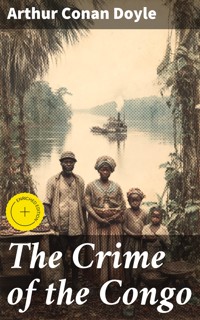
In "The Crime of the Congo," Arthur Conan Doyle presents a scathing critique of the colonial exploitation and human rights abuses occurring in the Congo Free State during the late 19th century. Employing a compelling mix of investigative journalism and fervent narrative, Doyle employs vivid prose to expose the atrocities perpetrated under King Leopold II of Belgium's regime, intertwining firsthand accounts and eloquent appeals to the reader's moral sensibilities. The book sits within the broader context of imperial critiques in Victorian literature, yet it is distinguished by its relentless focus on ethical considerations and humanitarian advocacy. Doyle, renowned for creating the iconic character Sherlock Holmes, was not just a master of detective fiction, but also a deeply concerned global citizen. His experiences and travels, alongside his burgeoning commitment to social justice, fueled his outrage over the injustices faced by the Congolese people. This work emerges from a period when European ideologies of superiority were being increasingly questioned, positioning Doyle as an early advocate for the rights of colonized peoples. Readers who engage with "The Crime of the Congo" will find themselves confronted with urgent ethical dilemmas that resonate even today. Doyle's investigative narrative invites reflection on the legacies of colonialism and the importance of ethical responsibility, making this work not only a historical account but a call to action for contemporary audiences. The book is essential for anyone interested in colonial studies, human rights advocacy, or the power of literature to effect social change. In this enriched edition, we have carefully created added value for your reading experience: - A succinct Introduction situates the work's timeless appeal and themes. - The Synopsis outlines the central plot, highlighting key developments without spoiling critical twists. - A detailed Historical Context immerses you in the era's events and influences that shaped the writing. - An Author Biography reveals milestones in the author's life, illuminating the personal insights behind the text. - A thorough Analysis dissects symbols, motifs, and character arcs to unearth underlying meanings. - Reflection questions prompt you to engage personally with the work's messages, connecting them to modern life. - Hand‐picked Memorable Quotes shine a spotlight on moments of literary brilliance. - Interactive footnotes clarify unusual references, historical allusions, and archaic phrases for an effortless, more informed read.
Das E-Book können Sie in Legimi-Apps oder einer beliebigen App lesen, die das folgende Format unterstützen:
Veröffentlichungsjahr: 2019
Ähnliche






The Crime of the Congo
Table of Contents
Introduction
"In the name of humanity, I appeal to your sympathy and compassion; for, though they belong to a distant race, they are still men, and they are still our brothers." This poignant quote from Arthur Conan Doyle's 'The Crime of the Congo' encapsulates the heart of the work, urging readers to reflect on moral responsibility and human rights amid exploitation and suffering. The book serves as a powerful clarion call, urging society to confront the inhumane realities faced by the peoples of the Congo at the hands of colonial powers, igniting a passionate discourse that reverberates through time.
Regarded as a classic, 'The Crime of the Congo' stands as a formidable testament to advocacy in literature, shedding light on colonial atrocities that paved the way for global human rights discussion. Its enduring themes resonate with the plight of marginalized communities and the fight against oppression, ultimately establishing Doyle as not merely a creator of fictional worlds but as a voice against the injustices of his time. The book’s legacy has inspired countless authors and activists, emphasizing literature's role in social change, making it not just relevant but also necessary.
Written in the early twentieth century, 'The Crime of the Congo' emerged in 1909 as Conan Doyle was already celebrated for his detective stories. With a career that straddled various genres, Doyle utilized his platform to address critical social issues through this powerful exposé. In this work, he provides a meticulously researched account of the brutal realities experienced by the Congolese people under King Leopold II's regime, raising awareness of human rights abuses while challenging readers to confront the moral implications of silence and inaction.
Doyle's purpose in writing 'The Crime of the Congo' was not merely to inform; it was to incite action. By documenting the devastating consequences of colonial exploitation, he seeks a global conscience, imploring readers to recognize their shared humanity across borders. The book serves both as an indictment of imperialism and an unsettling reminder of the repercussions of greed and indifference. This duality reinforces its importance, as it bridges literary artistry and historical critique, compelling audiences to engage critically with foundational ethical questions.
The content of the book is rich with detailed accounts and testimonials from survivors of the harsh realities faced in the Congo. Doyle meticulously gathers narratives and statistics, creating an impactful narrative chain that weaves through the spectrum of human experience in the context of colonial terrorism. The thoroughness of his research, combined with his powerful prose, paints a grim, yet essential picture of the exploitation and violence wrought by colonial powers, thereby encouraging a broader exploration of ethics and responsibility in global governance and human interaction.
In a time when the world was increasingly grappling with questions of morality in the wake of industrialization and colonial expansion, 'The Crime of the Congo' encourages introspection on a grand scale. By reflecting on the human capacity for both good and evil, Doyle's work pushes readers to search their own conscience in light of the shared responsibility to protect the vulnerable. This profound inquiry into the nature of humanity transcends its historical context, speaking to generations past, present, and future.
As one explores the themes of moral obligation and the call for compassion, the stark contrasts between civilization and barbarism emerge forcefully through Doyle's narrative. The depictions of civilians caught in the crossfire of exploitation illuminate the broader consequences of imperial ambitions, offering a critique that questions the very foundations of modern society. This powerful dichotomy allows readers to confront uncomfortable truths while fostering an understanding of the interconnected lens through which humanity operates.
Moreover, the book acts as a catalyst for awareness, serving to confront readers with the harsh realities that many might prefer to overlook. Doyle not only pulls back the curtain on systemic injustice but also inspires conversations around the responsibility that individuals and nations share in combating such atrocities. This challenge remains pertinent today as the echoes of colonialism still resonate in various forms around the globe, rendering the themes of the book all the more urgent and relevant to contemporary discussions around social justice and equity.
The literary style of 'The Crime of the Congo' further fortifies its classic status, characterized by a blend of compelling rhetoric and bold advocacy. Doyle’s ability to harness the power of language to evoke strong emotions captivates readers, ensuring that the narrative does not merely flow but resonates deeply within. The engaging prose coupled with unflinching accounts compels the audience not just to read but to feel, providing an immersive experience that enhances understanding and empathy.
In exploring the consequences of imperialism, the intricate portrayal of hope and despair emerges as a powerful theme. Doyle illustrates how, even in the bleakest circumstances, the resilience of the human spirit shines through. This portrayal fosters a connection with readers, who are inspired by the tenacity of those who dare to fight for dignity and justice. It becomes evident that the book transcends its setting, providing insights applicable to various struggles for freedom and equality across time and space.
As the reader navigates the intricacies of colonial power dynamics, the themes of complicity and guilt come to the fore. Doyle's work prompts contemplation around the moral choices that individuals and nations face, challenging us to question our affiliations, privileges, and responsibilities toward others. This allows readers to engage with critical self-reflection, examining how personal actions might contribute to wider systemic issues rooted in the exploitation of the vulnerable.
In a world where many modern narratives echo the themes of exploitation and resilience in varying contexts—be it economic, social, or political—the relevance of 'The Crime of the Congo' endures. It becomes a seminal text that links past and present struggles against inequity and injustice. As readers grapple with the echoes of colonialism, the work serves as a vital reminder of the need for continual vigilance and advocacy against complacency and inaction in the face of suffering.
Doyle's exploration of the tension between ethics and progress offers readers an opportunity to reflect on the sacrifices made in the name of advancement. It forces a reckoning with the uncomfortable truth that many benefits enjoyed in modern societies have been built upon the backs of oppressed populations. Such reflections provoke meaningful discourse, making the book a crucial entry point for understanding the historical underpinnings of contemporary inequalities in a global context.
In terms of impact, 'The Crime of the Congo' has influenced countless discussions around human rights throughout the decades, becoming a precursor to modern humanitarian literature. Its potential as a tool for activism and awakening global consciousness exemplifies the capacity for literature to shape social realities. Writers and activists alike have drawn inspiration from its passionate tone and profound insights, providing a framework for challenging injustice across various realms of society.
Ultimately, 'The Crime of the Congo' serves not only as a historical document but also as an enduring call to action. Its insistence on compassion and moral duty fosters a collective consciousness among readers, inspiring a shared commitment to pursuing justice and humanity. The themes presented within the work maintain a poignant relevance, inviting individuals to reflect upon their role in the ongoing fight against oppression and ensuring that such atrocities are neither forgotten nor repeated.
Conan Doyle’s work thus transcends its immediate context, engaging with universal questions about humanity, ethics, and responsibility. This engagement, underpinned by rich historical exploration and moving narrative, encourages readers to not only reflect on the past but also envision a more equitable future. The classic status of this book rests firmly upon its ability to evoke thought, stimulate dialogue, and inspire action, elements that remain crucial in contemporary discourse.
In conclusion, as one delves into 'The Crime of the Congo,' they embark on a journey that questions the fabric of human society and its complex interplay with power and morality. The work's enduring themes urge readers to confront their own perceptions and actions regarding justice and humanity in a world that remains fraught with inequality. It stands as a vivid reminder of literature's potential to shape understanding and incite change, solidifying its essential place on the pantheon of classic works.
Synopsis
In 'The Crime of the Congo', Arthur Conan Doyle presents an intricate examination of the exploitation and atrocities committed in the Congo Free State under King Leopold II of Belgium. The book serves as a critical exposé, detailing the harsh realities faced by the indigenous population due to colonial greed. Doyle, renowned for his literary prowess, combines factual reporting with a compelling narrative style to engage readers and shed light on the moral corruption associated with imperialism in Africa. The work strives to bring awareness to an international audience about an often-overlooked humanitarian crisis.
Doyle's investigation is rooted in the personal accounts of individuals who suffered under Belgian rule, showcasing the brutal conditions imposed by colonial authorities. The text illustrates how forced labor, particularly in rubber production, led to widespread violence, exploitation, and devastating consequences for Congolese communities. By incorporating testimonies and graphic details, Doyle seeks to humanize the statistics of suffering, making evident the dire circumstances that characterized life in the Congo during this dark period.
The narrative also delves into the complicity of European nations and businesses in perpetuating these atrocities for profit. Doyle critiques the moral indifference exhibited by Western powers who turned a blind eye to the suffering. He emphasizes that the exploitative practices were not just a product of individual malice but part of a broader system of colonialism that prioritized economic gain over human rights. The juxtaposition of wealth accumulation and human suffering forms a central theme throughout the book, exposing the darker side of imperial interests.
Doyle's work is not merely a chronological account; it is infused with passionate appeals for reform and justice. He calls for accountability and sheds light on the necessity of public awareness and activism against such crimes. The author recognizes the power of the written word as a tool for change, inspiring readers to engage with the plight of the Congolese and consider their moral responsibilities. By framing the narrative within a larger ethical context, Doyle challenges readers to reflect on their own complicity in global injustices.
Throughout the text, Doyle employs a blend of narrative and journalistic techniques to create urgency in the reader’s mind. Vivid descriptions and personal stories serve to engage the audience emotionally and intellectually. This stylistic choice reinforces the gravity of the situation, compelling readers to confront the uncomfortable truths of colonial exploitation. The evocative language used throughout the book paints a harrowing picture that lingers long after the last page has been turned.
As the book progresses, Doyle highlights various international responses to the Congolese crisis. He discusses efforts from humanitarian organizations and activists who sought to challenge colonial narratives and advocate for the rights of those oppressed. The exploration of these developments provides a glimmer of hope amidst the pervasive misery documented throughout the text. It shows that despite the overwhelming odds, there were voices raised against the injustices occurring in the Congo, urging for reforms and international cooperation.
Towards the conclusion, Doyle emphasizes that the plight of the Congolese people is not an isolated incident but part of a larger pattern of colonial atrocities that demands recognition and action. He underscores the importance of historical memory, suggesting that forgetting such crimes only paves the way for future abuses. Doyle aims to instill a sense of collective responsibility and moral obligation amongst readers, urging them to ensure that similar injustices are never repeated in the name of progress or civilization.
The central message of 'The Crime of the Congo' resonates with contemporary discussions on human rights, ethical governance, and colonial legacies. Doyle argues that awareness and education are vital in combating the silence that surrounds such issues. By documenting the unnecessary suffering of countless individuals, he reaffirms the importance of empathy in the pursuit of justice. The work is both a historical account and a passionate cry for change, encouraging readers to critically engage with the past to prevent future atrocities.
In summary, Arthur Conan Doyle's 'The Crime of the Congo' provides an unflinching glimpse into the brutal realities faced by the Congolese people under colonial rule. Through a combination of personal narratives, critical commentary, and moral appeals, Doyle highlights the urgent need for reform and justice. The book stands as a testament to the power of literature in addressing social issues, reflecting the timeless call for humanity to confront its darkest chapters, ensuring that those crimes are neither forgotten nor repeated.
Historical Context
The work is set against the backdrop of late 19th- and early 20th-century Africa, focusing on the Congo Free State established in 1885 by King Leopold II. Presented to the public as a humanitarian project, this regime rapidly evolved into a system of forced labor, widespread violence and exploitation of the indigenous population. Published in 1909, the narrative reflects not only the immediate concerns surrounding the territory’s governance but also broader imperial attitudes that marginalized local voices in favor of European interests.
The Berlin Conference of 1884–85 established rules for the partition of Africa among European powers, introducing the principle of effective occupation. This diplomatic framework enabled Leopold II to secure personal control of the Free State under the pretext of philanthropic reform. Decisions made during those negotiations facilitated policies that devalued African lives, a theme that resonates throughout the account of abuses committed under Leopold’s authority.
During the same period, ideas commonly labeled social Darwinism provided an intellectual justification for imperial expansion, asserting that so-called “civilized” nations had the right to dominate others deemed “less advanced.” The author engages with this discourse by highlighting the moral disparity between the lofty ideals professed by colonizers and the brutal realities of their actions, thus challenging claims of European superiority.
Missionaries and other eyewitnesses played a crucial role in exposing the Free State’s crimes. Among them, the journalist Edmund Dene Morel emerged as a leading critic after detailing systematic exploitation and violence against the Congolese. His founding of the Congo Reform Association in 1904 mobilized public opinion across Europe and North America, paralleling the text’s own efforts to shed light on the human cost of colonial rule.
Humanitarian organizations repeatedly documented forced labor, mutilations of those who resisted and population losses that scholars estimate may have numbered in the millions. These figures underscore the scale of suffering under Leopold’s administration and are woven into a narrative that urges readers to confront the consequences of imperial exploitation.
The work also contextualizes the rise of anti-colonial sentiment in the early 20th century, as growing public dissent in Britain and the United States questioned the ethics of overseas rule. By reporting on the Free State’s abuses, the text seeks to influence public opinion and prompt a reexamination of colonial practices.
In 1908 the Belgian state assumed control of the territory, transforming it into the Belgian Congo. Although this transition was intended to address international criticism, many exploitative practices continued under government administration. The narrative captures this shift, illustrating that annexation did not immediately end abuses or improve conditions for the Congolese.
European governance disrupted traditional power structures among indigenous communities. Colonial authorities relied on local intermediaries to enforce policies, fostering complex relationships of dependency and mistrust. The work reflects on these social disruptions, revealing how colonialism undermined community cohesion and disregarded indigenous autonomy.
Environmental impacts are also examined: the extraction of rubber and minerals led to extensive deforestation and ecological disturbance, linking resource exploitation directly to human rights abuses and demonstrating that the colonial legacy extended beyond immediate violence.
The introduction of European education and Christian missions further altered social dynamics. While literacy and new belief systems were promoted, missionaries often aligned with colonial agendas, overlooking local traditions and contributing to cultural displacement—a paradox addressed in the narrative.
Resistance took many forms, including labor uprisings against harsh working conditions. These revolts were met with severe repression, highlighting the lengths to which authorities would go to maintain control. Such episodes underscore the collective agency of Congolese people even under extreme oppression.
The global repercussions of Congo’s exploitation are also considered. Resources extracted from the region fueled European prosperity and shaped international trade relationships, illustrating the interconnected nature of imperial economies and the complicity of global markets in sustaining colonial violence.
Organizations like the Aborigines Protection Society and the Congo Reform Association signaled a growing movement in Europe to advocate for colonized peoples. The text contributes to this tradition by providing testimony and analysis intended to inspire further advocacy and reform.
Throughout the narrative, entrenched racial prejudices of the era are critiqued. By contrasting proclamations of a civilizing mission with documented atrocities, the work indicts the moral justifications used to legitimize colonial domination and calls for a more humane approach to international relations.
Pamphlets, essays and lectures by politicians, missionaries and intellectuals formed part of a broader dialogue on the ethics of empire. This account joins those voices, framing historical facts within human stories to encourage readers to confront uncomfortable truths about colonial complicity.
Ultimately, the volume serves as a powerful critique of the social and political structures that enabled exploitation. By centering personal experiences and empirical evidence, it challenges readers to acknowledge the lingering effects of colonialism and to advocate for justice and humanitarian reform.
Author Biography
Introduction
Sir Arthur Conan Doyle (1859–1930) was a Scottish-born physician and author whose creation of Sherlock Holmes transformed detective fiction and helped popularize rational, evidence-based storytelling. Beginning with A Study in Scarlet and The Sign of the Four, and reaching mass audiences through The Strand Magazine, his Holmes tales shaped public ideas about observation, deduction, and forensic method. Beyond Holmes, Conan Doyle wrote admired historical romances such as The White Company and the Brigadier Gerard stories, influential science fiction in the Professor Challenger series, and significant non-fiction on war and public affairs. His public stature, knighthood, and advocacy ensured a cultural presence far exceeding the printed page.
Education and Literary Influences
Conan Doyle was educated in Roman Catholic schools before studying medicine at the University of Edinburgh, where clinical training emphasized observation and diagnostic reasoning. As a young man he served as a ship’s doctor on voyages that broadened his experience and independence. Opening a medical practice on England’s south coast in the early 1880s, he wrote between patients, using medicine’s demand for precise detail to shape his prose. The most consequential influence on his craft came from Edinburgh surgeon Joseph Bell, whose keen attention to outward signs and logical inference directly informed the methods later attributed to Sherlock Holmes.
Literarily, Conan Doyle acknowledged a debt to Edgar Allan Poe’s detective tales and to Émile Gaboriau’s Monsieur Lecoq stories, both of which offered models of ratiocination and narrative suspense. For historical fiction, he admired Walter Scott’s romance of the past, adapting its vigor while tightening plots and prose. His scientific education reinforced a preference for clear exposition and verifiable detail, tempering sentiment with procedure. These combined influences—clinical empiricism and narrative ingenuity—produced a style at once brisk, theatrical, and methodical, enabling him to make the improbable seem plausible and to sustain curiosity through steady revelations of cause, effect, and character.
Literary Career
Conan Doyle’s literary breakthrough arrived with A Study in Scarlet, introducing Holmes and Dr. Watson, followed by The Sign of the Four. His decisive ascent came in the early 1890s when The Strand Magazine began publishing the Holmes short stories, whose episodic puzzles suited periodical reading and cultivated a broad audience. The narratives favored swift set-ups, vivid clues, and climactic demonstrations of reasoning, with Watson’s genial narration permitting both suspense and explanation. The author’s medical discipline helped anchor intricate plots in plausible physical details, while Holmes’s disdain for conjecture became a recurring theme, asserting the primacy of observation over assumption.
The Adventures of Sherlock Holmes and The Memoirs of Sherlock Holmes consolidated his fame, amplified by Sidney Paget’s iconic illustrations. Seeking freedom from his creation, Conan Doyle ended the series with “The Final Problem,” provoking public dismay and revealing the character’s extraordinary hold on readers. Critical reception was notably mixed—admiring craft and ingenuity yet debating literary seriousness—but commercial popularity was undeniable. Meanwhile, Conan Doyle pursued the stage, journalism, and longer fiction, demonstrating professional versatility. The period established him as a household name, with Holmes as both an artistic asset and a constraint on ambitions beyond detective fiction.
Responding to demand, Conan Doyle returned to Holmes with The Hound of the Baskervilles, set before the detective’s presumed death, and then with The Return of Sherlock Holmes, which revived the character. Later collections, including His Last Bow and The Case-Book of Sherlock Holmes, expanded the corpus and experimented with tone and setting. He simultaneously sought recognition for historical novels such as The White Company and Sir Nigel, along with the comic-martial Brigadier Gerard tales, all showcasing energetic storytelling and period color. Although Holmes overshadowed these works for many readers, they sustained his reputation for narrative verve and versatility.
Conan Doyle also advanced early science fiction through the Professor Challenger series, most famously The Lost World, which combined scientific speculation with adventure. Subsequent Challenger tales explored catastrophe, mysticism, and inquiry, reflecting his interest in the boundaries of knowledge. He wrote influential war histories and pamphlets, including The Great Boer War and The War in South Africa: Its Cause and Conduct, aiming for accessible analysis and public persuasion. His prose favored clarity and momentum over ornament, enabling him to cross genres—detective tale, historical romance, adventure, essay, and drama—while maintaining a distinctive commitment to logic-driven narrative progress.
Public recognition followed swiftly. Conan Doyle lectured widely, his works were translated, and theatrical and later cinematic adaptations extended his reach. He received a knighthood in the early 1900s, widely associated with his literary achievements and public service during the South African conflict, and he twice stood for Parliament without success. These milestones reflected the breadth of his cultural influence: not merely a popular storyteller but a national figure participating in debates on law, war, and ethics. His professional life thus fused authorship with public engagement, reinforcing the perception of a writer who wrote for, and spoke to, his time.
Beliefs and Advocacy
Conan Doyle was publicly engaged on questions of empire, war, and civic duty. During the Second Boer War he served as a physician in a field hospital and wrote extensively on the conflict, arguing Britain’s case and addressing controversies of conduct. He believed that clear information and reasoned argument could shape policy and opinion, a conviction that mirrored Holmes’s method in the political sphere. He also championed reforms in criminal justice, notably investigating miscarriages of justice, where his status and investigative habits proved influential. His pamphlet The Crime of the Congo joined broader efforts to expose atrocities in Central Africa.
After the First World War, Conan Doyle became one of the most prominent advocates of Spiritualism, publishing works such as The New Revelation, The Vital Message, and The History of Spiritualism, and lecturing internationally. He treated the subject with earnest seriousness, convinced that disciplined inquiry could address questions of survival and communication. This stance drew dedicated followers and intense criticism, including a public rift with illusionist Harry Houdini over the authenticity of mediumistic phenomena. His involvement with the Cottingley Fairies episode further illustrated his commitment to beliefs many contemporaries dismissed, revealing a complex blend of skepticism, credulity, and hope.
Final Years & Legacy
In his later years Conan Doyle balanced fiction, memoir, and advocacy. The Case-Book of Sherlock Holmes offered new tales with darker shadings; The Land of Mist explored Spiritualist themes through familiar characters; and Memories and Adventures reflected on a life of letters, medicine, and travel. He continued to lecture and to correspond with admirers and critics alike. Health pressures eventually reduced his pace, but he remained publicly engaged. He died in 1930 in England. Newspapers around the world marked his passing, emphasizing both the enduring thrill of Holmes’s adventures and the author’s public service, generosity, and combative idealism.
Conan Doyle’s legacy is vast. Holmes and Watson provide a template for the detective duo, influencing narrative structure, forensic emphasis, and the figure of the consulting expert. His work helped normalize scientific reasoning in popular fiction and inspired generations of writers, screenwriters, and criminologists. Readers organized societies devoted to sustained study and playful scholarship, and the stories have been repeatedly adapted for stage, radio, film, and television. While his Spiritualist advocacy remains controversial, it also highlights a lifelong quest to reconcile empirical method with moral and metaphysical questions. Today he stands as a central architect of modern popular narrative.