Erhalten Sie Zugang zu diesem und mehr als 300000 Büchern ab EUR 5,99 monatlich.
- Herausgeber: Musaicum Books
- Kategorie: Krimi
- Sprache: Englisch
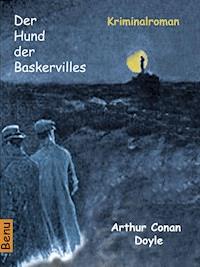
Arthur Conan Doyle's 'The Hound of the Baskervilles' is a classic detective novel that follows the renowned detective Sherlock Holmes as he investigates the mysterious death of Sir Charles Baskerville. Set in the eerie moors of Dartmoor, this gothic tale is filled with suspense, deception, and supernatural elements, making it a gripping and atmospheric read. Doyle's narrative style combines deductive reasoning with a keen eye for detail, keeping readers on the edge of their seats until the final reveal. 'The Hound of the Baskervilles' is considered one of Doyle's finest works, showcasing his talent for crafting intricate plots and memorable characters within the realm of detective fiction. With its rich descriptions and clever twists, this novel continues to captivate audiences worldwide. Arthur Conan Doyle's background as a physician and his fascination with crime and mystery undoubtedly influenced his creation of Sherlock Holmes and his iconic adventures. Doyle's own experiences and interests in detective work shine through in his writing, adding depth and authenticity to his characters and storylines. Fans of mystery and suspense will undoubtedly enjoy 'The Hound of the Baskervilles' for its masterful storytelling and timeless appeal. Whether you are a longtime Sherlock Holmes enthusiast or new to the genre, this novel is a must-read for anyone seeking a thrilling and thought-provoking mystery. In this enriched edition, we have carefully created added value for your reading experience: - A succinct Introduction situates the work's timeless appeal and themes. - The Synopsis outlines the central plot, highlighting key developments without spoiling critical twists. - A detailed Historical Context immerses you in the era's events and influences that shaped the writing. - An Author Biography reveals milestones in the author's life, illuminating the personal insights behind the text. - A thorough Analysis dissects symbols, motifs, and character arcs to unearth underlying meanings. - Reflection questions prompt you to engage personally with the work's messages, connecting them to modern life. - Hand‐picked Memorable Quotes shine a spotlight on moments of literary brilliance. - Interactive footnotes clarify unusual references, historical allusions, and archaic phrases for an effortless, more informed read.
Sie lesen das E-Book in den Legimi-Apps auf:
Seitenzahl: 359
Veröffentlichungsjahr: 2018
Das E-Book (TTS) können Sie hören im Abo „Legimi Premium” in Legimi-Apps auf:
Ähnliche









THE HOUND OF THE BASKERVILLES
Published by
Books
Table of Contents
Introduction
In a land of bog and whispering winds, reason walks into the fog of superstition and refuses to be swallowed by it.
The Hound of the Baskervilles, by Arthur Conan Doyle, holds a central place in the canon of detective fiction. First serialized in The Strand Magazine from 1901 to 1902 and published in book form in 1902, it restores the presence of Sherlock Holmes and Dr. Watson to readers who had followed their earlier adventures. The novel’s premise is simple and compelling: a family in Devon is haunted by the legend of a spectral hound, a death raises fearful questions, and two investigators bring method to a landscape charged with myth, rumor, and dread.
Its classic status partly arises from the historical moment of its appearance. After Doyle had dramatically concluded Holmes’s career in a previous tale, this novel returned the detective to public print while setting the investigation before that earlier farewell. The effect was electric: a familiar intelligence confronted an unfamiliar terrain, and the excitement of recognition met a refreshed narrative design. The Strand’s readership devoured each installment, and the complete volume rapidly became a touchstone, demonstrating how a series character could be renewed without compromising the integrity of the fictional world.
Equally decisive was the book’s fusion of genres. Doyle wove the clear logic of the detective story into the shadows of the Gothic, allowing fog, moor, and ancestral fear to press against the lantern of analysis. The tension between superstition and science animates every page, yet the prose never abandons entertainment for thesis. Instead, the novel shows how atmosphere can thicken inquiry, and how inquiry can aerate atmosphere, producing a narrative in which dread becomes a stimulus for investigation rather than an end in itself.
Doyle’s craftsmanship is evident in the novel’s architecture: crisp openings, accumulating clues, and carefully placed misdirections that preserve fairness while heightening mystery. Dr. Watson’s steady voice guides the reader through uncertain ground, making careful observation feel both intimate and disciplined. The serialized origins encouraged a cadence of suspense that the book version preserves, with chapters closing on images or discoveries that invite reflection. As a result, the story rewards both swift reading for thrills and slower reading for structure, its design aligning sensation with logic at nearly every turn.
The partnership of Holmes and Watson remains foundational to the book’s appeal. They embody complementary virtues: dazzling inference and patient attention, analytic brilliance and humane curiosity. Their collaboration becomes a model for shared inquiry, in which different temperaments illuminate the same problem from distinct angles. This dynamic does more than solve puzzles; it dramatizes the ethics of knowledge, suggesting that truth emerges not from solitary genius alone but from conversation, verification, and trust between investigators and witnesses.
Setting is never mere backdrop here; the moor exerts a shaping force on character and plot. Devon’s open expanses, sudden mists, and treacherous ground concentrate the novel’s emotional pressure, while the ancestral Baskerville estate focuses questions of inheritance and responsibility. Urban expertise must adapt to rural conditions, and the rhythms of London give way to the silences of a landscape that seems to remember older terrors. In this way, place becomes a testing ground for method, asking whether modern procedure can read a terrain that resists quick measurement.
The novel’s fascination with modernity is equally striking. Doyle foregrounds observation, inference, and practical experiment, invoking the tools and habits of contemporary science. Clocks, messages, footsteps, and the patterns of behavior all become data points, instructing readers in how to parse the ordinary for concealed significance. Against this stands the persistence of legend—an inheritance of story that commands attention even when reason challenges it. The contest is not merely intellectual; it concerns how communities manage fear, narrate danger, and establish authority amid uncertainty.
The book’s influence reaches far beyond its immediate success. It helped codify the country-house mystery, while also demonstrating how the detective form could borrow the chill and imagery of the supernatural without surrendering to it. Later crime narratives frequently replicate its pattern of an isolated setting, a threatened lineage, and a rational agent contending with collective anxiety. In parallel, works of horror and suspense adopt its lesson that suggestion can be more unsettling than spectacle, and that landscape, properly rendered, can act almost as an antagonist.
Adaptations across stage, radio, cinema, and television have kept the story continually in circulation, indicating its flexibility and durability. Directors and actors return to its moorland vistas and ominous legends because the tale offers both a recognizable structure and rich atmospheric possibilities. Each medium reshapes the material, but the core remains: a puzzle rooted in place and intensified by belief. This adaptability underscores the novel’s balance of clarity and ambiguity, a balance that allows fresh interpretations while preserving the story’s essential trajectory and tone.
For new readers, The Hound of the Baskervilles offers two simultaneous pleasures: the immediate draw of a gripping mystery and the more reflective satisfaction of a carefully reasoned inquiry. The clues are planted with fairness, yet their arrangement invites multiple provisional explanations, encouraging active reading. Without disclosing outcomes, it can be said that the novel rewards attention to character, setting, and the subtle interplay of rumor and fact. Doyle’s restraint ensures that revelation feels earned, not contrived, and that the journey through uncertainty remains as engaging as its destination.
The book endures because its central contest—between fear’s magnetism and reason’s steadiness—feels continually contemporary. In an age marked by rapid information and persistent mythmaking, the story’s insistence on patient verification resonates strongly. Its landscapes remind us that environments shape understanding; its partnership suggests that collaborative scrutiny outperforms solitary certainty. Above all, it affirms that curiosity can be courageous without being credulous. That blend of atmosphere, intellect, and humane poise secures The Hound of the Baskervilles a lasting place among classics, inviting each generation to step onto the moor with clear eyes and an open mind.
Synopsis
The Hound of the Baskervilles by Arthur Conan Doyle, first serialized in The Strand Magazine in 1901–1902 and published in 1902, features Sherlock Holmes and Dr. Watson at the height of their partnership. It opens in Baker Street with a mysterious walking stick left by a visitor. Holmes deduces its owner, who proves to be Dr. James Mortimer, a country physician from Devonshire. He brings an account of the sudden death of Sir Charles Baskerville, last occupant of Baskerville Hall, and a family legend concerning a demonic hound. He fears for the new heir, Sir Henry Baskerville, arriving from Canada. The case invites tension between scientific reason and Gothic superstition that will shape the investigation.
Dr. Mortimer relates the history of the Baskerville curse, centered on an ancestor, Hugo Baskerville, and a spectral hound haunting the moor. He describes how Sir Charles was found dead near the yew alley gate at Baskerville Hall, with signs of great distress and, reported near the scene, the marks of an enormous hound. Though the inquest favored natural causes, Mortimer suspects something sinister. He seeks Holmes’s counsel before Sir Henry takes possession of the estate. Holmes listens, tests the reliability of Mortimer’s observations, and weighs how legend may be used to mask human motives, setting a cautious tone for the inquiry.
Sir Henry arrives in London and immediately experiences unsettling incidents. A new boot goes missing from his hotel, and later an old boot disappears. An anonymous warning, assembled from newspaper cuttings, urges him to keep away from the moor. A bearded stranger shadows him by cab through city streets. Holmes and Watson follow leads, but evidence is fragmentary. Concerned for the heir’s safety, Holmes decides that Sir Henry should go to Devonshire under protection. He sends Watson to accompany him and to report everything in detail, while reserving his own movements and keeping several investigative lines active in London.
Devonshire’s moorland becomes a brooding presence as Watson and Sir Henry reach Baskerville Hall. The mansion’s melancholy corridors, the wind-swept tors, and the treacherous Grimpen Mire evoke the legend’s menace. The household, managed by the butler Barrymore and his wife, is dutiful yet guarded. Nearby residents include Dr. Mortimer; a keen naturalist who roams the moor with his sister; and a contentious landowner known for interfering lawsuits. The district is further unsettled by news of an escaped convict hiding in the hills. At night, strange sobs and distant cries disturb the Hall, suggesting both human secrecy and something more uncanny.
Watson, acting as Holmes’s eyes and ears, keeps a steady chronicle of impressions and facts. He notes the rigid routines and unspoken tensions among the servants, Sir Henry’s growing attachment to the naturalist’s sister, and the persistent atmosphere of watchfulness. He learns that someone has been signaling from the Hall’s windows toward the moor. He glimpses a solitary figure keeping a hidden vigil on a distant tor, and he hears a sound like a hound’s howl carrying across the marsh. The narrative alternates between daily detail and sudden alarms, gradually tightening the web of coincidence and suspicion.
Questions proliferate as Watson follows multiple threads. Why does the butler prowl at night, and to whom are the signals addressed? What has the convict seen that keeps him close to the mire? What prompted a woman in the nearby town of Coombe Tracey to contact Sir Charles before his death, and why does she now guard her motives? Reports of otherworldly sightings and outsized tracks mingle with mundane facts such as letters, ciphers, and personal habits. Through interviews and reconnaissance, Watson identifies contradictions and private agendas, but the chain of cause and effect remains blurred by fear and rumor.
Tension escalates with a fatal mishap on the moor, deepening the sense that human danger and folkloric terror are entangled. Sir Henry’s movements become a point of strategic concern, as his daily walks may expose him to both human ambush and the moor’s hazards. The landscape itself functions as an adversary, with sudden fogs, treacherous bogs, and vast distances frustrating pursuit and escape. Competing explanations—supernatural curse or calculated plot—vie for plausibility. Watson weighs character, motive, and opportunity, aware that misplaced trust could be disastrous, and that a misread clue may serve someone else’s hidden design.
The investigation coalesces when Holmes intervenes directly to assemble the disparate clues and test a hypothesis. He reevaluates alibis, reconstructs movements on the night of Sir Charles’s death, and considers how fear can be manipulated as a weapon. A deliberate plan is laid to draw the culprit into the open while protecting the heir. The strategy depends on timing, terrain, and an understanding of how the legend of the hound can be exploited. Even as the prospect of a confrontation looms, the narrative guards its surprises, emphasizing the disciplined reasoning that distinguishes practical evidence from atmospheric dread.
Without disclosing the final revelations, the novel’s lasting power rests on its union of detective logic with Gothic atmosphere. It explores how stories inherited from the past shape present actions, and how reason can dispel terror without dispelling mystery. The grim moor, the ancestral house, and the interlacing of love, greed, and social standing provide a setting where character and environment influence fate. The Hound of the Baskervilles endures as a study in perception: appearances deceive, legends seduce, and inference, patiently tested, restores proportion. It affirms the value of inquiry while recognizing the allure of the unknown.
Historical Context
Arthur Conan Doyle’s The Hound of the Baskervilles unfolds in late Victorian Britain, largely between London and the moorlands of Devon. The reigning monarchy was that of Queen Victoria, and the social order was anchored by the landed gentry, an expanding middle class, and professional elites in law, medicine, and finance. London operated as an imperial capital and a media hub, while rural estates symbolized inherited authority. State institutions—the Metropolitan Police and criminal courts—sat alongside a vigorous periodical press that shaped opinion. Against this backdrop, the novel’s contrast between metropolitan rationality and provincial superstition probes how authority, knowledge, and class operated in Britain around the turn of the century.
The work first appeared serially in The Strand Magazine from 1901 to 1902, illustrated by Sidney Paget, before book publication in 1902. Although written after Doyle had “killed” Holmes in 1893, the narrative is placed earlier in the detective’s career. The Strand’s mass readership ensured immediate cultural impact, reviving Holmes’s popularity. The timing mattered: Britain was debating its place in the world during the South African War (1899–1902), while domestic readers sought both diversion and reassurance in tales of reason subduing disorder. Serialization emphasized suspense and communal reading habits fostered by the illustrated press at the height of late Victorian print culture.
Dartmoor, the principal setting, was already famed for its treacherous mires, granite tors, prehistoric hut circles, and bleak weather. The area’s bogs and tors had been mapped and mythologized by travelers, geologists, and local antiquarians throughout the nineteenth century. Dartmoor Prison, established in the early nineteenth century and later used as a civil prison, stood as a tangible reminder of state power in a remote landscape. Rail connections in the West Country and local coaching roads made the moor accessible to urban visitors, while its dangers remained real. Doyle drew on this documented geography to frame a contest between fear and reason in a stark environment.
The narrative turns on the fate of a hereditary estate, reflecting the legal and social weight of primogeniture in Victorian Britain. Country houses remained symbols of continuity, yet they were increasingly vulnerable. An agricultural depression from the 1870s into the 1890s reduced rural rents, forcing some families to retrench or mortgage land. Estates were governed by wills, settlements, and trustees under a legal regime modernized throughout the nineteenth century. In such a climate, inheritance disputes, entailments, and the dependence of tenants and servants on a household’s stability had real consequences. The book channels these pressures into a plot where lineage and property become high-stakes matters.
The moor’s lore echoes a wider Victorian fascination with folklore. The Folklore Society, founded in 1878, organized the collection and classification of legends, customs, and beliefs across Britain and Ireland. Devon and Cornwall supplied abundant material, and local clergy and antiquarians published studies of Dartmoor’s traditions. Writers such as Sabine Baring-Gould, a Devon clergyman and folklorist, helped popularize the region’s legends and landscapes. Doyle’s narrative uses a fabricated family curse and spectral hound to dramatize the persistence of pre-scientific beliefs in rural districts. By staging rational inquiry against storied terrain, the novel explores how legend survives modernization without endorsing the supernatural.
The story also reflects contemporary debates about policing and criminal investigation. The Metropolitan Police (established 1829) and its Criminal Investigation Department (formally reorganized in 1878) professionalized urban law enforcement, yet public skepticism lingered. The sensational coverage of the Whitechapel murders in 1888 had revealed limits in detection and fueled fascination with crime. Doyle’s “consulting detective” concept positions Holmes as a specialist who complements—and sometimes surpasses—official police work. This arrangement mirrors public discourse in which private expertise, scientific method, and individual initiative were often imagined as corrective forces to bureaucratic shortcomings.
Victorian science increasingly shaped investigative technique. Throughout the late nineteenth century, criminology experimented with classification systems, such as Alphonse Bertillon’s anthropometry in the 1880s, while forensic practices like trace analysis, chemical tests, and careful observation entered popular awareness. Britain officially adopted fingerprinting for criminal identification in 1901. Doyle equips Holmes with a scientific demeanor—footprint analysis, cigar-ash comparisons, experiments—rather than occult powers. The novel thereby publicizes methodical reasoning as a tool that demystifies fear. The use of luminous substances to fake the hound’s appearance also draws on contemporary knowledge of chemicals, including widely known applications of phosphorus.
Communications technology underpins the plot’s tempo. By the late nineteenth century, the telegraph was routine for urgent messages, and the postal system—reformed under the penny post since 1840—supported rapid correspondence across Britain. Newspapers and weeklies disseminated crime stories, rumors, and social commentary to a broad literate public. Doyle exploits telegrams, letters, and the metropolitan press to show information moving faster than people, enabling Holmes to coordinate action from a distance. The informational infrastructure of the age becomes a narrative resource, while also highlighting how misdirection and secrecy can thrive within an overabundance of circulating reports.
Railways and urban transport knit the narrative’s spaces together. Since the mid-nineteenth century, the Great Western Railway linked London to the West Country, making Dartmoor accessible to tourists, invalids, and investigators. Within London, hansom cabs and, increasingly, electric trams and omnibuses facilitated quick movement. The book’s transitions from Baker Street to Devon mirror a society where speed and reach had transformed daily life and narrative plausibility. Yet once on the moor, modern conveyances give way to foot travel and vulnerable bodies, reasserting nature’s force and reminding readers that technology cannot abolish physical risk.
The presence of an escaped convict in the story resonates with Victorian penal history. Throughout the nineteenth century, debates over deterrence, rehabilitation, and prison conditions led to reforms, inspections, and statistical oversight. Dartmoor Prison, with its grim reputation and remote location, embodied the state’s capacity to isolate offenders. Escapes were rare but not unheard of, and newspapers eagerly reported them. The notion of a dangerous fugitive on open moorland played on contemporary anxieties about crime spilling into rural spaces once deemed safe, while allowing Doyle to test how fear, rumor, and fact intermingle when law enforcement is distant.
The late-Victorian imperial context forms part of the cultural air the book breathes, even though its plot is domestic. By the 1890s, the British Empire spanned continents, and imperial service, trade, and migration shaped social mobility and wealth at home. Many Holmes stories involve colonial legacies, returning soldiers, or fortunes made abroad; such patterns were familiar to Doyle’s readers. Imperial expansion also fed public appetite for tales of adventure, exotic landscapes, and scientific mastery. The Hound of the Baskervilles converts those tastes into a British landscape adventure, situating the extraordinary not in a distant colony but in England’s own periphery.
A powerful late-Victorian intellectual current was the discourse on degeneration and atavism. Thinkers like Cesare Lombroso popularized the idea that criminality might reflect inherited or primitive traits, while popular writing speculated about moral or biological decline in modern society. Such notions circulated widely, even when scientists disputed them. Doyle’s novel toys with hereditary doom through the Baskerville legend, yet its solution ultimately privileges human agency, motive, and circumstance over biological determinism. By dramatizing how superstition can mask calculated crime, the book distances itself from crude atavist explanations without denying the appeal of Gothic atmospherics.
Religion and the occult also formed part of the period’s cultural debate. Spiritualism had attracted followers in Britain since the mid-nineteenth century, and séances, mediums, and psychical research drew public attention. Doyle himself later became a prominent advocate of spiritualism, especially after World War I, though in his Holmes fiction he typically subjects supernatural claims to empirical scrutiny. The Hound of the Baskervilles aligns with this earlier rationalist stance: extraordinary appearances demand ordinary explanations, established by observation and testing. In this sense the novel participates in a broader late-Victorian negotiation between faith, skepticism, and emergent scientific authority.
Household structure in the story reflects the centrality of domestic service in Victorian Britain. By the late nineteenth century, domestic service was the largest single occupation for women and a significant employment sector for men in large houses. Country estates relied on butlers, housekeepers, coachmen, and maids, governed by strict hierarchies and codes of deference. The novel’s interactions between gentry and servants illustrate a social order in which information, loyalty, and livelihood were intertwined. This arrangement supplied both stability and opportunities for secrecy, and it allowed fiction to explore class boundaries within the intimate spaces of kitchens, corridors, and lodges.
The book’s cultural reception was shaped by a mature mass market for illustrated fiction. The Education Act of 1870 had expanded basic schooling, raising literacy rates across England and Wales. The Strand Magazine, launched in 1891, specialized in accessible narratives with strong visual accompaniment; Sidney Paget’s images made Holmes instantly recognizable to readers. Illustration influenced how audiences imagined spaces like Baker Street and Dartmoor, and serial publication invited collective speculation between installments. Doyle benefited from this synergy of text and image, embedding his detective within a visual culture that bridged journalism, advertising, and popular entertainment.
Doyle’s medical training at the University of Edinburgh, and his apprenticeship under the diagnostically gifted surgeon Joseph Bell, informed Holmes’s method. Bell’s emphasis on acute observation and inference is often cited by Doyle as the character’s inspiration. The author’s life intersected with public affairs: he served as a physician in South Africa during the South African War and wrote on the conflict, contributing to debates about British policy. Knighted in 1902, Doyle wrote The Hound of the Baskervilles amid national self-scrutiny over empire, professionalism, and morality. The novel’s celebration of methodical inquiry thus resonates with contemporary ideals of expertise and civic service.
Together these contexts illuminate how the novel mirrors and interrogates its era. It stages a confrontation between scientific modernity and hereditary privilege, metropolitan speed and rural stasis, mass media rumor and verified fact. By locating terror within England’s own ancient landscape, it suggests that threats to order are neither purely foreign nor purely mystical, but social and material. Holmes’s success frames reason as a public good, while the vulnerabilities of an aristocratic house hint at the fragility of inherited power under modern pressures. In balancing Gothic atmosphere with empirical resolution, the book both entertains and critiques its historical moment.
Author Biography
Introduction
Arthur Ignatius Conan Doyle (1859–1930) was a Scottish-born physician who became one of the most widely read authors of the late Victorian and Edwardian eras. He is best known as the creator of Sherlock Holmes and Dr. Watson, whose cases helped define the modern detective story through a blend of observation, inference, and atmospheric suspense. Doyle wrote across genres—historical romance, science fiction, adventure, and nonfiction—while maintaining a public profile as a commentator on contemporary affairs. His success in print, on stage, and in serialized magazines made him a global literary figure, and in 1902 he was knighted for services that included wartime medical work and public writing.
Although Holmes secured his fame, Doyle’s oeuvre extended far beyond Baker Street. He produced admired historical novels, energetic adventure tales, and visionary speculative fiction, and he published essays and book-length interventions on politics, war, and social questions. His characters migrated early to the theatre and later to film, radio, and television, helping entrench the figure of the consulting detective and the sidekick narrator in popular culture. Doyle’s lucid style, controlled pacing, and interest in method helped shape genre conventions that still govern crime and adventure narratives. His books have been translated widely, and his stories continue to generate adaptations, pastiches, and scholarly debate.
Education and Literary Influences
Conan Doyle grew up in Edinburgh and was educated at the Jesuit-run Stonyhurst College in Lancashire before returning to Scotland for university. He studied medicine at the University of Edinburgh, qualifying as a physician in the early 1880s. As a young man he gained formative experience as a ship’s surgeon, first on a whaling voyage to the Arctic and then on a West African steamer. He opened a medical practice in Southsea, near Portsmouth, where spare hours fed into disciplined writing habits. Clinical training honed his observational eye, and the varied people he encountered at sea and in surgery furnished material for character and setting.
At Edinburgh, Doyle encountered the surgeon Joseph Bell, whose incisive diagnostic methods supplied a model for Holmes’s rational procedures. His reading drew on British and European traditions: he admired Edgar Allan Poe’s pioneering detective tales and engaged deeply with the historical romance associated with Sir Walter Scott. The late nineteenth-century magazine marketplace, with its appetite for serial fiction and illustrated short stories, shaped his approach to narrative economy and episodic structure. He learned to anchor intricate plots in clear prose and to leaven deduction with mood and incident, a combination that proved ideal for monthly publication and helped cultivate a devoted readership.
Literary Career
Doyle’s earliest tales appeared while he was still a student, and in 1887 his novel A Study in Scarlet introduced Sherlock Holmes and Dr. Watson in the pages of Beeton’s Christmas Annual. The Sign of Four followed in 1890. Beginning in 1891 The Strand Magazine serialized Holmes short stories, supported by Sidney Paget’s defining illustrations. The Adventures of Sherlock Holmes and The Memoirs of Sherlock Holmes quickly established the pair as cultural fixtures. Readers responded to the balance of logic, atmosphere, and urban detail, and Doyle’s deft use of the first-person narrator offered immediacy without surrendering the detective’s aura of mastery.
In 1893 Doyle attempted to end the series with a story culminating in a seemingly fatal confrontation, seeking time for other literary ambitions. Public reaction was intense, and demand for the detective never fully abated. He returned with a novel set earlier, The Hound of the Baskervilles (1901–1902), before restoring Holmes to active life in The Return of Sherlock Holmes (1903–1904). Later collections, including His Last Bow (1917) and The Case-Book of Sherlock Holmes (1927), extended the canon over four decades. The stories display ingenious plotting, vivid secondary characters, and a London rendered as a stage for rational inquiry and moral drama.
Beyond detective fiction, Doyle pursued historical subjects with sustained energy. Micah Clarke (1889) and The White Company (1891) explored turbulent periods of English history, while Sir Nigel (1906) returned to the fourteenth century. He also created the dashing French soldier Brigadier Gerard, a comic-heroic figure of the Napoleonic era who headlined popular story cycles. Many contemporaries and later critics praised the sweep and chivalric spirit of these works, and Doyle himself regarded his historical romances as central to his artistic identity. They reveal careful archival reading, a relish for set-piece action, and a humane interest in courage, loyalty, and fate.
Doyle’s scientific romances broadened his range further. The Lost World (1912) introduced Professor Challenger and an expedition to a remote plateau, followed by The Poison Belt (1913) and, later, The Land of Mist (1926). He wrote for the stage and saw his characters adapted by prominent dramatists; he also penned The Speckled Band as a play. His nonfiction engaged current affairs: The Great Boer War (1900) and The War in South Africa: Its Cause and Conduct (1902) argued Britain’s case, while The Crime of the Congo (1909) condemned colonial atrocities. These interventions showcased his appetite for evidence, debate, and public persuasion.
Beliefs and Advocacy
Public life drew him repeatedly from the study. During the Second Boer War he served as a physician in a field hospital in South Africa, an experience that amplified his interest in military logistics and public health. He was knighted in 1902. Politically, he stood twice for Parliament as a Liberal Unionist but was not elected. He became an energetic campaigner in cases of suspected wrongful conviction, notably those of George Edalji and Oscar Slater. His analyses brought national attention to investigative failures and helped spur reforms, including the creation of more robust avenues of criminal appeal and growing scrutiny of police procedure.
Spiritualism occupied an increasingly prominent place in his life and writing. Raised in a Catholic milieu, he turned to psychical research and, over time, became one of its most famous advocates, especially after the losses his family suffered during the First World War. He published programmatic works such as The New Revelation (1918), The Vital Message (1919), and a two-volume History of Spiritualism (1926), and he endorsed the controversial Cottingley Fairies photographs in The Coming of the Fairies (1922). He lectured widely in Britain and abroad, debating skeptics and urging open-minded inquiry. The commitment fortified supporters and unsettled some admirers of his fiction.
Final Years & Legacy
In the 1920s Doyle balanced fiction with travel and lectures, sustaining an international profile. Later Holmes stories appeared alongside Challenger narratives that reflected his spiritualist convictions. Personal bereavements from the war years deepened his resolve to defend the possibility of survival after death, and he continued to organize and attend séances and public meetings. Though his health declined, he remained active as a correspondent and advocate. He died on 7 July 1930 at his home, Windlesham, in Crowborough, Sussex. Tributes noted not only the creator of a beloved detective but also a writer who saw literature as a vehicle for civic argument.
Doyle’s legacy is both literary and cultural. Sherlock Holmes supplied a lasting template for the analytical detective, shaped the popular image of forensic reasoning, and inspired innumerable successors. Illustrations by Sidney Paget and later screen portrayals fixed the iconography associated with the character, while adaptations across media continually renew the stories for new audiences. Organized societies and academic studies sustain global interest in the canon. Doyle’s historical and scientific romances remain in print, and his nonfiction records a vigorous engagement with the public life of his time. His career exemplifies the Victorian belief in knowledge applied to narrative and society.
THE HOUND OF THE BASKERVILLES
I. Mr. Sherlock Holmes
Mr. Sherlock Holmes, who was usually very late in the mornings, save upon those not infrequent occasions when he was up all night, was seated at the breakfast table. I stood upon the hearth-rug and picked up the stick which our visitor had left behind him the night before. It was a fine, thick piece of wood, bulbous-headed, of the sort which is known as a "Penang lawyer[1]." Just under the head was a broad silver band nearly an inch across. "To James Mortimer, M.R.C.S., from his friends of the C.C.H.," was engraved upon it, with the date "1884." It was just such a stick as the old-fashioned family practitioner used to carry—dignified, solid, and reassuring.
"Well, Watson, what do you make of it?"
Holmes was sitting with his back to me, and I had given him no sign of my occupation.
"How did you know what I was doing? I believe you have eyes in the back of your head."
"I have, at least, a well-polished, silver-plated coffee-pot in front of me," said he. "But, tell me, Watson, what do you make of our visitor's stick? Since we have been so unfortunate as to miss him and have no notion of his errand, this accidental souvenir becomes of importance. Let me hear you reconstruct the man by an examination of it."
"I think," said I, following as far as I could the methods of my companion, "that Dr. Mortimer is a successful, elderly medical man, well-esteemed since those who know him give him this mark of their appreciation."
"Good!" said Holmes. "Excellent!"
"I think also that the probability is in favour of his being a country practitioner who does a great deal of his visiting on foot."
"Why so?"
"Because this stick, though originally a very handsome one has been so knocked about that I can hardly imagine a town practitioner carrying it. The thick-iron ferrule is worn down, so it is evident that he has done a great amount of walking with it."
"Perfectly sound!" said Holmes.
"And then again, there is the 'friends of the C.C.H.' I should guess that to be the Something Hunt, the local hunt to whose members he has possibly given some surgical assistance, and which has made him a small presentation in return."
"Really, Watson, you excel yourself," said Holmes, pushing back his chair and lighting a cigarette. "I am bound to say that in all the accounts which you have been so good as to give of my own small achievements you have habitually underrated your own abilities. It may be that you are not yourself luminous, but you are a conductor of light. Some people without possessing genius have a remarkable power of stimulating it[1q]. I confess, my dear fellow, that I am very much in your debt."
He had never said as much before, and I must admit that his words gave me keen pleasure, for I had often been piqued by his indifference to my admiration and to the attempts which I had made to give publicity to his methods. I was proud, too, to think that I had so far mastered his system as to apply it in a way which earned his approval. He now took the stick from my hands and examined it for a few minutes with his naked eyes. Then with an expression of interest he laid down his cigarette, and carrying the cane to the window, he looked over it again with a convex lens.
"Interesting, though elementary," said he as he returned to his favourite corner of the settee. "There are certainly one or two indications upon the stick. It gives us the basis for several deductions."
"Has anything escaped me?" I asked with some self-importance. "I trust that there is nothing of consequence which I have overlooked?"
"I am afraid, my dear Watson, that most of your conclusions were erroneous. When I said that you stimulated me I meant, to be frank, that in noting your fallacies I was occasionally guided towards the truth. Not that you are entirely wrong in this instance. The man is certainly a country practitioner. And he walks a good deal."
"Then I was right."
"To that extent."
"But that was all."
"No, no, my dear Watson, not all—by no means all. I would suggest, for example, that a presentation to a doctor is more likely to come from a hospital than from a hunt, and that when the initials 'C.C.' are placed before that hospital the words' Charing Cross' very naturally suggest themselves."
"You may be right."
"The probability lies in that direction. And if we take this as a working hypothesis we have a fresh basis from which to start our construction of this unknown visitor."
"Well, then, supposing that 'C.C.H.' does stand for 'Charing Cross Hospital,' what further inferences may we draw?"
"Do none suggest themselves? You know my methods. Apply them!"
"I can only think of the obvious conclusion that the man has practised in town before going to the country."
"I think that we might venture a little farther than this. Look at it in this light. On what occasion would it be most probable that such a presentation would be made? When would his friends unite to give him a pledge of their good will? Obviously at the moment when Dr. Mortimer withdrew from the service of the hospital in order to start in practice for himself. We know there has been a presentation. We believe there has been a change from a town hospital to a country practice. Is it, then, stretching our inference too far to say that the presentation was on the occasion of the change?"
"It certainly seems probable."
"Now, you will observe that he could not have been on the staff of the hospital, since only a man well-established in a London practice could hold such a position, and such a one would not drift into the country. What was he, then? If he was in the hospital and yet not on the staff he could only have been a house-surgeon or a house-physician—little more than a senior student. And he left five years ago—the date is on the stick. So your grave, middle-aged family practitioner vanishes into thin air, my dear Watson, and there emerges a young fellow under thirty, amiable, unambitious, absent-minded, and the possessor of a favourite dog, which I should describe roughly as being larger than a terrier and smaller than a mastiff."
I laughed incredulously as Sherlock Holmes leaned back in his settee and blew little wavering rings of smoke up to the ceiling.
"As to the latter part, I have no means of checking you," said I, "but at least it is not difficult to find out a few particulars about the man's age and professional career." From my small medical shelf I took down the Medical Directory and turned up the name. There were several Mortimers, but only one who could be our visitor. I read his record aloud.
"Mortimer, James, M.R.C.S., 1882, Grimpen, Dartmoor, Devon. House-surgeon, from 1882 to 1884, at Charing Cross Hospital. Winner of the Jackson Prize for Comparative Pathology, with essay entitled 'Is Disease a Reversion?' Corresponding member of the Swedish Pathological Society. Author of 'Some Freaks of Atavism' (Lancet 1882). 'Do We Progress?' (Journal of Psychology, March, 1883). Medical Officer for the parishes of Grimpen, Thorsley, and High Barrow."
"No mention of that local hunt, Watson," said Holmes with a mischievous smile, "but a country doctor, as you very astutely observed. I think that I am fairly justified in my inferences. As to the adjectives, I said, if I remember right, amiable, unambitious, and absent-minded. It is my experience that it is only an amiable man in this world who receives testimonials, only an unambitious one who abandons a London career for the country, and only an absent-minded one who leaves his stick and not his visiting-card after waiting an hour in your room."
"And the dog?"
"Has been in the habit of carrying this stick behind his master. Being a heavy stick the dog has held it tightly by the middle, and the marks of his teeth are very plainly visible. The dog's jaw, as shown in the space between these marks, is too broad in my opinion for a terrier and not broad enough for a mastiff. It may have been—yes, by Jove, it is a curly-haired spaniel."
He had risen and paced the room as he spoke. Now he halted in the recess of the window. There was such a ring of conviction in his voice that I glanced up in surprise.
"My dear fellow, how can you possibly be so sure of that?"
"For the very simple reason that I see the dog himself on our very door-step, and there is the ring of its owner. Don't move, I beg you, Watson. He is a professional brother of yours, and your presence may be of assistance to me. Now is the dramatic moment of fate, Watson, when you hear a step upon the stair which is walking into your life, and you know not whether for good or ill. What does Dr. James Mortimer, the man of science, ask of Sherlock Holmes, the specialist in crime? Come in!"
The appearance of our visitor was a surprise to me, since I had expected a typical country practitioner. He was a very tall, thin man, with a long nose like a beak, which jutted out between two keen, grey eyes, set closely together and sparkling brightly from behind a pair of gold-rimmed glasses. He was clad in a professional but rather slovenly fashion, for his frock-coat was dingy and his trousers frayed. Though young, his long back was already bowed, and he walked with a forward thrust of his head and a general air of peering benevolence.
As he entered his eyes fell upon the stick in Holmes's hand, and he ran towards it with an exclamation of joy. "I am so very glad," said he. "I was not sure whether I had left it here or in the Shipping Office. I would not lose that stick for the world."
"A presentation, I see," said Holmes.
"Yes, sir."
"From Charing Cross Hospital?"
"From one or two friends there on the occasion of my marriage."
"Dear, dear, that's bad!" said Holmes, shaking his head.
Dr. Mortimer blinked through his glasses in mild astonishment.
"Why was it bad?"
"Only that you have disarranged our little deductions. Your marriage, you say?"
"Yes, sir. I married, and so left the hospital, and with it all hopes of a consulting practice. It was necessary to make a home of my own."
"Come, come, we are not so far wrong, after all," said Holmes. "And now, Dr. James Mortimer—"
"Mister, sir, Mister—a humble M.R.C.S."
"And a man of precise mind, evidently."
"A dabbler in science, Mr. Holmes, a picker up of shells on the shores of the great unknown ocean. I presume that it is Mr. Sherlock Holmes whom I am addressing and not—"
"No, this is my friend Dr. Watson."
"Glad to meet you, sir. I have heard your name mentioned in connection with that of your friend. You interest me very much, Mr. Holmes. I had hardly expected so dolichocephalic a skull or such well-marked supra-orbital development. Would you have any objection to my running my finger along your parietal fissure? A cast of your skull, sir, until the original is available, would be an ornament to any anthropological museum. It is not my intention to be fulsome, but I confess that I covet your skull."
Sherlock Holmes waved our strange visitor into a chair. "You are an enthusiast in your line of thought, I perceive, sir, as I am in mine," said he. "I observe from your forefinger that you make your own cigarettes. Have no hesitation in lighting one."
The man drew out paper and tobacco and twirled the one up in the other with surprising dexterity. He had long, quivering fingers as agile and restless as the antennae of an insect.
Holmes was silent, but his little darting glances showed me the interest which he took in our curious companion.
"I presume, sir," said he at last, "that it was not merely for the purpose of examining my skull that you have done me the honour to call here last night and again to-day?"
"No, sir, no; though I am happy to have had the opportunity of doing that as well. I came to you, Mr. Holmes, because I recognised that I am myself an unpractical man and because I am suddenly confronted with a most serious and extraordinary problem. Recognising, as I do, that you are the second highest expert in Europe—"
"Indeed, sir! May I inquire who has the honour to be the first?" asked Holmes with some asperity.
"To the man of precisely scientific mind the work of Monsieur Bertillon must always appeal strongly."
"Then had you not better consult him?"
"I said, sir, to the precisely scientific mind. But as a practical man of affairs it is acknowledged that you stand alone. I trust, sir, that I have not inadvertently—"
"Just a little," said Holmes. "I think, Dr. Mortimer, you would do wisely if without more ado you would kindly tell me plainly what the exact nature of the problem is in which you demand my assistance."