
1,99 €
Niedrigster Preis in 30 Tagen: 0,00 €
Niedrigster Preis in 30 Tagen: 0,00 €
Mehr erfahren.
- Herausgeber: Musaicum Books
- Kategorie: Geisteswissenschaft
- Sprache: Englisch
Thomas Hobbes's 'Leviathan (Complete Edition)' delves into the philosophical concept of the social contract and the role of government in securing peace and order. Written in a straightforward and precise prose, the book explores the nature of man in a state of nature and the necessity of a strong central authority to prevent chaos. Hobbes presents a compelling argument for the sovereign's absolute power to maintain civil obedience and prevent the return to a state of war. The book's logical arguments and structured reasoning reflect the author's background in political theory and moral philosophy. 'Leviathan' is a cornerstone in political philosophy, influencing contemporary ideas of statecraft and governance. Hobbes's keen insights into human nature and society make this work a timeless classic that continues to provoke thought and discussion in the modern world. In this enriched edition, we have carefully created added value for your reading experience: - A succinct Introduction situates the work's timeless appeal and themes. - The Synopsis outlines the central plot, highlighting key developments without spoiling critical twists. - A detailed Historical Context immerses you in the era's events and influences that shaped the writing. - An Author Biography reveals milestones in the author's life, illuminating the personal insights behind the text. - A thorough Analysis dissects symbols, motifs, and character arcs to unearth underlying meanings. - Reflection questions prompt you to engage personally with the work's messages, connecting them to modern life. - Hand‐picked Memorable Quotes shine a spotlight on moments of literary brilliance. - Interactive footnotes clarify unusual references, historical allusions, and archaic phrases for an effortless, more informed read.
Das E-Book können Sie in Legimi-Apps oder einer beliebigen App lesen, die das folgende Format unterstützen:
Veröffentlichungsjahr: 2018
Ähnliche







LEVIATHAN
(Complete Edition)
Published by
Books
Table of Contents
Introduction
From the wreckage of civil strife rises a colossal, man‑made figure assembled from countless individuals, forcing a stark contemplation of whether ungoverned human passions will rule the world or whether people will deliberately craft a common authority strong enough to secure peace without extinguishing life itself.
Leviathan endures as a classic because it fuses philosophical rigor with an unforgettable political image, forging a shared vocabulary for thinking about authority, law, and obligation. Hobbes’s work helped inaugurate modern political philosophy in vernacular prose, bringing questions once reserved for scholars into wide public debate. Its arguments, sharpened by a tightly reasoned method, have influenced centuries of discourse on rights, sovereignty, and the limits of power. The book’s grip on cultural imagination—its emblematic title and iconic frontispiece—makes its ideas legible even to those who have not read it, while its insights continue to challenge readers to examine the foundations of collective life.
Thomas Hobbes (1588–1679), an English philosopher trained in classical learning and deeply interested in the new sciences, wrote Leviathan during the upheavals of the English Civil Wars. First published in 1651 in English, the work addressed a nation fractured by conflict and contending claims to authority. Hobbes later produced a Latin version in 1668, but the English text remains central to his project of speaking directly to a broad audience. The “Complete Edition” presents the full scope of the treatise, allowing readers to follow Hobbes’s argument from human psychology to civil order and the complex relations between religious and political power.
The premise that animates Leviathan is stark: in the absence of a shared authority, human beings face endemic vulnerability and rivalry; to escape that insecurity, they authorize a sovereign power to adjudicate disputes and maintain peace. Hobbes traces this transition through a sequence of reasoning about desire, fear, prudence, and agreement. The work does not merely advance a policy preference; it seeks to build a science of politics grounded in clear definitions and logical consequence. Readers encounter a compelling vision in which stability and protection emerge not from custom or lineage, but from a deliberate act of collective institution.
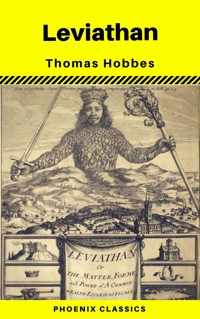
Hobbes organizes the treatise into four interconnected parts: Of Man, Of Commonwealth, Of a Christian Commonwealth, and Of the Kingdom of Darkness. The famous frontispiece visually condenses his thesis by depicting a sovereign composed of citizens, each a participant in the body politic. That image mirrors the textual method, which proceeds from the smallest elements—motions, appetites, words—to the largest structures of law and dominion. The prose is intentionally exacting, yet studded with memorable metaphors, enabling an account that is at once systematic and vividly concrete. Together, image and argument confront readers with the architecture of political life.
A central theme is the exchange between liberty and security. Hobbes does not treat freedom as an abstract ideal floating above necessity; he embeds it within conditions of safety, predictability, and rule‑governed cooperation. Peace becomes the enabling ground for any durable enjoyment of goods, honor, and inquiry. Law, in his account, is not merely constraint but also a framework that allows individuals to pursue purposes without constant fear. This sober vision, attentive to the costs of disorder, continues to resonate in debates about the role of the state, the nature of rights, and the responsibilities of citizenship.
Equally striking is Hobbes’s analysis of language and human psychology. He insists that political contention often originates in confusion over words, ambiguous definitions, and the sway of rhetoric over reason. By clarifying terms and disciplining inference, he aims to prevent verbal disputes from becoming material conflicts. His portrait of the passions—especially fear, vainglory, and the appetite for power—explains why agreements must be credible and why enforcement matters. In this way, Leviathan links the most intimate movements of the mind to the largest institutions, showing how private motives shape public structures.
Religion occupies a crucial place in the book, not as an isolated domain but as a force that intersects with law, interpretation, obedience, and conscience. Hobbes examines the claims of ecclesiastical authority and the uses of scriptural reasoning in civic disputes. He asks how spiritual allegiance can coexist with temporal rule, and under what arrangements their tensions can be managed rather than inflamed. The discussion is intricate and historically grounded in the controversies of his century, yet it persists as a model for thinking through plural commitments within a single political community.
From its first appearance, Leviathan provoked intense discussion. Some readers were alarmed by its uncompromising account of authority; others admired its clarity and ambition. The book’s arguments traveled widely, inspiring rebuttals, revisions, and adaptations across Europe. That contested reception is part of its classic status: a work that continues to incite debate has not been reduced to a period piece. Hobbes invited readers to test his chain of reasoning, and the very persistence of disagreement attests to the depth and reach of his claims about power, order, and obligation.
The influence of Leviathan extends through political philosophy and beyond. Later thinkers—among them John Locke, Jean‑Jacques Rousseau, Baruch Spinoza, and David Hume—engaged Hobbes’s premises whether to refine, resist, or reframe them. Elements of his approach echo in legal positivism, constitutional thought, and theories of international relations that analyze anarchy among states. The book’s imagery and idiom also left a cultural mark: “Leviathan” became a shorthand for the modern state and the dilemmas of collective agency. Even when authors depart from Hobbes, they often do so by adopting his questions and arguing on his terrain.
For contemporary readers, the “Complete Edition” offers the continuity of an argument that rewards sustained attention. The four parts illuminate one another, moving from the mechanics of human judgment to the design of commonwealth and the regulation of spiritual claims. Reading with patience—attuned to definitions, transitions, and examples—reveals the subtlety of Hobbes’s project. His prose resists haste, yet its economy makes careful study repay the effort. Approaching the work as a guided inquiry rather than a set of isolated slogans allows its logic to emerge and its nuances to reshape familiar assumptions about politics.
Leviathan remains urgently relevant because the conditions that troubled Hobbes—fear, faction, misinformation, and contested sovereignty—have not vanished. In times of rapid change, the questions he posed about security, consent, representation, and the boundaries of power retain their force. The book’s lasting appeal lies in its combination of intellectual precision and imaginative reach: it explains why people build states and warns what follows when authority falters. By situating liberty within a durable peace, Hobbes offers a demanding, sobering, and still compelling vision of how a common life can be made and preserved.
Synopsis
Leviathan (Complete Edition) by Thomas Hobbes, first published in 1651 amid the English Civil Wars, presents a comprehensive political philosophy aimed at securing civil peace. Hobbes proposes a science of politics grounded in a materialist psychology and a geometric method of reasoning. He portrays the commonwealth as an artificial person created by art, superior in power to its members, and seeks to explain its generation, structure, and maintenance. The treatise is divided into four parts—Of Man, Of Commonwealth, Of a Christian Commonwealth, and Of the Kingdom of Darkness—moving from individual cognition and passion to collective authority and its religious and intellectual conditions.
Part I begins with a mechanistic account of human cognition. Sensation results from motions transmitted through the senses; imagination is the residue of these motions; dreams and apparitions are explained naturalistically. Hobbes treats memory as a sequence of decaying impressions that can be ordered by association. From these foundations he approaches prudence as experience-based anticipation rather than innate insight. The emphasis is on clarity of definitions and controlled use of words, since confusion in language breeds error. This epistemological framing justifies a method that proceeds from simple motions to complex human behaviors, preparing the ground for moral and political analysis.
Hobbes then examines speech and reasoning as tools for cooperation and power. Language enables naming, calculation, promises, and records of covenant, but it also invites deception and fallacy when words are undefined or abused. He distinguishes science—deductive knowledge from definitions—from opinion based on authority, warning against reliance on scholastic terms that lack clear referents. The account includes causes of error such as haste, superstition, and rhetorical manipulation. By tracing how valid reasoning depends on stable definitions and public standards, Hobbes sets up the necessity of a common judge to resolve disputes about meaning, evidence, and entitlement.
Turning to the passions, Hobbes analyzes appetite, aversion, hope, fear, glory, and anger as directional motions that orient action. Good and evil are relative to desire; felicity consists in continual success in obtaining objects of appetite. From deliberation arises will, and with will comes responsibility for voluntary acts. He defines power as the present means to obtain future apparent goods, noting natural equality in the ability to harm and be harmed. Honor, reputation, and competition produce rivalry, while diffidence fuels precaution. This account explains why isolated individuals, even when rational, face pervasive insecurity and are prone to conflict.
Out of this psychology emerges the state of nature, a hypothetical condition without common authority. In that condition, each retains a right to everything, leading to a situation of mutual fear and endemic conflict. Natural law is introduced as precepts of reason oriented to self-preservation, foremost the seeking of peace when it can be obtained and the readiness for defense when it cannot. Central among these precepts is the requirement to perform covenants once made, making justice a matter of keeping agreements. Yet covenants require enforcement, since without a common power they lack the force to bind.
Part II presents the generation of the commonwealth by covenant and authorization. Individuals mutually transfer their rights to a sovereign, who represents their persons for the sake of peace and defense. Commonwealths may be instituted by agreement or acquired by submission, but in both cases legitimate authority rests on the consent or protection of subjects. Hobbes compares monarchy, aristocracy, and democracy, evaluating their capacities to secure unity and prevent faction. He enumerates rights essential to sovereignty, including making laws, judging disputes, directing war and peace, and controlling doctrines that could dissolve obedience, while subjects retain limited liberties consistent with preservation.
Hobbes elaborates civil law as the commands of the sovereign, interpreted by authorized judges to settle controversies. Property, inheritance, contracts, and offenses acquire public meaning through law, not private conscience. Punishment aims at correction and deterrence, and the sovereign is not liable to subjects for injustice in the legal sense. Nonetheless, natural liberty persists where the law is silent, and certain inalienable claims follow from the aim of self-preservation, such as resisting threats to life. He treats taxation, public ministers, military discipline, and counsel, stressing that successful rule depends on clear communication and consistent execution of laws.
Part III addresses religion and its political bearings. Hobbes interprets scripture using methodological rules, aiming to locate its authority in public determination rather than private inspiration. He examines prophecy, miracles, and spirits, emphasizing verification and lawful authorization. The church is treated not as an independent polity but as an institution within the commonwealth; its ministers teach by permission of civil power. Doctrines concerning the kingdom of God are framed in terms compatible with civil peace, so that controversies of faith do not fracture allegiance. The upshot is a unified jurisdiction where ecclesiastical and civil commands do not compete.
Part IV critiques sources of what Hobbes calls intellectual darkness: confused language, scholastic metaphysics, unauthorized ecclesiastical claims, and credulous demonology. He argues that these errors foster sedition and civil war by placing private authorities above public law. The work closes by reaffirming the need for a visible, undivided sovereign to stabilize meanings, enforce covenants, and channel religious practice toward peace. Beyond its immediate moment, the treatise endures as a foundational statement of social contract theory and state sovereignty, posing lasting questions about order, liberty, and the role of reasoned authority in averting political catastrophe.
Historical Context
Leviathan emerged from the convulsions of seventeenth-century England and a wider European crisis. The setting is the Stuart monarchy after 1603, ruling a composite kingdom that included England, Wales, and, in intricate ways, Scotland and Ireland. Dominant institutions included the Crown, the Church of England with its episcopal structure, and the common-law courts and Parliament. Society remained hierarchical, with landed elites, rising merchants, and a rural majority. Print, universities at Oxford and Cambridge, and a growing urban culture shaped opinion. Across the Channel, dynastic and religious conflicts destabilized Europe, while in England disputes over sovereignty and church governance pressed toward confrontation.
Thomas Hobbes (1588–1679) was born as the Spanish Armada threatened England, a coincidence he later linked to a lifelong sensitivity to fear and security. Educated at Oxford, he entered the household of the Cavendish family as tutor and client, a relationship that afforded travel on the Continent and access to elite political culture. He absorbed classical history and political reflection, publishing an English translation of Thucydides in 1629. That choice signaled his interest in the causes of civic discord and the mechanics of power. His early career thus unfolded within networks of aristocratic patronage and humanist learning that shaped his later arguments.
Under James I and Charles I, debates over royal prerogative and parliamentary privilege intensified. The Stuarts espoused robust monarchical authority and, at times, divine-right language; Parliament defended ancient rights, especially in taxation and redress of grievances. Fiscal stress from warfare and court expenditure pushed the Crown toward controversial revenue devices. Religious policy, influenced by Archbishop William Laud, elevated ceremonial uniformity and episcopal oversight, antagonizing many English Puritans. These tensions—constitutional, fiscal, and religious—created the background against which questions of obedience, law, and authority became urgent, themes Leviathan would address with stark clarity and a new vocabulary of political science.
The Personal Rule of Charles I (1629–1640) foregrounded the practical limits of non-parliamentary governance. The king raised funds through ship money and other expedients, while courts like Star Chamber enforced conformity. Legal resistance, exemplified by widely discussed challenges to ship money in the late 1630s, sharpened arguments about the source of law. In Scotland, efforts to impose an English-style liturgy triggered mobilization. The king’s difficulties in extracting resources without consent made the problem of political obligation tangible for observers like Hobbes, who watched how disagreements about procedure and conscience could destabilize a realm lacking a decisive, recognized arbiter.
The Bishops’ Wars (1639–1640) against a Presbyterian Scotland forced Charles to summon the Short Parliament in 1640 and then the Long Parliament, which sat, with interruptions, into the 1660s. Parliamentary leaders impeached leading royal advisers, including Thomas Wentworth, Earl of Strafford, and Archbishop Laud, and dismantled many prerogative courts. Simultaneously, they pursued religious reforms that divided opinion among English Protestants. The collision of parliamentary ambition and royal authority posed a practical test of mixed monarchy theories. Hobbes observed the cascade of claims—legal, scriptural, historical—made by competing institutions, a proliferation of normative languages that Leviathan later attempts to discipline and subordinate to sovereignty.
The Irish Rebellion of 1641 and disputed control over the militia radicalized English politics. The Grand Remonstrance catalogued grievances against the Crown and inflamed public opinion. Mutual distrust drove London and the court apart, and attempts to arrest parliamentary leaders in January 1642 helped harden positions. By mid-1642, England slid into civil war. Armies formed around Parliamentarian and Royalist allegiances, and pamphlet battles accelerated. The practical question—who commands force and judges necessity—became inseparable from theological identity and constitutional principle. Hobbes’s sensitivity to fear, rumor, and the perils of divided authority took shape amid this unstable and militarized public sphere.
The war’s military logic transformed politics. Parliament’s New Model Army, centralized and professionally organized by 1645, won decisive victories such as Naseby. Armed congregations of Independents, grievances over arrears, and petitions from radical groups like the Levellers pressed for broader reforms. Second-round fighting in 1648 and Pride’s Purge that December showed the capacity of disciplined force to overawe institutions. For Hobbes, such episodes illustrated how competing claims to legitimacy dissolve in the absence of a power able to impose peace. Leviathan’s insistence on undivided sovereignty reflects the perceived futility of balancing arrangements when multiple authorities assert a right to command.
In January 1649, a high court tried and executed Charles I, and England became a Commonwealth. Across the Channel, many royalists and intellectuals gathered in Paris and other cities. Hobbes spent much of the 1640s in Paris, moving within expatriate and philosophical circles. There he taught mathematics to the future Charles II for a period in the mid-1640s and refined his political system first sketched in De Cive (1642). The regicide and the experimental republican regime sharpened the stakes of his argument: how to secure peace when doctrinal disagreement and ambitious factions remain irrepressible. Leviathan’s composition belongs to this crucible of exile and regime change.
Leviathan appeared in London in 1651, printed by Andrew Crooke and accompanied by a striking engraved frontispiece designed with Abraham Bosse. The image—an artificial person composed of its subjects—visualized the book’s thesis that political unity must be constructed and maintained. Hobbes soon returned to England, seeking safety in the very authority whose construction he described, and lived under the Commonwealth and then Protectorate. The book courted controversy: Presbyterians condemned its Erastian subordination of church to state, while Royalists disliked elements perceived as legitimating obedience to de facto powers. Its notoriety matched the intensity of the decade’s public argument.
Hobbes’s intellectual tools drew from the Scientific Revolution. He admired Euclidean method and aspired to a deductive “civil science” grounded in definitions and consequences. Exposure to continental networks, including the Parisian circle around Marin Mersenne, brought him into conversation with leading natural philosophers. He read Galileo and contemporary mechanical philosophy, adopting a resolutely materialist account of motion and sensation. This outlook shaped his anthropology: appetites, aversions, and fear become analyzable causes rather than moral mysteries. Leviathan’s terse definitions and geometric rhetoric echo the methodological confidence of mid-seventeenth-century science applied to the intractable phenomena of politics and religion.
Religious division saturated everyday life. The Church of England’s episcopal structure faced challenges from Presbyterians advocating governance by assemblies, and from Independents asserting congregational autonomy. Sectarian diversity expanded in the 1640s—Baptists, Quakers, and other gathered churches—against a backdrop of anxieties about Catholic plots. Hobbes proposed an Erastian settlement in which scriptural interpretation for civil purposes falls under sovereign authority, aiming to neutralize clerical rivalry as a source of sedition. His extended biblical exegesis in Leviathan’s latter parts responded directly to sermons, pamphlets, and synodical claims that had helped mobilize populations during the crisis.
Print culture amplified conflict and reform. The abolition of Star Chamber in 1641 loosened prewar censorship, prompting a flood of pamphlets and newsbooks. Parliament tried to reassert control via the Licensing Order of 1643; Milton’s Areopagitica (1644) protested those controls, illustrating the ferment of arguments about press freedom. Postal reforms opened in 1635 expanded communication, and coffeehouses appeared in Oxford (circa 1650) and London (1652), becoming hubs of discussion. Leviathan entered this crowded marketplace of ideas, where readers encountered statecraft alongside theology and news of battles. Hobbes’s dense, polemical prose was crafted for a literate, disputatious public sphere.
Economic and social transformations framed political fears. Enclosure and commercialization reshaped rural life, displacing some communities and enriching others. London’s population surged, intensifying demand for grain, credit, and information. War taxation, billeting, and requisition strained households; maritime trade fluctuated with blockade and privateering. Guild structures persisted yet faced pressure from emerging capitalist practices. Hobbes translated these material uncertainties into an insistence that only a stable sovereign can protect industry and commerce. His celebration of peace as the precondition for prosperity reflected a society learning how vulnerable markets and livelihoods were to the shocks of military and confessional conflict.
The European context magnified English anxieties. The Thirty Years’ War (1618–1648) devastated regions of Central Europe and entrenched statecraft oriented toward raison d’état. The Peace of Westphalia (1648) codified principles of territorial sovereignty and noninterference that resonated with Hobbes’s attention to jurisdiction and authority. He depicted relations among states as resembling a “state of nature,” a condition of potential conflict held in check by prudence and alliances, not by a superior judge. English debates about standing armies, naval power, and continental engagements were thus linked to a broader redefinition of order in an international system without a common sovereign.
Legal and constitutional controversy gave Leviathan a proximate target. Common lawyers, drawing on precedent and custom, asserted an “ancient constitution” limiting prerogative; royal advisers claimed broad emergency powers. Disputes over proclamations, taxation without parliamentary grant, and jurisdictional boundaries had erupted since the early Stuart period. Hobbes dismissed customary constraints without an enforcing authority, arguing that law is the command of a recognized sovereign, known by public promulgation. His critique of “schoolmen” and common-law mystique responded to revered English traditions that, in his view, masked contests of power and encouraged dangerously divided loyalties.
Universities preserved scholastic curricula that Hobbes blamed for sowing metaphysical confusion. Oxford and Cambridge trained clergy and magistrates in Aristotelian frameworks at a time when experimental and mathematical sciences were gaining ground. Leviathan’s attack on academic philosophy aimed to displace what he saw as obscurity with mechanical clarity. The book’s reception inside universities was fraught. Decades later, amid renewed political tensions, Oxford condemned and burned Hobbes’s works in 1683, a sign that his challenge to clerical and legal orthodoxies continued to provoke alarm among institutional gatekeepers who feared the civic implications of his materialism and Erastian ecclesiology.
The Commonwealth, Protectorate, and then Restoration (1660) provided shifting tests for Hobbes’s principles. With Charles II’s return, Hobbes received protection and a modest pension, aided by his earlier service as a tutor in exile. Yet Leviathan remained suspect across factions: it could be read as licensing obedience to usurpers while undermining ecclesiastical independence. Hobbes issued a Latin edition in 1668, adjusting and defending points for learned audiences. Meanwhile, heresy panics and moral reform campaigns periodically revived scrutiny of his writings. The Restoration settlement did not end the seventeenth century’s struggle over sovereignty; it reconfigured it under new institutional alignments and anxieties about dissent and order.`,`Cultural habits also shifted, affecting how ideas travelled. Coffeehouses fostered debate among merchants, lawyers, officers, and writers; periodicals and newsletters created a rhythm of political attention; and improved coastal shipping and roads connected provincial towns to London’s print economy. Literacy rose unevenly, but enough readers could engage with polemical prose to sustain vigorous controversy. Hobbes’s decision to write in English, not only Latin, positioned Leviathan within this expanding public. His aphoristic statements about fear, honor, and contract circulated beyond scholarly circles, helping to fix new terms—“state of nature,” “sovereign,” “covenant”—in the political vocabulary of a society learning to argue with texts and with itself.`,
Author Biography
Thomas Hobbes (1588–1679) was an English philosopher whose work helped found modern political theory. Writing amid the early modern scientific revolution and the upheavals of the English Civil Wars, he sought a systematic account of human nature and authority that could secure peace. His masterwork, Leviathan (1651), offered a stark analysis of conflict and a powerful defense of sovereign power grounded in consent. A rigorous stylist and an insistent materialist, Hobbes approached politics with the methods of geometry and the new science. Controversial in his lifetime, he became a central reference point for debates about sovereignty, obligation, freedom, and the nature of the state.
Hobbes received a humanist education, studying grammar, rhetoric, and classical languages before attending Magdalen Hall, Oxford. There he encountered Aristotelian curricula but developed a lasting admiration for Euclidean geometry, which shaped his conception of demonstrative reasoning. He later spent extended periods on the Continent, where exposure to discussions around Marin Mersenne’s Parisian circle deepened his engagement with mathematical method and the new natural philosophy associated with Galileo. He drew on ancient historians and poets as well as contemporary science, integrating classical insights with mechanistic explanations of mind and motion. These experiences produced a distinctive synthesis: an account of politics grounded in psychology, language, and material causation.
A long association with the Cavendish family provided Hobbes with patronage and scholarly freedom. As a tutor and companion on continental tours, he broadened his intellectual horizons and cultivated interests that ranged from optics to ethics. His first major publication was a celebrated translation of Thucydides’ History of the Peloponnesian War (1629). The choice reflected Hobbes’s taste for lucid, unsentimental analysis of conflict and faction—topics that would later anchor his political thought. The translation displayed his command of classical prose and his belief that careful history could instruct political judgment. It also announced the sober realism that would define his mature writings on law, power, and civil order.
The mounting constitutional crisis of the 1640s brought Hobbes’s political ideas into sharper focus. He composed The Elements of Law, Natural and Politic (1640), circulated in manuscript, arguing that fear of violent death prompts individuals to authorize a common power. De Cive (On the Citizen) followed in 1642, presenting a compact, Latin statement of his civil philosophy. Concerned for his safety as tensions escalated, Hobbes left for Paris, where he joined an expatriate community and participated in debates about science and theology. During this period he also tutored the exiled Prince of Wales, an appointment that reinforced his visibility and drew his arguments into wider political controversy.
Leviathan (1651) synthesized Hobbes’s views on language, psychology, religion, and politics in a single, architectonic work. It famously depicted the state of nature as a condition of insecurity in which life tends to be “solitary, poor, nasty, brutish, and short,” and defended the institution of a sovereign—monarchical or otherwise—authorized by covenant. The book’s stringent claims about ecclesiastical power and scriptural interpretation provoked criticism, especially among royalists and theologians abroad. Hobbes returned to England soon after publication. His arguments were denounced by some as irreligious, yet the book’s acuity and coherence rapidly made it a touchstone for defenders and critics of centralized authority.
Hobbes continued to systematize his philosophy in later works. De Corpore (1655) and De Homine (1658) developed his program from first principles in geometry and physics to a theory of sense, language, and action, complementing the political doctrine of De Cive. He engaged in notable controversies: a long dispute with John Bramhall over free will and necessity, and acrimonious exchanges with Oxford mathematicians—especially John Wallis—about geometry and quadrature. Parliamentary scrutiny in the 1660s made him cautious about publishing on religion in England. He nevertheless wrote Behemoth, a probing dialogue on the causes of the Civil War, and produced a Latin Leviathan (1668) and verse translations of Homer.
In his final decade, Hobbes enjoyed protection at court after the Restoration while continuing to write and revise. He died in 1679, having lived through—and theorized—the transformations of early modern Britain. His legacy is extensive: a foundational role in social contract theory; a realist analysis of power and security influential in political theory and international relations; and contributions to debates on representation, legal authority, and the relationship between science and politics. Even critics who rejected his conclusions adopted his questions and methods. Hobbes remains a central figure for understanding sovereignty, obligation, religious toleration, and the conditions of civil peace.
LEVIATHAN (Complete Edition)
Introduction
NATURE (the art whereby God hath made and governs the world) is by the art of man, as in many other things, so in this also imitated, that it can make an artificial animal. For seeing life is but a motion of limbs, the beginning whereof is in some principal part within, why may we not say that all automata (engines that move themselves by springs and wheels as doth a watch) have an artificial life? For what is the heart, but a spring; and the nerves, but so many strings; and the joints, but so many wheels, giving motion to the whole body, such as was intended by the Artificer? Art goes yet further, imitating that rational and most excellent work of Nature, man. For by art is created that great LEVIATHAN[1] called a COMMONWEALTH, or STATE (in Latin, CIVITAS), which is but an artificial man, though of greater stature and strength than the natural, for whose protection and defence it was intended; and in which the sovereignty is an artificial soul, as giving life and motion to the whole body; the magistrates and other officers of judicature and execution, artificial joints; reward and punishment (by which fastened to the seat of the sovereignty, every joint and member is moved to perform his duty) are the nerves, that do the same in the body natural; the wealth and riches of all the particular members are the strength; salus populi (the people's safety) its business; counsellors, by whom all things needful for it to know are suggested unto it, are the memory; equity and laws, an artificial reason and will; concord, health; sedition, sickness; and civil war, death. Lastly, the pacts and covenants, by which the parts of this body politic were at first made, set together, and united, resemble that fiat, or the Let us make man, pronounced by God in the Creation.
To describe the nature of this artificial man, I will consider
First, the matter thereof, and the artificer; both which is man.
Secondly, how, and by what covenants it is made; what are the rights and just power or authority of a sovereign; and what it is that preserveth and dissolveth it.
Thirdly, what is a Christian Commonwealth.
Lastly, what is the Kingdom of Darkness.
Concerning the first, there is a saying much usurped of late, that wisdom is acquired, not by reading of books, but of men. Consequently whereunto, those persons, that for the most part can give no other proof of being wise, take great delight to show what they think they have read in men, by uncharitable censures of one another behind their backs. But there is another saying not of late understood, by which they might learn truly to read one another, if they would take the pains; and that is, Nosce teipsum, Read thyself: which was not meant, as it is now used, to countenance either the barbarous state of men in power towards their inferiors, or to encourage men of low degree to a saucy behaviour towards their betters; but to teach us that for the similitude of the thoughts and passions of one man, to the thoughts and passions of another, whosoever looketh into himself and considereth what he doth when he does think, opine, reason, hope, fear, etc., and upon what grounds; he shall thereby read and know what are the thoughts and passions of all other men upon the like occasions. I say the similitude of passions, which are the same in all men,- desire, fear, hope, etc.; not the similitude of the objects of the passions, which are the things desired, feared, hoped, etc.: for these the constitution individual, and particular education, do so vary, and they are so easy to be kept from our knowledge, that the characters of man's heart, blotted and confounded as they are with dissembling, lying, counterfeiting, and erroneous doctrines, are legible only to him that searcheth hearts. And though by men's actions we do discover their design sometimes; yet to do it without comparing them with our own, and distinguishing all circumstances by which the case may come to be altered, is to decipher without a key, and be for the most part deceived, by too much trust or by too much diffidence, as he that reads is himself a good or evil man.
But let one man read another by his actions never so perfectly, it serves him only with his acquaintance, which are but few. He that is to govern a whole nation must read in himself, not this, or that particular man; but mankind: which though it be hard to do, harder than to learn any language or science; yet, when I shall have set down my own reading orderly and perspicuously, the pains left another will be only to consider if he also find not the same in himself. For this kind of doctrine admitteth no other demonstration.
The First Part:Of Man
Chapter I. Of Sense
CONCERNING the thoughts of man, I will consider them first singly, and afterwards in train or dependence upon one another. Singly, they are every one a representation or appearance of some quality, or other accident of a body without us, which is commonly called an object. Which object worketh on the eyes, ears, and other parts of man's body, and by diversity of working produceth diversity of appearances.
The original of them all is that which we call sense, (for there is no conception in a man's mind which hath not at first, totally or by parts, been begotten upon the organs of sense). The rest are derived from that original.
To know the natural cause of sense is not very necessary to the business now in hand; and I have elsewhere written of the same at large. Nevertheless, to fill each part of my present method, I will briefly deliver the same in this place.
The cause of sense is the external body, or object, which presseth the organ proper to each sense, either immediately, as in the taste and touch; or mediately, as in seeing, hearing, and smelling: which pressure, by the mediation of nerves and other strings and membranes of the body, continued inwards to the brain and heart, causeth there a resistance, or counter-pressure, or endeavour of the heart to deliver itself: which endeavour, because outward, seemeth to be some matter without. And this seeming, or fancy, is that which men call sense; and consisteth, as to the eye, in a light, or colour figured; to the ear, in a sound; to the nostril, in an odour; to the tongue and palate, in a savour; and to the rest of the body, in heat, cold, hardness, softness, and such other qualities as we discern by feeling. All which qualities called sensible are in the object that causeth them but so many several motions of the matter, by which it presseth our organs diversely. Neither in us that are pressed are they anything else but diverse motions (for motion produceth nothing but motion). But their appearance to us is fancy, the same waking that dreaming. And as pressing, rubbing, or striking the eye makes us fancy a light, and pressing the ear produceth a din; so do the bodies also we see, or hear, produce the same by their strong, though unobserved action. For if those colours and sounds were in the bodies or objects that cause them, they could not be severed from them, as by glasses and in echoes by reflection we see they are: where we know the thing we see is in one place; the appearance, in another. And though at some certain distance the real and very object seem invested with the fancy it begets in us; yet still the object is one thing, the image or fancy is another. So that sense in all cases is nothing else but original fancy caused (as I have said) by the pressure that is, by the motion of external things upon our eyes, ears, and other organs, thereunto ordained.
But the philosophy schools, through all the universities of Christendom, grounded upon certain texts of Aristotle, teach another doctrine; and say, for the cause of vision, that the thing seen sendeth forth on every side a visible species, (in English) a visible show, apparition, or aspect, or a being seen; the receiving whereof into the eye is seeing. And for the cause of hearing, that the thing heard sendeth forth an audible species, that is, an audible aspect, or audible being seen; which, entering at the ear, maketh hearing. Nay, for the cause of understanding also, they say the thing understood sendeth forth an intelligible species, that is, an intelligible being seen; which, coming into the understanding, makes us understand. I say not this, as disapproving the use of universities: but because I am to speak hereafter of their office in a Commonwealth, I must let you see on all occasions by the way what things would be amended in them; amongst which the frequency of insignificant speech is one.
Chapter II. Of Imagination
THAT when a thing lies still, unless somewhat else stir it, it will lie still for ever, is a truth that no man doubts of. But that when a thing is in motion, it will eternally be in motion, unless somewhat else stay it, though the reason be the same (namely, that nothing can change itself), is not so easily assented to. For men measure, not only other men, but all other things, by themselves: and because they find themselves subject after motion to pain and lassitude, think everything else grows weary of motion, and seeks repose of its own accord; little considering whether it be not some other motion wherein that desire of rest they find in themselves consisteth. From hence it is that the schools say, heavy bodies fall downwards out of an appetite to rest, and to conserve their nature in that place which is most proper for them; ascribing appetite, and knowledge of what is good for their conservation (which is more than man has), to things inanimate, absurdly.
When a body is once in motion, it moveth (unless something else hinder it) eternally; and whatsoever hindreth it, cannot in an instant, but in time, and by degrees, quite extinguish it: and as we see in the water, though the wind cease, the waves give not over rolling for a long time after; so also it happeneth in that motion which is made in the internal parts of a man, then, when he sees, dreams, etc. For after the object is removed, or the eye shut, we still retain an image of the thing seen, though more obscure than when we see it. And this is it the Latins call imagination, from the image made in seeing, and apply the same, though improperly, to all the other senses. But the Greeks call it fancy, which signifies appearance, and is as proper to one sense as to another. Imagination, therefore, is nothing but decaying sense; and is found in men and many other living creatures, as well sleeping as waking.
The decay of sense in men waking is not the decay of the motion made in sense, but an obscuring of it, in such manner as the light of the sun obscureth the light of the stars; which stars do no less exercise their virtue by which they are visible in the day than in the night. But because amongst many strokes which our eyes, ears, and other organs receive from external bodies, the predominant only is sensible; therefore the light of the sun being predominant, we are not affected with the action of the stars. And any object being removed from our eyes, though the impression it made in us remain, yet other objects more present succeeding, and working on us, the imagination of the past is obscured and made weak, as the voice of a man is in the noise of the day. From whence it followeth that the longer the time is, after the sight or sense of any object, the weaker is the imagination. For the continual change of man's body destroys in time the parts which in sense were moved: so that distance of time, and of place, hath one and the same effect in us. For as at a great distance of place that which we look at appears dim, and without distinction of the smaller parts, and as voices grow weak and inarticulate: so also after great distance of time our imagination of the past is weak; and we lose, for example, of cities we have seen, many particular streets; and of actions, many particular circumstances. This decaying sense, when we would express the thing itself (I mean fancy itself), we call imagination, as I said before. But when we would express the decay, and signify that the sense is fading, old, and past, it is called memory. So that imagination and memory are but one thing, which for diverse considerations hath diverse names.
Much memory, or memory of many things, is called experience. Again, imagination being only of those things which have been formerly perceived by sense, either all at once, or by parts at several times; the former (which is the imagining the whole object, as it was presented to the sense) is simple imagination, as when one imagineth a man, or horse, which he hath seen before. The other is compounded, when from the sight of a man at one time, and of a horse at another, we conceive in our mind a centaur. So when a man compoundeth the image of his own person with the image of the actions of another man, as when a man imagines himself a Hercules or an Alexander (which happeneth often to them that are much taken with reading of romances), it is a compound imagination, and properly but a fiction of the mind. There be also other imaginations that rise in men, though waking, from the great impression made in sense: as from gazing upon the sun, the impression leaves an image of the sun before our eyes a long time after; and from being long and vehemently attent upon geometrical figures, a man shall in the dark, though awake, have the images of lines and angles before his eyes; which kind of fancy hath no particular name, as being a thing that doth not commonly fall into men's discourse.
The imaginations of them that sleep are those we call dreams. And these also (as all other imaginations) have been before, either totally or by parcels, in the sense. And because in sense, the brain and nerves, which are the necessary organs of sense, are so benumbed in sleep as not easily to be moved by the action of external objects, there can happen in sleep no imagination, and therefore no dream, but what proceeds from the agitation of the inward parts of man's body; which inward parts, for the connexion they have with the brain and other organs, when they be distempered do keep the same in motion; whereby the imaginations there formerly made, appear as if a man were waking; saving that the organs of sense being now benumbed, so as there is no new object which can master and obscure them with a more vigorous impression, a dream must needs be more clear, in this silence of sense, than are our waking thoughts. And hence it cometh to pass that it is a hard matter, and by many thought impossible, to distinguish exactly between sense and dreaming. For my part, when I consider that in dreams I do not often nor constantly think of the same persons, places, objects, and actions that I do waking, nor remember so long a train of coherent thoughts dreaming as at other times; and because waking I often observe the absurdity of dreams, but never dream of the absurdities of my waking thoughts, I am well satisfied that, being awake, I know I dream not; though when I dream, I think myself awake.
And seeing dreams are caused by the distemper of some of the inward parts of the body, diverse distempers must needs cause different dreams. And hence it is that lying cold breedeth dreams of fear, and raiseth the thought and image of some fearful object, the motion from the brain to the inner parts, and from the inner parts to the brain being reciprocal; and that as anger causeth heat in some parts of the body when we are awake, so when we sleep the overheating of the same parts causeth anger, and raiseth up in the brain the imagination of an enemy. In the same manner, as natural kindness when we are awake causeth desire, and desire makes heat in certain other parts of the body; so also too much heat in those parts, while we sleep, raiseth in the brain an imagination of some kindness shown. In sum, our dreams are the reverse of our waking imaginations; the motion when we are awake beginning at one end, and when we dream, at another.
The most difficult discerning of a man's dream from his waking thoughts is, then, when by some accident we observe not that we have slept: which is easy to happen to a man full of fearful thoughts; and whose conscience is much troubled; and that sleepeth without the circumstances of going to bed, or putting off his clothes, as one that noddeth in a chair. For he that taketh pains, and industriously lays himself to sleep, in case any uncouth and exorbitant fancy come unto him, cannot easily think it other than a dream. We read of Marcus Brutus[2] (one that had his life given him by Julius Caesar, and was also his favorite, and notwithstanding murdered him), how at Philippi, the night before he gave battle to Augustus Caesar, he saw a fearful apparition, which is commonly related by historians as a vision, but, considering the circumstances, one may easily judge to have been but a short dream. For sitting in his tent, pensive and troubled with the horror of his rash act, it was not hard for him, slumbering in the cold, to dream of that which most affrighted him; which fear, as by degrees it made him wake, so also it must needs make the apparition by degrees to vanish: and having no assurance that he slept, he could have no cause to think it a dream, or anything but a vision. And this is no very rare accident: for even they that be perfectly awake, if they be timorous and superstitious, possessed with fearful tales, and alone in the dark, are subject to the like fancies, and believe they see spirits and dead men's ghosts walking in churchyards; whereas it is either their fancy only, or else the knavery of such persons as make use of such superstitious fear to pass disguised in the night to places they would not be known to haunt.
From this ignorance of how to distinguish dreams, and other strong fancies, from vision and sense, did arise the greatest part of the religion of the Gentiles in time past, that worshipped satyrs, fauns, nymphs, and the like; and nowadays the opinion that rude people have of fairies, ghosts, and goblins, and of the power of witches. For, as for witches, I think not that their witchcraft is any real power, but yet that they are justly punished for the false belief they have that they can do such mischief, joined with their purpose to do it if they can, their trade being nearer to a new religion than to a craft or science. And for fairies, and walking ghosts, the opinion of them has, I think, been on purpose either taught, or not confuted, to keep in credit the use of exorcism, of crosses, of holy water, and other such inventions of ghostly men. Nevertheless, there is no doubt but God can make unnatural apparitions: but that He does it so often as men need to fear such things more than they fear the stay, or change, of the course of Nature, which he also can stay, and change, is no point of Christian faith. But evil men, under pretext that God can do anything, are so bold as to say anything when it serves their turn, though they think it untrue; it is the part of a wise man to believe them no further than right reason makes that which they say appear credible. If this superstitious fear of spirits were taken away, and with it prognostics from dreams, false prophecies, and many other things depending thereon, by which crafty ambitious persons abuse the simple people, men would be would be much more fitted than they are for civil obedience.
And this ought to be the work of the schools, but they rather nourish such doctrine. For (not knowing what imagination, or the senses are) what they receive, they teach: some saying that imaginations rise of themselves, and have no cause; others that they rise most commonly from the will; and that good thoughts are blown (inspired) into a man by God, and evil thoughts, by the Devil; or that good thoughts are poured (infused) into a man by God, and evil ones by the Devil. Some say the senses receive the species of things, and deliver them to the common sense; and the common sense delivers them over to the fancy, and the fancy to the memory, and the memory to the judgement, like handing of things from one to another, with many words making nothing understood.
The imagination that is raised in man (or any other creature endued with the faculty of imagining) by words, or other voluntary signs, is that we generally call understanding, and is common to man and beast. For a dog by custom will understand the call or the rating of his master; and so will many other beasts. That understanding which is peculiar to man is the understanding not only his will, but his conceptions and thoughts, by the sequel and contexture of the names of things into affirmations, negations, and other forms of speech: and of this kind of understanding I shall speak hereafter.
Chapter III. Of the Consequence or Train of Imaginations
BY CONSEQUENCE, or train of thoughts, I understand that succession of one thought to another which is called, to distinguish it from discourse in words, mental discourse.
When a man thinketh on anything whatsoever, his next thought after is not altogether so casual as it seems to be. Not every thought to every thought succeeds indifferently. But as we have no imagination, whereof we have not formerly had sense, in whole or in parts; so we have no transition from one imagination to another, whereof we never had the like before in our senses. The reason whereof is this. All fancies are motions within us, relics of those made in the sense; and those motions that immediately succeeded one another in the sense continue also together after sense: in so much as the former coming again to take place and be predominant, the latter followeth, by coherence of the matter moved, in such manner as water upon a plain table is drawn which way any one part of it is guided by the finger. But because in sense, to one and the same thing perceived, sometimes one thing, sometimes another, succeedeth, it comes to pass in time that in the imagining of anything, there is no certainty what we shall imagine next; only this is certain, it shall be something that succeeded the same before, at one time or another.
This train of thoughts, or mental discourse, is of two sorts. The first is unguided, without design, and inconstant; wherein there is no passionate thought to govern and direct those that follow to itself as the end and scope of some desire, or other passion; in which case the thoughts are said to wander, and seem impertinent one to another, as in a dream. Such are commonly the thoughts of men that are not only without company, but also without care of anything; though even then their thoughts are as busy as at other times, but without harmony; as the sound which a lute out of tune would yield to any man; or in tune, to one that could not play. And yet in this wild ranging of the mind, a man may oft-times perceive the way of it, and the dependence of one thought upon another. For in a discourse of our present civil war, what could seem more impertinent than to ask, as one did, what was the value of a Roman penny? Yet the coherence to me was manifest enough. For the thought of the war introduced the thought of the delivering up the King to his enemies; the thought of that brought in the thought of the delivering up of Christ; and that again the thought of the 30 pence[3], which was the price of that treason: and thence easily followed that malicious question; and all this in a moment of time, for thought is quick.
The second is more constant, as being regulated by some desire and design. For the impression made by such things as we desire, or fear, is strong and permanent, or (if it cease for a time) of quick return: so strong it is sometimes as to hinder and break our sleep. From desire ariseth the thought of some means we have seen produce the like of that which we aim at; and from the thought of that, the thought of means to that mean; and so continually, till we come to some beginning within our own power. And because the end, by the greatness of the impression, comes often to mind, in case our thoughts begin to wander they are quickly again reduced into the way: which, observed by one of the seven wise men, made him give men this precept, which is now worn out: respice finem; that is to say, in all your actions, look often upon what you would have, as the thing that directs all your thoughts in the way to attain it.
The train of regulated thoughts is of two kinds: one, when of an effect imagined we seek the causes or means that produce it; and this is common to man and beast. The other is, when imagining anything whatsoever, we seek all the possible effects that can by it be produced; that is to say, we imagine what we can do with it when we have it. Of which I have not at any time seen any sign, but in man only; for this is a curiosity hardly incident to the nature of any living creature that has no other passion but sensual, such as are hunger, thirst, lust, and anger. In sum, the discourse of the mind, when it is governed by design, is nothing but seeking, or the faculty of invention, which the Latins call sagacitas, and solertia; a hunting out of the causes of some effect, present or past; or of the effects of some present or past cause. Sometimes a man seeks what he hath lost; and from that place, and time, wherein he misses it, his mind runs back, from place to place, and time to time, to find where and when he had it; that is to say, to find some certain and limited time and place in which to begin a method of seeking. Again, from thence, his thoughts run over the same places and times to find what action or other occasion might make him lose it. This we call remembrance, or calling to mind: the Latins call it reminiscentia, as it were a re-conning of our former actions.
Sometimes a man knows a place determinate, within the compass whereof he is to seek; and then his thoughts run over all the parts thereof in the same manner as one would sweep a room to find a jewel; or as a spaniel ranges the field till he find a scent; or as a man should run over the alphabet to start a rhyme.