17,99 €
Mehr erfahren.
- Herausgeber: Crown House Publishing
- Kategorie: Bildung
- Sprache: Englisch
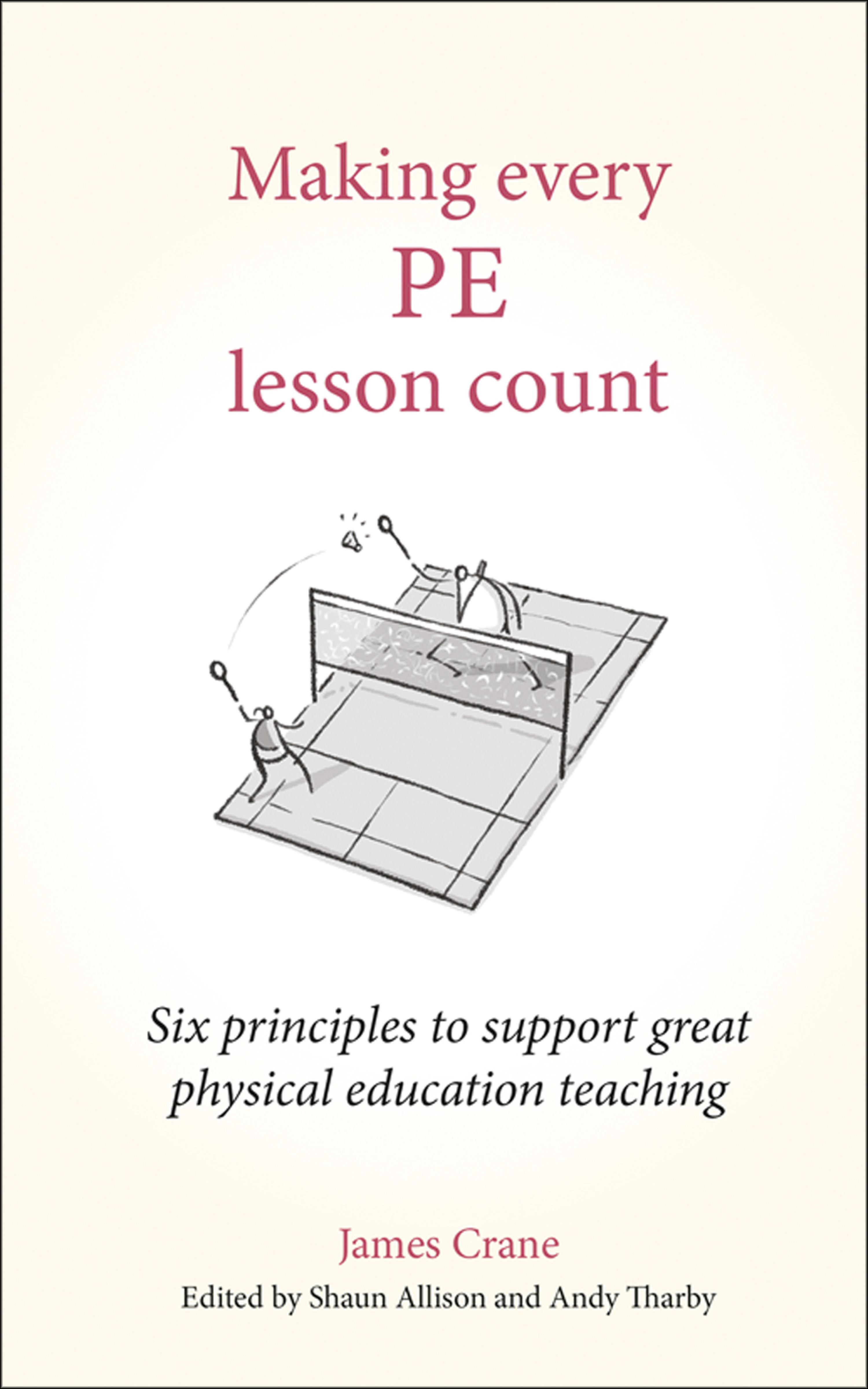
Written by James Crane, Making Every PE Lesson Count: Six principles to support great physical education teaching provides realistic and practical strategies that will help teachers make abstract ideas more concrete and meaningful in both practical and theory PE. PE provides a unique opportunity for some students to flourish and become professional athletes or achieve excellent academic outcomes. However, if you ask any PE teacher, their main aim is that all students leave school with a love of physical activity and lifelong participation in sport. The benefits on physical, mental and social health are undeniable. The place PE holds in the curriculum is therefore fundamental to society in that it acts as a vehicle to promote resilience, determination and perseverance. Writing in the engaging style of the award-winning Making Every Lesson Count series, James Crane articulates the fundamentals of great PE teaching and shares simple and practical strategies designed to challenge students across all aspects of the subject. In an age of educational quick fixes and ever-moving goalposts, this precise and timely book returns to the fundamental questions that all PE teachers must consider: 'What can I do to help my students thrive in the wide world of physical education?' Making Every PE LessonCount is underpinned by six pedagogical principles - challenge, explanation, modelling, practice, feedback and questioning. Good PE teaching is littered with all these principles, not as a checklist or plan as such, but to ensure that teaching is well structured and thought out. This book aims to bring the evidence around effective teaching linked to the six pedagogical principles to life through the lens of a physical education teacher. It focuses on all aspects of PE in secondary schools with reference to real-life examples from a huge range of sports and physical activities and classroom theory. James links his findings back to the subject throughout and offers reflective questions for teachers to sharpen their practice. Making Every PE LessonCount aims to synthesise the latest research on teaching and learning and link it specifically to PE. There is a huge amount of evidence available for teachers, and this book acts as an practical guide that will successfully bridge the gap between the world of academic research and PE teaching.
Das E-Book können Sie in Legimi-Apps oder einer beliebigen App lesen, die das folgende Format unterstützen:
Veröffentlichungsjahr: 2024
Ähnliche














Praise for Making Every PE Lesson Count
Making Every PE Lesson Count: Six Principles to Support GreatPhysical Education Teaching is an insightful, accessible and personal narrative resource for developing and engaged physical educators. This book offers a range of intimate perspectives on how to tackle key considerations in the delivery of high-quality and accessible physical education. It has understanding and progress for learners at its heart – essential for all practitioners to understand and engage with, but also for anyone who may need to know more regarding what physical education is about, beyond sport and physical activity. The book offers comprehensive and practical approaches, with actionable strategies to create engaging and effective learning experiences. Diagrams and pictures provide useful summaries of key information. James Crane has captured the heart and soul of physical education, with a clear and accessible writing style, readers will quickly understand the challenges and rewards of teaching physical education.
Dr Julia Potter, Head of Physical Education,University of Chichester
I love the film Kes. This is no Kes, but to paraphrase Kevin Keegan, ‘I love it.’ Why? It’s as much about the learning as it is about the movement.
James doesn’t sit on the fence, yet he does create a balance – a balance between research and practice. A pracademic, perhaps? He also manages to balance creating opportunities for elite athletes while encouraging all students to develop a love of physical activity.
James has an uncanny ability to draw you into the setting, whether it be the sports hall or the track or field. You can get a real feel for the conversations between the teacher and students.
Whether you’re new to the profession of teaching PE and/or sport or a seasoned pro, this book is for you. It’s filled with gentle nudges that will enable you to enable your students to succeed.
Bryn Llewellyn, former school leader and founder of Tagtiv8,co-author of How to Move & Learn
This book is easy to read, written with passion and packed with practical ideas, tips and prompts for reflection. From trainees to experienced PE teachers, all are likely to find something that improves their practice in this book. It is structured so you can dip in and focus on a specific aspect or read it as a whole. Heads of department could easily take this as a template for their team’s CPD.
Kevin Lister, Deputy Head Teacher, Stratford upon Avon School,and author of Teach Like You Imagined It
Making every PE lesson count
Six principles to support great physical education teaching
James CraneEdited by Shaun Allison and Andy Tharby
Acknowledgements
This book would not have been possible without the guidance of Shaun Allison and Chris Runeckles. Both have been directors of the Durrington Research School, where I have been fortunate enough to work for the past five years. They have each offered me their unwavering support while challenging me both professionally and personally. They have been superb to work with and consistent in driving forward evidence-informed practice in our region. I am now lucky enough to be able to call them colleagues and friends – thank you both for everything.
This book is a product of my teacher training and time spent working in three excellent PE departments. I want to thank everyone with whom I have come into contact, as those small interactions have been a part of enabling me to write this book. Even my two best friends, Ollie and Jase, despite not working in education, have provided me with insightful perspectives. A special mention must go to the superb Durrington High School PE department; I could not be prouder to be a part of this team. Their professionalism and commitment are integral in nurturing our young people to develop their knowledge, skills, understanding and curiosity in the wide world of sport.
It is the PE teachers working tirelessly in schools up and down the country that are shaping the Alan Shearers and Helen Housbys of tomorrow. You are doing an amazing job in inspiring the young people in your schools, putting them on the path towards a lifelong love of sport and PE. Your passion and dedication are pivotal in supporting each and every child you teach.
I must also take this opportunity to thank Andy Tharby and Shaun Allison for providing me with the opportunity to write this book. Their thought-provoking editing has been a wonderful process for me to go through. I feel lucky enough iito work with both of you in my day job, and I am extremely grateful for your support throughout this new endeavour.
My mum and dad have always been my biggest supporters, driving me round the country to play football and offering me insights into wider life lessons. You have always been my greatest supporters and have forever been in my corner, no matter what. I hope this book makes you both proud.
My wife, April, and 5-year-old son, Oscar, have been my rocks while writing this book. Their patience and understanding have enabled me to have the time and space to talk things through and ensured the process has been a smooth one. Oscar has always been keen to help me write the book, getting his pencils and paper out to sit with me at the dining room table. He has also been more than happy to nip into the garden and play some sport when I need to have a break. April has been the central person in believing in me and always being the voice of reason when I need it most, and all while being pregnant with our second child, a beautiful little girl called Phoebe. I literally could not have done this without you. You’re amazing. I love you very much.
Contents
Introduction
When people are asked about their favourite subject when they were at school, there seems to be a large swathe that passionately turn to PE, shouting about their love for a specific sport or a teacher who made the subject an enjoyable experience. This is certainly the case for me; I look back fondly on my PE lessons and the impact they had on me as I matured into adulthood.
In the early 2000s, I attended King Richard School in Cyprus. My PE teacher was Mr Lane, and he taught me from Year 9 through to Year 11. I had always enjoyed PE; I played a lot of sport outside of school and relished any opportunity to be physically active, even more so if there was a competitive element. It was Mr Lane who captured this and pushed me to be the best version of myself. His passion, enthusiasm, strong subject knowledge and unwaveringly high expectations of what I could achieve ensured PE and sport would be a huge part of who I am.
PE provides an incredibly unique opportunity for students to flourish: some become professional athletes, others achieve excellent outcomes at GCSE and A level. However, if you 2ask any PE teacher, their main aim is for all students to leave them once they finish school with a love of physical activity and the lifelong habit of participation – at whatever level of expertise. The benefits on physical, mental and social health are undeniable. The place PE holds in the curriculum is therefore fundamental to society, but it can also be used as a vehicle to promote resilience, determination and perseverance.
Mr Lane found that balance perfectly. He ensured that we all fostered a love of physical activity while developing our understanding of the nuance of a wide range of sports. His drive and love for the subject shone through all aspects of his teaching, but this alone didn’t make him a brilliant teacher. His effective practice was built on high expectations and challenge: whatever the activity, his technical language and tactical know-how was never dumbed down, no matter the prior experience of the students. Through clear and well-thought-out explanation, he gave the activity context which helped me feel like an aspiring gymnast when designing my floor routine. The feedback he gave was focused and purposeful, which enabled me to use it to improve my performance. His biggest strength was that he used his questioning to probe me and ensure that I was thinking deeply about my performance, where my knowledge gaps were and what I could do to ensure that I was constantly reflecting, thinking and improving.
Thankfully, when I returned to a school setting as a trainee PE teacher, independent learning and a somewhat whimsical way of teaching was on its way back out. The power of knowledge and high-quality instruction were once again regarded as the cornerstones of the teaching world.1 What had proved invaluable to me as a student in Mr Lane’s class was, in fact, great teaching.
3Although this might not be groundbreaking to hear, it does provide reassurances that we have solid foundations behind the choices we make every day in our teaching. This book aims to synthesise the latest research on teaching and learning and present it specifically for PE teachers. There is a huge amount of evidence available, too much for a classroom teacher to be expected to engage with directly. This book does not claim to be an exhaustive review of the educational research; indeed, there will be areas that fall outside of its remit and, as such, will be omitted. However, it does aim to bridge the gap between the world of academic research and PE teaching.
In Making Every Lesson Count, Shaun Allison and Andy Tharby describe six pedagogical principles that are the bedrock of great teaching.2 The first principle, challenge, is the flagship of teaching, ensuring students struggle and having high expectations of what they can do. Only then will they be able to move beyond their existing knowledge and skills. The second principle is explanation, which is the ability to articulate new concepts and ideas. Explanation makes the abstract appear concrete in students’ minds, which is no mean feat and rather tricky to do well. The next principle is modelling. This involves physically showing the students how to tackle problems or complex procedures, making the implicit processes we go through as experts explicit to students, in order to support them to apply the same principles, processes and procedures themselves. Students require sufficient time, within set parameters, in order to practise these processes enough to support the retention of the knowledge and skills long term. Practice is the pinnacle of the six principles as it is where the most crucial element of learning comes to the fore: memory. Students need to be aware of where they are, where they are going and how they are going to get there – which is why coiled up with practice 4comes feedback. Without feedback, practice becomes redundant and stagnant. Practice does not make perfect unless feedback is used to guide students and impact their future practice, ensuring that they make progress. The final principle is questioning. This is about the dialogic subtleties we go through in order to support the learning cycle. Questions are used to keep students on track, check their understanding, identify misconceptions and promote deep thinking around a topic or activity. Good PE teaching is littered with all of the principles, not as a checklist or plan as such, but to ensure that teaching is well structured and thought out. The art of the principles is in deploying them to adapt our teaching to ensure that we are navigating the unpredictable, ever-changing landscape of our students.
The six principles are already inherent in the best PE teaching. However, there are a number of challenges for PE teachers to overcome, and it is worth exploring these one at a time.
Sequencing of the Curriculum
Perhaps the biggest battle we have as PE teachers is over the spaces we have available to us throughout the academic year. The sports hall being out of bounds for Year 11 exams, the gym being taken along with the table tennis tables for Year 8 jabs, the main hall being blocked out for three weeks so the school production can rehearse. The list seems to be infinite, but that is only half the battle. Our sequencing issues impact our curriculum offer, our teaching strategies and our assessment criteria, moderation and standardisation. In an ideal world, we would all teach Year 8 badminton at the same time, in the same way in which maths departments tend to teach Year 8 simplifying expressions – for example – in the same block of lessons. It allows for rich departmental discussions, particularly the sharing of common misconceptions 5and strategies to address them. In PE, this is simply undoable. Most schools have one sports hall and may have up to eight classes on at the same time, creating a physical impossibility for those classes to be taught the same unit of work at the same time. The maturational development students go through from one term to the next is startling. To have a curriculum that is coherent and rigorous, supported with assessment, is hard enough when this challenge isn’t there, but, simply put, sequencing all classes on the same topic at the same time is not an option for the vast majority of PE teachers.6
7Breadth vs Depth
The PE curriculum creates a moral dilemma. On one hand there is the important element of students experiencing a wide range of sports, which will support them in finding their love of physical activity and thus promote lifelong participation. The other element is the development of a deep level of understanding of the complexities of fewer sports, coupled with supporting students to excel at GCSE and A level. The question is always hotly discussed among PE teachers: do you have a broad curriculum to foster a love for sport more generally, or do you promote elite sport for all in a deeper-level curriculum? The answer, I suppose, is balance. The aim is to promote both avenues while ensuring that you have high-quality outcomes and create opportunities for students to experience a wide range of activities.
Subject Knowledge
Most UK PE teachers will be expected to teach invasion games, net and wall games, striking and fielding games, outdoor adventurous activities, dance, swimming and water safety, and gymnastics, even though they will have likely specialised in only one of these disciplines during their higher education. Furthermore, during their playing careers, they may have only played one sport to a level which would mean their subject knowledge can be considered expert. The Sutton Trust’s 2014 report, What Makes Great Teaching?, lists subject knowledge as an imperative characteristic of great teaching.3 This presents a very real problem for PE teachers. How can the level of challenge be appropriate for all students, through effective questioning and modelling, when we are teaching outside of our specialism? Therefore, 8the following limitations are likely to present an issue unless we act to address them:
Subject knowledge will be less robust.The ability to identify and address misconceptions will be limited.The teacher will bring their own misconceptions into play.There will be less challenge through effective questioning and modelling.Understanding of how to support students in their decision making will be limited.The Relationship Between Practical and Theory
As GCSE and A level PE have become more heavily weighted on theory, and theory content and assessment complexity has increased, more and more schools are beginning to alter their curriculum, affording more hours to theory at the expense of practical lessons. There is a finite number of hours in the day and, with all subjects becoming more content heavy, the balance between practical and theory lessons in PE is a prevalent one. Some schools have introduced a theory element into their Year 9 curriculum or have moved to more theory lessons and fewer practical lessons at Key Stage 4 and 5. This discussion point comes back to moral purpose and how schools keep physical education physical in an ever-changing environment. Of course, how we utilise our extracurricular programme is pivotal to students’ development. This book will explore how PE teachers can ensure a focus on physical activity while supporting theory concepts through a curriculum built on high expectations and challenge for all students.9
Knowledge of Students
The students we teach will have a vast range of sporting backgrounds and differing knowledge in both theory and practical settings. PE teachers need to be able to identify students’ prior capabilities and understanding, then carefully stretch and challenge each of them through effective delivery, questioning and feedback. How do you scaffold questioning to ensure that students feel confident enough to answer while also being sufficiently challenged to think deeply? What is the most effective way to give students feedback that is both purposeful and manageable?
While the six pedagogical principles provide an overarching framework for great teaching, great teachers need to be great at teaching their subject. This means that they must understand the challenges of implementing these principles within the context of their specialism. Only then can they develop their pedagogy, use it to overcome these challenges, and become expert subject teachers. That is the purpose of this book: to help all PE teachers reflect on the challenges of implementing the six pedagogical principles in their own settings, and provide them with evidence-informed strategies that they can try out to make every PE lesson count.
In each chapter, you will find a number of practical teaching strategies designed to bring the six principles to life, followed by some reflective questions. Nevertheless, all schools are different, so it is up to you to refine them to suit your classes and activities. After all, you are the expert in your setting and on your students.
1 Robert Coe, Cesare Aloisi, Steve Higgins and Lee Elliot Major, What Makes Great Teaching? Review of the Underpinning Research (London: Sutton Trust, 2014). Available at: https://www.suttontrust.com/wp-content/uploads/2014/10/What-Makes-Great-Teaching-REPORT.pdf.
2 Shaun Allison and Andy Tharby, Making Every Lesson Count: Six Principles to Support Great Teaching and Learning (Carmarthen: Crown House Publishing, 2015).
3 Coe et al., What Makes Great Teaching?, p. 19.