11,49 €
Mehr erfahren.
- Herausgeber: Titan Books
- Kategorie: Abenteuer, Thriller, Horror
- Sprache: Englisch
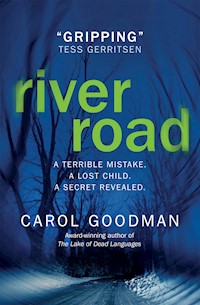
In the midst of a snowstorm, creative writing professor, Nan Lewis, thinks she hit a deer. But then a police officer tells her that her student, Leia Dawson, has been killed in a hit-and-run on River Road. And there is blood on Nan's car. Nan finds herself reviled by the same community that supported her when her young daughter was killed in a similar accident six years ago. The people around her are hiding secrets she'll have to uncover to clear her name and find out who really killed Leia…
Das E-Book können Sie in Legimi-Apps oder einer beliebigen App lesen, die das folgende Format unterstützen:
Seitenzahl: 482
Veröffentlichungsjahr: 2016
Ähnliche















Contents
Cover
Title Page
Copyright
Dedication
One
Two
Three
Four
Five
Six
Seven
Eight
Nine
Ten
Eleven
Twelve
Thirteen
Fourteen
Fifteen
Sixteen
Seventeen
Eighteen
Nineteen
Twenty
Twenty-One
Twenty-Two
Twenty-Three
Twenty-Four
Twenty-Five
Twenty-Six
Twenty-Seven
Twenty-Eight
Acknowledgments
About the Author
Also Available from Titan Books
RIVER ROADPrint edition ISBN: 9781785650710E-book edition ISBN: 9781785650727
Published by Titan BooksA division of Titan Publishing Group Ltd144 Southwark Street, London SE1 0UP
First edition: January 20161 2 3 4 5 6 7 8 9 10
This is a work of fiction. Names, characters, places, and incidents either are the product of the author’s imagination or are used fictitiously, and any resemblance to actual persons, living or dead, business establishments, events, or locales is entirely coincidental. The publisher does not have any control over and does not assume any responsibility for author or third-party websites or their content.
Copyright © 2016 by Carol Goodman. All rights reserved.
No part of this publication may be reproduced, stored in a retrieval system, or transmitted, in any form or by any means without the prior written permission of the publisher, nor be otherwise circulated in any form of binding or cover other than that in which it is published and without a similar condition being imposed on the subsequent purchaser.
A CIP catalogue record for this title is available from the British Library.
To my mother
one
SHE CAME OUT OF nowhere.
I was driving back from the faculty Christmas party. I’d had a couple glasses of wine but I wasn’t drunk. Distracted, sure, what with Cressida dropping that bombshell and the scene with Ross, but not drunk.
I didn’t see her. It was dusk, that dangerous hour when day slides into night and deer steal out of the woods. I’ve lived here long enough to know that. I’ve braked a hundred times to watch a doe lead her fawns safely across the road. A lot of people hate the deer. They eat their gardens and carry ticks. But I have always thought they were more beautiful than any garden I could grow and loved them for Emmy’s sake, who thought they were as magical as unicorns.
It was on that blind curve just before Orchard Drive. Everyone takes it too fast. I, of all people, should have known that too, but I was distracted and my vision had gone blurry for a moment. I’d lifted my hand off the wheel to wipe my eyes and something hit the bumper. A horrible thump I felt in my chest. Then something white scrolling upward like a long scarf unraveling, its body weirdly elongated like one of those cave paintings from the South of France, a hunter’s dream of a spirit deer flying across the cosmos—
But when it hit the windshield it was meat and blood and broken glass and I was pulling blind to the shoulder and screaming NO NO NO NO as if I could unscroll time and undo what had happened even as I felt sure that I’d been on a collision course with that deer all day long. Maybe for my whole life.
I don’t know how long I screamed and cried like that, probably only a minute, but when I stopped—Get a grip, Nan!—it was dark. I turned on the headlights and a half-crumbled stone wall reared up like a tombstone. My car was angled into a ditch, the front right tire lower than the left, the stone wall only inches from my bumper. If I’d braked a few seconds later I’d have gone straight into it. If the deer had leapt out a few feet farther—
The deer. Was it dead? It must be after that impact—
I started shaking again. I could still feel that horrible thump.
But what if it wasn’t dead? What if it was lying hurt by the side of the road while I sat here feeling sorry for myself—
Get a grip, Nan!
I was still clutching the steering wheel. I felt a laugh bubbling behind my lips. Typical, Nan, thinking you’re still driving when you’re stuck in a ditch. Before the tears could come again I opened the door. The cold air was bracing. It’s supposed to go down to twenty degrees tonight. Someone said that at the party. Dottie, it had been Dottie, department secretary and earth mother, always watching the weather from her office on the top floor of the Jewett Faculty Tower. Dottie always warned the students to be careful driving home. Her kind, dimpled face rose up in my mind. Sure you’re okay to drive home, Nan? I’m giving Leia a lift and you’re on the way. You could come back tomorrow for your car.
If I’d taken her up on her offer I wouldn’t have hit the deer. Maybe she would have hit it and then at least it wouldn’t have been me.
I cringed at the meanness of the thought. Poor Dottie would be heartbroken if she hit a deer. She had an I brake for leprechauns bumper sticker on her ancient VW and posted notices of stray cats on her Facebook page.
Then again, Dottie would have braked for the deer sooner. And if she had hit it she’d already be out of the car looking for it and calling the animal rescue hotline, which she probably had programmed onto her phone.
I felt for my phone in my pocket. I could call someone—but who? Dottie? She was probably already home in bed in her flannel nightgown watching Downton Abbey reruns and sipping chamomile tea. Ross? His house was only ten minutes up the road. He’d still be up, cleaning up from the party, or perhaps sitting by the fireside with a few straggler students, regaling them with stories of his Harvard days and the famous writers he had known. Still, he’d come. I could imagine his deep, gravelly voice. Of course we think the world of you, Nan. This wasn’t personal.
No, not Ross. Cressida? Cressida’s face swam into view, pity etched on her fine Nordic features, her shield-maiden braids bristling with indignation. I’m so sorry, Nan, I tried everything I could but the committee went against you. If only you’d listened to me—No, not Cressida. Not now.
I got out and wobbled on the uneven ground. I braced myself against the car. Had I hit my head? No, the air bag hadn’t deployed. It hadn’t been that hard an impact. Maybe the deer wasn’t dead. Maybe it had run into the woods.
Wounded. Fragile legs broken. Crawling off to die.
I turned around slowly, looking north to where the road disappeared around the sharp bend and then south where it ran straight under tall sycamore trees between old dry-laid stone walls. Then I stared at the ditch where my car had come to rest, and the broken stone wall above it—and recognized just exactly where I was. There was the gatepost to the old Blackwell estate and the drive that climbed steeply through the orchard where deer came out at dusk to eat windblown apples. I’d watched them a hundred times from my own living room window and seen cars coming around the bend too fast, driving straight into the wall—
I shivered and stared back at the wall. Where it was broken someone had painted a white cross. In the spring there were daffodils here—
This place. How many lives had it taken? I should have been driving slower. But there was nothing I could do now. I should have been watching, but the deer was probably okay. I should just go home. Get in bed in a flannel nightgown with a cup of chamomile tea like Dottie—only I’d add a shot of bourbon. I imagined telling Dottie tomorrow that I’d hit a deer. Her first question would be if I’d gone to look for it.
I turned away from the orchard and looked to the right into the woods. That’s where the deer—hurt, scared—would have gone. I’d go into the woods a little ways. Just to make sure. If the deer was wounded it wouldn’t have gone far. If I didn’t find it that meant it was all right.
I climbed over the crumbling wall, tearing my stockings and scraping my hands on the rough, cold stones. My thin ballet flats sank into the deep leaf litter and my legs felt wobbly as I walked away from the wall and into the woods. Shock from the accident, I told myself, and from finding myself here.
Not from drinking too much. I’d only had a few. I certainly felt completely sober now. But it had been a long day. I’d given my last finals and held extended office hours for students handing in assignments. I’d had to listen to a dozen excuses for late papers: everything from failed printers and crashed hard drives to dead grandparents and bad breakups—a litany of chaos and drama presented as though no one had ever suffered as they had. If they had used half the creativity in the stories they handed in as they did in their excuses they’d be writing masterpieces, I’d wanted to say, but instead I had patiently repeated my late-paper policy and then granted them their extensions. They really did have chaotic lives, some of them. This semester’s creative writing class in particular was a bit of a ragtag crew. The class almost hadn’t run, but then Dottie had channeled a bunch of transfer students into it and recruited a few older students, like Leia, even though she was really too advanced for it. For which I was grateful—it wouldn’t look great for the tenure committee if the class hadn’t run—but transfer students were often … volatile.
There were the working-class kids from Newburgh and Fishkill who’d gone to community college first to save their parents the higher tuition at SUNY Acheron or to pull up their grades—and some valiant older students like Aleesha Williams, a single mom in her twenties who’d struggled up from the projects in Poughkeepsie and was trying to get a teaching degree. But there were also spoiled rich girls like Kelsey Manning, a media arts major from Long Island who’d asked if she could be excused from the final because she wanted to leave early for a ski trip to Vail (I told her no and saw Cressida, in her office across the hall, roll her eyes), and stoners like Troy Van Donk Jr., whose father ran Van’s Auto over on 9G and who was spending a few semesters at Acheron dealing drugs to the rich kids from Long Island and sleeping with the Westchester girls hungry for some “real life” experience. He’d had the nerve to email for an extension because of “girlfriend trouble.” I’d had half a mind to fail him, but the truth was that even though some of the stories he wrote had a disturbing violent vein running through them, he was the best writer in the class. He’d been working on a satire of The Odyssey set in the dive bars and projects of Poughkeepsie that had been funny and promising. I wanted to see what he’d done with it.
Lady Bountiful, Evan used to call me.
You’re too easy on them, Cressida, whose office across the hall from mine gave her a ringside seat to my student conferences, always said. You let them walk all over you.
And it did take a lot out of me, listening to all those stories of heartache and calamity. Even the happy stories were draining—all those hopes and dreams for the future. All that faith that no matter what, things would work out. The last time a student had said to me that she knew everything would work out I had wanted to ask, “Why? Why do you think that?”
So when Leia Dawson came to see me at the end of the day I just couldn’t take any more, even though she was my favorite student. My prize student. The one who reminded me of myself at her age. I’d had her for Intro to Creative Writing her freshman year and Advanced Fiction Workshop her junior. Leia was the full package—bright, beautiful, talented—and kind to boot. She brought Dottie flowers on her birthday and baked madeleines for workshop when I told them about Proust. She’d taught creative writing in Acheron’s Prison Initiative Program for the last two years. For some real life experience, she’d told me. I’d written her a recommendation for grad school and she’d gotten a full ride to Washington University’s MFA program. She’d already published in a few journals and won the department’s writing prize. Ross had gotten her an internship at his publisher for the summer. I fully expected to see her first novel in a couple of years—and knowing Leia she would remember me in the acknowledgments—but when I saw her hovering in the hallway outside my office I just didn’t think I could take listening to more of her bright, shiny plans for the future.
“I’ve got to run home and change for the party!” I’d called over my shoulder as I passed her in the hallway. “Can we catch up there?”
But the only time I’d seen her at the party was in the kitchen, pouring a glass of wine for Ross when I’d tracked him down to ask him if it was true that I’d been denied tenure—
I stumbled over a rock and grabbed a pine trunk to steady myself. Denied tenure. The words thudded in my head with the same finality as the thud of the deer against my car. It wasn’t just that I had been denied tenure, it was knowing that I’d have to leave. No one stayed on after being denied tenure. It was pathetic. I might even be fired. And then where would I go?
I looked around me as if I could find the answer to my question in my current surroundings. I’d come farther than I’d meant to and the woods were turning dark—lovely, dark and deep, as Frost was no doubt quoted in half the Intro Lit essays lying on the backseat of my car.
Maybe that’s why I was here tonight. I’d been led here by that deer to this place to watch these woods fill up with snow—yes, Dottie had been right, it was snowing—on the darkest night of the year. It was the solstice, I remembered with a chill that had only a little to do with the dropping temperature. Dottie had mentioned it at the party. John Abbot, who taught the gothic novel and twentieth-century horror fiction, had made a woo-woo noise and reminded us all that the Victorian tradition of reading ghost stories on Christmas Eve came from the belief that the solstice was when the dead were supposed to walk. Joan Denning, an adjunct who taught ghost stories to her ESL students, said that one of her students had just handed in a paper on our own local ghost, Charlotte Blackwell, who always appeared on the winter solstice seeking a blood sacrifice for her daughter who had drowned in the Hudson. Dottie, who hated ghost stories, had covered her ears and Cressida had given Joan a nudge and a meaningful look at me to shut her up and Joan had blushed scarlet. I shivered now, but not with cold or fear. I’d already made my sacrifices. What more could this place take from me? If the dead were walking in this snowy wood I’d wait for them here. I sank down onto the ground, leaned against the tree, the bark rough against my back, and looked up at the snow sifting through pine needles, a half-moon caught in tangled branches, so bright I closed my eyes against it …
… and drifted off for a few moments. Long enough to have the dream. Someone shouting Come back!
Me. I was the one shouting Come back! to Emmy as she ran down the hill, the lights of her sneakers flashing red through the grass, her childish laughter cut short by a screech of tires … a shrill, heartbreaking cry.
I startled awake, my face wet as it always was when I awoke from the nightmare. The nightmare of Emmy run over on River Road. The worst ones were when I saw her running from the house and I looked up from my desk in time to call her back—
Come back!
—and save her.
But I hadn’t saved her in this dream. I’d heard the screech of tires and her startled, surprised cry just as I had on that day. I wiped my face. My tears were ice water. My lap was full of snow. It must have been in the teens. The alcohol in my blood—not that I’d had that much to drink—had probably lowered my core temperature. How long had I been asleep? If I stayed here much longer I would freeze to death.
It was supposed to be a gentle way to die. You felt warm at the end, like in that story by Jack London….
I shook myself and looked around at the woods. What a pathetic way to go—half drunk (maybe I really had had a little too much to drink), freezing to death … because I didn’t get tenure? That’s what people would say. That I was so upset at not getting tenure that I drove off the road, stumbled into the woods, and froze to death.
Well, screw that. So I hadn’t gotten tenure. After all that had happened to me—
Emmy running down the hill, sneaker lights flashing, a voice crying Come back!
—I wasn’t going to let a tenure decision be the thing to undo me. I could ask to stay on while I appealed the decision. I was a good teacher. I had great evaluations. And if I didn’t get the decision appealed I could apply to other colleges. I still had a chance—maybe that’s why I had dreamed about Emmy. The time to save her was gone but there was still time enough to save myself. To get myself back on my feet.
So that’s what I did. I got to my feet, shook the snow off my coat, and walked out of the dark woods and back to the road.
* * *
It was snowing so hard I might not have found my way back without my headlights shining dimly through the snow. My shoes were soaked and my feet numb by the time I scrambled back over the stone wall. I paused for a moment there to clear the snow from the stone and found the painted cross. Someone had painted it after Emmy died. For a while people had left flowers and candles here but I never had. I didn’t want Emmy to be remembered as the little girl who had died at the side of a road in a ditch.
Eventually they had stopped leaving flowers.
I was careful to step over the snow-covered ditch getting into my car, but when I pulled out the left tire got stuck and I had a bad moment thinking I’d have to call Van’s and explain to Troy Van Donk Sr. what I was doing out on the river road in a snowstorm, soaking wet, breath smelling of wine, but then with a lurch and a sickening grinding against my poor old car’s underbelly I cleared the snow-filled ditch and fishtailed out onto the road.
The snow was coming down heavy now and there was no sign that the plows had been out. I crept down River Road with my high beams on and my hazard lights blinking, white-knuckling the steering wheel and leaning forward to peer through my cracked windshield—crap, what was that going to cost?—into dizzying snow eddies. I barely got up Orchard Drive. I knew I’d never make it up my impractically steep driveway. A little farther up the road was a turnaround that the trucks from the old orchard used to use and where Acheron students parked to make out or hike into the woods to explore the old abandoned buildings on the Blackwell estate. No one was there tonight. I pulled in far enough so my car wouldn’t get hit by a plow and hiked up my driveway to my house, my feet so numb I couldn’t feel them by the time I got to my front door.
Oolong, my ancient Siamese, screamed indignantly and threw her bony body at my feet as soon as I walked in. I apologized profusely as I dumped a can of Fancy Feast into her bowl. I got the bourbon out of the cabinet but then I remembered my resolution in the woods. Maybe I had been drinking too much. Not that that had anything to do with hitting the deer—no one could have helped that—but yelling at Ross hadn’t been the smartest move.
I made myself a cup of tea instead and added milk and sugar—for shock, as people were always saying in British novels. I’d certainly had my share of shocks today. I sat down on the living room couch to collect myself a little before tackling the rotting farmhouse stairs up to my bedroom. It really had been an awful day.
Is it true? I’d demanded of Ross when I’d burst into the kitchen (startling Leia, who had been pouring wine, so that she spilled it on Ross’s wrist and then scurried out). I’m sorry, Nan. He’d turned away to unbutton his shirt cuff and run cold water over the wine stain so he wouldn’t have to look me in the eye. I didn’t want you to find out like this. Cressida shouldn’t have said anything.
But Cressida had told me because she was my friend—my best friend in the department. Since her office was right across the hall from mine we couldn’t help but hear each other’s student conferences. Can you believe they still don’t know what a dangling modifier is? I’d moan after a student left. Don’t believe that story about the dead grandmother, she’d say after a student had wept for ten minutes in my office, she told me that last year when she was in my Women’s Lit class. So when I’d asked Cressida what had happened in the committee she had only hesitated a moment before breaking down and telling me.
I’m so sorry, Nan, I tried everything I could but the committee went against you. If only you’d listened to me—
She was right. A year ago, when Cressida was up for tenure, she told me that it had made a big difference that she’d just gotten a contract for a new book. I really needed to at least have something under way. She even offered to make an introduction to her editor, but I hadn’t taken her up on her generous offer and now I’d repaid her with getting her in trouble with Ross. I’d have to tell him it hadn’t been her fault that she’d told me. If I hadn’t completely blown things with Ross. Snatches of things I’d said to him in the kitchen were coming back to me. I’d accused him of sabotaging my chances because I’d broken off with him six and a half years ago. Shit. How many people had heard that? How many people were gossiping about me right now? Poor Nan, did you hear she threw a fit at the Christmas party because she didn’t get tenure? Did you know she had an affair with Ross Ballantine? It must have been right after her daughter …
I reached for my tea and upset a stack of papers that slid down onto the floor like a sheet of snow coming off a steep-pitched roof. My living room was a mess. I was a mediocre housekeeper at best and got worse as the semester went on. Half-full teacups tottered on stacks of books. A fine layer of dust and cat hair floated in the air. I’d clean up tomorrow while grading papers. And then I’d write a letter to the tenure committee. I would demand to know the basis for being denied. I had good student evaluations and had published an award-winning novel …
But nothing for over six years. Nothing since Emmy.
… but I had an idea for something now. Something about hitting that deer. I’d start on it tomorrow. After a good night’s sleep. I stretched out on the couch and closed my eyes. I’d rest up a little before climbing the stairs—I’d call someone in the morning to fix them—and fell asleep.
In my dream I was sitting at my desk watching Emmy run down the snow-covered hill toward the road. I knew it was all right because the day Emmy had died had been in spring and the apple trees had been in bloom. She was picking daffodils. The best ones grew down on the edge of the road on the other side of the stone wall. She knew she wasn’t allowed to climb over the wall. I’d overheard Evan whisper to her that they would pick flowers for me for Mother’s Day when he got home from work. She must have gotten tired of waiting. When I found her she was clutching a handful of daffodils. The smell of daffodils and apple blossoms still makes me sick. But in the dream it was all right because it was winter so this wasn’t the day. I had time. I lowered my head to my laptop. I was writing my second novel, the one that I would never finish …
Come back!
A screech of tires … a scream … and then … thump.
I startled awake, the remembered impact of the deer hitting my car reverberating in my chest. It was morning, the living room full of that morning-after-the-first-snow kind of light that for a moment made me feel hopeful—like a child waking up to a world transformed. A new beginning. A clean slate. That’s what I had promised myself in the woods. I was going to appeal the tenure decision, clean my house, cut back on my drinking….
Something thumped against the front door. For a moment I had the horrible thought that it was the deer throwing itself at my door in vengeance for hitting it and leaving it for dead in the woods. But then I heard the noise again, and the creak of the loose floorboard on the front porch, and realized it was someone knocking at the door.
“Coming,” I shouted, getting groggily to my feet. It was probably Dottie, stopping by on her way to work, come to see if I was all right. Dear Dottie, I should take her out to lunch over break. Or it was Cressida, who could have seen my car parked in the turnaround on her way in to work and wondered if I was okay. Or Ross, come to say it had all been a terrible mistake. He’d already talked to the tenure committee and they’d reversed their decision—
It wasn’t Dottie, Cressida, or Ross. It was a police officer, his uniformed bulk looking too big for my doorway, breathing cold into the room. His bland, broad face and dark, thickly lashed eyes looked vaguely familiar. I thought for a second maybe I’d had him as a student but I realized he was too old.
“Hi,” I said, pulling my cardigan over my blouse to cover up the fact I wasn’t wearing a bra. “Can I help you, Officer?”
“Nancy Lewis?”
“I’m Nan Lewis.”
“Is that your car parked on the side of the road? The one with the broken headlight?”
Crap. “Yes, is it in the way, Officer”—I peered at his name badge—“Sergeant McAffrey? I couldn’t get it up the driveway in the snow last night so I pulled into the turnaround so it would be out of the way of the snowplows. I was going to take it to Van’s when I got dressed.” I saw his eyes roving over the disarray of my living room, lingering on the bourbon bottle on the kitchen counter, disapproval in his eyes. Well, fuck that. Who was he to judge me?
“Look, I had a crappy night last night. I hit a deer on my way home from the English faculty party. So if you’re going to ticket me for a broken headlight …”
He turned his cold, disapproving eyes on me. “I’m not here about a broken headlight, Ms. Lewis. I’m here about a hit and run—a student at the college named Leia Dawson. She was found dead on the river road this morning.”
two
“No,” I SAID, GRIPPING the edge of the door to steady myself, “you must be mistaken. Dottie drove Leia home last night.”
“Dottie?”
“Dorothy Cooper, the English Department secr—administrative assistant. Call her. She’ll straighten this out.” Dottie could straighten anything out, I started to tell him, but then my stomach flipped over and I realized I was about to be sick.
“Excuse me,” I managed. I fled to the downstairs half-bath off the kitchen and emptied my stomach of the red wine and three mini quiches I’d had last night. I rinsed out my mouth and looked at myself in the mirror. Mascara under my eyes, hair a rat’s nest. Do rats have nests? Emmy had once asked me when I used the expression. I finger-combed it back into a sloppy bun and scrubbed the mascara off with soap and cold water. It couldn’t be Leia dead, I told myself, but it must be someone.
When I came back the cop was standing at the kitchen counter looking at the bourbon bottle. I wanted to explain that I hadn’t had any when I got home last night but then that would sound like I usually had a drink when I got home, so I said nothing. He straightened up when I came into the room. His head almost touched the low farmhouse ceiling. I cleared off the nicest chair for him and sat down on the couch, pulling the afghan over my lap. “Why do you think it’s Leia?” I asked. “Because of her ID? You know they all use fake IDs to drink at the Black Swan.”
“I’m familiar with the underage drinking problem at the Swan,” he said. He was still standing. Looking up at him was making me feel sick again. “But I’m afraid there’s no doubt about the identity of the girl. Your department head identified her this morning.”
“Ross?” My voice sounded shrill and foreign. “My God, he must be devastated. Leia was his favorite student—mine too. Was he absolutely sure?”
“Dr. Ballantine made a positive ID and verified that Ms. Dawson was at his residence last night for the faculty Christmas party. You were there too.”
I looked up at him, not sure if it was a question or a statement. “Would you please sit down? I promise the chair is cleaner than it looks.”
He blushed, which made him look younger—maybe he had been in one of my classes. There was a criminal justice program at the college that local cops took sometimes, but it clearly wasn’t the right time to ask him. “Yes, I was at the party. I saw Leia in the kitchen talking to Ross.”
Leia, swiveling her swanlike neck as I burst in, spilling red wine onto Ross’s wrist, her big blue eyes wide and startled. Those blue eyes that stood out even more since she’d cut her waist-length black hair short at Thanksgiving. She’d lost weight too, and there were dark rings under her eyes, which I’d assumed came from late-night studying. I covered my mouth at the image of those eyes frozen in a death stare. Could it really be true? Was Leia really dead? I found a tissue in my cardigan pocket and wiped my eyes. “But Dottie said she was driving her home.”
“Ms. Cooper apparently was unable to locate her and assumed she’d gotten a lift from someone else. She suggested you as a possibility since you left shortly after Ms. Cooper saw Leia leaving the kitchen. Do you remember what time that was?”
“When I saw Leia in the kitchen?” I was shaking my head, but then I recalled the view out Ross’s kitchen window. You couldn’t see the river from his house but there was a beautiful view of the Catskills on the other side. A couple of students had been sitting on the stone wall next to the old barn Ross used as a garage, black silhouettes against the setting sun, except one who stood out because her red leather jacket caught the sun and glowed like a burning ember.
“The sun was going down over the mountains,” I said, “so what time is sunset these days? Four thirty? I left soon after and it was dusk when I was driving home. You know how it’s hard to see at dusk. A deer ran right in front of my car on the bend before Orchard Drive—”
“You didn’t see Ms. Dawson walking on River Road when you left Dr. Ballantine’s residence?”
“No. If I had I would have offered her a lift. She’s one of my favorite students—” I gasped, all of Leia’s bright future rising up in front of me—the prizes, the MFA, the novels she would never write now—how was it possible that all of that could be extinguished overnight? “I’m sorry,” I said when I could talk again. “This is a lot to take in. You say she was hit on River Road? But she wasn’t found until this morning? Who …?”
“A plow driver. He saw her boots sticking up out of the snow—”
I pictured bright yellow rain boots, but no, Leia had worn red cowboy boots. And a red leather jacket. A tough-girl look she’d affected since she had started teaching at the prison.
“She was lying in three inches of snow and covered with a foot more so we think she was hit after it started snowing—around five p.m.”
“It wasn’t snowing when I left the party,” I said, “or when I hit the deer. It started snowing later, when I was in the woods.”
“In the woods?”
“Yes, I went to look for the deer.”
He smiled for the first time since I’d opened my door to him. Two curved lines, like parentheses, framed his wide mouth when he smiled, making his whole face look softer. “Why?” he asked.
“Sorry …?”
“Why’d you go look for the deer?”
“In case it was hurt.”
“And what would you have done if you’d found it?”
“Um … I’m not sure … I just had to see….”
“And did you find it?”
“No,” I admitted. “So I suppose it was okay.”
“Uh-huh,” he said, flipping open a notepad. “So you say it started snowing when you were in the woods and then you went back to your car when you didn’t find the deer?”
First I sat down in the snow and had myself a little cry and a nap. “I hiked around a bit.”
“In those?” He bent his eyes down to the floor where I’d kicked off the velvet ballet slippers I’d worn to the party last night. I picked them up. They were still damp. Ruined.
“I guess it wasn’t very practical of me but I felt bad.”
“About the deer?”
“Yeah, I didn’t even see her—”
“You didn’t see the deer?” He looked up from his notebook, eyes narrowing, jaw hardening. “Then how do you know it was a deer?”
He held my gaze. His eyes, which I’d taken for black at first, were actually a deep brown with flecks of gold in them. Looking into them was like staring into those eddies of snow through my windshield last night. Dizzying and cold. I drew the afghan up over my chest.
“I meant, I didn’t see it until it was right in front of my car and then it was too late to stop. It’s dark on the river road. The town ought to put up lights on it. I always tell my students not to walk on it at night. Poor Leia—”
“And you came right home after looking for the deer?”
“Yes. I couldn’t get up my driveway so I parked in the turnaround. I went to sleep early.” I didn’t even have a drink. “I’d had a long day—teaching, holding office hours, then the party….”
“And how much did you have to drink at the party?”
He slipped the question in so stealthily that I was already saying “Not much, a glass or two” before I could stop myself. “Why? Why are you asking me that?”
He looked up, his face carefully blank. “We’ve had a hit and run, Ms. Lewis. Hit and run. That means the driver didn’t stop, didn’t report it, left Ms. Dawson to die on the side of the road. We’re looking for the driver. You were driving home around the time Leia Dawson was hit. Your car was left on the side of the road with visible damage to the front left bumper. You were drinking—”
“Only a glass!”
“Or two.”
“I hit a deer.”
“That you didn’t see and couldn’t find.”
I stared at him. He wasn’t smiling now. His mouth was hard, his eyes unreadable. “Should I call a lawyer?”
He shrugged, his shoulders rolling under his jacket with a smoothness that suggested a hidden reserve of strength. “That depends”—he put his notepad away, braced his hands on his knees, and leaned forward to get up—“on what we find on your car.”
* * *
I pulled on rubber boots over my bare feet and followed him down my unplowed driveway and across the road to the turnaround through shin-deep snow. We’d gotten over a foot. The snow lay on the top and trunk of my car, but had been cleared off the hood. A narrow strip had been shoveled around the front tires, where a police officer knelt taking pictures. In the bright sunlight the damage looked worse than it had last night, the left side of the hood crumpled. A flatbed tow truck was idling on Orchard Drive, its exhaust pluming blue in the cold, still air.
“You’re going to take my car?”
“After the initial forensics, yes—”
“Don’t you need a warrant to confiscate my property?”
“A damaged car in the vicinity of a hit and run constitutes probable cause.” The cop smiled at me. “I learned that at your college in Intro to Criminal Justice.”
“I’m calling my lawyer,” I said, taking my cell phone out of my pocket.
“That’s probably wise, Ms. Lewis,” he said more kindly, which scared me worse than when he’d been mean. “And look, if we find deer fur and blood and no trace of Leia Dawson on your car you’ll be in the clear.”
My stomach turned at the words trace of Leia Dawson. He must have seen it on my face.
“We just want to find the person who hit that girl and left her for dead in the road. You of all people must understand that.” His face softened and he looked like he was going to say something else, but then the other police officer called his name—Joe—and as he turned I suddenly remembered him. He was the officer who’d responded when Emmy was hit.
He said excuse me—he’d been polite that morning too—and walked toward the cop who was crouched in front of my left front tire. As he knelt down next to the cop, I remembered him kneeling beside me on the road all those years ago. The paramedics wanted to take Emmy but I was still holding her hand. The police officer—Joe—had knelt down beside me in the mud and laid his hand over mine. I remembered that the warmth of his flesh had shocked me and that when I turned to him his face had been as white as Emmy’s. Why, he’s so young, I’d thought, only a boy himself.
He was leaning forward now, looking at something in a plastic bag that the other cop was holding up for him. When he got up all of the softness in his face was gone and he looked like he’d aged way more than six years since that morning when he’d knelt down beside me in the mud.
“You’re going to have to come down to the station now, ma’am.”
“But why? I told you, I hit a deer.”
“We’ve found blood and white wool fibers in your tire. The fibers look like a match for the scarf Leia Dawson was wearing last night.”
three
MCAFFREY LET ME GET my coat and make a phone call but when I asked if I could shower and change he said he’d prefer I didn’t, his face hard, no trace of the young officer who’d comforted a bereaved mother.
“Can I at least go to the bathroom?” I asked, feeling like a child. A scared child.
He nodded, embarrassed, and blushed when I plucked my bra out of the sofa cushions. I did too, but I didn’t want to sit in a police station without a bra.
I called my college roommate, Anat Greenberg, who was a lawyer with a practice in Poughkeepsie, from the bathroom. She made me repeat everything twice. I could hear McAffrey shifting his weight over a creaky floorboard on the other side of the door.
“So he hasn’t arrested you?” Anat asked.
“No. No one’s read me my rights or anything.”
“Okay, so they must not have enough evidence. Listen, Nan, there’s a lot of pressure in these cases to make an arrest. Don’t answer any questions until I get there.”
I told her I wouldn’t and flushed the toilet even though I’d been too nervous to pee. Then I ran cold water over my hands until they stopped shaking. I wished I could brush my teeth but the brush was in the upstairs bathroom.
When I stepped out I saw McAffrey had retreated to the living room. He was standing at the desk underneath the window that looked out over the front lawn. It was piled high with books and folders. I hadn’t sat at that desk since the day Emmy died. He looked up from a copy of The Odyssey I’d used in the Great Books class I’d taught this semester and it was on the tip of my tongue to make a comment—like, do you like Greek literature?—but when I saw his face I closed my mouth. The time for idle pleasantries had passed when he saw that blood on my tires.
He motioned for me to walk in front of him and I followed him down my unplowed driveway to his patrol car. He opened the back door for me and I got in, feeling like a suspect in a cop show. I stared through the thick bulletproof glass barrier between the front and back seats and felt like I was underwater looking up through a glaze of ice. When I looked out the side window I saw that my car was already gone. He made a U-turn in the turnaround, drove down the steep hill, and made a right on River Road, heading toward town. A flash of yellow caught my eye as we turned. I looked back through the rear window and saw another police car and yellow tape flapping from the old stone wall. I stared at it until the road curved and I couldn’t see it anymore. When I turned back in my seat I caught McAffrey’s eyes watching me in the rearview mirror.
“Is that where you found Leia?” I asked.
“Uh-huh.” His voice was flat. He was still looking at me in the mirror, studying me as if expecting me to break down at the scene of the crime.
“That’s where Emmy died,” I said.
“I remember,” he said. “It’s a bad curve. Poor visibility. People take it too fast. Maybe you came around it too fast and didn’t see Ms. Dawson—”
“It was a deer!” I said, shutting my eyes so I didn’t have to see the cold look in his eyes. I felt that horrible thump and saw the white underbelly of the deer flying toward me. It had looked like a long white scarf—like the one Leia had been wearing. Could it have been Leia I hit?
But no, I’d looked up and down the road for the deer. Hadn’t I? I remembered that I’d been a little unsteady on my feet. But I hadn’t been drunk. I’d have seen Leia lying on the road. And when I came back—
When I came back the ground was covered with snow, so much snow that I’d barely gotten out of the ditch—
The patrol car came to a sudden stop and I remembered the lurch of my car last night and the grinding noise it had made when I backed out of the ditch. Bile rose in my throat. I opened my eyes and met McAffrey’s gaze in the mirror.
“I think I know what happened,” I said.
* * *
Although Anat had warned me not to talk until she got there I could barely wait until we were in the interview room to tell my story to Sergeant McAffrey and his colleague Detective Stan Haight, a heavy man with a thick mustache who did look young enough to be one of my students. I wanted to clear everything up. I wanted to erase that flat, cold look in McAffrey’s eyes.
“When I pulled off the road after hitting the deer I went into the ditch. My left tire cleared the ditch but my right tire was stuck in it.” I demonstrated with my hands how the car had come to rest unevenly. “When I came back from looking for the deer the ground was covered with snow. I could barely get my car out—the left tire went into the ditch….” I swallowed hard to keep down the bile that rose every time I thought about that sickening lurch and horrible grinding sound. “Don’t you see, Leia was in the ditch. I ran over her backing out.”
I wiped my eyes with the back of my hand and looked around for a box of tissues. There was none. There was nothing useful or comforting in this room. The fever-yellow paint was water-stained and peeling. There was an old poster about AIDS prevention. The air smelled like sweat and burnt coffee. The two men across the scarred table stared blankly at me for a moment and then exchanged a quick look—some kind of prearranged signal that indicated who should talk. Detective Haight won.
“Let me get this straight,” he said, spreading his hands out, palms up. “You’re saying that after you hit”—he made air quotes with his fingers—“ ‘the deer’ you pulled over into a ditch. Then you went into the woods to look for the deer, which you didn’t find, and while you were in the woods someone else hit Leia Dawson in the same exact location. She landed under your front left tire. When you came back you didn’t see her because so much snow had fallen and you backed up over her?”
He leaned a little closer to me with each emphasized word until his face was only inches from mine and I could smell stale coffee and something sweet, like maple syrup, on his breath. I had to force myself not to push my chair back to get away from the smell, which was making me feel even sicker.
“Yes,” I said, “I know it sounds … unlikely.” The right side of Detective Haight’s mouth twitched in a poorly suppressed sneer. “But that’s what must have happened. I hit a deer, not Leia. I looked for the deer. If Leia had been lying there I’d have seen her.”
“Because there wasn’t any snow on the ground when you went into the woods,” Sergeant McAffrey said almost gently.
“Right.”
“But there was so much snow on the ground when you came back that Leia Dawson’s body was covered by it?” Detective Haight asked.
“Yes. It started snowing when I went into the woods.”
“And how long were you in the woods?” Haight asked.
“I-I’m not sure. I sat down for a bit.”
“You sat down?” Haight asked, his eyes sliding toward his colleague. But McAffrey didn’t meet his amused glance. He was staring straight at me, a look of sorrow on his face, as if I’d personally disappointed him. The look I’d wanted to banish from his face had only set harder, like quick-drying cement. I remembered now that when he’d looked up from Emmy’s body and met my eyes he’d told me he was going to find the bastard who had done this.
“I was tired,” I said. “It had been a long day. Finals, conferencing with students, the faculty party …”
“Where you’d had how much to drink?”
“Just a glass.”
“Or two,” McAffrey added. I was beginning to think maybe I shouldn’t have spoken until Anat got here.
“I don’t think I should answer any more questions until my lawyer gets here.”
Detective Haight made a sound in the back of his throat—something between a snort and a guffaw. “Your call, Ms. Lewis. Interview terminated …” He said the time into the tape recorder and pushed his chair back from the table. The metal legs dragging over the linoleum floor sounded like the underbelly of my car scraping against the ground last night and this time I could almost see Leia’s blood smearing over the snow.
* * *
McAffrey led me back through the waiting room. I looked to see if Anat had arrived but instead I saw Kelsey Manning shifting her two-hundred-dollar-a-pair True Religion jeans–clad behind in a cheap plastic chair, chewing the ends of her waist-length ironed hair.
“Professor Lewis, what are you doing here?”
I could have asked her the same thing. Earlier today she had made it sound like she had to get off campus before the final so she could leave for Vail. “I’m just—”
“Aiding the police in our inquiries,” McAffrey smoothly supplied. I stared at him, surprised he was trying to spare me the embarrassment of telling my student I was a suspect.
“Really? Did you see it happen? Can you give me a quote?” She turned to McAffrey. “I work for Vox Pop, that’s our campus paper, it means—”
“Voice of the People,” McAffrey said. “I took eight years of Latin. And I’m familiar with the campus paper. I read the piece on ‘police brutality’ when we detained one of your classmates for trying to buy liquor with a fake ID.”
“Oops,” Kelsey said with an engaging smile and a tilt of her slim hips. “Our bad. But I didn’t write that. I know that boy—he’s an ass. Can you give me a quote, Officer”—she stood on tiptoe to read McAffrey’s brass name tag—“McCafferty. I’ll make sure I spell your name right and make you look good.”
“Sergeant McAffrey doesn’t need you to make him look good,” I told Kelsey. “When my daughter was killed in a hit and run six years ago he found who did it. He’ll find who did this too.”
Kelsey’s eyes widened and she licked her shiny gelled lips. “Is that why you’re here, Professor Lewis, because you have a personal connection to the tragedy? Do you think it could be the same person who did it? Like a serial drunk driver?”
“That’s enough,” McAffrey barked. “Ms. Lewis is here to answer our questions, not yours.”
He placed his hand on my elbow and propelled me forward. I saw Kelsey’s eyes, which I thought were as wide as three coats of Maybelline could get them, widen to the size of manga princess proportions. When I looked back I saw her bent over her phone, furiously double-thumb typing.
* * *
“For a college professor you’re pretty stupid,” McAffrey said when he brought me to a windowless room that looked like it was once a supply closet.
“I beg your pardon!”
“You gave that girl all the ammunition she needed to write a damning story about you.”
“I was just trying to speak up for you.”
“As you said, I don’t need anyone to make me look good. You’re the one in deep shit here, Ms. Lewis. That story about going into the woods and falling asleep while Leia was hit by someone else—” He shook his head, his jaw clenched so tight I could see the muscle throb. Then he turned on his heel and walked out the door, slamming it behind him.
* * *
Anat came half an hour later. “I told you not to talk until I got here,” she said firmly after giving me a hug. Anat had spent her summers in Israel and her winters in the Bronx. Her curly brown hair had started going gray at thirty and she refused to color it on principle. The white streaks, flaring out from her temples, made her look like an avenging comic-book action figure. She’d spent most of our time together in college telling me I thought too well of people. She’d stopped that after Emmy died.
“When I realized what must have happened I thought I could clear everything up,” I said. She rolled her eyes. “I see now that was a mistake.”
Her lip quirked, she tried to rein it in, but lost the battle and snorted. I see now that was a mistake was what we’d say to each other after misspent nights mixing tequila and rum.
“Okay,” she said more gently. “Tell me this story.”
I told her what I’d told McAffrey and Haight. She made me repeat it twice, then she repeated it back to me. She didn’t use air quotes or ironic emphasis but I could tell she wasn’t happy. “It’s a big coincidence,” she pointed out, “and I don’t like the time lapse in the woods. It sounds like you passed out drunk—” Her eyes slid away from me and I remembered that the last time we’d gotten together I’d had a few too many glasses of wine over dinner. Hey, we’re not in college anymore! she’d joked, but the next time she’d called she had asked if maybe I shouldn’t rein it in a bit. I’d told her that it was just being with her that had made me have those few extra … memories of our misspent youth and she’d laughed. But now I saw a flicker of doubt in her eyes as she looked back at me. “How much did you have to drink?”
“One, maybe two glasses of wine. I wasn’t drunk; I was tired and angry.” I told her about not getting tenure.
“That sucks, Nan. I know how much you love teaching. But they’ll make out you drank more because you were pissed.”
“Who will make out?” I asked, my skin feeling icy. “Do you think they’re going to arrest me? Won’t they leave me alone when they find out who really hit Leia?”
“If they find the real perpetrator. Right now they think they’ve got her. Look,” she added, seeing the tears in my eyes, “I’m going to go talk to the boys in charge. Stay put”—her eyes roved around the room, lighting on a stack of toner cartons—“and try to stay out of trouble.”
She was gone forty minutes. I wished I’d brought papers to grade or a book to read. I tried getting internet on my phone but there was no cell phone service and the police Wi-Fi was password protected. I scrolled through old phone messages. I’d gotten five calls this morning—one from Ross, one from Cressida, three from Dottie.
When Anat came back her face looked grim but she put on a smile for me. “I’ve got good news and bad news,” she said. She didn’t ask me which I wanted to hear first. “The good news is they’re releasing you. As I pointed out to the hunky Sergeant McAffrey, the evidence is circumstantial. The forensic evidence isn’t in yet. They haven’t gotten back the DNA report on the blood or analysis of Leia’s clothing. The fibers they found in the tires could have gotten there anywhere, anytime. They don’t have a witness to the hit and run, you have no previous offenses, and you’re an upstanding member of the college community who suffered her own tragedy in this very town.”
I nodded at each point feeling a small glimmer of hope prickling my skin. I noticed that she hadn’t said anything about my story or the likelihood that the blood on my tires would match Leia Dawson’s. “What’s the bad news?” I asked.
The smile disappeared from Anat’s face. “The bad news is they have a witness from the faculty party who says you were drunk and belligerent and that you were heard coming out of the kitchen yelling at your department chair that if you couldn’t teach anymore you might as well go drive to the Kingston Bridge and throw yourself in the river.”
four
“I DIDN’T MEAN IT,” I said for the fourth or fifth time on the drive back to my house.